Google Photos may soon cut deleted photo recovery to 30 days

Code spotted in a recent version of the Google Photos app suggests Google may be getting ready to change how Trash works. If it does, deleted photos and videos that were backed up would only be recoverable for 30 days instead of 60.

Google Photos Download

At the moment, Google Photos uses a two-part policy. Backed-up photos and videos can sit in the trash for as long as 60 days, while anything that was never backed up is removed after 30. The code found in that newer app build points to Google possibly bringing both cases under the same 30-day limit, which would cut the current buffer for backed-up files in half. Google hasn’t announced anything officially, and the change doesn’t seem to be rolling out widely yet, so this is still an unconfirmed update pulled from app code, not a live policy change posted by Google. Even so, that 60-day window has been around since 2015, when Google expanded the policy after users pushed back, and it’s been useful for people who delete a lot of files at once, share an account with family, or just don’t think to check the trash very often.

If you rely on Google Photos to hold onto important pictures and videos, this is something to keep an eye on, especially since Google already ended unlimited high-quality storage in 2021 and has made storage limits matter a lot more. A 30-day cap wouldn’t be unusual, to be fair, since it would put Google Photos in line with iCloud and Dropbox. Google Photos is currently available on Android and iOS.

Dropbox Download

AYN Odin 3 gets another price hike on September 1: up to $529

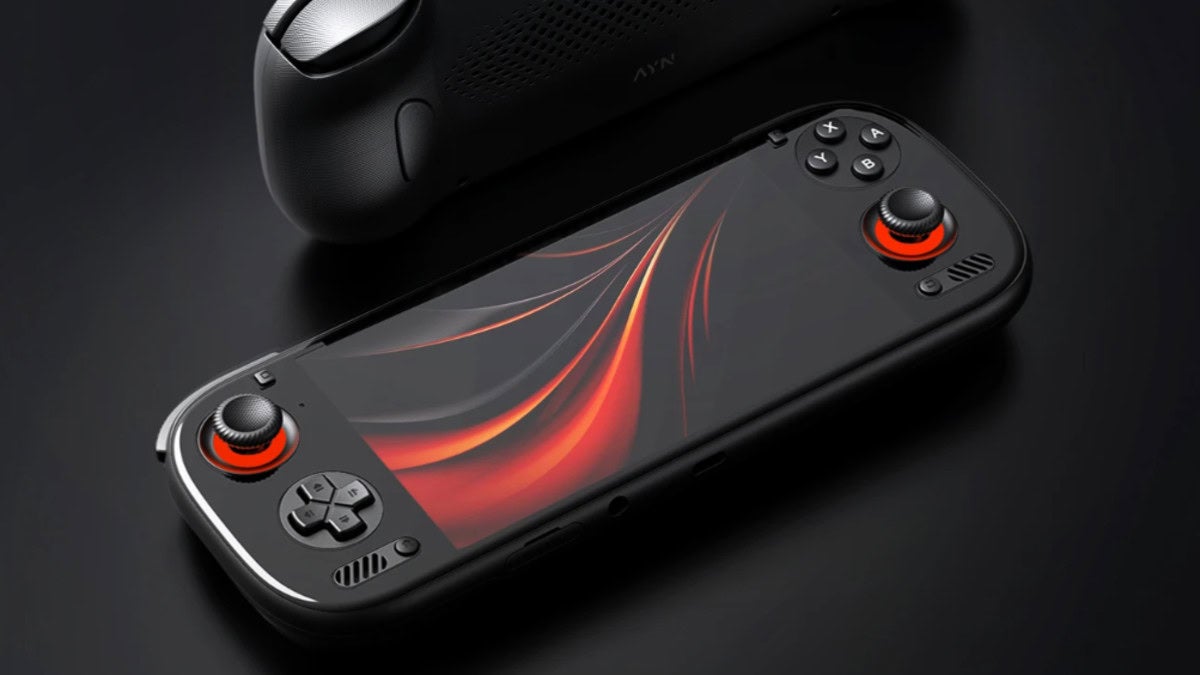
AYN is raising prices again on its flagship Odin 3 Android handhelds. The new pricing kicks in on September 1, the company says. Starting that day, the Odin 3 will cost $369, the Odin 3 Pro will go to $469, and the Odin 3 Max will land at $529. That’s an extra $20, $20, and $30, respectively. It’s also AYN’s third price increase of 2025, following earlier bumps in March and June.

According to AYN, the increase comes from higher Qualcomm chipset and memory costs. Even with that, the Odin 3 still stands out for people who want top-tier Android handheld performance. You’re getting a Qualcomm Snapdragon 8 Elite-class chip, a 6-inch 120Hz OLED screen, an 8,000mAh battery, and Hall effect joysticks. This clearly isn’t aimed at casual buyers.

If you’re after the best Android handheld performance you can get right now, the AYN Odin 3 is still an easy one to recommend. You might also be looking at the high-end AYANEO Pocket S, or the less expensive Retroid Pocket 4 Pro if you’re willing to give up some performance.

Orders placed through AYN before the end of August will still get the lower price.

China’s humanoid robots run 100m in 9.39 seconds: faster than Bolt, but it proves little

At the 2026 World Humanoid Robot Games in Beijing, China’s humanoid 100-meter record dropped to 9.39 seconds, according to the official Beijing results. On paper, that means a humanoid robot covered the distance faster than Usain Bolt.

X-Humanoid clocked 9.39 seconds. Honor’s humanoid robot Lightning reportedly reached 9.32 in testing and ran 9.47 in one heat, while Tiangong Ultra also posted 9.39 in a preliminary race. Put those times next to last year’s winning 21.50 and the jump is hard to miss: multiple 2026 robots were already under 9.5 seconds at an event that, according to the official Beijing results, featured more than 2,000 humanoids across 51 events.

If you follow humanoid robotics, this lands as a real speed milestone. Still, there’s a reason roboticists are skeptical. A flat track is much easier than a chaotic kitchen, an unfamiliar home, or folding laundry. Rodney Brooks has described these contests as heavy on publicity, and some of the race footage still showed robots needing crash mats after struggling to brake.

The result also lines up with China’s broader push against the US. Earlier this year there was a robot high-jump record, and in April Honor’s Lightning won the Beijing half-marathon in 50 minutes 26 seconds. Public competition is clearly speeding up the development of machines that are highly capable and highly visible, even if they still aren’t ready for practical deployment.

The race footage is online, and so are the official Beijing results.

Apple smart glasses reportedly target 2027: lighter Vision Pro alternative

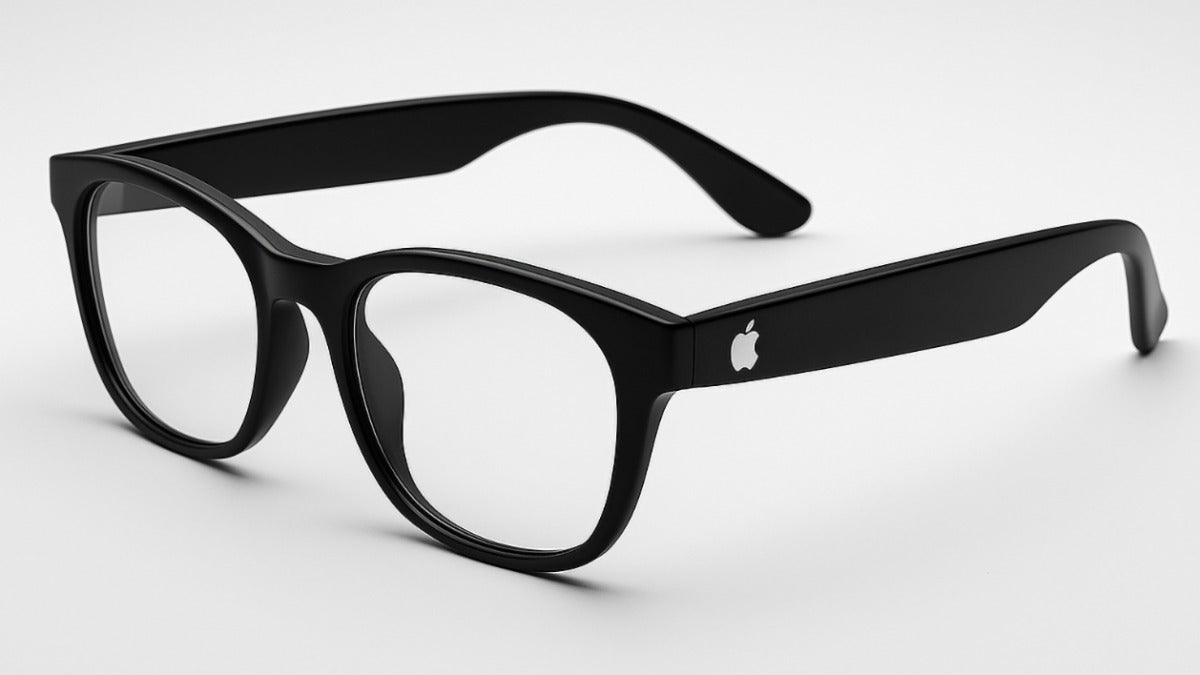
Apple’s rumored smart glasses are starting to sound less like a shrunken Vision Pro and more like something people might actually wear. The latest reports point to a 2027 launch, with Apple aiming for a lighter, everyday option instead of another bulky mixed-reality device.

What’s being described under Apple’s N50 project is closer to regular eyewear than a headset. Reports say the glasses would include microphones and speakers for voice commands, phone calls, turn-by-turn directions, and spoken feedback. Cameras could also be part of the package, whether for photos, video, or features that respond to what’s around you. The big thing they apparently won’t have is a built-in display. Most of the heavy lifting would instead come from a Bluetooth connection to an iPhone, which would help keep the glasses lighter and, maybe, cheaper too.

Apple also seems to be putting a lot of weight on making these look mainstream. The company is reportedly testing four frame styles, working with colors like black, light brown, and ocean blue, and using acetate frames. At the same time, attention appears to be moving away from a delayed or lower-priority second-generation Apple Vision Pro. That fits with Apple trying to keep pace with Meta, Google, and Samsung, while also dealing with the privacy worries that come with face-worn cameras. Options being discussed include a model without cameras, tighter limits on what the cameras can do, or clearer cues when audio is being recorded.

If you’re hoping for smart glasses you could wear every day, this is the Apple wearable that looks more interesting right now.

There’s still nothing to download yet. Apple’s smart glasses are unofficial for now, but the current reporting keeps pointing to an iPhone-connected product showing up in 2027.

Telegram applies for .gram: your username could become a web address

Telegram has filed for the .gram top-level domain in the Internet Corporation for Assigned Names and Numbers’ (ICANN) 2026 round, according to ICANN application records. If it goes through, Telegram users could eventually end up with username.gram web addresses.

Telegram Download

If the company gets approved in ICANN’s first big generic top-level domain (gTLD) expansion in more than a decade, and it’s competing in a field of more than 1,600 applications according to ICANN’s 2026 round data, Telegram could turn usernames into web identities, profile pages, and lightweight websites. Pavel Durov, who founded Telegram, has even suggested that users might one day build those sites from a single text prompt.

Still, approval is far from certain. ICANN applications go through technical, financial, and legal review, and that process can take months or years, according to ICANN. The application fee is $227,000, also according to ICANN. ICANN records also suggest Link Freedom Group may be pursuing .gram, and public records, user pricing, plus the promised website tools all remain unclear.

And even if .gram gets approved, don’t expect a traditional domain marketplace. These addresses would more likely be Telegram-controlled subdomains that keep users inside Telegram’s own network, reinforce the company’s infrastructure after problems like the temporary t.me suspension, and connect back to Telegram’s TON, Gram, and Fragment Web3 plans.

If you use Telegram a lot, this is something to watch, even though there’s nothing new to download yet, because .gram could bring messaging, identity, publishing and hosting together in one platform-controlled presence.

You can get Telegram now on iOS, Android, Mac, and the web.

V8s are still on sale in 2025: 5 carmakers keeping them alive

Ford, Ferrari, GMC, Mercedes-Benz, and Cadillac all still sell V8-powered vehicles in 2025. That alone tells you the V8 isn’t gone yet. It’s hanging on in a handful of models, even as the rest of the industry keeps moving toward smaller turbocharged engines, hybrids, and EVs.

Tighter emissions and fuel-economy rules have pushed a lot of brands toward turbo six-cylinders, hybrids, and fully electric drivetrains. So these days, V8s mostly show up in full-size trucks , flagship SUVs, and halo performance cars, not the mainstream vehicles they used to dominate.

Ford has kept a V8 in production continuously since the Flathead showed up in 1932, and the company says it’ll keep building V8s for as long as regulations let it. You can still see that commitment in the Ford Mustang and in Ford’s full-size trucks.

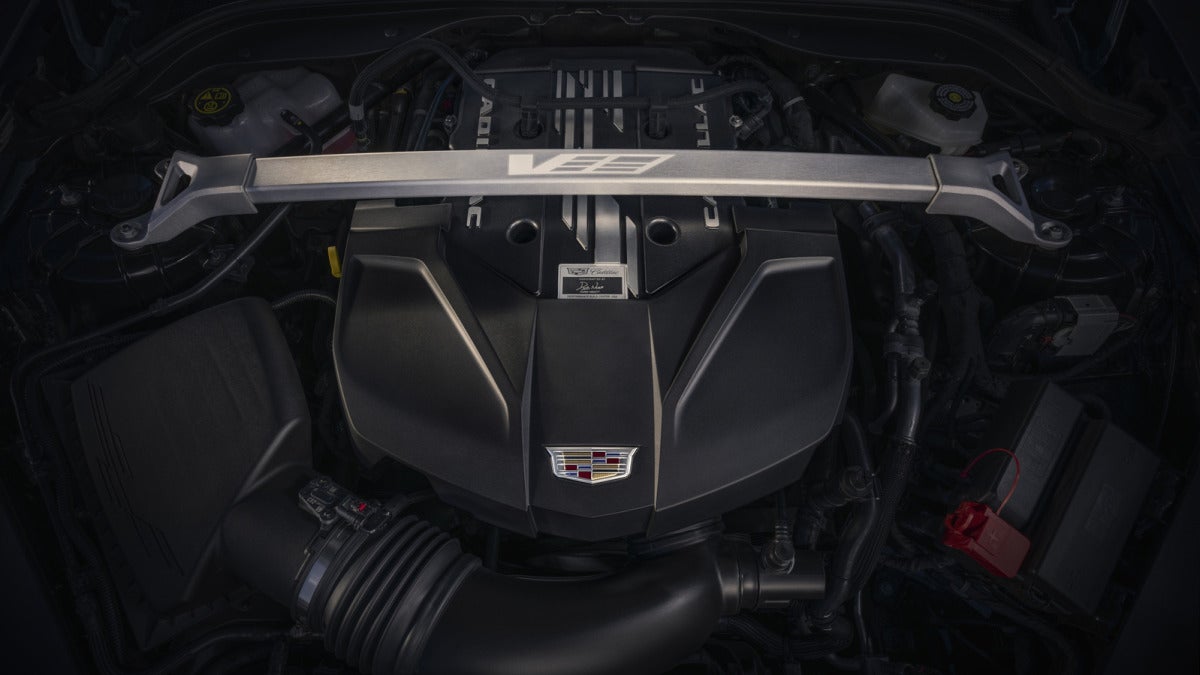
General Motors is on a similar track. GMC and Chevrolet still depend on V8s for trucks and performance models, while Cadillac keeps the formula alive in the 2025 Cadillac Escalade and the Cadillac CT5-V Blackwing.

Still, the numbers show where things are headed. Registration data say V8 registrations in half-ton pickups fell from 64.6% in 2020 to 38% in 2024, while six-cylinders pulled ahead for the first time in decades.

At the luxury end, Ferrari, Mercedes-Benz, and even BMW are proof that the formula still has a place, and hybrids such as the Ferrari SF90 Stradale may help extend its life a little longer. You can still walk into a dealership and buy a V8 today, but you’ll mostly find it in trucks, luxury flagships, and high-performance cars.

Windows 11 gets April 2026 patches: a RAM flaw can bypass VBS

Microsoft rolled out the April 2026 security patches for Windows 11, and one of the bigger fixes targets CVE-2026-23670, a hardware-assisted way to get around Virtualization-Based Security, or VBS. Researchers found that some DDR4 and DDR5 memory modules allow software to rewrite Serial Presence Detect (SPD) data. Once an attacker already has administrator access, they can use that to trick the PC into reporting more RAM than it actually has.

From there, things get ugly fast. The fake memory map creates aliased memory regions, which can let an attacker slip past Windows 11’s VBS without ever touching the hardware. No need to open the case. The researchers also say the same setup can disrupt Microsoft Defender, Sophos Intercept X, and even kernel-level anti-cheat protections.

The hardware in question includes certain modules from Corsair, G.Skill, and ADATA. In those cases, SPD write access wasn’t properly locked down, even though JEDEC guidance says it should be.

Microsoft says the patch does its job on systems where Secure Boot is turned on. The researchers aren’t fully convinced. They describe the fix as partial and say PCs running without Secure Boot could still be vulnerable.

If VBS is part of your security setup, if you’re running workloads that actually need that protection, or if you’re responsible for enterprise PCs, this is an update you shouldn’t put off.

Install the April 2026 Windows 11 updates through Windows Update. If your system uses affected hardware, there are extra steps too: Corsair has an SPD write-protection tool, and Gigabyte has released motherboard firmware updates.

Aptoide is now on Google Play in the US: the first third-party Android app store

Aptoide just landed on Google Play in the US. That means American Android users can now grab the third-party app store straight from Google’s own marketplace. Aptoide is calling it the first third-party Android app store to make that jump on Google Play.

Aptoide Download

So, no more sideloading it from the web. The release is another sign of how much Android is shifting after Google lost its antitrust case to Epic Games. Under Google’s Play Catalog Access program, which Google says took effect on July 22, 2026, qualifying rival app stores are now allowed to show up inside Google Play.

That opens up more choice for users, and it gives developers another channel for distributing apps, with room to test different policies and business models. Aptoide, which launched in 2009, says it has about 25 million monthly active users and more than 400,000 apps. Rival stores still don’t get a free pass, though. According to Google, eligible stores have to meet its security, privacy, and safety requirements, and they also have to pay fees.

If you’ve been wanting an alternative to Google Play, this is an easy download. Google Play will probably stay your default for a while, but this is still a notable shift. And if stores like the Epic Games Store or Microsoft’s Xbox mobile store follow, Android could get a lot messier before any of them truly put pressure on Google, with more fragmentation, more exclusives, and the usual arguments over security.

You can download Aptoide now from Google Play in the US on Android.

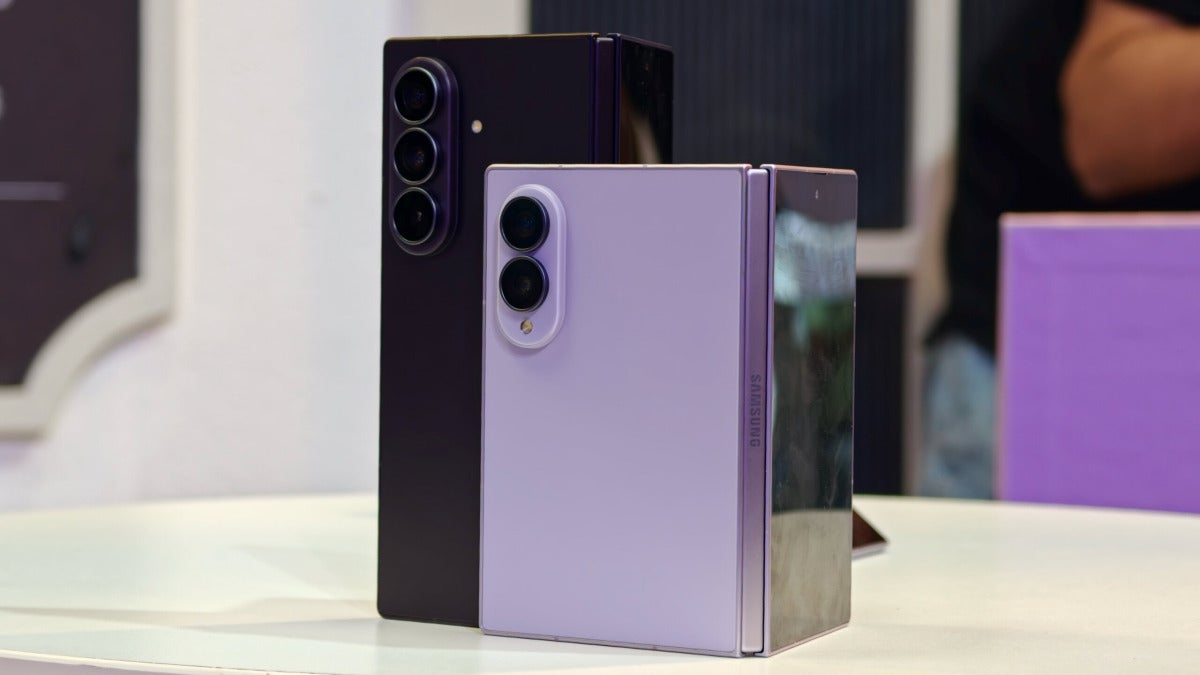
Samsung Galaxy Z Fold 8 is here: why its crease is less visible

Samsung unveiled the Samsung Galaxy Z Fold 8 in London on July 22, 2026, and sales started on August 7. The big pitch this time is simple: the inner display crease is less noticeable than before.

Samsung says the Flex Titanium structure combines a titanium-alloy film with a titanium plate so stress gets distributed more evenly across the fold. That should make the panel feel more rigid and stay more stable without giving up flexibility. Early hands-on reports suggest the crease really is better, but it hasn’t disappeared. You can still see it and feel it from certain angles, and with more use it could become more visible. For now, it’s still the biggest visual compromise in the foldable category.

Samsung also says the new film is 20 times stiffer than earlier polymer layers, while the display module is 12% thinner. The screen is supposed to handle repeated bending and light scratches better too. On top of that, pixel density goes up 15% to 422 ppi, and power efficiency improves by 10%. Even with those gains, the usual inner-screen trade-offs are still here: fingerprints, scratch risk, and the general compromises that come with a foldable display.

If you’ve been waiting for a foldable that feels a little more mainstream, the Samsung Galaxy Z Fold 8 looks worth buying. Samsung is also working on Center-Etched Thin Glass, shipments are expected to grow by more than 20% this year, and the pressure from Huawei, Google, Motorola, plus a likely foldable iPhone from Apple, keeps building.

You can buy the Samsung Galaxy Z Fold 8 and Samsung Galaxy Z Fold 8 Ultra now. Samsung announced both in London on July 22, 2026, and sales began on August 7.