M6 Mac mini benchmarks appear: a serious speed boost

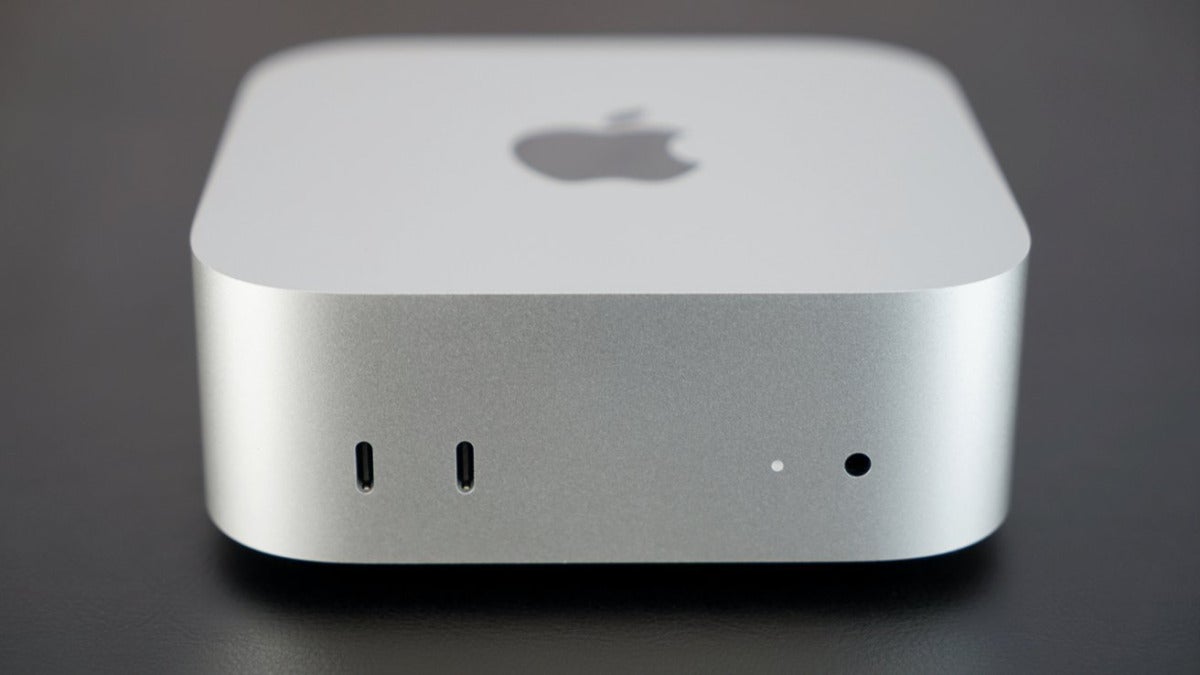
Apple’s next Mac mini showed up today in an early Geekbench listing, and the numbers point to an M6 chip with a clear CPU bump. Apple still hasn’t announced the machine, so take the benchmark for what it is: an early hint, not a finished picture.

Geekbench Download

The Geekbench entry lands at about 4,000 single-core and 25,000 multi-core. If that holds, the next Mac mini would be roughly 15 to 20 percent faster than the current model in single-core speed, and around 20 percent or more ahead in multi-core work. Everyday stuff like app launches, web browsing, and office tasks should feel quicker. Heavier jobs, including 4K exports, software builds, 3D rendering, and big photo-library work, ought to finish faster too.

The Mac mini also has one advantage here: airflow. Its desktop chassis gives it more room to breathe than a thinner laptop or tablet, which could help it keep performance up during longer, sustained workloads.

If you’re coming from an Intel Mac mini or an earlier Apple silicon model, and you want strong value for a student setup, a home office, or a creator desk without stepping up to a Mac Studio, this one looks like a smart buy when it arrives.

Still, be careful with this benchmark. Early Geekbench database listings can be mislabeled, and some are run on prerelease software. Apple also has time to tune clock speeds, power management, and thermals before launch, so the final machine could land a little differently.

You can’t buy the M6 Mac mini yet. But if these numbers hold, Apple’s cheapest macOS desktop is in line for a real upgrade.


Blender Download

Apple iPhone Duo is official: it could be hard to buy at launch

Apple unveiled the iPhone Duo on September 9. Pre-orders open October 16, deliveries start October 23, and the first batch already looks like it could be hard to get.

Analyst Jeff Pu has lowered his 2026 iPhone Duo shipment estimate to about 6 million units, down from 7 million. That change doesn’t seem tied to softer demand. The bigger problem appears to be supply: hinge bottlenecks, durability testing, inner-display flatness inspections, and reported production still stuck in the hundreds of units per day. Put that together and you could be looking at fast sellouts, longer shipping windows, and spotty store availability.

Apple’s book-style foldable starts at $1,999 for 256GB and climbs to $3,199 for 2TB. The iPhone Duo comes with a 5.4-inch outer screen, a 7.6-inch inner display, an A20 Pro chip, and a titanium frame, with Star White and Night Sky as the two color options.

Analysts still expect Apple to sell every unit it can make, grab 20% to 25% of the foldable market Samsung helped build, and give the wider iPhone upgrade cycle some momentum. Even so, the near-term upside may only go so far. Current forecasts put iPhone 18 Pro and Pro Max shipments at 72 million units, roughly 12 times higher.

If you want Apple’s first foldable, it’s probably smart to move quickly. Demand looks strong, supply looks unusually tight, and this launch could get picked over fast.

You can pre-order Apple’s iPhone Duo from Apple starting October 16.

Widow’s Bay sweeps the 2026 Emmys: a historic double for Matthew Rhys

Widow’s Bay was the story of the 2026 Emmys tonight. It won Outstanding Drama Series, picked up major creative awards, and gave Matthew Rhys a historic double at the 2026 Emmy Awards. Rhys took lead actor and shared the producing win, the night’s clearest milestone, and it locked in Widow’s Bay as the season’s breakout prestige hit, with the kind of broad Television Academy backing that usually points to a life past awards season.

In a streaming year packed with franchise rollouts and endless algorithm-chasing output, Widow’s Bay landed differently. It looked and felt made by hand, ambitious, expensive, and sure of itself. Other platforms got their moments, but none came close to matching Widow’s Bay’s across-the-board strength.

If you follow prestige TV or the streaming race, here’s what tonight said pretty plainly: the winners were the services still paying for distinctive, costly originals that get people talking. The losers were the ones flooding the zone without a single title anyone can rally around. And Matthew Rhys’s actor-producer sweep is another reminder that star-led TV can turn talent into something much bigger for a platform.

You can stream Widow’s Bay on its home service, which now has a flagship hit and, just as important, a bragging right every rival wants.

US military confirms on-orbit weapons for the first time

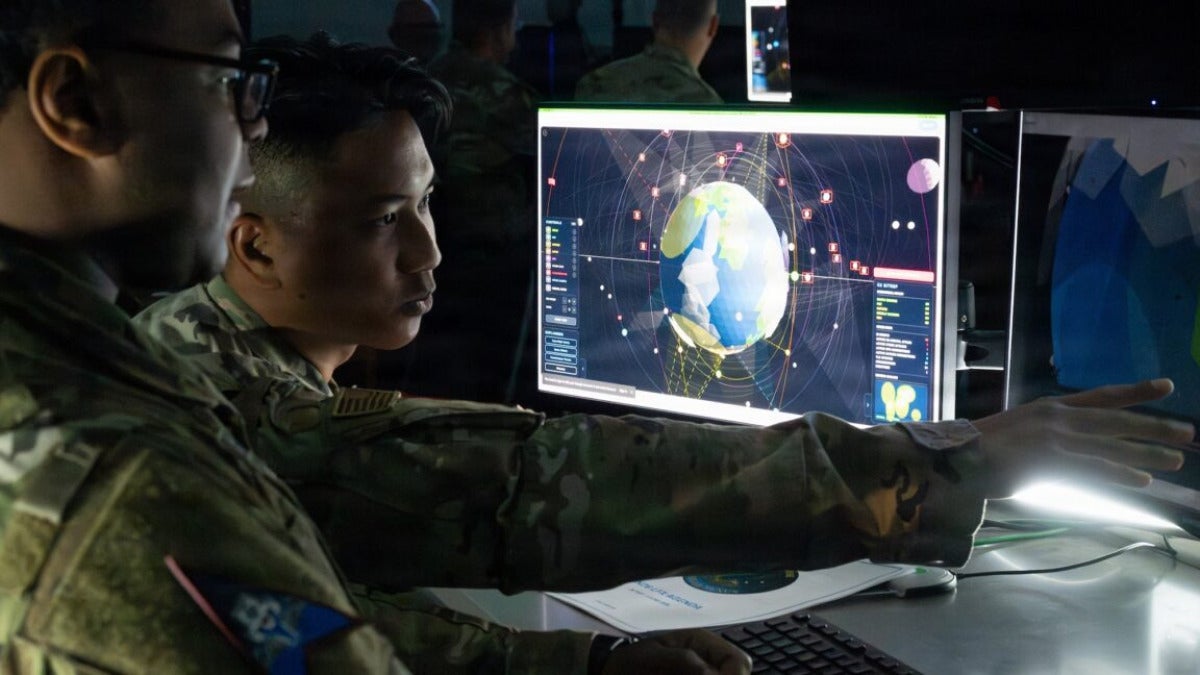
For the first time, the United States has publicly acknowledged that it has deployed space control weapons in orbit. The admission came from US Air Force Secretary Troy Meink, and it is the clearest statement so far that American space weapons are already operating on orbit.

Meink didn’t say what the weapons are, when they were launched, or whether they’ve been tested. He argued that keeping those details secret helps deterrence and protects operational security. Even with those blanks, the statement marks a real shift. For years, space was talked about as a sanctuary. Now it’s being framed as a contested warfighting domain where the United States wants space superiority.

This reaches far beyond military circles. Satellites support GPS, weather forecasting, broadband, finance, surveillance, and battlefield coordination, and the US government says this move is a response to growing Chinese and Russian counter-space threats, including anti-satellite missiles, co-orbital craft, jammers, directed-energy systems, and alleged Russian orbital anti-satellite efforts.

If you rely on space-based services, or if you follow military technology, keep an eye on this. Most analysts think non-kinetic options such as jamming, lasers, or microwaves are more likely than kinetic strikes that create debris, but the legal gray area around the 1967 Outer Space Treaty could still accelerate a space arms race and spill over onto commercial operators and the broader economy.

You can read the announcement in official Pentagon and US Air Force coverage.

Volkswagen unveils ID.7 Pro S test car: claimed 9.2 kWh/100 km

Volkswagen says a specially optimized ID.7 Pro S test car averaged 9.2 kWh per 100 km over a long-distance drive. The car was based on the rear-wheel-drive Volkswagen ID.7 Pro S, and Volkswagen credits the result to aerodynamic tuning, careful power management, and the efficiency of its MEB platform. If that number holds up, it would put this test car ahead of most production EVs on sale today, which usually land somewhere between 14 and 20 kWh per 100 km depending on size, speed, weather, and wheel choice.

That matters because efficiency sits underneath range. A car that uses less energy can travel farther on the same battery, squeeze more range out of every extra kWh, lower charging costs, keep weight down, and cope better in winter or at motorway speeds.

What Volkswagen is really arguing here is that the next stage of the EV race won’t be decided only by stuffing in bigger battery packs. It’ll come from better aerodynamics, lighter parts, smarter thermal systems, improved software, and getting more out of every kilowatt-hour the car already has.

If you pay attention to EV running costs, this is a claim worth following. Still, take it with some caution until independent tests back it up, because consumption can swing quite a bit with speed, temperature, tyres, and the shape of the route.

The production Volkswagen ID.7 Pro S is available through Volkswagen, but this record number came from a specially optimized test version.

Trump backs Flock license plate cameras: privacy concerns return

Donald Trump has come out in favor of automated license plate readers, or ALPR cameras, arguing that they help police solve crimes and that the privacy cost is a fair trade. His comments put the technology back at the center of the debate, and they bring fresh attention to Flock Safety, which says it operates 120,000 cameras, handles billions of scans each month, and helped with 1 million investigations in 2025, along with 10,000 missing-person cases.

The objections haven’t changed. Critics say ALPR systems let police collect huge amounts of data on drivers who haven’t done anything wrong: license plates, timestamps, and location records, often without a warrant, probable cause, or reasonable suspicion. That can include routine trips to work, visits to doctors, attendance at protests, and travel to places of worship.

They also point to false matches and cases where the systems were allegedly used for stalking. The Los Angeles Police Department walked away from its Flock Safety contract over questions about who controls the data and how it’s shared. Other departments have paused their agreements or dropped them outright. And an August YouGov poll showed the public split against police use, with 46% opposed and 38% in support, including in places such as Houston-area communities, Toledo, and Kyle, according to YouGov.

Anyone who pays attention to surveillance policy in the US should keep an eye on this.

Expect the American Civil Liberties Union to keep pressing for tighter rules on data retention, access, and warrants. Expect the industry to back guardrails while resisting routine warrant requirements. And expect more scrutiny of America’s patchwork approach, especially when it’s set beside the clearer frameworks used in the UK, the EU, and Canada.

KTH publishes OT defense study: software learns when to reboot hacked factory networks

KTH Royal Institute of Technology has published a new study on an autonomous operational technology (OT) intrusion-response agent. It nudges automated industrial cyber defense, even with limited traffic visibility, a little closer to something that could work in practice.

Wireshark Download

According to the KTH Royal Institute of Technology study, the autonomous OT intrusion-response agent was trained for 14 days on a containerized, segmented network under attack. It worked from about 40,000 observations, sampled every 30 seconds, using six traffic-count features to decide whether to leave things alone or reset three supervisory hosts, two water-tank processes, or the supervisory and control subnets. Those resets rebooted the targets, renewed credentials, and changed IP addresses. The best belief-state model tracked 500 hypotheses, outperformed raw-history agents, came close to a full-visibility baseline, and even turned up four cases where one history interval did worse than none.

If you follow OT security, this KTH Royal Institute of Technology paper is worth your time. Still, the study rests on assumptions about attacker behavior, simplifies an observation model that otherwise would have needed 100 million measurements, and was tested only on three supervisory hosts, two PLCs, and two tanks using weak-credential HTTP, SSH, Telnet, SMB, and CVE-2017-7494. So you still don’t know whether the KTH Royal Institute of Technology approach generalizes, even as 73% of OT organizations reported intrusions in 2024, up from 49% a year earlier, OT recovery costs run 4 to 6 times higher than IT, and the average industrial breach cost climbed by $830,000. You can read the study from KTH Royal Institute of Technology.