New York passes social media age-check law: TikTok and Instagram feeds could require verification

New York just passed a new social media age-verification law that could force apps like Instagram, TikTok, and YouTube to check ages before people in the state can get access to algorithmic feeds.

TikTok Download

Under the New York law, personalized feeds are treated differently from simple chronological ones. Users under 18 would need parental consent to use the recommendation-based version. To make that work, platforms may have to ask a user’s age, estimate it, or sometimes rely on documents or third-party verification tools.

Supporters of the New York law say these feeds are especially good at keeping teens engaged, which is also why the measure limits overnight notifications for minors. Critics see a privacy problem here: if companies first have to determine whether someone is a teen or an adult, users could end up giving over more personal information even if all they want to do is browse.

If you use social apps regularly, keep an eye on this. A rule aimed at minors could still change how adults log in. New York regulators still need to finish the compliance rules. Legal challenges over speech and privacy are likely. And if the law holds up, it could become a model for other states. The measure applies in New York and would affect personalized feeds on major social apps if enforcement moves forward.

Instagram Download

TikTok’s U.S. security chief testifies September 15: first public testimony since restructuring

TikTok’s U.S. Chief Security Officer Will Farrell is headed to Capitol Hill on September 15. He’ll testify before the House Select Committee on the Chinese Communist Party, the company’s first public executive testimony since TikTok’s U.S. restructuring wrapped up in January 2026.

TikTok Download

Lawmakers are likely to focus on one question right away: how much influence ByteDance still has over TikTok’s U.S. business after the forced divestiture. ByteDance kept a 19.9% stake, just under the 20% control threshold set in the 2024 sell-or-ban law. Day-to-day control, at least on paper, shifted to TikTok USDS Joint Venture LLC, which is backed by Oracle, Silver Lake, and MGX.

Project Texas will come up too. Expect questions about where TikTok’s U.S. data is stored, who can get access to it, and what protections are in place if ByteDance still provides technical support or software. Lawmakers may also zero in on the recommendation algorithm licensing deal, and whether that still gives ByteDance real leverage.

If you’ve been following TikTok’s future in the U.S., this hearing carries a lot of weight. It lands after the 2024 sell-or-ban law, the Supreme Court’s approval in January 2025, TikTok’s brief shutdown in the U.S., President Donald Trump’s pauses on enforcement, House Select Committee Chair John Moolenaar’s warning that ByteDance’s remaining stake could still leave an opening to Beijing, TikTok executive Adam Presser’s expected absence, and the Department of Justice’s recent position that the federal-device ban no longer applies.

The hearing will be available through the House Select Committee on the Chinese Communist Party on September 15.

NordVPN Download

Google Maps for Android Auto gets a live speedometer: beta users are seeing it now

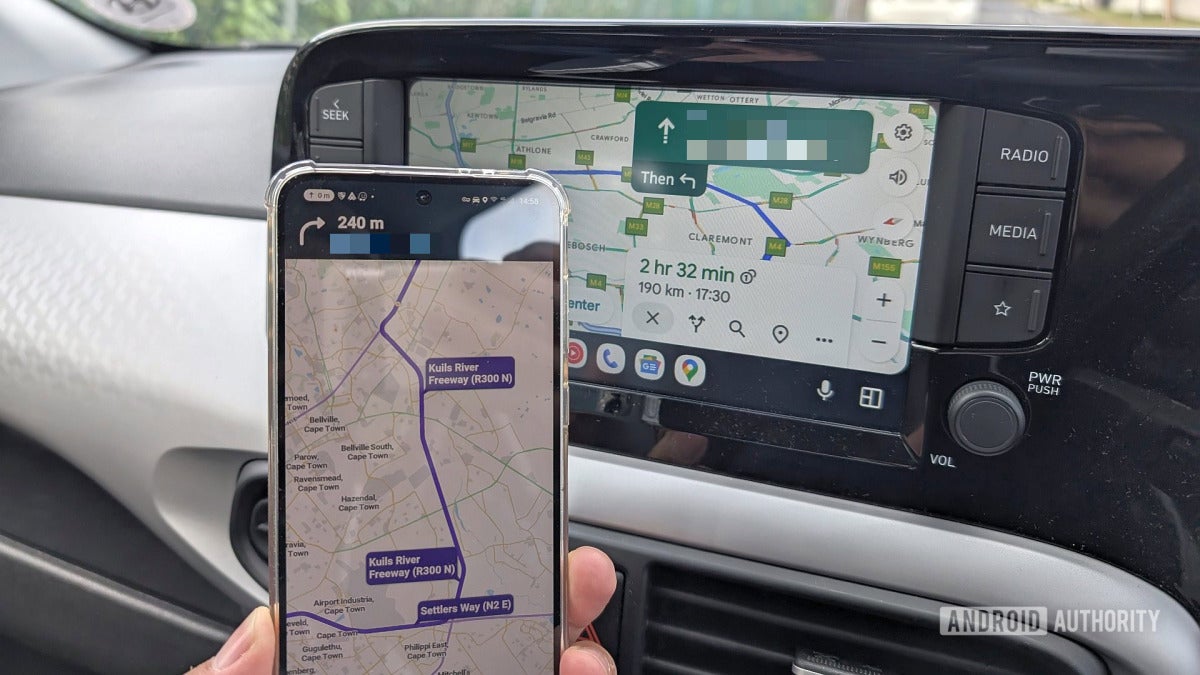
Google Maps on Android Auto is finally getting a beta speedometer, a Waze-like driving feature that feels overdue at this point.

Google Maps Download

Some beta users in Canada running Google Maps version 26.29.02.946673643 have already seen it, and users in India are reporting the same thing. This doesn’t seem to be a full public launch yet. Google appears to be switching it on server-side, so if it hasn’t shown up for you, that’s not unusual.

When navigation is active, Maps shows your current speed next to the posted speed limit. If you go over, the indicator reportedly changes from yellow to red. If you’re not using turn-by-turn directions, users say you’ll only see your current speed, which is close to how Waze does it.

If you use Google Maps on Android Auto a lot, this is an update you’ll probably want. The speedometer has been in the Google Maps apps on Android and iPhone for a long time already, and it reportedly made its way to Apple CarPlay in July 2024. Google is also said to be adding Immersive View and traffic-incident alerts that are less disruptive, though it’s still not clear how accurate all of this will be across different markets, whether it adds to driver distraction, or what it does to battery life.

You can get Google Maps for Android Auto through the Google Maps app on Android, but for now the speedometer looks limited to a smaller group of beta users.

Waze Download

Masayoshi Son lays out AI forecast: $5 trillion a year by 2040

At SoftBank World, SoftBank Group founder and CEO Masayoshi Son laid out an enormous AI bet: by 2040, he thinks the world could be spending about $5 trillion a year on AI buildout, or roughly 800 trillion yen annually. Son’s case was simple enough. If AI revenue reaches 20% of global GDP by 2040, that level of spending starts to look defensible.

ChatGPT Download

You can already see where SoftBank is heading. The company has been building toward an AI platform that spans chips, robotics, data centers, and large-scale computing. Its investment in OpenAI is expected to top $60 billion before the end of 2026, with part of that backed by a $40 billion bridge loan.

Son also waved off bubble concerns at SoftBank World, calling them “absurd,” even as U.S. tech companies and governments from India to the EU prepare their own massive infrastructure spending.

He also went deep on the power question. Son said AI data centers may need 3 terawatts by 2040, about 1.8 times current global electricity consumption, with gas doing the early work and fusion coming later. Data centers already consume huge amounts of electricity and water, and some estimates put them at nearly 3% of projected global electricity use by 2030.

Then came the bigger societal claim. Son said you could see 100 trillion autonomous agents by 2040, moving society from “human-centric” to “agent-centric.”

Maybe that timeline lands, maybe it doesn’t. But if you pay attention to AI infrastructure, this is the kind of forecast you watch closely. That was the message coming out of SoftBank World.