Soulslikes have a huge problem: they haven’t understood Souls. The charm of From Software’s games is how they combine an RPG layer with what are essentially dungeon crawlers. A dungeon-exploration game, with a real-time action component, where paying attention to your surroundings and how and where you move matters as much as simply being good at fighting. All the tools they give you are there for a reason, and using them isn’t breaking the game: it’s what the game is about.
That’s why almost all soulslikes feel worse. Unbalanced and poorly made. They don’t have the grace and charm of From Software’s games because they don’t understand that they aren’t action games: they’re dungeon crawlers. But there’s one game that, while leaning fully into being an action game, manages to work because it does its own thing. And it manages to work in the process. That game is Mortal Shell, and in a few days it will have its own sequel.
Atmosphere is sometimes everything
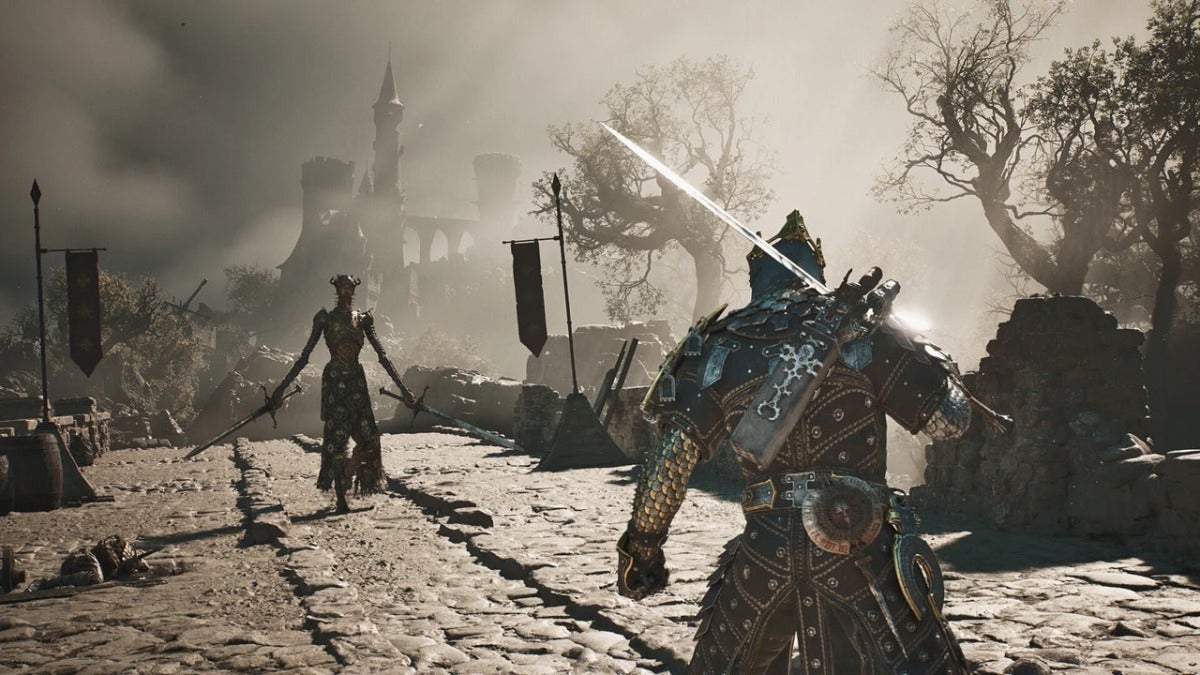
Mortal Shell, to start with, emphasizes one specific aspect: atmosphere. It’s gloomy, it’s dark, it’s abject. Dying again and again makes sense because the atmosphere invites it. The music, composed by musician Simon Heath, underscores this with its sickly, oppressive tone. Everything in the game invites you to soak up a world where everything seems made to make you feel like you can’t win. And you can’t. That’s why it feels appropriate to die, to lose, to have to try again: this world is made for that.
The shell system helps too. We’re a soul that has to inhabit different bodies, or shells, which completely changes our playstyle each time. Instead of building it around equipment, we keep changing playstyle and shell, possessing the reanimated bodies of those we’ve defeated or have been able to recover along the way. This reinforces the game’s sense of desperation.
Otherwise the game is exactly as simple as you’d expect. The lack of budget shows in the lack of variety and content, but it works on a basic level. It gets the basics right, offers a worthy challenge, and reduces the game to what’s essential: its atmosphere, its tone, and its combat
Building on what’s there
Mortal Shell isn’t a masterpiece. It’s a small, interesting game that does what it can with what it has. It doesn’t reach the heights of genius of the Souls games, but it knows how to take what interests it and give up what doesn’t. That’s why it works. And that’s exactly why everything we’ve seen and tried from Mortal Shell 2 so far works. Because it doesn’t try to outdo FromSoftware at its own game. It tries to be its own thing.
Mortal Shell 2 is even darker, more depressing, and more brutal. The variety of enemies is greater, the environments are more oppressive, and the setting is even wilder. But most surprising of all is something else: they’ve removed the stamina bar. They’ve given up something that’s essential in Souls, and not only does it work, it works beautifully. It feels more agile, faster, better. Which doesn’t mean From Software’s Souls games shouldn’t have stamina, but that Mortal Shell shouldn’t have stamina because, by focusing on combat and its consequences, not on exploration and RPG elements, it feels stronger by not having to manage unnecessary resources.
Set for release on August 20, Mortal Shell 2 could very well be one of the year’s dark horses. One of those action games that fly under the radar for a lot of people and end up being an absolute marvel. The first one already is, and we strongly recommend it. That’s why, if you get the chance, play it, because you might be surprised by what a small studio can do with very clear ideas.
