
Let’s be realistic: as soon as November begins, stores go into overdrive with tempting discounts, and Black Friday scams, from fake online stores to phishing emails, compete for your attention too. November now marks the unofficial start of holiday shopping.

Millions of people sit down at their computers in search of that record-breaking discount on a laptop, a console or a television. Unfortunately, behind the eye-catching discounts and prices in red, there’s a parallel industry also hoping to cash in on Black Friday: cybercriminals.
Knowing how Black Friday and Cyber Monday scams work is the first step toward preventing a supposed bargain from ending in stolen banking details or a package that never arrives. Below, we go over the most common scams on the web, the warning signs of fraudulent sites and how to add an extra layer of protection to your computer with antivirus software like Avast Free Antivirus.
Why Black Friday and Cyber Monday are peak season for online fraud
During this period, the volume of online purchases grows exponentially. We browse in a hurry, open dozens of tabs at once and let our guard down because we expect to see extraordinarily low prices. Scammers exploit this very mindset: when a shopper sees a product at 80% or 90% off, the fear of it selling out tends to override common sense.
What’s more, the logistical chaos typical of this time of year makes deception easier. When you’re expecting multiple deliveries and receiving dozens of promotional newsletters a day, it becomes much harder to distinguish a genuine notification from an attempted scam. For attackers, all it takes is sending out thousands of automated scams through sponsored ads, social media and mass emails for hundreds of shoppers to fall into the trap within hours.
The most common Black Friday scams: fake stores, unbelievable discounts and phishing impersonating major brands
Although the techniques evolve every year, the vast majority of scams during the sales weekend fall into three very clear categories:
- Fake online stores: Criminals create websites that mimic the design, logos and catalog of well-known retailers or popular brands down to the last detail. These websites are usually promoted through ads on search engines or social media. The user pays, but the product is never shipped or, at best, they receive a poor-quality counterfeit.
- Offers too good to be true: Unknown websites promising the latest technology or designer clothing at ridiculously low prices, with constant discounts of 85% or 90% across the entire catalog. Their sole aim is to capture the shopper’s credit card details or get shoppers to transfer money directly with no possibility of a refund.
- Phishing emails impersonating major retailers: Messages designed to look like official communications from e-commerce giants or parcel delivery companies. They tend to warn of a supposed payment problem, a package being held or an exclusive coupon that expires in an hour, directing the victim to a fake page where they’re asked to log in or enter their banking details.
How can you spot a fake shopping website? 5 quick checks before clicking “Buy”
Before entering your card details in your computer’s browser, take thirty seconds to review these five key points so you know how to spot fraudulent shopping websites:
- The URL in the browser bar: Look closely at the main domain. Scammers often register addresses that are almost identical to the originals, changing a letter, adding hyphens or using unusual extensions (for example, replacing .com or .es with .shop, .top or .xyz).
- Spelling and text quality: Fraudulent pages are often created in a rush using machine translation. If you find obvious spelling mistakes, nonsensical sentences or generic and inconsistent product descriptions, close the tab immediately.
- Available payment options: Be wary of any store that only accepts direct bank transfers, payments through peer-to-peer apps without buyer protection or cryptocurrencies. Legitimate retailers offer secure payment gateways, credit card payments with verification or recognized platforms that let you dispute charges.
- Contact details and legal policies: A real retailer always includes verifiable information: a physical address, tax identification number, customer service phone number or email address and clear return policies. If the “Contact” section is just an empty form and the legal text looks copied from another website, it’s a red flag.
- Extreme urgency tactics: Aggressive countdown timers on every product or pop-up messages claiming that “only 2 left and 45 people are viewing this” are intended to stop you thinking clearly so you won’t compare the price at other stores.
Why unsolicited emails and messages are more dangerous than they seem
During Black Friday, your inbox fills up with promotions. The problem with clicking directly on a link in an unsolicited email (or a pop-up ad) is that you lose control over where you’re actually going. A shortened link or one hidden behind a flashy “Redeem discount” button can redirect you to a cloned website that steals your credentials as soon as you try to log in.
The golden rule when using your computer is simple: if you receive a spectacular offer by email from a store you know, don’t click the link in the message. Open a new tab in your browser, manually type in the retailer’s official address (or access it through your usual bookmarks) and check whether that promotion actually exists on its website.
How Avast Free Antivirus helps you shop more safely on your computer
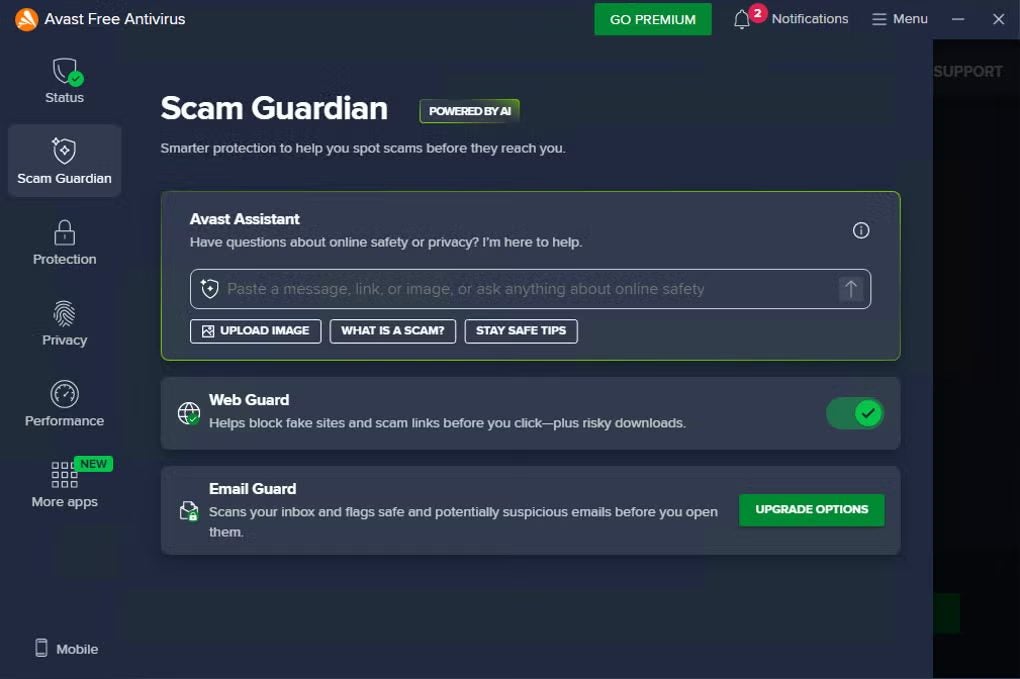
Even the most attentive shoppers can make a mistake when browsing dozens of offers. Having a security tool on your computer adds a practical layer of defense so you can browse, check your bank account and shop with greater peace of mind. Avast Free Antivirus integrates features specifically designed to intercept the threats common at this time of year before they compromise your data:
- Web Guard: If you accidentally click a fraudulent link or visit a fake online store that tries to steal your credentials, Web Guard helps protect you while you browse, bank or shop online. This feature is designed to help block malicious websites and unsafe downloads before they can cause you problems.
- Antivirus: Sometimes, a supposed PDF invoice, a downloadable coupon or an attachment in a phishing email conceals malicious software. If a dangerous file manages to slip through, Antivirus acts as a real-time backup layer that helps protect your device against malware.
- Avast Assistant: When you come across an ambiguous email, a suspicious offer or a website you’re not quite sure about, you can turn to Avast Assistant. This built-in artificial intelligence assistant works like a companion you can consult for a second opinion before clicking or sharing your details.
What to do if an offer or message seems suspicious
If you’re looking at your screen and have doubts about whether a promotion is legitimate, follow this short action plan:
- Stop and don’t click: Close the email or pop-up window without downloading any attachments or filling out forms.
- Check the domain and look for reviews: Search for the store’s name on Google along with words like “reviews” or “scam” to check whether other users have reported recent problems.
- Ask for a second opinion: Use Avast Assistant to analyze the message or situation and confirm whether it shows common patterns of social engineering or phishing.
- Act quickly if you’ve already paid: If you think you’ve entered your card details on a fraudulent website, contact your bank immediately to block the card and request that the charge be reversed. Also change your password if you used one that you use for other services.
A summary of smarter shopping habits for the whole weekend (and year)
Enjoying Black Friday and Cyber Monday discounts doesn’t mean taking unnecessary risks. Keeping your browser and operating system up to date, using unique passwords for each online store and sticking to trusted retailers for your shopping can help reduce the chances of an unpleasant surprise.
To shop with greater confidence this weekend and reduce the risk of falling for fraudulent websites, try Avast Free Antivirus to help block malicious websites. Stop unsafe downloads and get a second opinion from Avast Assistant whenever an offer doesn’t feel right. Now, enjoy the sales!
