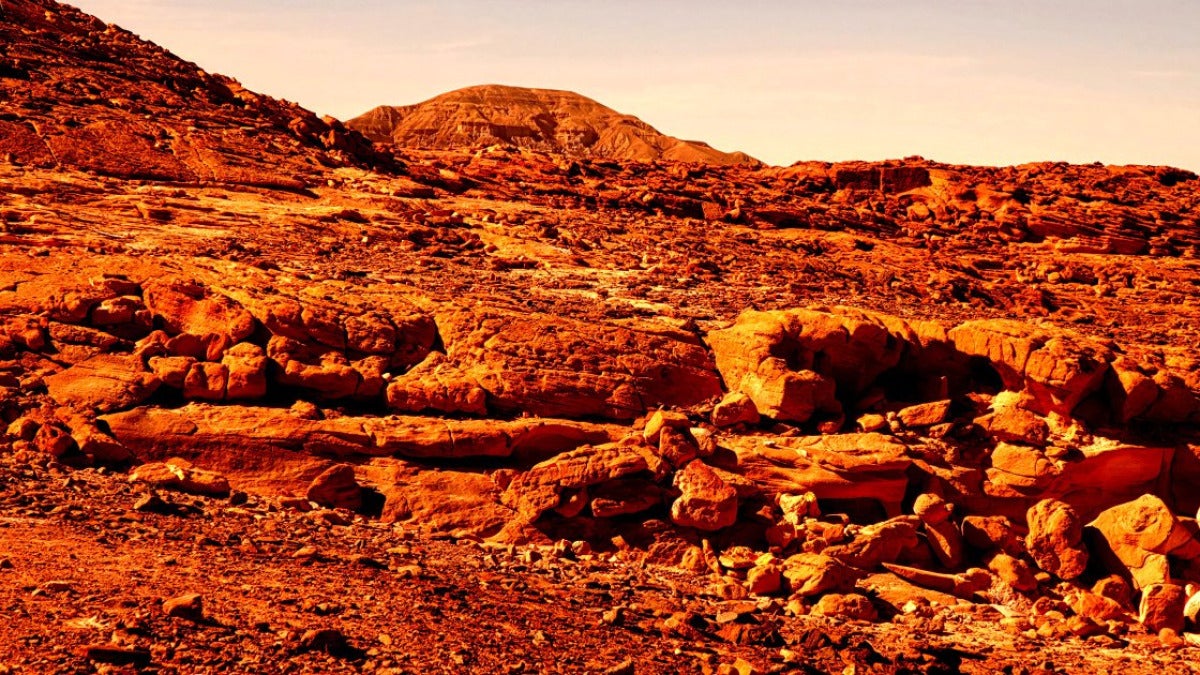
A new study in The Planetary Science Journal from researchers at the University of California, Riverside and the University of Washington argues that Earth didn’t need life to stay habitable. Even as a lifeless planet, it could’ve remained fit for liquid water for billions of years instead of sliding into a frozen wasteland or tipping into a Venus-like mess.
Samantha Gilbert-Janizek at the University of California, Riverside led the work with Rory Barnes at the University of Washington. The team modeled about 5 billion years of an Earth-like planet’s history, starting at formation and extending to roughly 500 million years into the future. They ran those simulations using 19 non-biological factors spread across the core, mantle, crust, oceans, and atmosphere.
What held things together in the model was geology. Liquid oceans and stable surface temperatures could last through the carbonate-silicate cycle alone, while the clearest atmospheric feature missing from the picture was oxygen. The study argues that this missing oxygen gives astronomers a cleaner way to separate a planet that’s merely habitable from one that’s actually inhabited. It also gives future exoplanet research a better baseline, including NASA’s proposed Habitable Worlds Observatory and the broader debate around the Gaia hypothesis.
If you follow exoplanet science, this paper is worth your time. You can read it now in The Planetary Science Journal.

Author: Jesús Bosque
{
"de-DE": "Ich bin Journalist mit über 30 Jahren Erfahrung in Videospielen und Technologie. Obwohl Videospiele schon immer mein Fachgebiet waren, habe ich begonnen, auch die komplexen Strukturen von Projektmanagement-Tools wie Asana sowie die Automatisierungen mit Make.com und N8N zu entdecken und zu genießen.",
"en-US": "I’m a journalist with more than 30 years of experience in video games and technology. Although my specialty has always been video games, I’ve recently started enjoying exploring the intricacies of project-management tools like Asana, as well as automations with Make.com and N8N.",
"es-ES": "Soy periodista con más de 30 años de experiencia en videojuegos y tecnología. Aunque mi especialidad siempre ha sido el videojuego, he empezado a disfrutar también de descubrir los laberintos de los programas de project management como Asana y las automatizaciones de make.com y de N8N",
"fr-FR": "Je suis journaliste avec plus de 30 ans d’expérience dans le jeu vidéo et la technologie. Bien que ma spécialité ait toujours été le jeu vidéo, j’ai commencé à prendre plaisir à explorer également les méandres des outils de gestion de projet comme Asana, ainsi que les automatisations avec Make.com et N8N.",
"it-IT": "Sono un giornalista con oltre 30 anni di esperienza nei videogiochi e nella tecnologia. Anche se la mia specialità è sempre stata il videogame, ho iniziato a divertirmi anche a scoprire i meccanismi degli strumenti di project management come Asana e delle automazioni con Make.com e N8N.",
"ja-JP": "",
"nl-NL": "Ik ben een journalist met meer dan 30 jaar ervaring in videogames en technologie. Hoewel videogames altijd mijn specialiteit zijn geweest, ben ik ook begonnen te genieten van het verkennen van de ingewikkelde wereld van projectmanagementtools zoals Asana en van automatiseringen met Make.com en N8N.",
"pl-PL": "Jestem dziennikarzem z ponad 30-letnim doświadczeniem w grach wideo i technologii. Choć moją specjalizacją zawsze były gry wideo, ostatnio zacząłem również czerpać przyjemność z odkrywania zawiłości narzędzi do zarządzania projektami, takich jak Asana, oraz automatyzacji w Make.com i N8N.",
"pt-BR": "Sou jornalista com mais de 30 anos de experiência em videogames e tecnologia. Embora meu foco sempre tenha sido os videogames, recentemente passei a gostar de explorar também os labirintos de ferramentas de gestão de projetos como o Asana e das automações com Make.com e N8N.",
"social": {
"email": "jesus.bosque@softonic.com",
"facebook": "",
"twitter": "",
"linkedin": ""
}
}
View all posts by Jesús Bosque