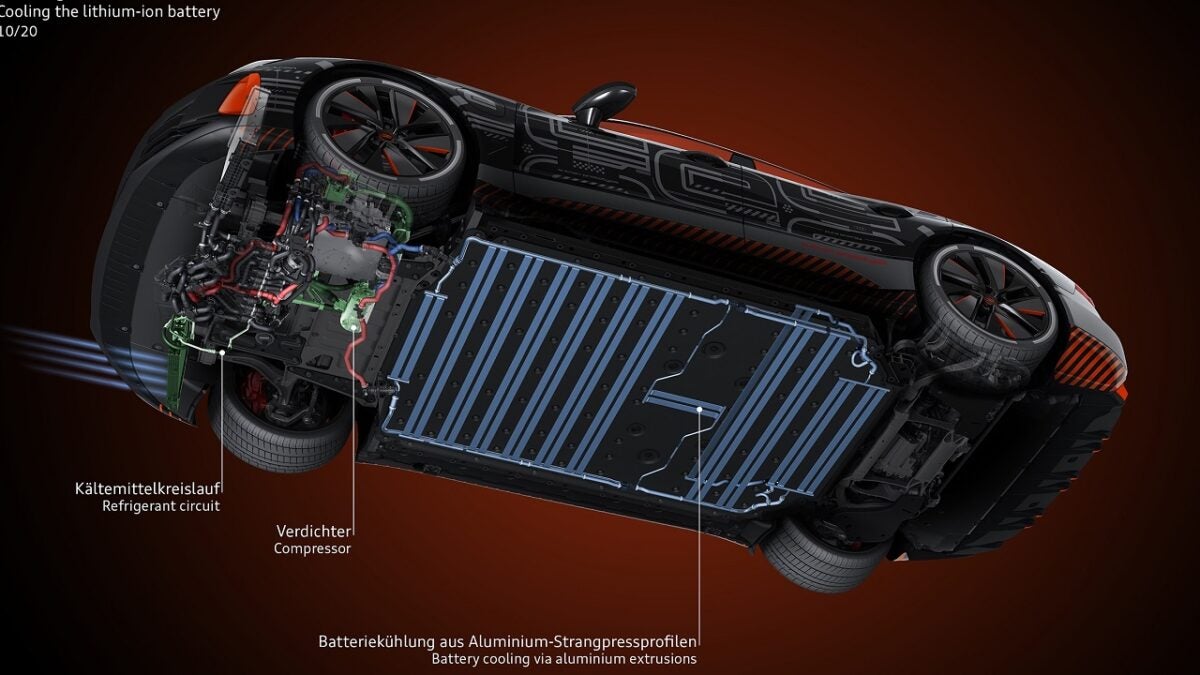
South Korean battery supplier SK On is making headlines with its innovative approach to electric vehicle (EV) battery cooling, recently showcased at the InterBattery 2025 trade show.
The company is focusing on immersion cooling, a method that involves submerging battery modules in a thermal fluid—potentially oil—instead of relying on traditional coolant or air circulation.
SK On claims this direct contact can more effectively manage creeping temperatures, provided that the flow is optimized to ensure maximum interaction with the battery cells.
General Motors has already recognized the benefits of wireless BMS technology
A significant component of this new cooling technique is its requirement for a wireless battery management system (BMS). By attaching a chip to each battery cell, SK On allows for real-time data transmission to antennas embedded within each module.
This design not only simplifies the layout but also optimizes space within the battery pack, potentially allowing for the inclusion of more cells, thereby enhancing performance and efficiency.
General Motors has already recognized the benefits of wireless BMS technology, having widely adopted it in its recent models.
The automaker asserts that this system not only makes battery packs smaller but also optimizes range. Similarly, China’s CATL is integrating wireless BMS technology into its latest innovations, emphasizing its importance for future battery-swapping solutions.
Despite ongoing research into immersion cooling for over a decade, it has not yet been widely implemented in mass-market vehicles. However, companies like Rimac are incorporating this technology into their electric supercars, and Ford is exploring its potential for future EV battery designs.
Meanwhile, automotive giants such as Mercedes and Nissan are still evaluating air cooling systems and solid-state battery technologies, reflecting the ongoing quest for optimal thermal management in electric vehicles.