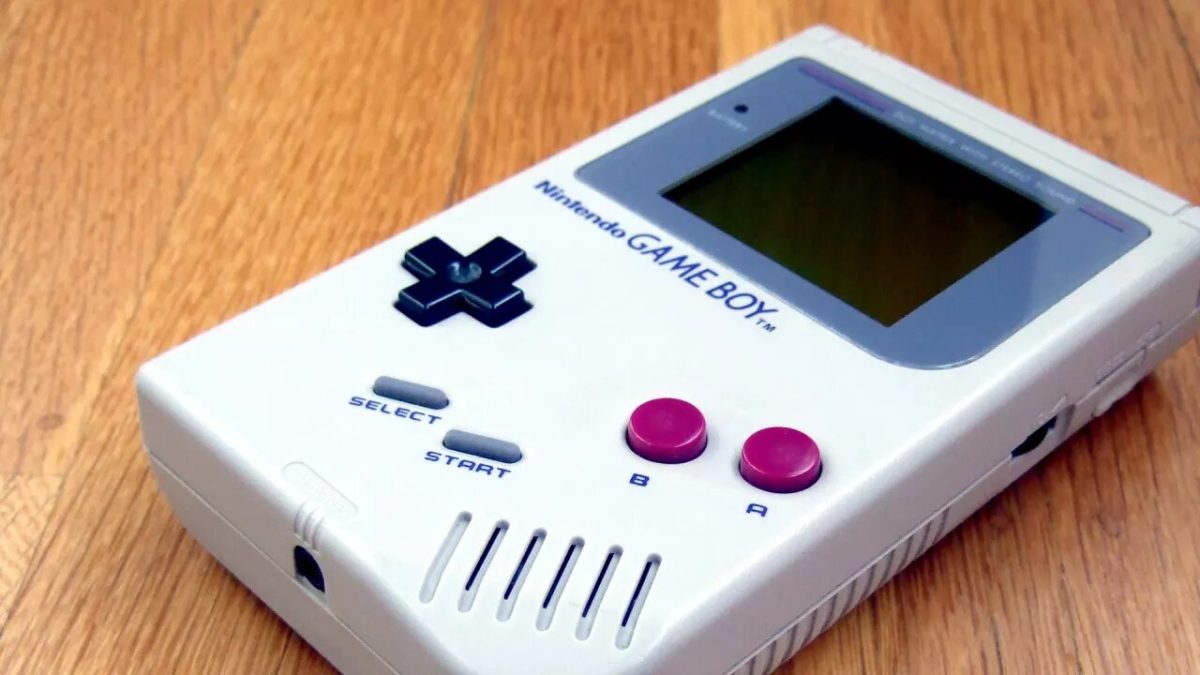
Considered to be one of the most iconic consoles ever, the Nintendo Game Boy turns 30 this year. Though it was hardly a technological powerhouse even back in the day, the lovable gray brick would go on to become one of the most popular consoles of all time. To celebrate, we’re going to take a look back at what made the Game Boy so special.
How the Game Boy was designed

The Game Boy was primarily designed by Gunpei Yokoi, the same man behind popular toys like the Ultra Hand and the Love Tester. Yokoi additionally helped create Nintendo’s original portable gaming system, the Game & Watch series, after watching a bored businessman fiddle with a calculator on a train.
The success of these toys and the Game & Watch series led to a lot of goodwill from Nintendo toward Yokoi, who had a lot of freedom in designing the Game Boy. He designed the system around the idea of “lateral thinking with withered technology”, which basically means taking slightly outdated technology and repurposing it into something new and innovative. The reasoning behind this was that the Game Boy would be built using technology that is already easily understood, affordable, and energy efficient.
The design of the Game Boy proved to be extremely popular due to its low price, long battery life, and durability. Competing portable systems like the Sega Game Gear boasted more power and color displays, but their high price point and monstrous battery consumption proved no match for the Game Boy. What really helped the Game Boy stand apart, however, was its amazing lineup of games.
The most iconic games ever, on the go!

The huge library of quality Game Boy games led to an explosion in sales. Of the launch titles, Super Mario Land amazed gamers by providing a console quality Mario game on the go. However, the launch title that really catapulted the Game Boy into a pop culture icon was Tetris. The Game Boy version of the timeless puzzle game was many people’s first introduction to the series, and the game would go on to become the best selling video game of all time. Tetris was bundled with the Game Boy and became the system’s first true killer app. An even bigger killer app, however, was just over the horizon.
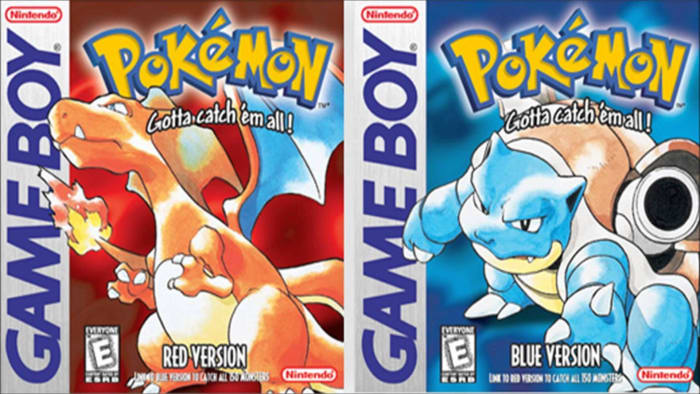
The arrival of Pokémon Red and Blue in the late ’90s laid down the groundwork for what would become a multibillion-dollar franchise. The game’s collection of 151 lovable creatures attracted gamers from all across the world. The addictive gameplay loop of battling and catching Pokémon led to the birth of the creature RPG genre, which is a style of game that Pokémon dominates to this day. Kids on the playground spent all day trading secrets of where to catch powerful secret Pokémon. More importantly, they used the Game Boy’s Link Cable to connect their systems, allowing them to trade and battle Pokémon. Pokémon’s unique social gameplay systems encouraged players to meet up with people in real life to get the most out of the game, making the game a treasured part of many people’s childhoods. Pokémon is currently the biggest media franchise in the world, surpassing Star Wars, Harry Potter, and Marvel.
With games like Tetris, Super Mario Land, Pokémon, and Link’s Awakening, it’s no wonder the Game Boy sold as it did. Instead of featuring neutered console ports like its competitors, the Game Boy instead focused on unique experiences that took advantage of the console’s unique portable design.
Rare Super Mario Bros. game sells for $100,150
Read Now ►A long line of successors
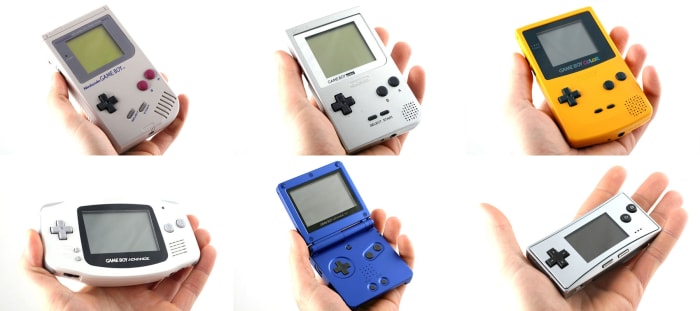
The runaway success of the Game Boy inevitably led to numerous upgrades and revisions. The Game Boy Pocket, also designed by Gunpei Yokoi, was the first of these upgrades and featured a smaller, lighter design, in addition to a true black and white screen as opposed to the original Game Boy’s green monochrome screen. It used two AAA batteries as opposed to the original Game Boy’s four and featured an LED light that would turn red when the batteries were running low. A few years later, the Japan-exclusive Game Boy Light solved the Game Boy’s most frustrating hardware problem: its unlit screen.
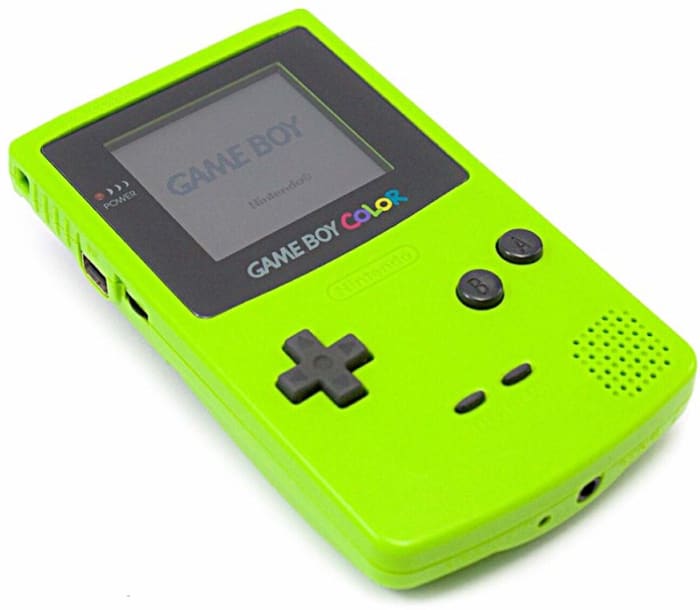
Next up, the Game Boy gained its first true successor in the Game Boy Color. The Game Boy Color had its own library of games that took advantage of the consoles color palette and more advanced processor, though it was still backward compatible with original Game Boy games. It was functionally a portable NES and served as the final 8-bit portable console to ever be released.
The release of the Game Boy Advance saw a major upgrade to the Game Boy family. Featuring a wide design, a higher resolution screen, and a 32-bit processor, the Game Boy Advance dazzled audiences with SNES quality portable games. The Game Boy Advance was still backward compatible, allowing it to play Game Boy and Game Boy Color games.

Watch: Fastest Super Mario Bros. speedrun in history
Go, go, mario! ►
The Game Boy Advance received its own revision in the Game Boy Advance SP. It had a unique clamshell design, a rechargeable battery, and a backlit screen. A spinoff of the Game Boy Advance, the Game Boy Micro, was made for trendy urban audiences. By far the smallest Game Boy yet, the Micro was about the size of an NES controller and featured a backlit screen.

When the Nintendo DS was being developed, Nintendo avoided calling it a new Game Boy upgrade. They did this because the DS was such a new and innovative piece of hardware, that if it didn’t catch on, they could continue the Game Boy line. Of course, we know now that the Nintendo DS became a smashing success, outselling even the Game Boy. But Nintendo wouldn’t be where they are now in the portable gaming space without the Game Boy paving the way. The Nintendo DS, 3DS, the Nintendo Switch, and all future Nintendo handhelds owe their existence to that iconic grey brick.
What are your favorite Game Boy memories? Let us know!
