In the fascinating world of video games and technology, a historical curiosity resurfaces: the Musen Cleaner Chiritori, a vacuum robot designed by Gunpei Yokoi, the emblematic figure behind the Game Boy. This innovative product from Nintendo, launched in the late 1980s, stood out for merging cleaning and play, turning a daily chore into a fun and entertaining experience for the youngest. A gadget that parents appreciated The Chiritori not only eliminated dust and dirt but also made children interact and play while doing household chores, promoting reflexes […]
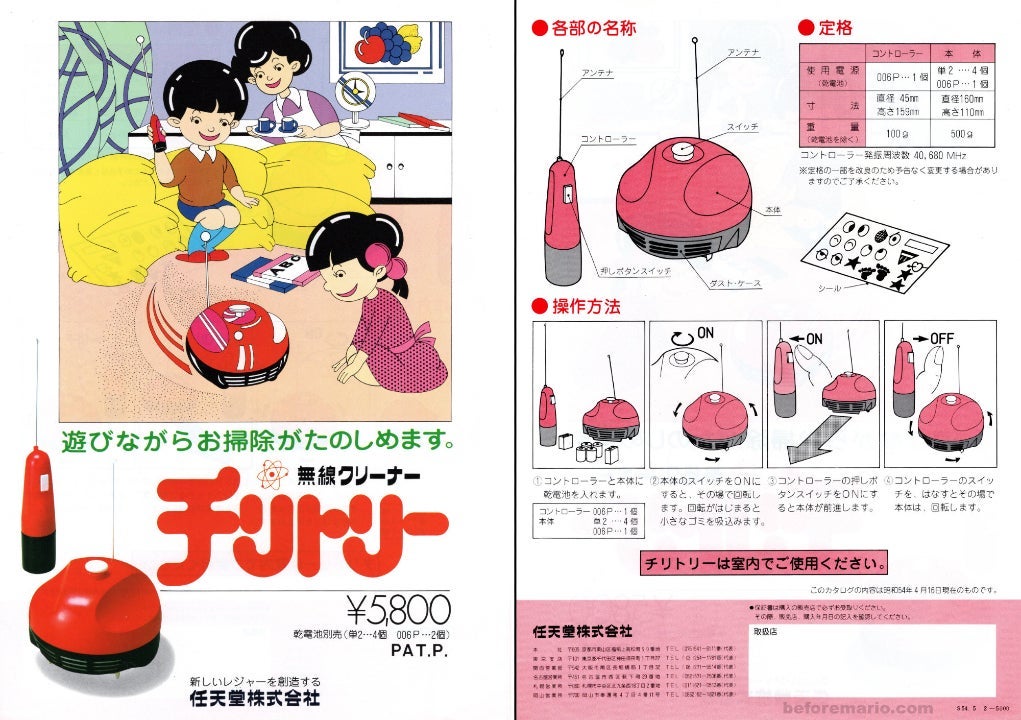
In the fascinating world of video games and technology, a historical curiosity resurfaces: the Musen Cleaner Chiritori, a vacuum robot designed by Gunpei Yokoi, the iconic figure behind the Game Boy. This innovative product from Nintendo, launched in the late 1980s, stood out for merging cleaning and play, turning a daily chore into a fun and entertaining experience for the younger ones.
A gadget that parents appreciated
The Chiritori not only eliminated dust and dirt, but also encouraged children to interact and play while doing household chores, promoting reflexes and the development of motor skills. With a remote control system that limited their movement, these devices allowed little ones to guide the vacuum cleaner as they pleased, an idea that anticipates the design of modern vacuum robots like Roomba.
Nintendo, which at that time alternated between the manufacturing of playing cards, toys, and instant rice, was looking beyond its gaming legacy. With the Chiritori, the company established a new way to bring technology closer to families, inviting children to participate in household chores in a fun way. This could be interpreted as a clever trick by parents to get their children to help with cleaning. However, the creation reflects a broader vision of the time, where dreaming of machines that performed routine tasks was a common idea, influenced by Japanese popular culture.
To increase the product’s appeal, Nintendo included customizable stickers, allowing children to unleash their creativity. In this way, the Chiritori not only represented a novelty in the field of appliances, but also solidified the principle that even the most mundane tasks could be transformed into games, an approach that continues to resonate in Nintendo’s design philosophy to this day.
Although the first digital camera in history became operational in 1973 (for six years it took more than 300,000 images of the Earth while orbiting in a space shuttle), the first one that was small enough to fit in our pocket arrived in the mid-80s: it could take up to 10 photos, which were stored on a 2-megabyte memory card, and the quality was rather questionable. In any case, these early models were not designed for the everyday consumer, because after all, no one had a computer in their […]
Although the first digital camera in history came into operation in 1973 (for six years it took more than 300,000 images of the Earth while orbiting in a space shuttle), the first one that was small enough to fit in our pocket arrived in the mid-80s: it could take up to 10 photos, which were stored on a 2-megabyte memory card, and the quality was rather questionable. In any case, these early models were not designed for the everyday consumer, because after all, no one had a computer at home. It had to be Nintendo, of course, to show us the way.
Say “Nintendo!”
On February 21, 1998, thousands of Japanese children watched the future unfold on their Game Boy with a gadget that now seems like a relic of the past but at that time was the height of modernity: a camera that attached to the cartridge slot of the console and allowed you to take black and white photos with a resolution of 128 pixels by 128 pixels. But the important thing was not the photos themselves, but what you could do with them.
You could not only take photos, but you could also add all kinds of stickers, use filters (of the time, of course, nothing like Instagram. Think more along the lines of visual tricks) and even draw on them. Additionally, you could create your own animations by combining several photos, play, using your face, the four mini-games that came with the cartridge, and even, oh surprise, print the images.
Think that, back then, if you wanted a photograph in your hand, and unless you already had an expensive digital camera, you had to take the film to be developed and come back a few days later, only to find out that half of the photos turned out poorly. With the Game Boy Camera, all you needed was to buy an additional Game Boy Printer (along with the necessary thermal photo paper), six batteries, and enjoy. Because, in addition to being able to print your photos, you could stick them around! For a ten-year-old, you won’t find many greater joys.
Send a photopixel
The Game Boy Camera was more than just a fad. In fact, even in Japan they were able to use the external disk 64DD to create animated 3D avatars of themselves based on photos from the camera. I won’t lie to you: they weren’t very good, but back then they were the Sistine Chapel of fun. These avatars could later be included as avatars in games like SimCity 64, and modified with Mario Artist. Not bad at all.
It was so popular that, when Game Boy Advance was released, they decided it couldn’t come out alone, and they planned the GameEye, which could take color photos and even had a dedicated game for it on GameCube, Stage Debut. In the end, by that time, real digital cameras were taking over the rest of the market, and they decided to cancel it before it flopped. However, Game Boy Camera has been very present in history, with hundreds of artists using it to create their works.
It is no coincidence that the Game Boy Camera is considered the first contact for an entire generation with digital editing, file transfer, and even the possibilities that the future opened up before us. Some artists who continue to use the add-on along with the Game Boy Printer for their projects are Jim Lockey and Jean-Jacques Calbayrac, who have found a vein in that unique and distinctive tone evoked by black and white pixels.
In the end, Nintendo DSi and Nintendo 3DS already came with a built-in camera showing that, deep down, nothing has been invented and by the late 90s we already had everything in a small device that was as excessively expensive as it was incredibly fascinating. And if you had one, you know exactly what I mean. Oh, by the way! If reading this has made you curious about selling yours or buying another, don’t forget to check what saved photos might be there, because current buyers have encountered all kinds of craziness. Yes, exactly what you’re thinking. Yikes.
A passionate fan has taken the initiative to reminisce about the classic Pokémon Yellow, released in 1996 for the Game Boy, by creating a remake titled Recharged Yellow. This renewed version is the result of the work of JaizuFangaming and is available for free download through the Ko-fi platform, although it is suggested that interested parties make a donation to the creator to compensate for their effort and dedication. A remake that has legal issues The remake offers various improvements and new features that revitalize the original experience. Players will need to have a clean ROM of the base game, as […]
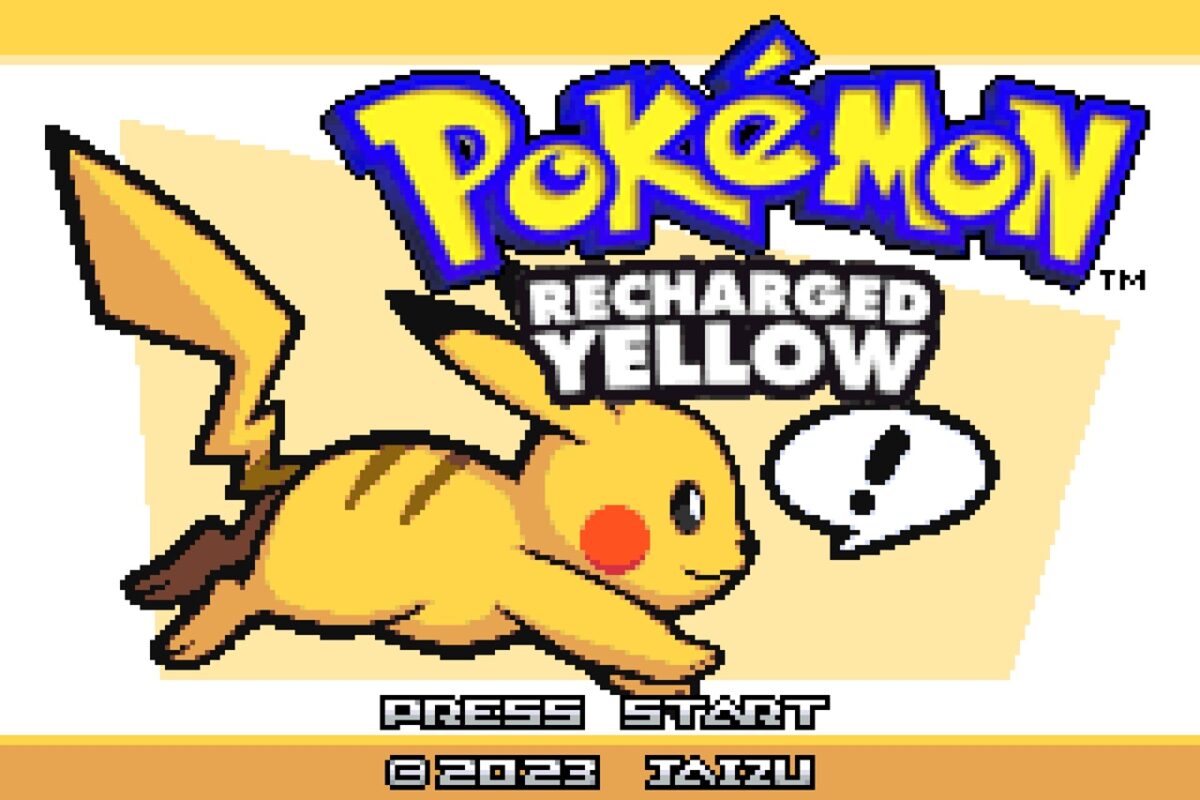
A passionate fan has taken the initiative to reminisce about the classic Pokémon Yellow, launched in 1996 for the Game Boy, by creating a remake titled Recharged Yellow. This renewed version is the result of the work of JaizuFangaming and is available for free download through the Ko-fi platform, although it is suggested that interested parties make a donation to the creator to compensate for their effort and dedication.
A remake that has legal issues
The remake offers various improvements and new features that revitalize the original experience. Players will need to have a clean ROM of the base game, as, for legal reasons, JaizuFangaming cannot provide the original files. However, the installation process comes with clear instructions that facilitate its implementation. Among the innovations of Recharged Yellow are a follower system, the inclusion of Jessie and James, as well as a hard mode and a Nuzlocke, in addition to a level cap to increase the challenge.
The reconstruction of the Kanto world has been done using the Pokémon Emerald engine, which has allowed the addition of elements such as real-time cycles, berries, and contest centers. The Sevii Islands have also been revitalized, thus expanding the game’s content for veteran players. Pokémon icons now feature more details, reflecting whether the captured creatures are shiny, which enhances the overall visual experience.
Additionally, although not directly related to the remake of Pokémon Yellow, fans can look forward to the release of Pokémon Legends Z-A scheduled for next year. This news adds a touch of excitement to the Pokémon universe, while players enjoy the nostalgia that Recharged Yellow offers. Undoubtedly, this remake promises to be an endless source of hours of entertainment for fans of the saga.
Three iconic Game Boy games are coming to Nintendo Switch Online, and exclusively in Japan, a classic from the console that shaped one of the best Zelda games.
Nintendo seems to have decided to step up its Game Boy catalog. Being one of the least cared for consoles within the Nintendo Switch Online subscription service, today they have announced that they are going to release three classics from the platform. Moreover, they are already available for all interested parties. What are these games?
Alleyway was one of the games in the initial Game Boy catalog, which was also very successful. It is a game in the style of Breakout or Arkanoid, where we have to destroy blocks with a ball, and we control a bar to bounce that same ball. The peculiarity of Alleyway is that Mario is the protagonist of the game, although he never appears characterized that way in-game. But hey, it was ’89: the covers were the graphics of the time.
Another one of the games to arrive, also from the initial catalog, is the legendary Baseball. A fun recreation of this sport, much more popular in the US and Japan, which will probably be the one that goes unnoticed the most among the new additions.
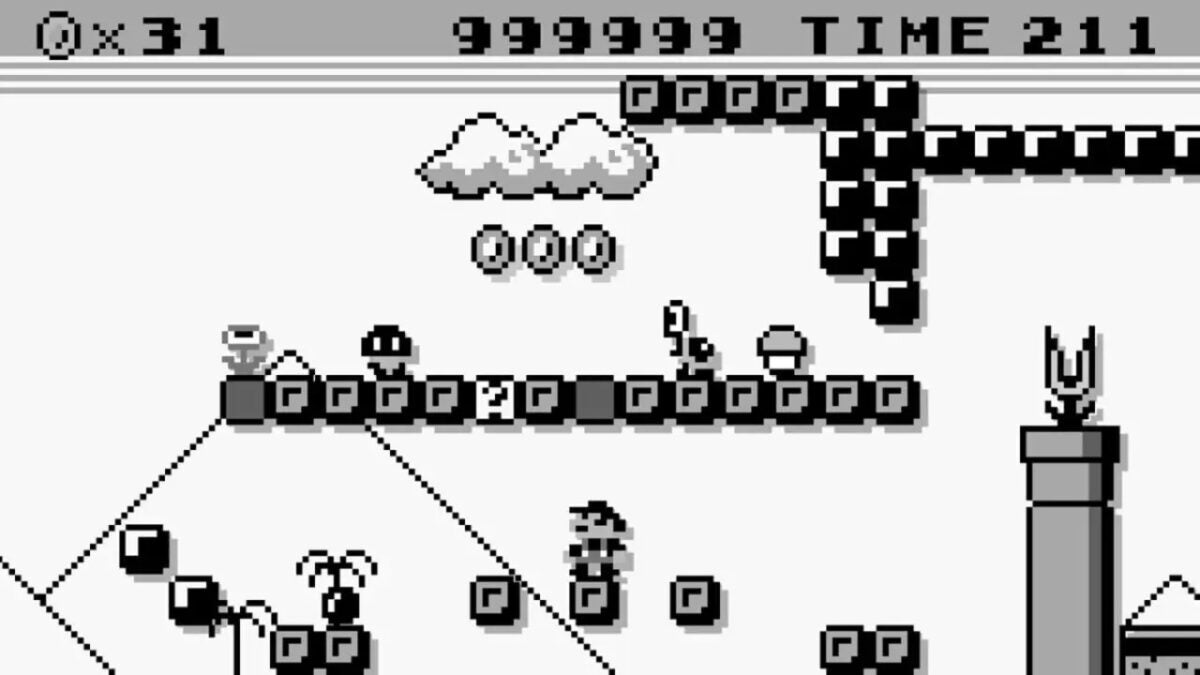
The jewel in the crown of the new titles is, without a doubt, Super Mario Land. Published in 1989 and not only being one of the titles in the console’s initial catalog, but also its main selling point, it is an excellent 2D platformer that adapts Mario’s classic gameplay to the small screen of the Game Boy. All this while introducing new enemies, powers, and some small twists in level design that are still very original today.
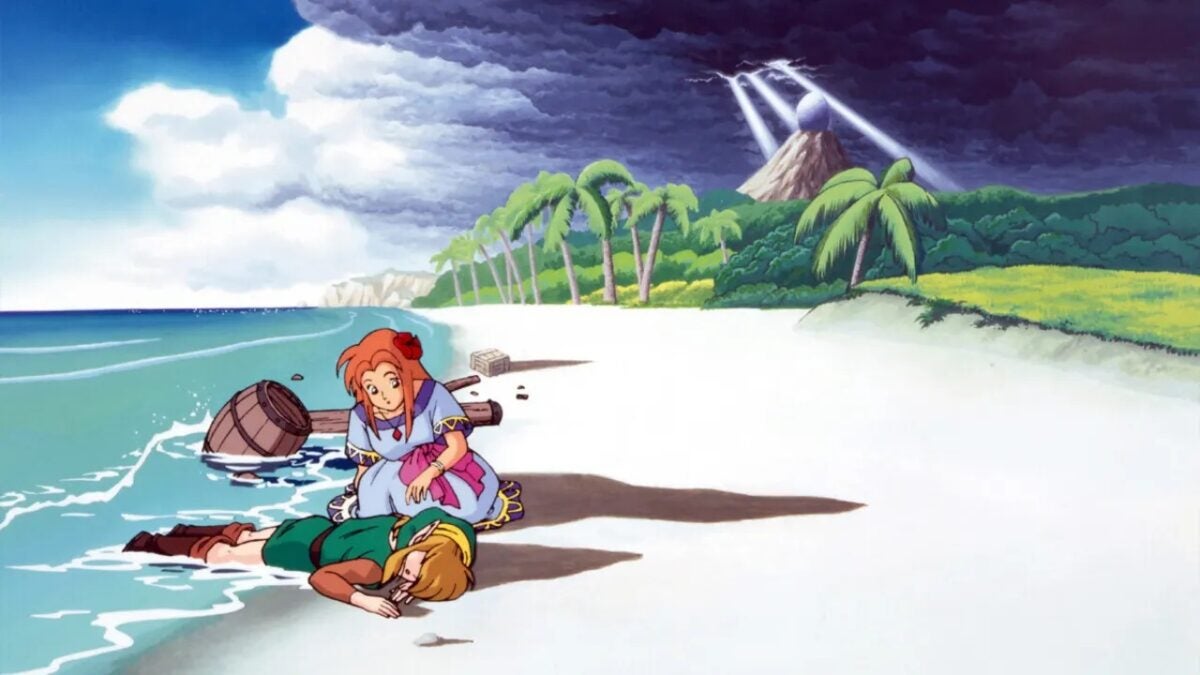
In addition, in Japan they will also receive a fourth game, which never came out outside of Japan: Kaeru no Tame ni Kane wa Naru. Translated as “For the frog the bells toll”, this game inspired by “For Whom the Bell Tolls” by Ernest Hemingway, is heavily inspired by the second and third The Legend of Zelda, and in fact, it would serve as the basis for what would later become The Legend of Zelda: Link’s Awakening.
Although we can only enjoy the first three, it is an excellent selection that shows that Nintendo is paying more attention and care to the Game Boy. Even if we have had to wait for the Switch 2 to be on the horizon.
One of the most beloved Zelda games in history receives an incredible PC port, surpassing all its technical limitations for maximum enjoyment.
Nintendo has a magical touch that makes their games not seem to age. Even when their age is evident due to the technical limitations they are subjected to, they have such good artistic design, careful mechanics, and clear intention that it is impossible not to recognize their logic. They are simply that good. They are made not as toys, thinking about the profit that can be extracted from them, but as something more. Like true works of art.
This is something that we can appreciate a little more today than yesterday thanks to the efforts of an anonymous developer. Because The Legend of Zelda: Link’s Awakening DX, the 1995 version released for Game Boy Color of The Legend of Zelda: Link’s Awakening, a Game Boy game released in 1993, has received a PC port that blows all its technical limitations out of the water.
Renamed Link’s Awakening DX HD, this port updates the game to allow widescreen and high refresh rate displays, as well as merging all individual maps to create an open world where we move with a very smooth and subtle scroll. That allows for another of the most surprising features of this port: the ability to zoom in or out of the camera view. That way, we can play at a 1:1 pixel perfect scale at 120fps, if we are able to see what is happening at that size. Or we have a screen large enough for that to be an option.
In any case, this is not the only port that The Legend of Zelda: Link’s Awakening has known. In addition to being a version of the original version itself, in 2019 Nintendo released an excellent remake of the game, with a diorama-like appearance. A version that, although it lost some of the mystery of the original, still retained all its magic.
This is something that will probably also happen with this Link’s Awakening DX HD. To check it out for yourself, you just have to download it on its itch.io page. However, it’s better if you do it quickly. Historically, Nintendo has not been a particularly understanding company with people who have made ports or remakes of their games.
Pokémon has always had a very important audiovisual side in its series and now we get a live-action series based on the nostalgia of playing Pokémon
Part of Pokémon’s success lies in its anime. It’s no secret that even before the games hit the shelves or the majority of people’s Game Boys, the franchise was already a tremendous cultural phenomenon. Everyone was talking about it, and to some extent, the anime was to blame for this. That’s why it’s impossible to separate its success from its audiovisual production. And that’s why it’s so difficult not to talk about the new Pokémon series. Which is not animated but live-action.
This new Pokémon series is called “Pocket ni Bouken o Tsumekonde,” which can be translated somewhat loosely as “Stuffing an Adventure in Your Pocket.” Renamed “PokeTsume” by the Pokémon fandom, the series will follow a girl named Madoka Akagi, who starts working at an advertising agency called ADventure. Amidst the tension and stress of a new job and a new life on the horizon, she will find comfort in rediscovering her passion for Pokémon when her mother sends her a Game Boy Pocket with a Pokémon Red cartridge she hadn’t seen in 20 years.
The series trailer already hints that the tone of the show will be warm and fun above all else. Akagi will overcome her daily problems by relying on Pokémon and what she extrapolates from her experiences, including how her coworkers resemble some of these adorable creatures. For example, a boss as forgetful as a Slowbro, a coworker as useless as a Magikarp, or a colleague as beautiful and determined as a Ninetales.
The series is set to premiere on October 19th in Japan. There’s no release date yet for Western audiences, but this is the kind of production worth keeping an eye on so we don’t miss it when it finally arrives in our regions.
Here’s how the handheld console changed video games forever.
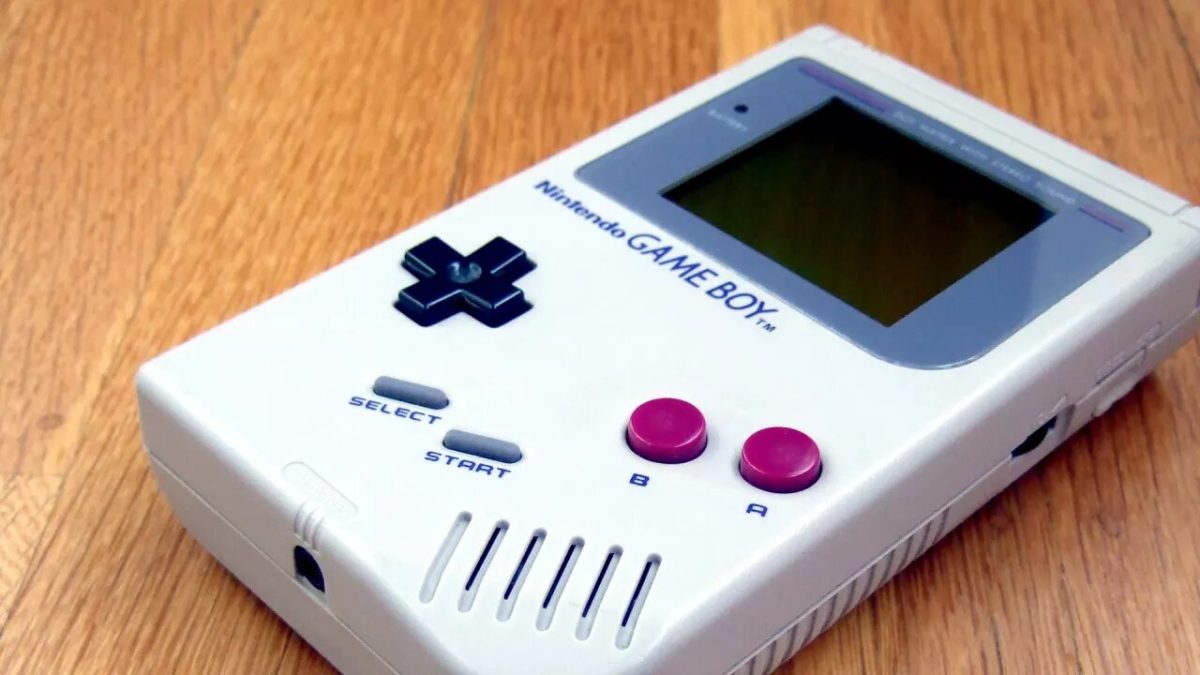
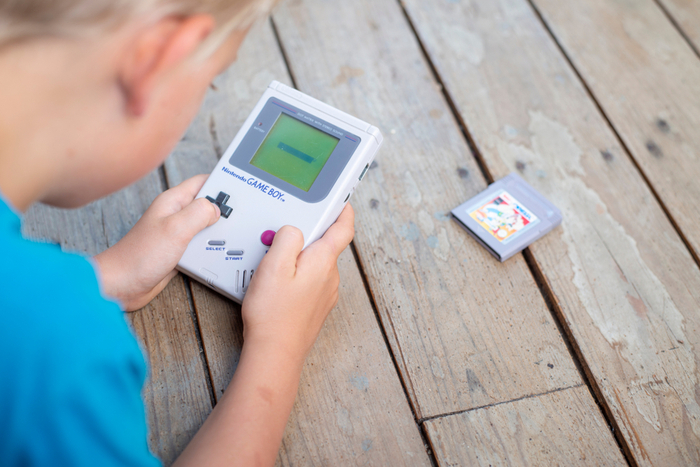
Considered to be one of the most iconic consoles ever, the Nintendo Game Boy turns 30 this year. Though it was hardly a technological powerhouse even back in the day, the lovable gray brick would go on to become one of the most popular consoles of all time. To celebrate, we’re going to take a look back at what made the Game Boy so special.
How the Game Boy was designed
The Game Boy was primarily designed by Gunpei Yokoi, the same man behind popular toys like the Ultra Hand and the Love Tester. Yokoi additionally helped create Nintendo’s original portable gaming system, the Game & Watch series, after watching a bored businessman fiddle with a calculator on a train.
The success of these toys and the Game & Watch series led to a lot of goodwill from Nintendo toward Yokoi, who had a lot of freedom in designing the Game Boy. He designed the system around the idea of “lateral thinking with withered technology”, which basically means taking slightly outdated technology and repurposing it into something new and innovative. The reasoning behind this was that the Game Boy would be built using technology that is already easily understood, affordable, and energy efficient.
The design of the Game Boy proved to be extremely popular due to its low price, long battery life, and durability. Competing portable systems like the Sega Game Gear boasted more power and color displays, but their high price point and monstrous battery consumption proved no match for the Game Boy. What really helped the Game Boy stand apart, however, was its amazing lineup of games.
The most iconic games ever, on the go!
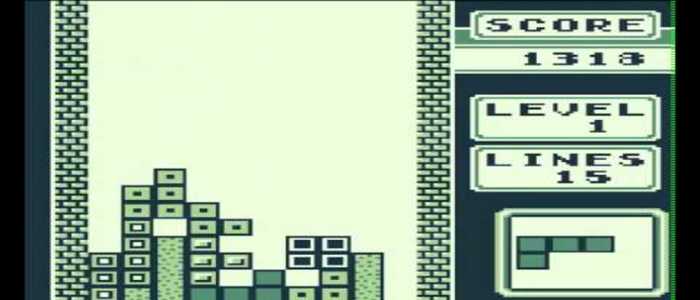
The huge library of quality Game Boy games led to an explosion in sales. Of the launch titles, Super Mario Land amazed gamers by providing a console quality Mario game on the go. However, the launch title that really catapulted the Game Boy into a pop culture icon was Tetris. The Game Boy version of the timeless puzzle game was many people’s first introduction to the series, and the game would go on to become the best selling video game of all time. Tetris was bundled with the Game Boy and became the system’s first true killer app. An even bigger killer app, however, was just over the horizon.
You might’ve heard of this one before
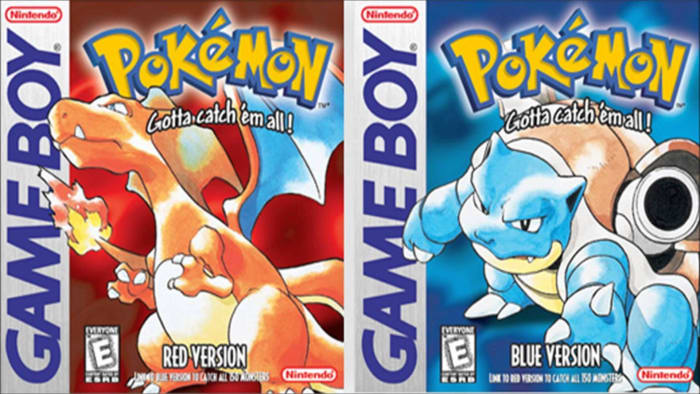
The arrival of Pokémon Red and Blue in the late ’90s laid down the groundwork for what would become a multibillion-dollar franchise. The game’s collection of 151 lovable creatures attracted gamers from all across the world. The addictive gameplay loop of battling and catching Pokémon led to the birth of the creature RPG genre, which is a style of game that Pokémon dominates to this day. Kids on the playground spent all day trading secrets of where to catch powerful secret Pokémon. More importantly, they used the Game Boy’s Link Cable to connect their systems, allowing them to trade and battle Pokémon. Pokémon’s unique social gameplay systems encouraged players to meet up with people in real life to get the most out of the game, making the game a treasured part of many people’s childhoods. Pokémon is currently the biggest media franchise in the world, surpassing Star Wars, Harry Potter, and Marvel.
With games like Tetris, Super Mario Land, Pokémon, and Link’s Awakening, it’s no wonder the Game Boy sold as it did. Instead of featuring neutered console ports like its competitors, the Game Boy instead focused on unique experiences that took advantage of the console’s unique portable design.
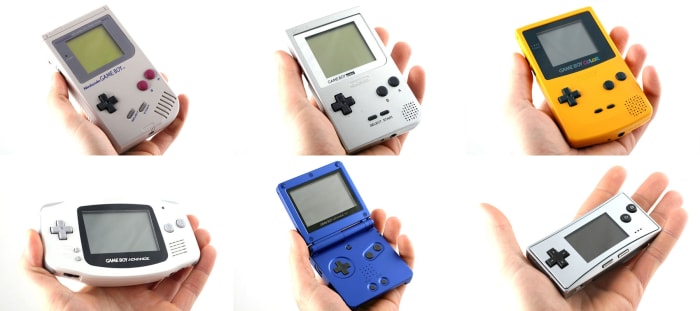
The runaway success of the Game Boy inevitably led to numerous upgrades and revisions. The Game Boy Pocket, also designed by Gunpei Yokoi, was the first of these upgrades and featured a smaller, lighter design, in addition to a true black and white screen as opposed to the original Game Boy’s green monochrome screen. It used two AAA batteries as opposed to the original Game Boy’s four and featured an LED light that would turn red when the batteries were running low. A few years later, the Japan-exclusive Game Boy Light solved the Game Boy’s most frustrating hardware problem: its unlit screen.
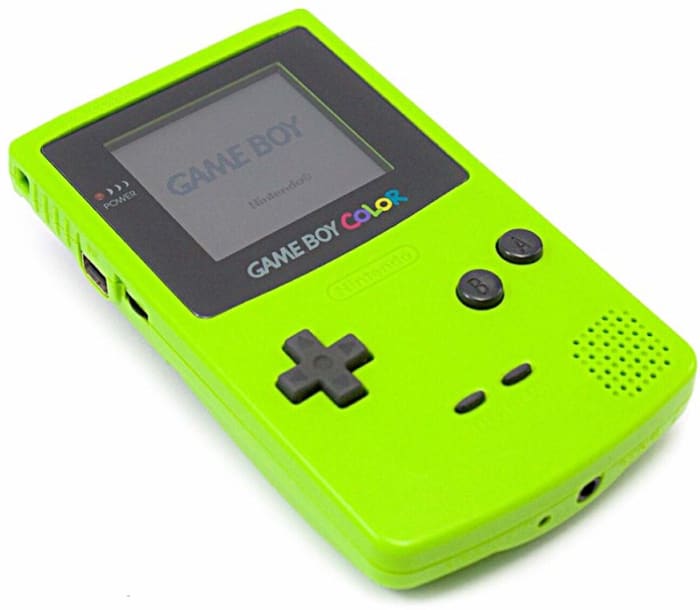
Next up, the Game Boy gained its first true successor in the Game Boy Color. The Game Boy Color had its own library of games that took advantage of the consoles color palette and more advanced processor, though it was still backward compatible with original Game Boy games. It was functionally a portable NES and served as the final 8-bit portable console to ever be released.
The release of the Game Boy Advance saw a major upgrade to the Game Boy family. Featuring a wide design, a higher resolution screen, and a 32-bit processor, the Game Boy Advance dazzled audiences with SNES quality portable games. The Game Boy Advance was still backward compatible, allowing it to play Game Boy and Game Boy Color games.
Watch: Fastest Super Mario Bros. speedrun in history
The Game Boy Advance received its own revision in the Game Boy Advance SP. It had a unique clamshell design, a rechargeable battery, and a backlit screen. A spinoff of the Game Boy Advance, the Game Boy Micro, was made for trendy urban audiences. By far the smallest Game Boy yet, the Micro was about the size of an NES controller and featured a backlit screen.
When the Nintendo DS was being developed, Nintendo avoided calling it a new Game Boy upgrade. They did this because the DS was such a new and innovative piece of hardware, that if it didn’t catch on, they could continue the Game Boy line. Of course, we know now that the Nintendo DS became a smashing success, outselling even the Game Boy. But Nintendo wouldn’t be where they are now in the portable gaming space without the Game Boy paving the way. The Nintendo DS, 3DS, the Nintendo Switch, and all future Nintendo handhelds owe their existence to that iconic grey brick.
What are your favorite Game Boy memories? Let us know!
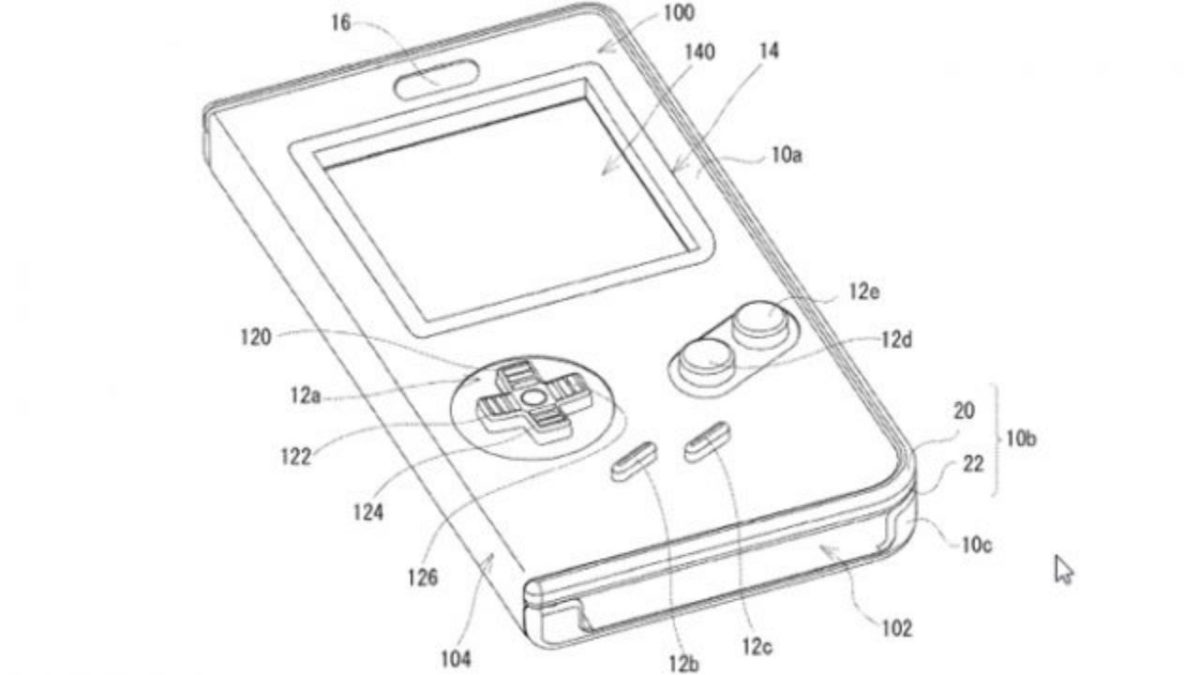
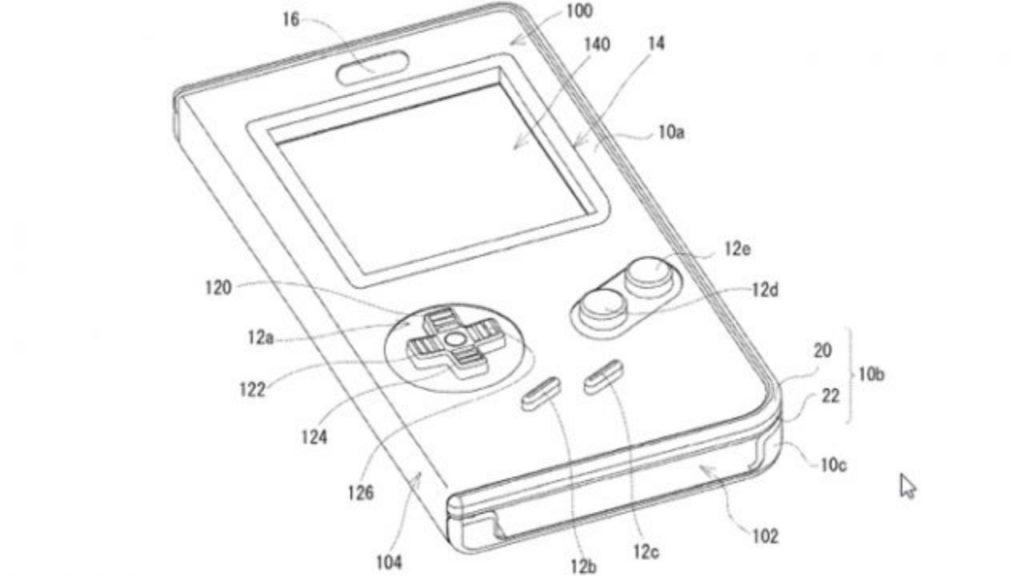
The runaway success of the NES and SNES Classic consoles led many to believe that a Game Boy Classic was inevitable. A recent patent published by the United States Patent and Trademark Office has revealed some details on what Nintendo has in mind for the Game Boy.
The patent describes a phone case that envelopes a smartphone with the Game Boy’s iconic button layout, complete with a d-pad and A and B buttons. Assumedly, users would press buttons on the case, which would press down and make contact with the touchscreen, simulating a button press. This would allow Nintendo to port its Game Boy games to mobile without dampening the experience with slippery, inaccurate touchscreen controls. It’s also odd to consider that Nintendo doesn’t include the words “Game Boy” or “game” in the patent.
Ye Olde Game Boy
How to get Game Boy games on your iPhone in less than 10 minutes
There have been similar phone cases released in the past that resemble a Game Boy, such as the Smart Boy. The Smart Boy, however, uses real Game Boy cartridges, and assumedly the Nintendo Game Boy phone case would use officially distributed ROMs instead. The success of these third-party Game Boy cases has shown that a market for this product exists.
Nintendo has not currently announced any plans for a Game Boy Classic, or any kind of Game Boy phone case. It would be extremely surprising if Nintendo actually released Game Boy games on mobile devices. While Nintendo has successfully dabbled in mobile gaming with titles like Super Mario Run, Fire Emblem Heroes, and Animal Crossing Pocket Camp, none of these games have been full-fledged entries in their respective series. Instead, they offer smaller or alternative experiences that are intended to encourage fans to buy the full games on Nintendo consoles. Nintendo does not want to cannibalize the sales of its own games by releasing the full experience on mobile devices. Why would anyone buy a Switch if they could play full-fledged Mario or Zelda games on their phones?
Watch: Fastest Super Mario Bros. speedrun in history
It should also be noted that Nintendo made headlines in recent months by going after ROM and emulation sites that hosted their games. Could this be because they are intending to release these classic Game Boy games on mobile? Stay tuned…