
In the world of information, Google is king. On the Internet, Google is king. Overall, in today’s society, Google is king. And as king, its idea is to transform something as human as… asking questions.

Google knows it has changed the world of Internet search over more than two decades. It’s been 25 years since we left behind the days of “10 blue links,” when you searched Google by typing in a box and getting links in return.
Even now you can search Chrome by asking questions out loud or pulling up a photo of your surroundings, and you can get everything from images to podcasts to TikToks.
Many searches are already well served by these results. If you go into Google and search for “Facebook” and come up with facebook.com or want to know the height of the Empire State Building, you’re all set.
An intelligent search engine to talk to
But there are a number of queries that Google has never quite worked for, and that’s where the company hopes AI can come into play.
Questions like “Where should I go in Paris next week?” or “What’s the best restaurant in Barcelona?”. These are difficult questions to answer because they’re not really one question, they’re many.
What is your budget? What days are all the museums in Paris open? How long are you willing to wait? Are there children coming? And so on and so forth.
“The bottleneck turns out to be what I call ‘orchestration of the structure,'” says Prabhakar Raghavan, a Google senior vice president who oversees Search.
A lot of that data exists somewhere on the Internet or even within Google-museums post hours on Google Maps, people leave reviews about wait times at restaurants-but putting it all together into something resembling a coherent answer is really hard.
“People want to say ‘plan me a seven-day vacation'”, says Raghavan, “ and they believe that if the linguistic model gets results, it must be right.”
One way to think of this is, simply, as questions with no correct answer. A large percentage of people who go to Google are not looking for information that exists somewhere.
They are looking for ideas, they want to explore. And since there probably isn’t a page on the Internet entitled: “The best vacation in Paris for a family with two children, one of whom is lactose-allergic and the other loves tennis,” podcasts and TikToks aren’t going to be much help either.
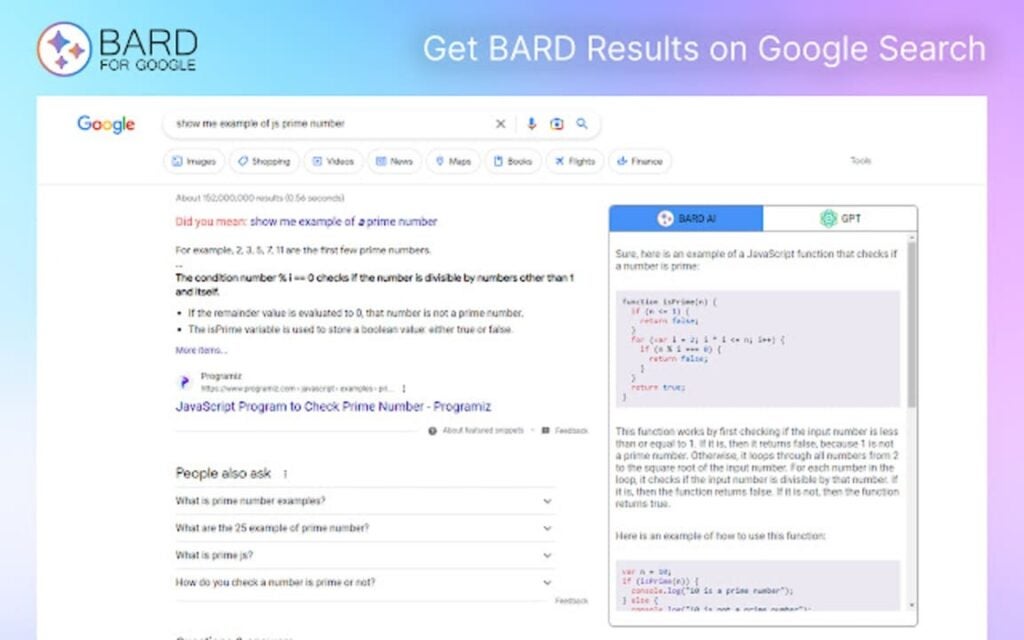
Artificial intelligence will be responsible for better response
Large linguistic models, being trained on a huge corpus of data from across the Internet, can help answer those questions by performing many different searches at once and combining that information into a few sentences and a few links.
“A lot of times you have to break a single question into 15” to get useful information from the search, Reid says. “Is it possible to do just one – how do we change the organization of the information?”
That’s the idea, but Raghavan and Reid are quick to point out that SGE can’t do these completely creative acts very well yet. At the moment, it’s going to be much more useful for synthesizing all the search data behind questions like “which speaker do I buy to take to the pool”.
It will also do well with “what were the best movies of 2022,” because it has some Rotten Tomatoes-style objective data to pull from along with the Internet’s many ratings and blog posts on the subject.
AI seems to make Google a better information-seeking machine, even if it’s not ready to become your travel agent. Google I/O has delivered.
Some of the links added in the article are part of affiliate campaigns and may represent benefits for Softonic.
