
Discover the next wave of contextual AI, tools that can act on your behalf, streamline your workflow, and help you produce polished writing without losing your originality or your voice.
The way we interact with technology is changing faster than ever. Over the past two years, most people have settled into using generative AI as a back-and-forth tool. You ask something in a chat window, get a reply, paste it somewhere else, then edit whatever came back.
That steady “prompt and response” routine is starting to wear out, though. In its place, something more mature is forming, and more automatic too, the era of AI writing agents.
These tools aren’t passive text boxes that wait around for isolated instructions. The newest ones can tell who you are, where you’re working, and what you’re trying to do. And right at the center of that shift, frankly, is one of the most widely used writing platforms around. Grammarly AI Agents are here to reshape how professional, academic, and creative writing gets done, acting like strategic collaborators wherever you work.
If your day regularly includes writing important emails, putting together complex business reports, or tightening up academic essays, it’s worth knowing what this technology can actually do. Better communication is part of the story. Getting back hours you’d otherwise lose to repetitive work matters too. There’s also a timely bonus here. From June 22 through July 3, you can get an exclusive 40% discount on Grammarly Pro annual plans. Deals like this hardly come around, so yes, it’s a very good moment to upgrade your writing setup.
What is an AI agent? The key difference between an assistant and a chatbot
A lot of people still ask the same basic question, and honestly, fair enough. What exactly is an AI agent, and how is it different from the familiar chatbot or classic AI writing assistant most users already know?
A useful place to start is proactive autonomy and context awareness. A traditional chatbot reacts to whatever you type. It starts off as a blank slate, with no real sense of you or your environment unless you spell everything out in a detailed prompt. Close the tab, switch topics for a while, come back later, and that context is usually gone. You have to guide it through every step of the process: ask for an outline, then a paragraph, then a tone change, and in the end you still have to correct factual mistakes yourself.
An AI agent, by contrast, is built to understand a broader goal, analyze the context you’re working in, and take proactive action to help you reach that goal. It isn’t waiting for you to micromanage every move. Instead, it looks at the variables around the task, maybe the type of document, maybe the email recipient, maybe the conversation history, and then it carries out specific work with a much stronger degree of judgment. That’s the difference people feel right away.
Meet Grammarly AI Agents: A lineup built for different needs
This isn’t just a nice idea on paper. Grammarly has a real edge here, with more than 16 years of specialized data on human communication, a platform used every day by more than 40 million people, and the trust of over 50,000 organizations worldwide. That’s a staggering amount of writing, really. That massive knowledge base has helped Grammarly fine-tune its AI agents to be highly specific and exceptionally fast.
Rather than handing you one generic agent that tries to do everything, the platform offers a range of specialized agents built for specific writing tasks and aims them at the parts of content creation that waste the most time. They work inside tools people already use, whether that’s Gmail, Google Docs, Slack, Microsoft Word, or project management platforms.
1. The Reader Reactions review agent
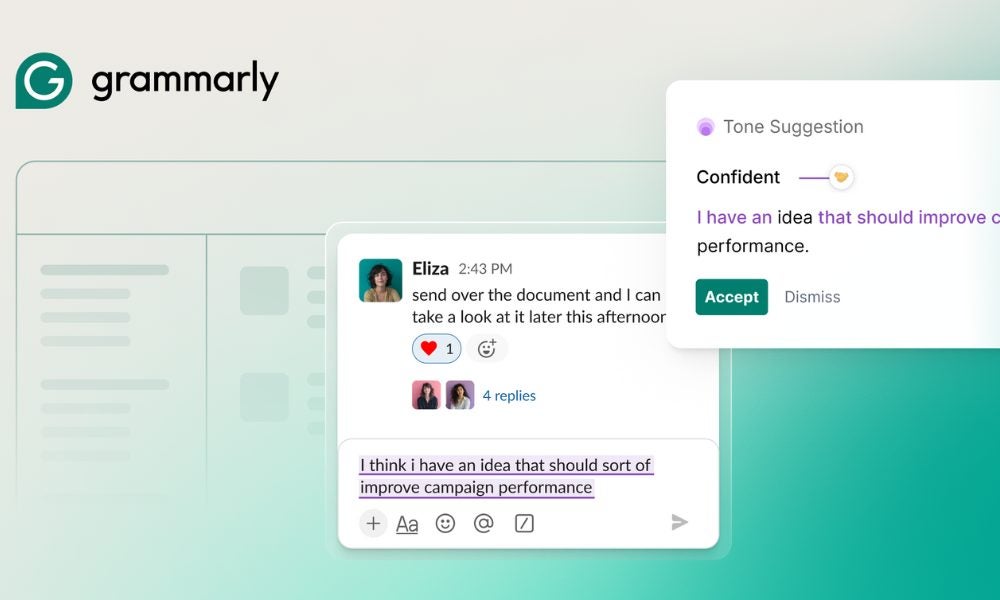
Ever send an important email, hit send, and immediately wonder if the tone landed wrong? It happens. This agent predicts how the actual recipient is likely to react to your wording. It can flag a message that reads as unintentionally harsh, overly corporate, uncertain, or just unclear, then offer quick revisions so your intended message lines up more closely with how it’ll actually be read.
2. The advanced citation finder and verifier (Citation Finder)
This one is especially useful for researchers and technical writers, and college students get plenty out of it too. The agent scans your document on its own for factual claims or numerical data that need supporting sources. It doesn’t stop at pointing out the gap, either. It also helps locate the right source and generates the citation in standard formats, whether APA, the MLA style many students know, or Chicago, which can save hours of tedious formatting work.
3. The contextual paraphrasing and restructuring agent
This goes well beyond swapping words with dictionary-style synonyms, which was the familiar weakness in older writing tools. This agent rewrites entire blocks of text, based on the goal you set. It can turn passive constructions into active ones. It can tighten repetitive paragraphs, and when an idea is still rough, expand it into a fuller explanation.
4. The originality and AI detection agent
In a world where transparency matters more than ever, this agent works quietly in the background to help your writing meet modern originality standards. It compares your content against extensive web-based databases to prevent accidental plagiarism and shows what percentage of your text might be flagged as AI-generated by third-party tools.
Here’s what really separates this ecosystem. Other AI tools often flatten a writer’s style until everything starts sounding oddly alike. Grammarly’s agentic AI is specifically designed to preserve your personal voice.
The software learns your usual phrasing and style preferences, so the suggestions still sound like you. It removes only what actually needs fixing, from grammar issues to awkward wording, and it also smooths out cohesion problems when the flow starts to slip.
Real-world use cases: How they improve your day-to-day productivity
To see what Grammarly AI Agents actually change, it helps to leave the theory alone for a minute and look at how they show up in three everyday situations across work and academic life.
Scenario 1: The corporate setting (writing client proposals by email)
Imagine you’re a project manager who needs to send a service renewal proposal to a key client through Microsoft Outlook or Gmail. You’ve got a rough draft full of scattered notes on costs, timelines, plus the technical requirements no one wants to untangle. A standard assistant might catch punctuation problems and typos.
Grammarly‘s AI agent does much more than that: it recognizes that you’re writing to a long-term client with whom you have a professional but friendly relationship. It analyzes the pricing you mention and restructures the budget into a cleaner, more visually effective format. It also suggests an opening paragraph that highlights the value delivered over the past year, then lets you know your closing sounds too forceful and offers a more collaborative alternative. Handy, especially when you’re rushing.
Scenario 2: The analytical role (building long business reports)
Now picture yourself writing a 20-page quarterly performance report in Google Docs for your company’s board. After hours of data analysis, fatigue starts creeping in. Your terminology gets inconsistent. Some transitions between financial sections become harder to follow than they should be.
As you write, Grammarly’s agent works like a real-time managing editor: it identifies the document as a high-level corporate report, standardizes technical terminology throughout, creates smoother logical connections between sections, and alerts you if you’ve failed to justify a particularly striking loss metric.
Scenario 3: The academic setting (a university research essay)
A final-year student is working on a complex research essay about the macroeconomic impact of renewable energy. In academic writing, the usual risk runs in two directions. You can sound too informal, or you can slip up in citations and references. Grammarly‘s citation agent reviews the document continuously.
When it spots a strong claim about gigawatt production in the European Union, the agent suggests adding a reference, helps trace the official source document, and instantly formats the citation in APA style. At the same time, the originality agent helps make sure outside ideas are properly paraphrased, which gives the student more confidence before final submission.
Grammarly Free vs. Grammarly Pro: Which version should you choose?
Grammarly offers an accessible model for a wide range of users, with two clear plan options. Grammarly Free includes access to the essential writing agents for basic grammar, spelling, punctuation, and simple tone suggestions. It’s a strong option for occasional users who want a reliable safety net for everyday writing.
If you’re a professional, content creator, student, or team leader who depends on high-impact written communication to hit your goals, Grammarly Pro unlocks the full power of agentic AI without the usual limitations. By subscribing to the Pro plan, you get a set of strategic advantages.
- Unlimited access to specialized agents: unrestricted use of reader reaction analysis, advanced citation tools, and full-document rewriting features.
- Deep brand voice customization: the ability to create detailed language profiles, whether formal, technical, or creative, for yourself or for an entire department.
- Advanced clarity suggestions: better detection of wordiness, overloaded sentences, and weak argument structure that the free plan may miss.
- High-precision built-in plagiarism detection: access to indexed academic and commercial databases to help verify the originality of your writing.
The limited-time offer you shouldn’t miss: Invest in your professional future with 40% off
Improving your communication skills is one of the highest-return investments you can make in your career. That’s exactly why this limited-time promotion is worth a serious look. Get 40% off the Grammarly Pro annual plan. This special offer is only available from June 22 through July 3.
This kind of discount almost never shows up for the platform. It’s meant to make the move into agentic AI easier for professionals and students alike, at a much more affordable price.
Conclusion: The future of writing is already here
Artificial intelligence isn’t just a flashy tech novelty anymore. It has become the invisible engine behind stronger expression. Writing well is no longer just about avoiding spelling mistakes; it also means being precise, connecting with your audience, structuring stronger arguments, and using your time wisely.
Grammarly AI Agents remove the mechanical, repetitive side of writing from your plate. That leaves more of your attention for ideas, for strategy, and for creativity too. They work where you work. Just as important, they sound like you sound, and they help elevate your results in ways that can make a real difference professionally or academically.
Don’t let weak communication slow your progress at work or in school, and don’t lose hours to the wrong tone or formatting either. The promotional window is short, so don’t sit on it. click here between now and July 3, save 40% on your annual subscription, and equip yourself today with one of the most advanced writing tools available.
