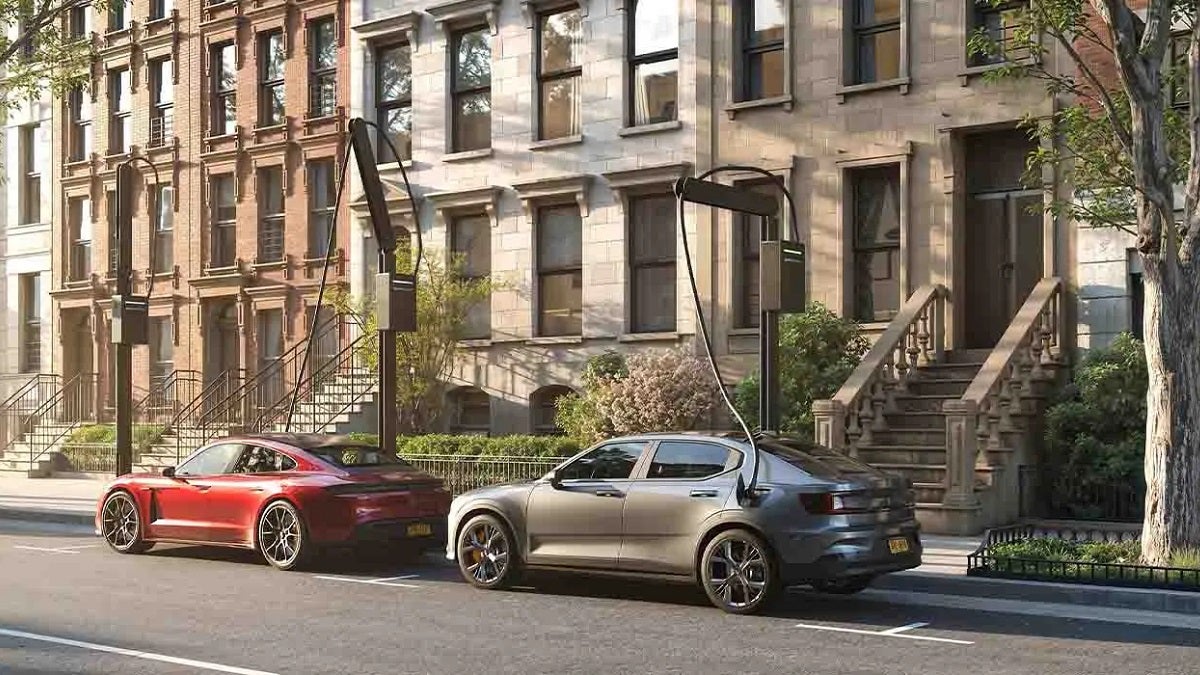
Gravity Inc., the fast-charging EV startup based in New York, is setting its sights on California as it announces an ambitious expansion to Los Angeles.
The company plans to open at least eight fast-charging stations across the metropolitan area, featuring cutting-edge 500 kW Distributed Energy Access Points (DEAPs) capable of delivering a full charge in just five minutes.
This charging speed is double that of Tesla’s Superchargers, which max out at 350 kW.
Los Angeles To Get Eight Futuristic Fast-Charging Stations By Gravity Inc.
The initiative indicates Gravity’s commitment to not only revolutionize the EV charging landscape in Los Angeles but also to challenge Tesla’s dominance in the fast-charging market.
CEO Moshe Cohen heralded this move as a game-changer for local drivers and fleet operators, citing enhanced reliability and speed, as well as the integration of advanced autonomous vehicle technology and vehicle-to-grid (V2G) capabilities.
Each of the upcoming stations is designed with a futuristic touch, including an innovative “tree” charger design for curbside installations, and plans for hands-free charging technology.
While the promised 500 kW charging speeds are not currently supported by most existing EV models, many vehicles on 800V platforms will benefit from the increased rates, resulting in quicker charges and less time spent at the stations.
Gravity is collaborating with an undisclosed national corporate partner to facilitate the rollout, with additional plans for hundreds of additional sites throughout the United States. The first stations in Los Angeles are expected to be operational by 2025, positioning Gravity as a formidable player in the fast-growing EV infrastructure market.
This ambitious strategy showcases Gravity’s desire to create a sustainable framework for electric vehicle use, capitalizing on growing demand for clean transportation while looking to solidify its status as the largest fast-charging network in the country. Industry insiders speculate that if Gravity continues on its current trajectory, it could potentially reshape the landscape of EV charging nationwide.