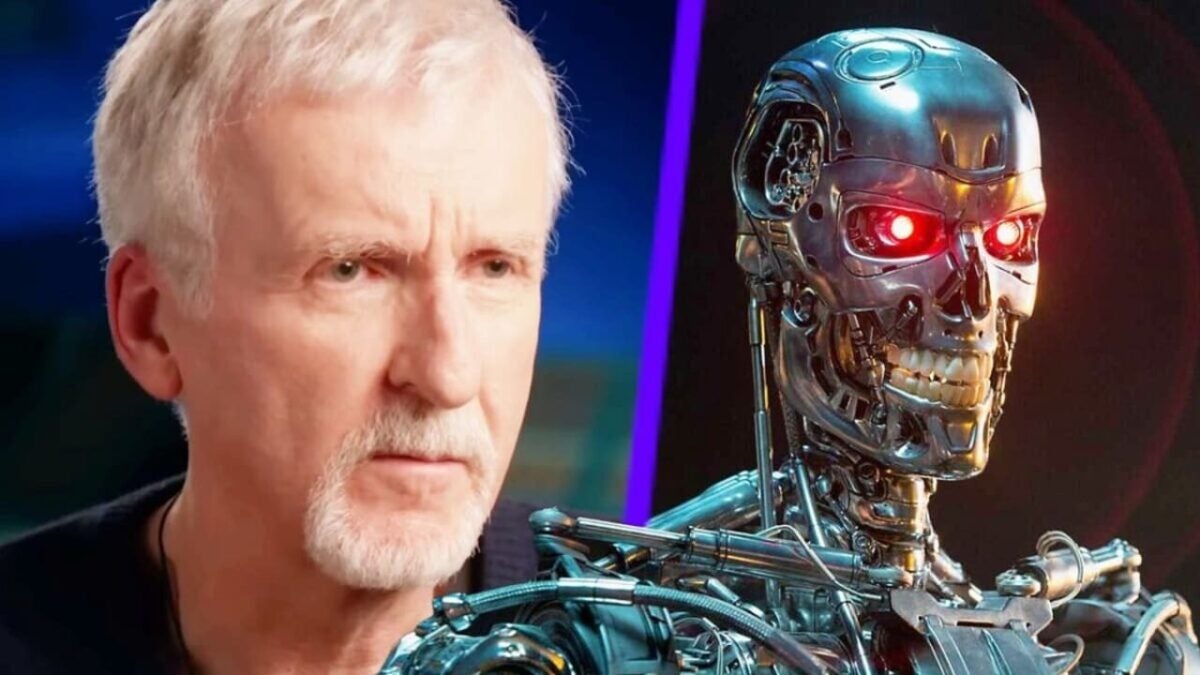
The well-known Canadian filmmaker James Cameron agrees with experts in the field of artificial intelligence that the advances of this technology pose a serious risk to humanity.

Cameron, whom we all know for movies like Titanic and Avatar, among others, has been giving interviews in Ottawa to inaugurate a Canadian Geographic exhibition about his achievements in exploring the depths of the sea (we must remember that he went to the deepest part of the Earth a few years ago).
He also directed and co-wrote the action and science fiction film Terminator in 1984, about a killer cyborg, and was asked by CTV News about his opinion regarding the recent predictions about the future of artificial intelligence.
Will AI wipe out humanity?
Many of the so-called godfathers of AI have recently warned of the need to regulate this rapidly advancing technology before it poses a greater threat to humanity.
“I absolutely share their concern,” Cameron said in the interview. “I warned you about it in 1984, and you didn’t listen,” he added with an air of arrogance befitting someone who has seen the future and it has come true.
Cameron said it is important to assess who is developing the technology, and whether they are doing it for profit or for defense. Or to do our homework.
“I think AI arms race is the biggest danger,” he stated. “I think we’re going to enter the equivalent of a nuclear arms race with AI, and if we don’t build it, others certainly will, and then things will escalate.”
“You could imagine an AI in a theater of combat, the whole thing being fought by computers at a speed where humans can’t intervene anymore, and you have no ability to de-escalate.”
The film world is also afraid of AI
The use of AI and its need for regulation has also been a point of controversy in the current strikes by writers and actors in the United States.
Around 160,000 actors and other media professionals affiliated with the SAG-AFTRA union are on strike, joining the more than 11,000 members of the Writers Guild of America who have been on strike since early May.
The unions argue that artists need protection against the use of their images and artwork by AI technology without their consent, and writers assert that studios should not be allowed to replace them with AI for scriptwriting.
Cameron said on Tuesday that he doesn’t believe technology is or will be soon at the level of replacing writers, especially because “it’s never a question of who wrote it, it’s a question of, is it a good story?”
“Personally, I don’t think an incorporeal mind that just regurgitates what other corporeal minds have said – about life they’ve had, about love, about lies, about fear, about mortality – and put it all together in a word salad and then regurgitates it… I don’t think that’s going to move an audience,” he stated.
Cameron said that although he “certainly wouldn’t be interested” in having AI write his scripts, time will tell the impact they will have on the industry.
When asked if he is open to the possibility of accepting a script produced by AI, he said: “Let’s wait 20 years, and if an AI wins an Oscar for Best Screenplay, I think that’s when we’ll have to take it seriously.”
Some of the links added in the article are part of affiliate campaigns and may represent benefits for Softonic.
