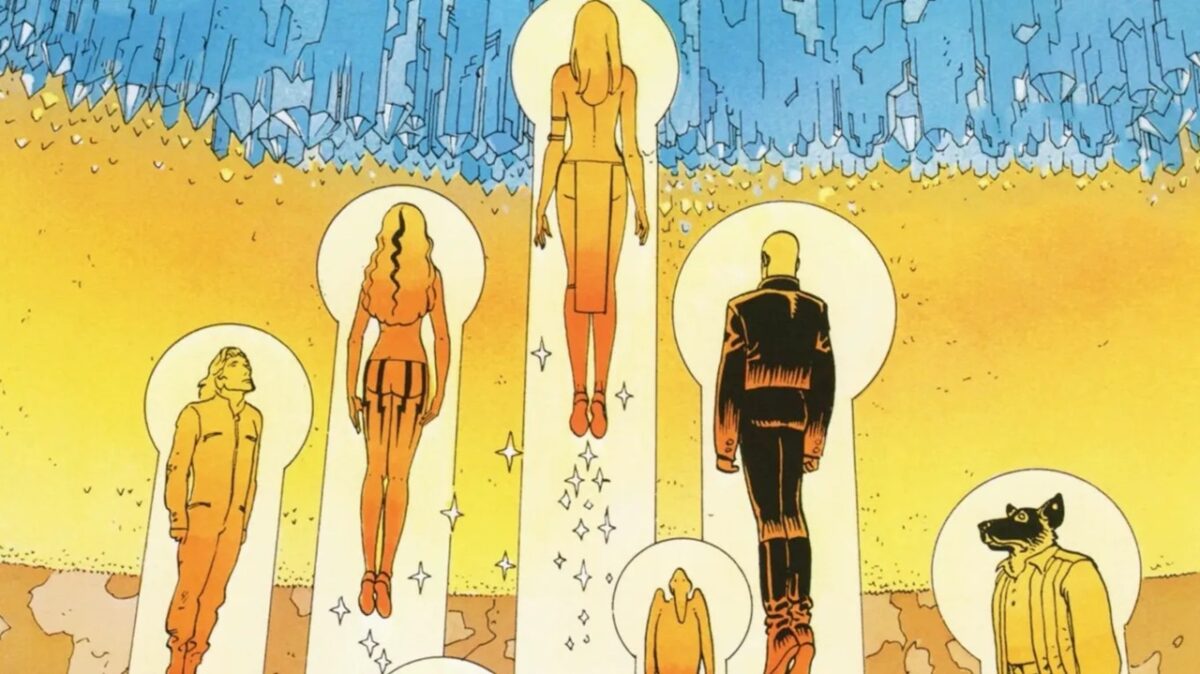
Considered a masterpiece of comic books, The Incal was created by Alejandro Jodorowsky and Moebius, transcending the limits of the medium and delving into a territory that explores deep philosophical questions. This complex narrative, rich in symbolism, intertwines mysticism, politics, and science fiction, and was conceived in the context of the failed film project of Dune, also envisioned by Jodorowsky.
The comic follows the adventures of John Difool, an antihero who accidentally becomes the bearer of the Incal, an artifact of immense power. Throughout his journey, the story critiques power structures, oppression, and reflects on the role of the individual in society. Using references to tarot, Jodorowsky manages to integrate archetypes that enrich the narrative, offering an exploration of individual and collective consciousness.
Additionally, the work addresses the use of hallucinogenic substances, although it does not glorify their consumption, but rather suggests that they can be tools for an expansion of consciousness. This approach, parallel to Frank Herbert’s vision in Dune, establishes a dialogue about the nature of reality and the search for truth.
A movie that never was with a great influence
The influence of El Incal has been monumental, inspiring generations of artists and creators across various media, from film to video games. The visual aesthetic of the comic has left an indelible mark on pop culture, evidenced in contemporary works. Although it was announced that Taika Waititi planned to adapt El Incal into a film, there have been no recent updates on the project.
The interconnection of all beings, the struggle for knowledge, and the evolution of consciousness are central themes that invite readers to reflect on their own existence. The Incal, more than just a simple comic, presents itself as a unique spiritual experience, showing that art can rise above conventional entertainment.