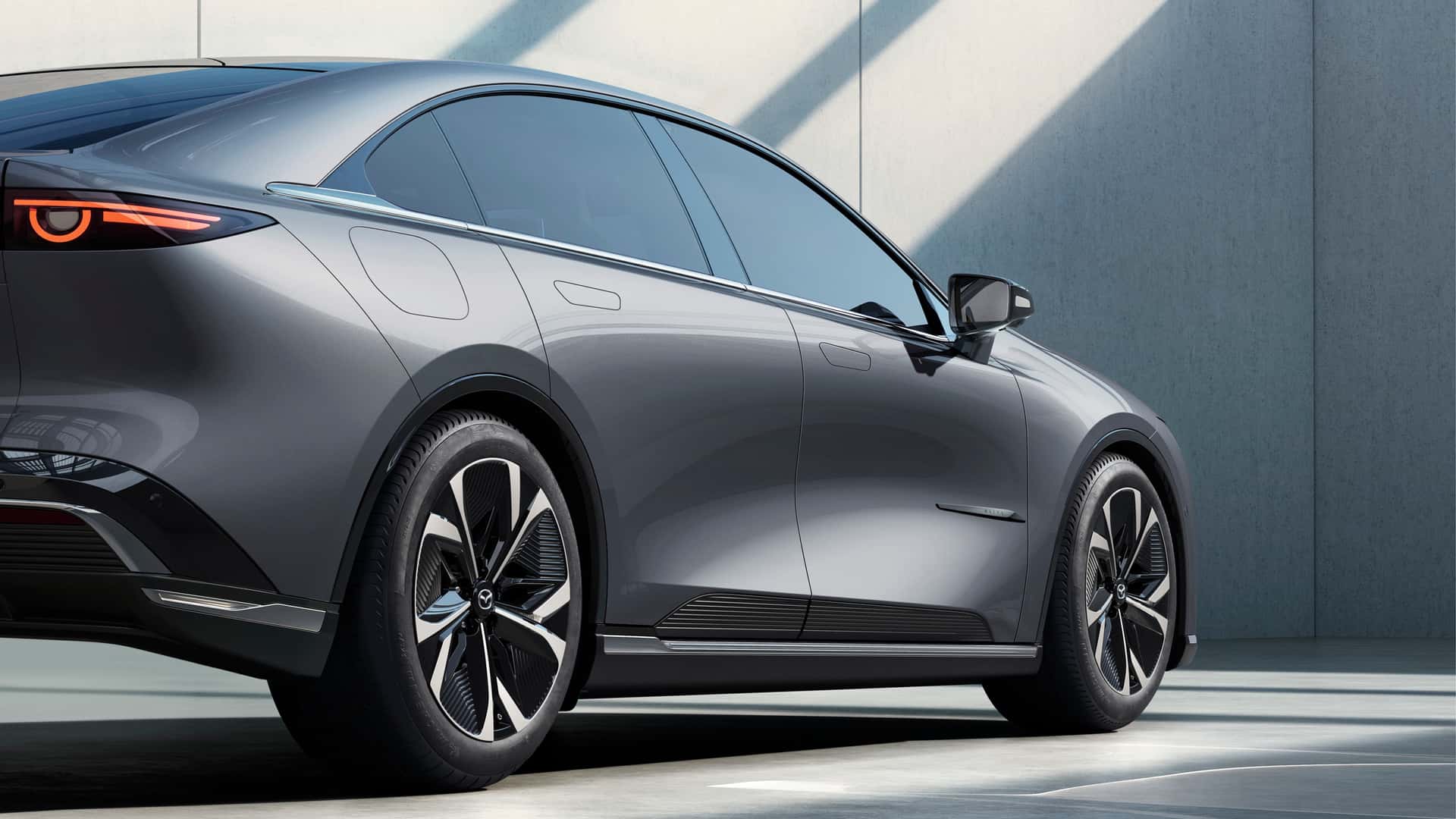
Mazda is gearing up to produce its first dedicated electric vehicle (EV) at the Hofu H2 assembly plant in Japan, with production set to begin in 2027.
This new model aims to leverage advanced manufacturing technologies and Panasonic Energy’s cylindrical lithium-ion battery cells, helping the company tackle challenges posed by the 25% auto tariffs imposed by the Trump administration.
The automaker’s head of production engineering, Taketo Hironaka, has described the tariff situation as “outrageous,” but remains optimistic that Mazda’s flexible production approach will enable it to mitigate these costs.
Mazda’s Flexible Production Strategy Aims to Overcome Tariff Challenges
Rather than establishing a dedicated line for EV production, Mazda will maintain a mixed-output system that allows gas, diesel, hybrid, and plug-in hybrid vehicles to be produced side-by-side.
This strategy is estimated to reduce investment needs by 85% and lead times by 80%, giving Mazda the agility to adjust production based on market demand.
By 2030, Mazda plans for all its vehicles to be “electrified,” with pure EVs constituting between 25% and 40% of global sales. The company is facing mounting pressure from rivals introducing lower-cost, more advanced EVs in the competitive U.S. market, which remains its largest.
After the failure of the MX-30 EV in the U.S. market, the stakes are even higher for Mazda as it looks to solidify its presence in the EV sector.
Upcoming models, including the 6e and the CX-6e, will bear the burden of this transition. While the 6e will reach markets outside of China later this year, both it and the CX-6e are currently produced through a joint venture in China. As the EV landscape rapidly evolves, Mazda’s success will hinge on whether its first dedicated electric vehicle can revitalize its brand in an increasingly electric world.