The processor war we are witnessing in the mobile sector is wonderful. And the best part is, we, the consumers, are the only ones benefiting from all of this. It’s becoming cheaper to produce high-quality chips, and making a good smartphone is getting easier every day.

MediaTek has unveiled its flagship mobile processor, the Dimensity 9300, which utilizes TSMC’s 3rd generation 4nm+ technology, trailing just behind Apple and its 3nm process.
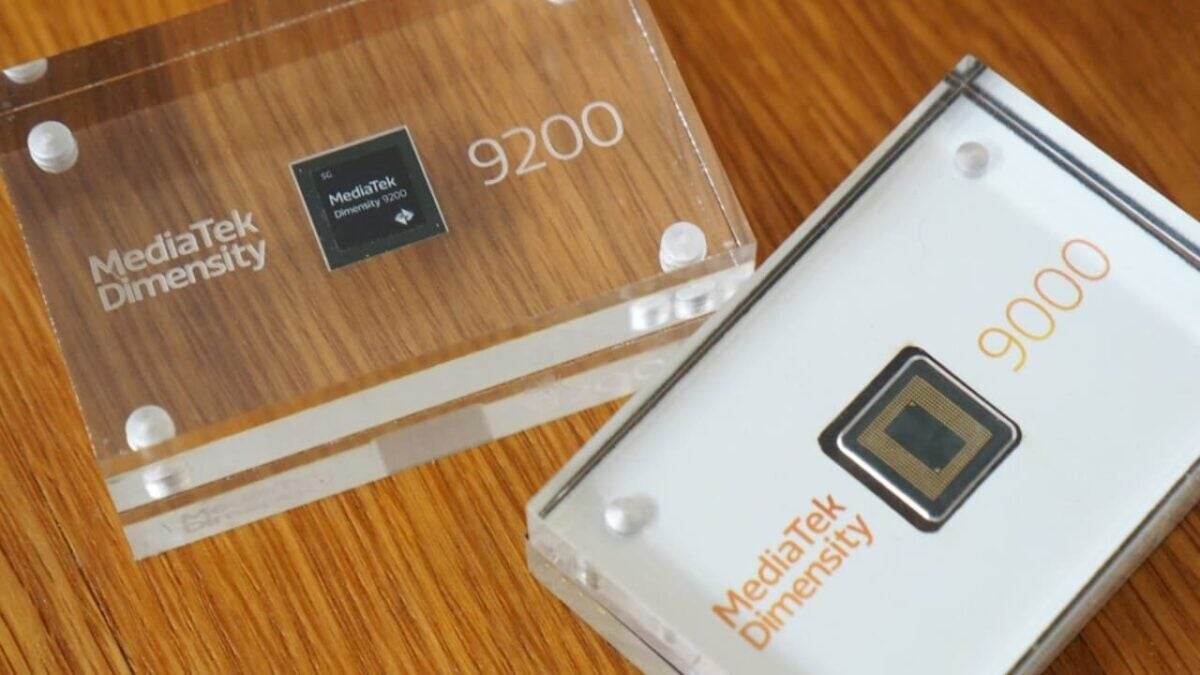
The company claims significant improvements in performance and energy efficiency compared to last year’s Dimensity 9200 and asserts that its performance matches Qualcomm’s new Snapdragon 8 Gen 3 processor in some key tests.
With this release, there are now three mobile systems-on-chip launched in the last month (including Google’s Tensor G3), showcasing a healthy competition in the high-end mobile processor sector.
No efficient cores, we just want power
The Dimensity 9300 features what MediaTek calls a “large core architecture” focused on performance, with four ultra-large cores and four large cores, totaling eight cores.
In comparison, the Snapdragon 8 Gen 3 comes with a single ultra-large Cortex-X4 core, along with 5 large Cortex-A720 cores and 2 smaller Cortex-A520 cores to balance power efficiency and performance.
With these configurations, it offers 15% more performance than the Dimensity 9200 at the same power level or a 33% power efficiency improvement with the same performance.
Indeed, MediaTek claims a 40% increase in maximum performance. The company also states to have achieved an AnTuTu score of 2,130,000+, which roughly matches the AnTuTu score of the Snapdragon 8 Gen 3.
MediaTek also boasts a 46% increase in GPU performance compared to the previous processor at the same power levels, with frame rates higher than its rival in certain gaming benchmarks.
Furthermore, it offers significantly superior deep learning performance compared to the Dimensity 9200, thanks to the new APU 790 AI processor, providing up to 8 times faster processing speed and stable image generation in less than a second.
If these claims hold true, it is indeed impressive, though real-world tests will be necessary to confirm these statements. In any case, it appears to be a solid alternative to Qualcomm’s Snapdragon 8 Gen 3.
