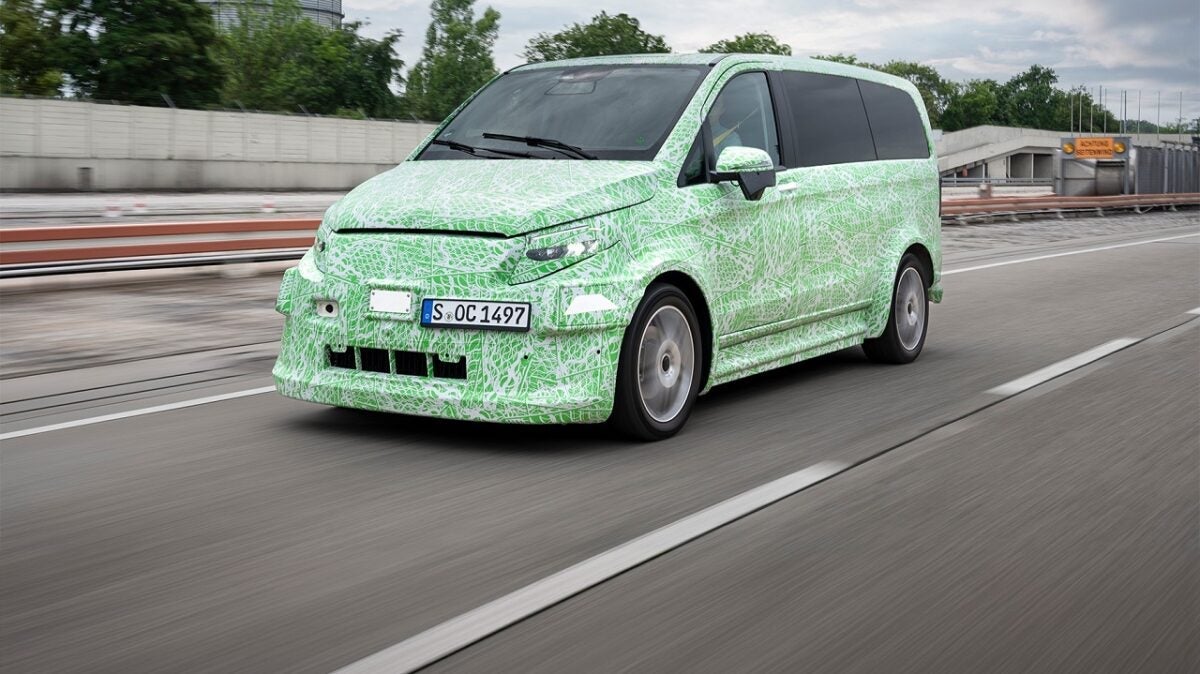
Mercedes-Benz has announced a strategic reorientation in its approach to vans, confirming plans for a new internal combustion van architecture, in addition to continuing the development of its electric platform Van.EA.

This change involves the introduction of the Van.CA, which will focus on combustion models, and reflects an evolution in the brand’s vision regarding electrification.
In a statement, Mercedes-Benz stated that the electric vans based on the Van.EA platform, which are expected to debut in 2026, will now be joined by others that will use the new combustion architecture.
An electric van from Mercedes for 2026
Both platforms will share 70% of their parts, allowing for production on the same assembly lines. This strategy aims to optimize economies of scale and provide flexibility in response to fluctuations in demand in the commercial vehicle market.
Historically, Mercedes had stated that all its future medium and large van models would be based exclusively on the electric platform. However, the recent announcement suggests a change in direction, keeping the possibility of combustion vehicles.
In addition, the current eSprinter van is built on the same chassis as the combustion versions, indicating the possibility of continuity in the use of fuels.
The German manufacturer had also previously established an agreement with Rivian for the production of electric vans in Europe, but is now focusing on the development of its internal Van.EA platform. Despite these changes, the company seems to maintain a dual vision that includes both electric and combustion vans in its future product offering.