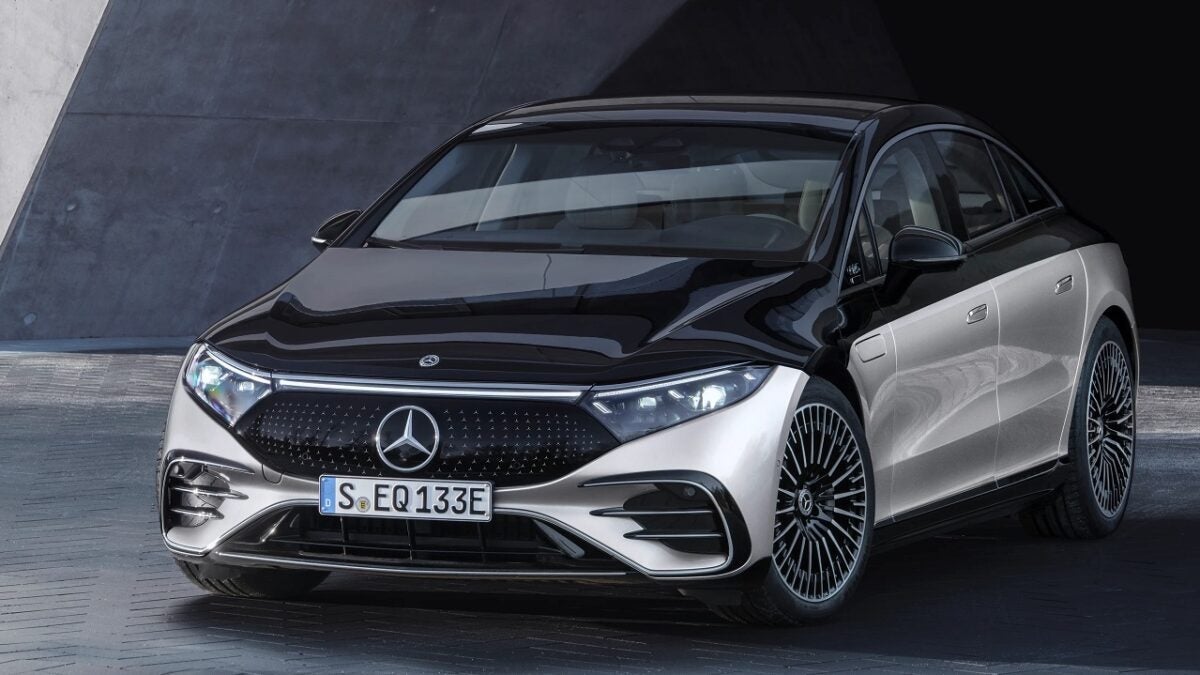
Mercedes-Benz has announced the launch of fully electric versions of three of its most popular models in the next two years, a market that will continue to grow over the years.

During the presentation of its 2024 financial results, the German company revealed that the Class C and Class E sedans, as well as the Class GLC SUV, will receive electric variants as part of a push in its product portfolio that will include “dozens” of new models or updates by 2027.
This transformation process will begin at the end of this year with the arrival of the compact CLA-Class 2026, which will be offered with both an electric motor and a 48-volt mild hybrid system.
The new Mercedes models that will electrify their fleet
This new CLA EV will incorporate significant improvements over the current generation, such as an 800-volt electrical architecture and a more efficient energy recovery system.
The improvements of the CLA EV will also be applied to other compact models developed on the new Mercedes-Benz Modular Architecture (MMA). The CLA is expected to maintain a sedan design similar to that of the current generation, while Mercedes’ strategy seems to shift towards offering vehicles with multiple powertrain options, as will also be evident in the electric C-Class, E-Class, and GLC-Class.
In addition, Mercedes-Benz’s AMG performance division has promised a series of launches, including the first electric vehicle based on the new dedicated AMG.EA architecture. The first model, a fastback sedan that could replace the current AMG GT 4-Door Coupe, is expected to arrive this year.
On the other hand, the first next-generation electric van from Mercedes is expected to be launched in 2026, based on a new platform called Van.EA.
Despite this focus on electrification, the automaker has also confirmed a significant update for its flagship model, the S-Class sedan, for next year, but no electric version was mentioned.
In addition, Mercedes has postponed a sales target that would have led the company to become fully electric in certain markets by 2030, indicating that combustion engines will continue to be in circulation throughout the next decade.