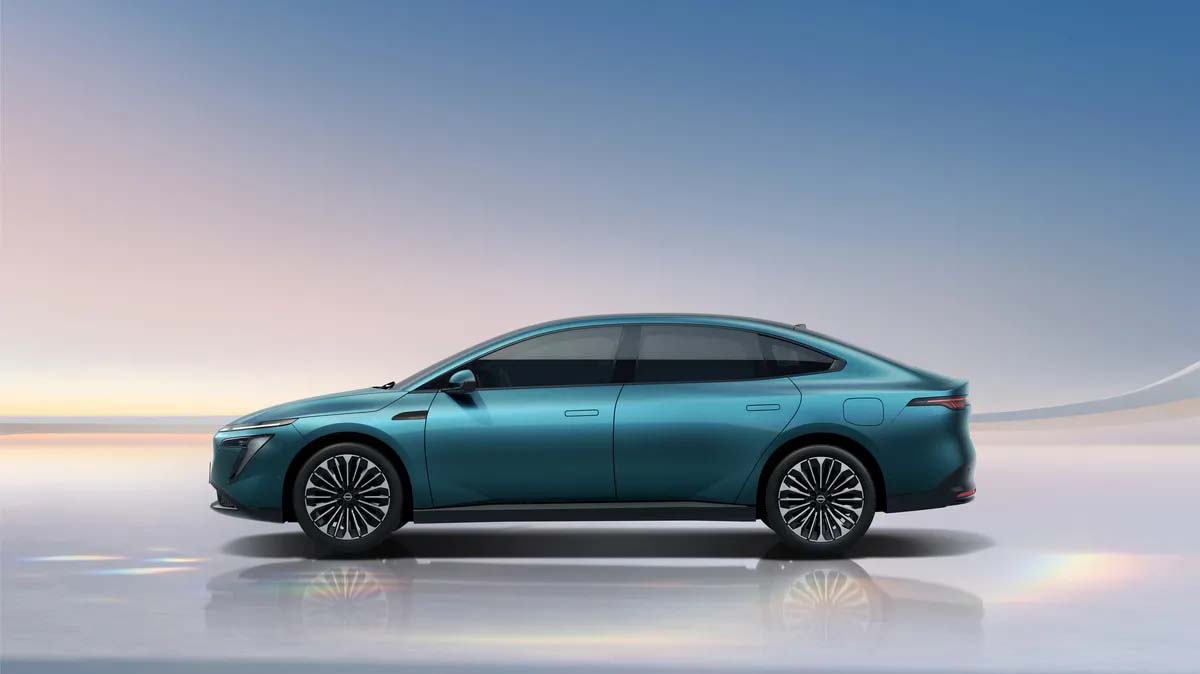
Nissan is making headlines in the electric vehicle (EV) market with its new N7 EV, which has reportedly set a record in China by amassing over 10,000 orders within just 18 days of its launch on April 28.
This impressive feat was achieved by the Dongfeng-Nissan joint venture, highlighting strong initial demand for Nissan’s first dedicated electric sedan.
Priced starting at 119,900 yuan (approximately $16,500), the N7 aims to attract budget-conscious consumers eager to switch to electric.
Nissan Targets Budget Buyers With New N7 Electric Sedan
Available with two lithium iron phosphate (LFP) battery options—58 kWh and 73 kWh—the N7 delivers a substantial driving range of up to 540 km (335 miles) and 625 km (388 miles) respectively.
This competitive positioning comes as the midsize sedan is a bit longer than the new Tesla Model 3, measuring 4,930 mm in length, while its 15.6-inch central infotainment system promises an engaging user experience, complete with high-end smart tech features.
Among its notable tech offerings is the Momenta smart driving system, which includes advanced functionality such as high-speed navigation assistance and full-scenario intelligent parking. In a departure from Nissan’s traditional designs, the interior boasts a minimalist aesthetic complemented by a smart heating and cooling refrigerator.
Despite the early success of the N7, Nissan faces significant challenges. The automaker has experienced declining sales and profits and plans to cut 15% of its global workforce, further exacerbated by the cancellation of a new LFP battery plant.
Compounding these difficulties, rivals like BYD are gaining market traction in China; the company recently reported selling over 10,000 units of its Qin L in its first week. As Nissan navigates this competitive landscape, the question remains: can the N7 sustain its momentum and compete effectively against these rivals in the world’s largest EV market?