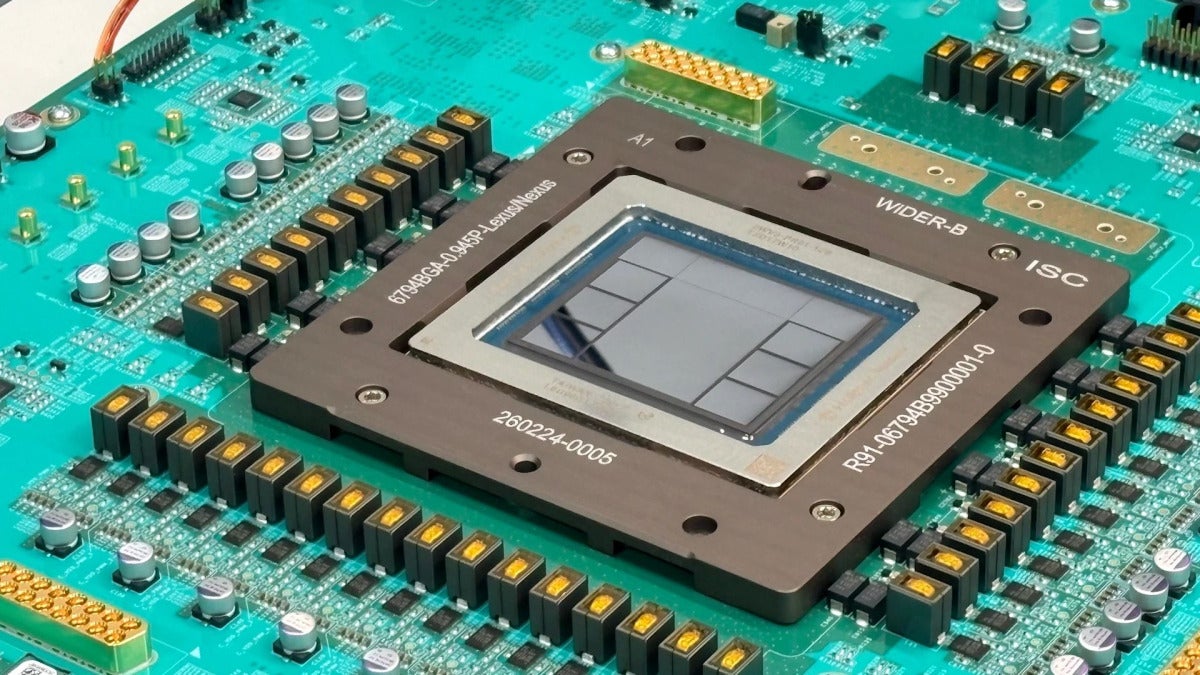
OpenAI seems to be edging toward a partnership with Samsung Foundry for its next generation of custom chips. Harrison Kim runs OpenAI Korea as general manager, and he said the two companies have made major progress in joint production and research.

OpenAI already depends on Taiwan Semiconductor Manufacturing Co. (TSMC) for Jalapeño, its first custom inference accelerator. Earlier reports said Broadcom co-designed that chip, and it reached mass production in under 18 months. Seen in that light, Samsung looks like a plausible candidate for whatever comes next, whether that means a follow-up chip, extra manufacturing capacity, or a separate processor built for a different workload.
What Samsung’s role would actually be is still murky. OpenAI hasn’t said whether Samsung Electronics, through Samsung Foundry, would manufacture a new design, serve as a backup source, co-develop silicon, or help in some other way.
Anyone who follows AI infrastructure should keep an eye on this. If OpenAI ends up using both TSMC and Samsung, that would point to very large demand. It would also cut single-supplier risk, ease some of the concentration in Taiwan, and give OpenAI more room to depend less on Nvidia while getting a tighter grip on performance, cost, and rollout timing.
There’s another piece to it. Reports say a successor chip is getting close to tapeout, and it’s easy to see how a Samsung Foundry deal would pull OpenAI deeper into South Korea. Samsung Electronics and SK hynix already provide key memory, including high-bandwidth memory (HBM), for systems like Stargate.
There’s nothing to download yet.