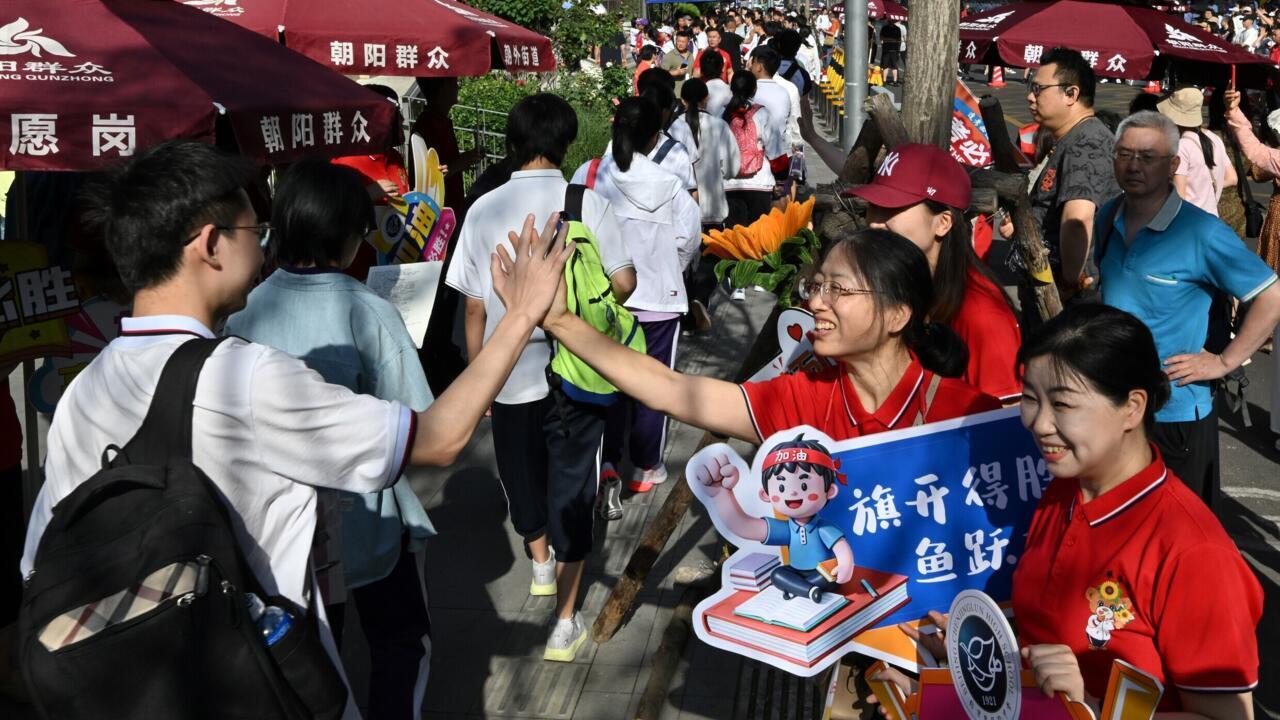
As millions of Chinese students face the critical gaokao examination, which runs from June 7 to June 10, 2023, concerns about academic integrity have prompted a significant shift in how technology is utilized during these high-stakes tests.
This year, over 13 million candidates are vying for university placements, making the pressures associated with this exam more pronounced than ever.
In a move designed to uphold fairness, popular AI chatbots in China, including Qwen from Alibaba and Yuanbao from Tencent, have disabled their image recognition features temporarily.
Tech Giants Disable Features to Ensure Fairness in Gaokao Testing
This action comes in response to fears that students might use such technology to cheat by photographing exam questions and receiving answers in real time. Messages displayed by these chatbots explicitly state that the functions have been suspended to maintain the integrity of the university admission process.
The gaokao, established in 1952, has undergone various transformations, particularly during the leadership of Mao Zedong and Deng Xiaoping, but its significance remains unchanged: it serves as a decisive factor in determining students’ educational and professional futures.
To ensure the security of exam content, questions are meticulously crafted and printed under strict conditions, often within high-security facilities such as prisons. This process is designed to prevent any potential leaks, with even the transport of exam materials secured with measures typically reserved for financial transactions.
With parental and societal pressures mounting, some students resort to various means to enhance their scores, from private tutoring to potential cheating. The recent regulatory framework established by China’s Ministry of Education, which prohibits the use of AI-generated content in homework and exams, underscores the intention to foster genuine learning rather than dependence on technology for shortcuts.
As educational institutions in Beijing seek to integrate AI into curricula, one thing remains clear: educational tools should aid learning, not compromise it during critical assessments.
