Everyone wants their own Fortnite. Or they want to be Fortnite instead of Fortnite. Alternatively, for those who are aware that this is impossible, they want to be the new Overwatch. Now that Blizzard’s game has self-destructed without any ceremony or meaning, there is an obvious opportunity for other companies to take its place. That’s why we see so many games on the horizon that seem to aim to fill that void. Hero shooters that work as games as a service. But if Sony has taught us something with Concord, maybe this is not the right way to go.

Concord, the new Sony video game developed by Firewalk Studios, was released on August 20th. Only 14 days later, on September 6th, its servers were shut down. This game as a service aimed to compete in the Overwatch space, but it has ultimately cost both Sony and Firewalk years of work and a significant amount of money that could have funded a couple of games. But why has this happened? That is a very good question that we can try to answer.
The most obvious and immediate answer is that, obviously, there was no interest from the players. In addition to the lack of a solid marketing strategy from Sony and an initial price of 40 euros for a game whose biggest competitors are competitive, the game never managed to generate any kind of interest among the public. Resulting in a peak of 607 simultaneous players on Steam, although on PlayStation that number multiplied by ten or a hundred, the numbers show not a failure, but a catastrophe. A total lack of interest from the public.
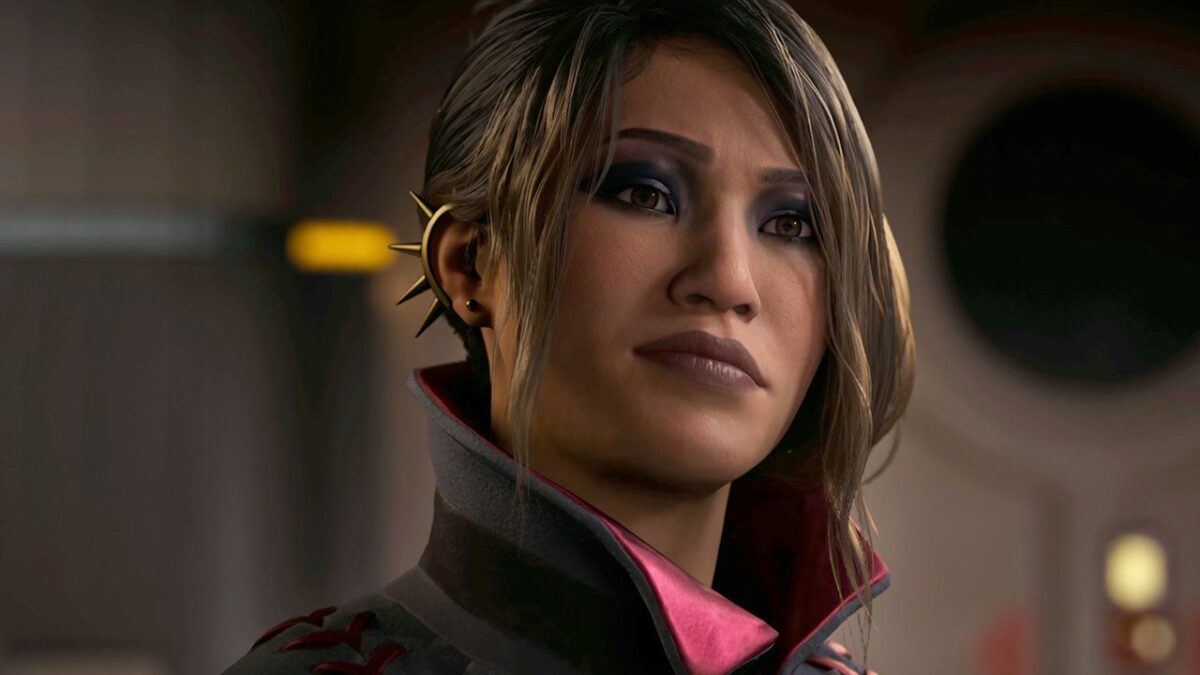
What are the reasons for this lack of interest? The first one is the lack of personality of its characters. Despite the incredible production values of the game, with an estimated budget that exceeds 100 million dollars, the characters were uninspiring and uninteresting. They were very realistic, with a high polygon count, but their artistic design seemed like a poor copy of the characters from Guardians of the Galaxy. This made the audience feel a deep disinterest towards the game.
This was one of the first and probably the most serious of their problems. In video games, and particularly in games as a service, the most striking thing at first glance is their characters. If players don’t fall in love with them at first sight, it’s difficult for them to give them a second thought. And in the case of Concord, it was difficult for anyone to be interested in them, even though their production values were far superior to those of their rivals.
This led to another one of its main problems. It was a good game, but it didn’t have a particular hook. Something that made it appealing on its own. Without bringing any radically new mechanics to the table, what it offered was a very well polished version of the classic hero shooter mechanics. Something it did excellently, but it had a problem: to verify that, it is necessary for players to be interested in trying your game. Something difficult when neither your characters nor your mechanics have anything inherently appealing to make them interested in it. And being a game as a service, not being able to play the card of a deep narrative for that purpose either.
All these problems are exacerbated by another obvious one. Concord took about five years to develop. Around one hundred million dollars. Both in time and money, these are prohibitive figures that, even if it had worked well, would have made the game a failure. With those figures, Concord had to explode in popularity to be considered a success; it wasn’t enough for it to work, it had to be a success, which put it at a disadvantage from the beginning, making it very difficult to overcome.
If we add up all these factors, it seems evident that the story of Concord is that of a foretold death. Of course, it’s easy to say in hindsight. No one expected Helldivers 2 to be the success it has been. But Helldivers 2 has not cost neither the money nor the time that Concord has cost. Something that shows that Sony’s plan to switch to games as a service and prioritize them doesn’t seem to be a success.
Not when they have serious problems with Bungie. When Concord has been a failure. When their biggest success of the year is Astro Bot, a fiercely single-player game, with a moderate budget and a rational development time. And besides, it has the potential to become the game of the year.
Does this mean that Concord marks the end of games as a service? Far from it. For Asian studios, especially those in China and South Korea, things are going very well. It probably means a radical change of plans for Sony, who has discovered the cost of a failure of this magnitude. But one thing is clear: whether as a service or not, the future lies in shorter developments and games with a smaller budget. Games that can be released sooner and cost less to develop. Because if Concord has been a disaster, we don’t want to imagine what it will be like when a game with the budget and development of a Grand Theft Auto VI fails.
