Doctor forms team to stop spread of fake medical news

One doctor is leading the charge against fake medical news on social media.

fake drugs

If you’re a frequent social media user, you’ve probably encountered posts spreading misinformation about medical topics like vaccinations. According to a study published in ScienceDirect, top posts on social media relating to common diseases contained misinformation 40% of the time.

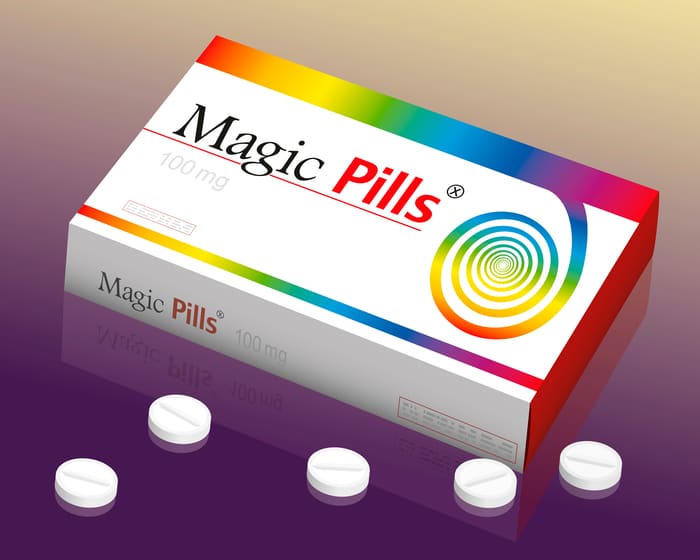
It’s easy to see why people turn to fake medical news. These posts often promise cheap, powerful miracle cures to common ailments. Factual medical information, on the other hand, is significantly less flashy and optimistic, often only promising moderate success. It’s completely understandable that a person who has a disease that makes their life miserable would skip over all of the pessimistic posts regarding realistic treatment in favor of fantastical stories about miracle recoveries. However, this creates false hope and can discourage patients from seeking legitimate treatment.
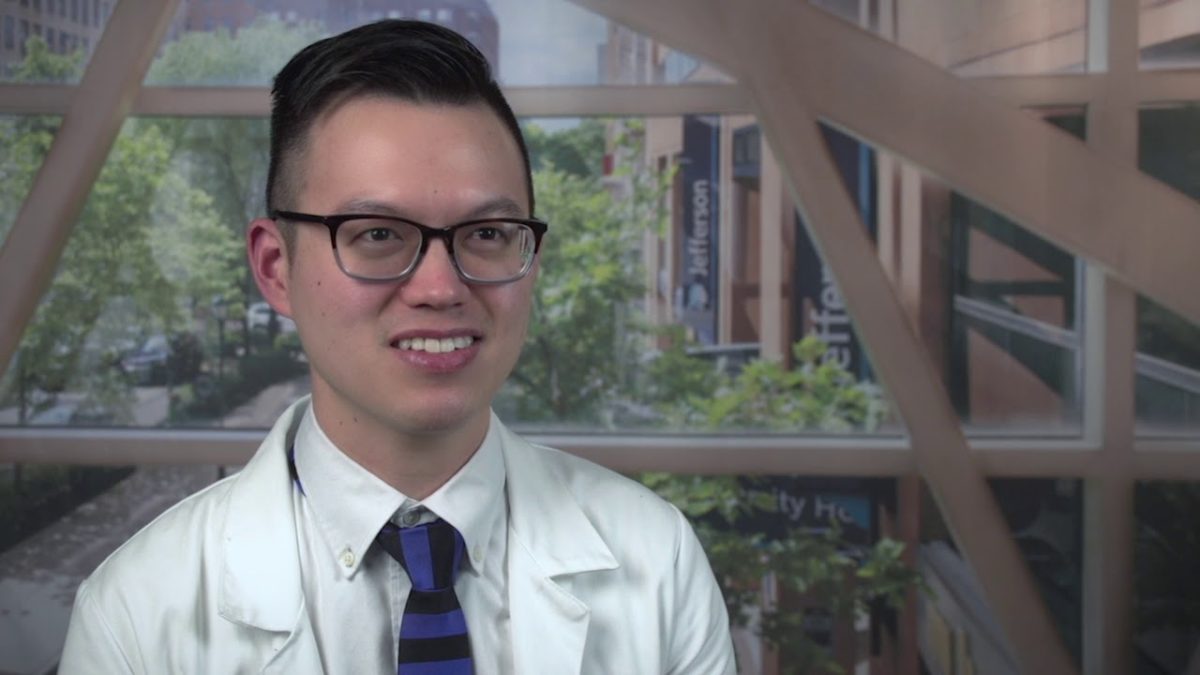
No one knows the harm that fake medical news can cause more than Dr. Austin Chiang. An internet-savvy, Harvard-educated gastroenterologist, Dr. Chiang has over 20,000 followers on social media. Dr. Chiang uses his online platform to spread factual but digestible medical advice. Whereas most doctors on Instagram are hopelessly drab, Dr. Chiang presents himself as relatable yet knowledgeable.

View this post on Instagram

Diagnosing cancer (or pre-cancerous) lesions often isn’t black of white. ? It’s like piecing a puzzle of information together between appearance on different imaging modalities (CT, MRI, EUS) + needle sampling + medical history + clinical picture. ? . ❗️Nowadays, only 200 microliters of pancreatic cyst fluid is required to test for some tumor markers like carcinogenic embryonic antigen (CEA) and DNA mutations. ?Also included in the analysis is detection of KRAS and GNAS mutations, which might indicate certain types of mucinous cysts…some of which could become cancer one day. ? . . . #cancer #diagnosis #science #biology #doctor #cancersucks #pancreaticcancer #cyst #meded #puzzle #mystery #usmle #medico #醫生 #癌 #健康 #hospital #health

A post shared by Austin C. MD MPH 。 GI Doctor (@austinchiangmd) on

While Dr. Chiang’s charming social media posts have gotten him a sizeable audience, his follower count pales in comparison to that of big anti-vax and alternative medicine accounts. He called this massive social media presence “the greatest health crisis of our time.” Realizing he can’t combat these campaigns on his own, Dr. Chiang set out to assemble a team of like-minded healthcare professionals to fight misinformation, forming the Association for Healthcare Social Media (AHSM)
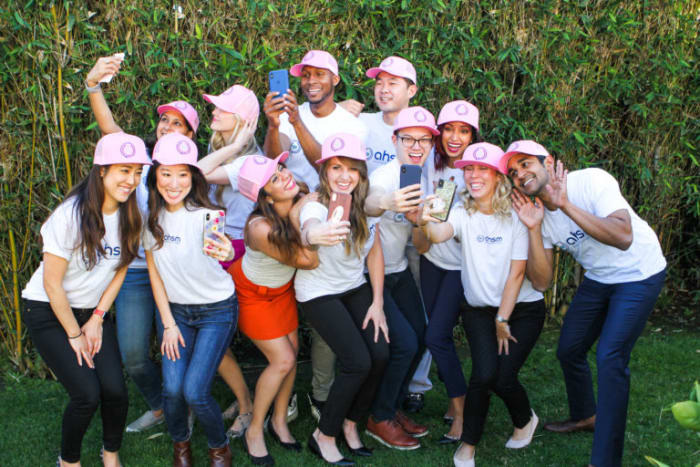
Dr. Chiang is using his position as Chief Medical Social Media Officer of Jefferson Health to recruit other savvy professionals. Dr. Chiang and his team are well aware that the public does not salivate over professional medical journals and press releases, and his team is hard at work packaging medical information for the social media age. The AHSM knows that scare tactics and emotional manipulation are what spreads in the medical social media sphere, and they use the opposite approach of easily understandable language and concise information told in a non-condescending manner.

With platforms like Instagram and Facebook facing huge issues with anti-vax accounts and other fake medical news spam, doctors taking to social media is the antidote we need moving forward. By combining legit medical knowledge with the hugely popular inspirational lifestyle aesthetic, medical professionals can build up huge followings to fight harmful medical advice.
Facebook under pressure to remove anti-vax groups

Why won’t Facebook take action against anti-vax groups? Here are some theories.

vaccines

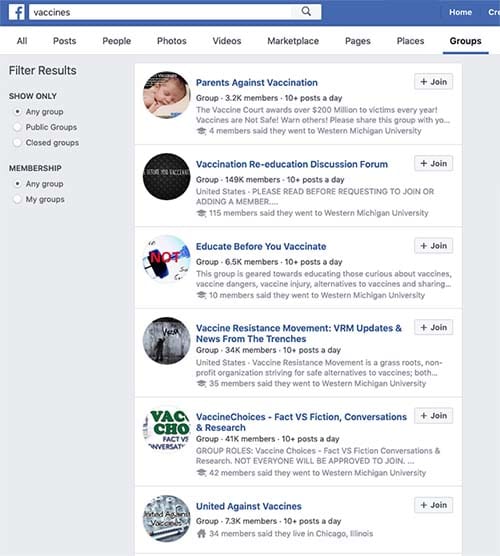
Adding to the growing list of Facebook controversies, the company has been accused of promoting anti-vax groups. Anti-vaxxers are people who ignore the scientifically proven benefits of vaccines by consuming or spreading misinformation, intentionally or not. Through Facebook, anti-vaxxers have found their greatest opportunities to thrive and grow.

On Facebook, users can create groups around pretty much any topic they want. The admins and moderators of these groups can choose to make the group open (allowing anyone to join), closed (allowing only approved members to join), or secret (the group can only be found when someone inside the group invites you, and you still must get approved).

In closed and secret groups, aspiring members usually have to fill out a questionnaire before they’re allowed to join. If the moderators don’t like someone’s answer, they can decline them from entering the group. The vast majority of anti-vax groups on Facebook are closed, meaning that if moderators feel that someone’s going to enter the group with the intention of debating members or spreading pro-vaccine content, they’ll simply shut the door in their face. This leads anti-vax groups to become echo chambers, where the anti-vax narrative goes unquestioned and is fed into with further misinformation.

8

It should also be noted that many admins of these groups promote alternative medicine that they sell, encouraging users to buy their snake oil instead of using vaccines. This obvious manipulation, for financial gain or otherwise, takes advantage of people who don’t have the facts.

The World Health Organization named “vaccine hesitancy” one of its top 10 health concerns for 2019. Facebook does not seem to care, as its algorithms promote anti-vax groups and pages when the topic of vaccines is searched (this is presumably due to anti-vax groups having more activity, likes, and posts than pro-vaccine groups).

anti-vax pages

Additionally, Facebook’s targeted ad system sends anti-vax ads to users it identifies as anti-vax, further confirming their biases and keeping them tightly locked in an echo chamber. Facebook has long been criticized for allowing these misinformative ads to flourish, as these anti-vax ads join other harmful targeted ads that promote things like white supremacy and anti-Semitism.  For a company that has vowed since 2016 to remove fake news, bigotry, and intentional misinformation, Facebook has done a remarkably awful job. Controversial content generates a lot of buzz on Facebook, and the company doesn’t appear to care whether that content includes fake information or not, as it brings more activity to the site, which brings more advertising dollars.

In a statement released last week, Facebook said it is “exploring additional measures to best combat the problem.” Measures mentioned in the statement include “reducing or removing this type of content from recommendations, including Groups You Should Join, and demoting it in search results, while also ensuring that higher quality and more authoritative information is available.” Whether or not these are hollow words remains to be seen, but based on Facebook’s track record with promoting blatantly fake news and misinformation, it’s hard to believe they’ll follow through.