Inside Twitter’s Community Notes: The Latest Update with a Limited Lifespan.

Community notes are one of the best inventions on the social network since the millionaire came to power. And as a great invention… it will probably last a very short time.

There are few things we tweeters can agree on now, but there are some. One is that we will never call Twitter “X” no matter how much Elon Musk insists on killing the blue bird and replacing it with the logo of the bad guy from ‘Action Man’. Another that community notes are one of the best inventions of the social network since the billionaire came to power. And as a great invention… it probably won’t last long.

Twitter DOWNLOAD

No, listen, it’s not like that

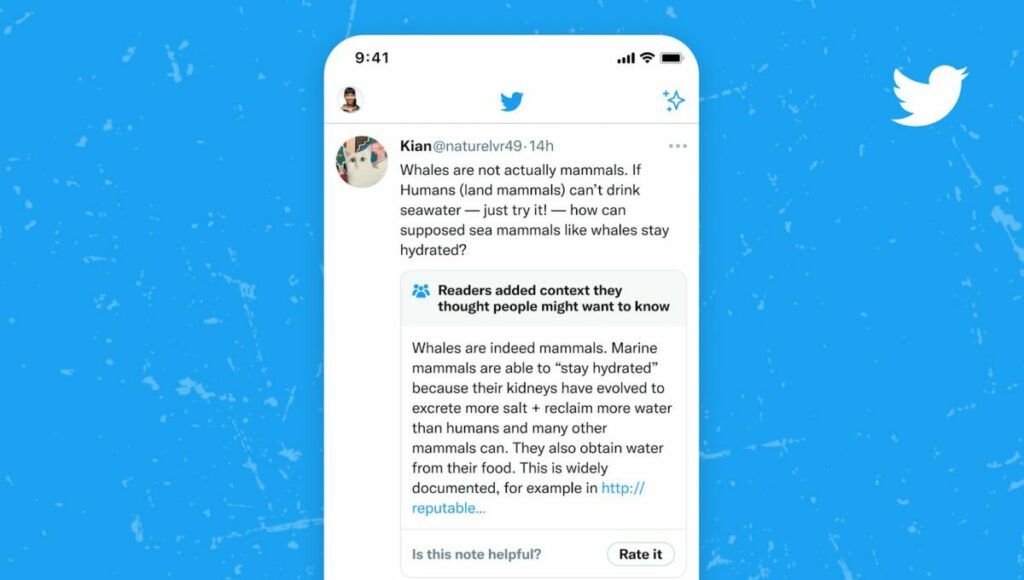
Community notes are, basically, Twitter’s way of fact-checking on the spot, correcting those who tell lies or inaccurate data in their tweets: politicians, columnists and opinion makers in general see how their most controversial messages have a note under them giving the correct information that they have decided to ignore. And who gives it? The community. That is exactly what this social network was born for, and the applause is practically unanimous.

44 countries around the world, at least for the moment, enjoy this way of doing justice in writing. The thing has been working for a few months now and it is one of the easiest and, why not say it, funniest ways to see the lies at a glance. Of course, not just any note from the community will do: they have to be valued as useful for the algorithm to decide to bring them to light. In other words, Twitter does not decide what is seen under the tweets, but the users do.

Well, this is very nice, but then… Why do we say that they are probably going to close the shutter if they are so useful? There are two reasons for that: the first is that out of some 122,000 notes that have been written, barely 11,000 have ended up being seen. And that’s because different members of the political spectrum in the community have to agree, and that leads to, for example, 50% of people thinking that vaccines are effective… and another 50% that they are not. These are objective data, of course they are effective, but because there is no consensus there are clarifications that remain in limbo.

The other is much more trivial: Elon Musk, the CEO, got a note from the community on one of his tweets and ordered not only to remove it, but also that, in general, they could not be posted on his account. He does not put fake news by decree law. And when something pisses off the owner of Twitter it doesn’t usually bode well. Anyway, don’t you have the strange feeling that in a year’s time we won’t be talking about Twitter because this man will have transformed it into something completely different? And no, in this case the change is not a positive thing.

Twitter DOWNLOAD

The incredible hoax about Cristiano Ronaldo and kebabs believed by the Spanish media

Cristiano Ronaldo, hoaxes, journalism and kebabs. This story is more than news: it is a symptom.

At this point in the 21st century, we all know what fake news is. There are even media such as The Onion or El Mundo Today focused on them, and nothing happens. What nobody expected is that, nowadays, someone would be so gullible as to take a piece of news from one of these two portals and believe it to the point of publishing it in national newspapers. Cristiano Ronaldo, hoaxes, journalism and kebabs. This story is more than news: it is a symptom.

Twitter DOWNLOAD

CR7 and the hoaxes

“Fan account, parody account, does not impersonate, does not affiliate with anyone”: this is the biography of the Twitter account that has given rise to a whole soccer conflict and that already gives clues that it may not have reliable information. The CR7 Timeline, as it is called, posted on April 24 a tweet about Mousalli Al-Muammar, the president of Al-Nassr, the team where the Portuguese player now plays and which featured some of his not very positive statements towards the player.

“I have only been ripped off twice in my life. The first was when I ordered 3 kebabs and there were only 2. The second was when I signed Cristiano Ronaldo”. And about the source of the news, an account that writes in Arabic with over 19 million followers, @SaudiNews50. Maybe the kebab thing could give a clue, since it is not the typical food of Saudi Arabia and responds more to a racist stereotype, but nevertheless some journalists did not end up connecting the dots.

On April 27, Cuatro gave the news as real, although it later deleted the tweet. They were not the only ones: La Vanguardia, Mundo Deportivo, El Español, Sport, Semana and many other online newspapers gave it as true, always looking for fodder in the world of soccer. Even Al-Nassr’s press officer had to make a statement to the EFE news agency: “The statements are false, they are true neither in form nor in content”.

It is surprising that in 2023 this has to be said, but we should not rely too much on everything that is said on the Internet if we do not want to be the one who is offended by Andrés Trasado or takes El Mundo Today for granted. Nowadays, no one would want to become that person on the rebound.

Fake news: What it is, how it has affected the panorama, and how to detect and report it

Fake news has become in a very short time one of the greatest evils of living in an interconnected world. These untrue news stories and hoaxes are capable of spreading like wildfire on the internet, social media and messaging services like WhatsApp. They cover a wide variety of topics, from the latest crazy way to get rid of the coronavirus to the unexpected transfer of a star player to your soccer team, or the latest sighting of the ever-charismatic Bigfoot.

Fake news

Believe it or not, fake news is not just an evil of the modern world: it has been around forever. Who could forget the famous fake video of Ricky Martin, the closet, the girl and the dog from Sorpresa ¡Sorpresa!? Or how Orson Welles terrorized the United States into believing the world was under an alien attack using just a radio? Fake news has always existed, only now it spreads much faster… and its collateral damage is also greater.

It’s probably happened to you more than once: a friend shares a controversial news story with you over Facebook, or you receive a photo from a concerned relative that shows your city in chaos when none of that is actually real. Fake news is everywhere, and although some stories are completely harmless and anecdotal, others have potentially fatal consequences. Let’s not forget all the poisonings caused by the untrue reports that drinking cleaning products would kill the coronavirus.

In today’s article, we’re going to talk about fake news and its impact and how to spot and report these stories. We hope you find it helpful!

What is fake news?

Fake news, as the name suggests, refers to fabricated news stories and rumors that are assumed to be true and go viral online. In fact, a recent study found that fake news about controversial topics is shared 70% more than real news.

There are many example of fake news, but below are the main ones:

  • Satire or parody– This kind of fake news simply aims to make the reader laugh. Normally these stories present wild and crazy situations intended to parody some real situation. Among them we would find, for example, the classic fake news story from April’s Fools Day. These tall tales are not dangerous in themselves, although they are sometimes taken seriously and can cause more than a few misunderstandings.
  • Clickbait- These stories have phony headlines that never really match the content of the article or news item. For instance, a newspaper published the headline “Bodies from 2004 tsunami still adrift 12 years later,” when the actual article explained that some bodies have yet to be identified.
  • Misleading content- These fake news stories include advertorials, a format that has exponentially increased in recent years. In them, advertising for a product or a person is presented as an objective news story. In short, it’s a subliminal message disguised to seem like real news.
  • Manipulated content- One of the most prolific examples of fake news. It involves an untrue news story or event that is illustrated by some real image. For example, a report might show an image of a crowded street during the COVID-19 pandemic, but the photo was taken several years earlier. This category also includes manipulated content, where Photoshop is used to alter real images to illustrate false information.
  • Fabricated content- This is the worst kind of fake news, stories that are completely made up and created for the sole purpose of deceiving, manipulating and damaging public opinion. One memorable example was when the U.S. attacked Iraq based on reports that the country possessed weapons of mass destruction, when it was proven that it did not.

How does fake news affect our everyday lives?

Fake news

Due to the fact that there are many types of fake news, this phenomenon can have a wide range of consequences. Some untrue news stories simply make us laugh a bit, and we even share them with our friends so they can enjoy them too. However, fake news can be highly dangerous, as it spreads disinformation and has the potential to destroy the public image of not only ordinary individuals and celebrities, but also of institutions, political parties, businesses and ultimately of any member of society.

It’s easy to find examples of this just by browsing the internet or taking a stroll down memory lane. In 2015, for example, a photo of an alleged fried rat that snuck into someone’s Kentucky Fried Chicken order went viral on social media. This story was picked up by the media, and the company’s image was seriously tarnished until the alleged “rat” was analyzed and proven to be chicken. A more recent example of fake news is the constant controversy surrounding the president of the United States spreading fake news on social media. In the wake of the pandemic, there has been a flurry of fake news claiming that the coronavirus does not exist and attributing all deaths to the rollout of 5G.

Fake news affects our everyday lives, to the point where it can change our entire world view or ideologies. That’s why it’s important to always tread carefully.

How to detect fake news

Now that you know what fake news is and how it can impact your life, it’s time to learn how to distinguish it from real news. We recommend following the steps below before you start sharing news on social media.

  • Consider the source- Before you assume that any news is true, it’s a good idea to consider the source. Check to see if it was published on a reliable website, or, in the case of a message on WhatsApp, whether it has been shared widely. You can always copy part of the text and run a search on Google to see if any additional information comes up.
  • Don’t trust the headline- Avoid sensational headlines and “clickbait” that only aims to get the reader’s attention. Usually such stories are fake news, and their goal is to get the unsuspecting user to click on a website.
  • Research the author- If you have suspicions about a news item, it’s a good idea to do research on the author. Search for their name on Google or read other posts they have written to find out if they normally write fake news.
  • Check the date of the story- Always check to see when the article you just read was published. Old news is no longer relevant, and when shared today, it can turn into fake news.
  • Consider that it could be a joke- If you’ve read a wild news story, there’s a strong chance it could be untrue. Again, research the website and the author, and run a search on Google to find out if any reliable news outlets have shared the same story.
  • Consider whether it’s written to change your opinion- The goal of many fake news items is to influence the opinions or beliefs of their readers. If you’ve just read an article that questions something you previously believed in, consider it may be fake news.
  • Use your common sense- Not everything published online is true. Use your common sense before you believe everything you read. If you have doubts about something, don’t share it with your friends, otherwise you’ll only be helping to spread a lie.
  • Ask an expert on the subject- If all else fails, ask an expert on the subject to find out if it’s fake news.

How to report fake news

A fundamental step to break the endless chain of fake news is to report it, but how can you do that? It may seem like mission impossible at first, but with a bit of determination and by going through the right channels, you can do your bit to stop these lies from spreading.

Here are the main ways to report a fake news story, depending on the media in which it was published.

If it was published on social media

If the fake news was published on social media platforms such as Facebook, Twitter or Instagram, there’s a simple way to report it. First of all, hover over the post or tweet in question and click on the icon with the three dots in the upper right corner. Then click on “Find support or report post,”or “Report Tweet,” or “Report.” Then give the platform the information it needs to stop this fake news from spreading.

If it was written in the press (traditional or online)

If the fake news was published by an online media outlet or the traditional print press, you should write to the news outlet or journalist in question. To do so, simply go to the contact information provided on the website or in the newspaper. You can also choose to send your complaint to the reader representative (you may not know this, but all newspapers have one), or if you prefer, message the journalist on social media. When writing your complaint, remember to treat the editor and the news outlet with respect and provide all the verified information you have to refute the false story.

If it reaches you over WhatsApp

If the fake news reaches you over WhatsApp, respond to your contact and let them know the information they shared is untrue. Also encourage them to contact the other people they inadvertently shared the hoax with to clarify this.

We hope you found our special on fake news helpful. What is the most scandalous fake news you’ve ever read or heard? Tell us about it in the comments section!

New WhatsApp feature will fight misinformation

This new feature will tell you if a message was forwarded more than five times.

WhatsApp

WhatsApp is introducing a new feature in their ever-growing fight against misinformation.

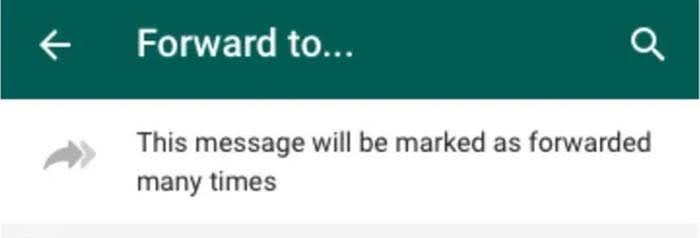
If a message is forwarded more than five times, the message will come with a double arrow next to it. 

WhatsApp Messenger Download Now ►
8

WhatsApp

WhatsApp announced the new feature in a recent blog post. The new feature will be available on the app on both iOS and Android.

Basically, if you see a message that says it was forwarded multiple times, there’s a chance that it’s a spam message, and you should report the user. Obviously, if a trusted friend sent you an invitation and you see the double arrow, it can probably be trusted. Then again, that person might as well make a group message or a Facebook event.

Last year, WhatsApp fell into some hot water after people fell for a rumor they heard on WhatsApp, and lynched people they thought were child abductors. 

Since then, WhatsApp developers have promised to do more to stop the spread of misinformation on the app. This new feature is definitely a step in the right direction. Although it still falls on the user to determine whether or not a message is malicious, the double arrow will be a nice warning sign. 

Facebook takes aim at misleading health products

Facebook reducing the spread of fake “miracle medicine” from the platform.

Instant Weight LossWe’ve all seen them: ads on Facebook promising a miracle cure that’s too good to be true.

These snake oil products say things like, “These pills will make you lose weight, grow your hair back, get rid of those stretch marks, make you live to be 100, and vanquish your enemies!”

As this misinformation about these miracle products counts as fake news, Facebook is making the effort to stop them. 

8

In a recent blog post, Facebook announced that they are reducing the following types of health-related posts:

  • Posts with exaggerated or sensational health claims
  • Posts attempting to sell products or services with health-related claims

Basically, if a pill claims that it can reduce belly-fat without changes to diet and exercise, Facebook will determine whether or not it should be hidden from viewers.

How big is this problem?

Essential oil

You might think that you’re savvy enough to realize when a product is too good to be true, but there are several that continue to dupe people.

For example, Essential Oils are making billions of dollars. Many people buy the product as they think it can treat their symptoms, but there are no studies that show that Essential Oils have any physical effect on the human body. Despite the fact that there is no research that says Essential Oils can treat your symptoms, they are still marketed as being something that can treat diseases like autism. 

Will this affect my page?

Unless you’re trying to hawk some “miracle pills” on your Facebook page, you won’t be affected. However, some pages you might be following will. Facebook said they will be handling the situation the same way they handle clickbait, which means they will be looking for key phrases commonly used in these snake oil sales pitches.

Posts with sensational health claims or solicitation using health-related claims will have reduced distribution,” Facebook wrote. “Pages should avoid posts about health that exaggerate or mislead people and posts that try to sell products using health-related claims. If a Page stops posting this content, their posts will no longer be affected by this change.”

Keeping on the theme of Essential Oils, let’s take a look at a major Essential Oils Facebook page. Young Living Essential Oils has about 1.5 million likes. The page posts information about Essential Oils and links to buy their products. If they advertise that they can make your stinky apartment smell better, the post should remain on the page. However, if they advertise that the product will help reduce your child’s ADHD symptoms, they should be blocked according to this new policy from Facebook.

Wrapping up

It’s great that Facebook is taking steps to ensure that you won’t see these snake oil pitches. However, we need to stay educated about the misinformation these products spread across the web. Before making a purchase, do some research to determine whether or not the product is proven to work. Also, always consult your doctor before taking a new medication.  

Facebook to try WhatsApp’s message forwarding limits

Facebook is limiting message forwarding on Messenger in Sri Lanka and clamping down on purveyors of fake stories in Myanmar

Fake news and Facebook

We’ve written a lot about WhatsApp’s fake news problem over the last few months and how the problem has also gripped Facebook in various parts of the world. We’re technology advocates and marvel at the way apps can change our modern lives. We also, however, understand the power that social technology on a global scale can have and this is why we report on the bad stuff like fake news as well as the good stuff like helping you get to work on time, for example.

WhatsApp and Facebook’s fake news scandals have been truly shocking with WhatsApp being at the heart of lynchings and horrific beatings in India and Facebook helping facilitate genocide in Myanmar. It is in India where most action has already been taken, with WhatsApp starting a number of initiatives including placing limits on message forwarding capabilities and even setting up an investigatory helpline to look into how users interact with false news stories.

It now looks as though Facebook is starting to apply what it has learned from its WhatsApp efforts in India to other parts of the world experiencing similar problems.

Facebook is limiting message forwarding on Messenger in Sri Lanka and clamping down on purveyors of fake stories in Myanmar

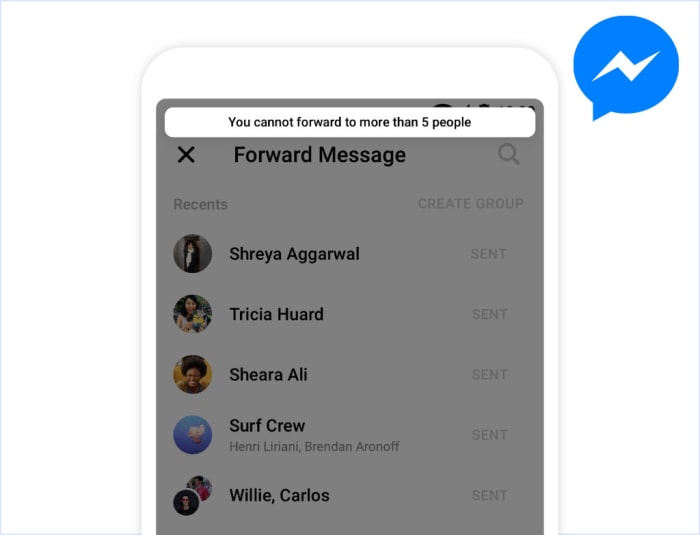
Facebook has released a blog post describing its efforts to halt the spread of fake news across its network and the most telling claim is that Facebook is starting to replicate what it has been doing on WhatsApp. In the post, Samdih Chakrabarti, who is a Facebook Director of Civil Integrity said, “In Sri Lanka, we have explored adding friction to message forwarding so that people can only share a message with a certain number of chat threads on Facebook Messenger. This is similar to a change we made to WhatsApp earlier this year to reduce forwarded messages around the world.”

Message forwarding n Messenger limited to five people

A screenshot posted to the Facebook blog indicates the limits Messenger uses in Sri Lanka face will be the same as those faced by WhatsApp users in India. If you’re forwarding a message on Facebook Messenger, you’ll only be able to forward it to five people at a time.

In Myanmar, where Facebook’s fake news problem has helped whipped up hatred of the local Rohingya Muslim population, Facebook is taking a different approach. Chakrabarti went on to say, “In Myanmar, we have started to reduce the distribution of all content shared by people who have demonstrated a pattern of posting content that violates our Community Standards, an approach that we may roll out in other countries if it proves successful in mitigating harm.”

They’re targeting the sources of the problem, which is refreshing, and Facebook even said it is prepared to ban individuals or organizations promoting violence. This echoes past action taken by the social network against the Myanmar military.

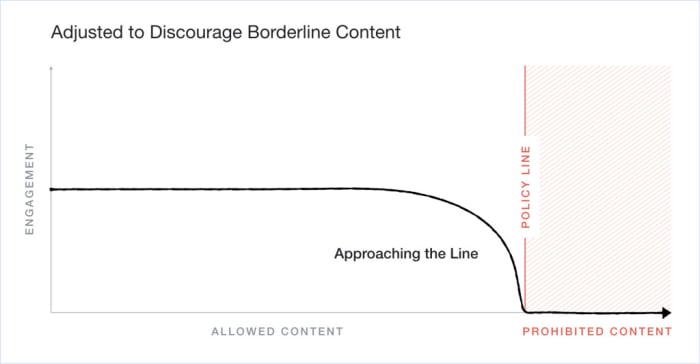
Facebook's new borderline content publication policy
Facebook’s new policy takes a harsher look on content that is close to its prohibition limit, rather than allowing it to naturally engage with other users.

It is good to see Facebook taking affirmative action in its bid to stamp out a true evil that has been able to spread across its network. It is also heartening to hear Chakrabarti recognize that, “This is some of the most important work being done at Facebook, and we fully recognize the gravity of these challenges.”

The damage that has already been done though, can’t be ignored and cleaning up the mess is only half of it. If Facebook truly understands the gravity of the situation, it will act more responsibly in the future to ensure this type of thing never happens again. With similar problems growing at home and with the hugely significant unveiling of Facebook’s planned cryptocurrency, it is more important than ever that the social giant recognizes its responsibilities and moves to fulfill them.

6 best news apps

Looking for a new news app? Here are some options!

News

We know you already know this, but it might be time to start looking outside of Facebook for the latest headlines.

All too often, we lean on the algorithm to take care of the discovery process on our behalf.

Because it’s challenging to keep track of every news source, app, and website out there, we’ve rounded up some of our favorites.  These can help you catch up on the news from your smartphone.

Best news apps

1. Apple News/Apple News +

Apple News

Yes, it comes default with your iPhone, the latest happenings, be it climate change research or the most recent antics from some Kardashian.

Apple News is free, but the company recently rolled out the new + service. Now, if you’re using the free version, it seems like a lot of what used to be available is now part of the upgrade.

That said, if you use the app, $9.99/month gives you access to content that’s typically gated, like The Wall Street Journal or the Los Angeles Times.

For $9.99, Apple News+ isn’t a bad deal — though there are some kinks that they need to work out when it comes to creating a seamless, cohesive experience. For instance, some magazine articles are PDFs versions of the original.

We’re sure that Apple will keep improving the app, in the meantime, the “Netflix for magazines” is a pretty good deal.

Apple News + Download free ►
9

2. Pocket

Pocket

Pocket is a great app for those who like scrolling through a long list of articles and saving the ones that pique their interest for a later reading sesh.

Pocket is a distraction-free reading experience, kind of like reading a book on the Kindle. All articles are hand-picked by you, downloaded and stored to your phone. So, when you do sit down to read, you’re not bombarded with recommendations or notifications. (That said, you can see recommendations based on what you save and like if you choose.)

The app works on your phone and desktop and presents a minimal, calming interface that design lovers will appreciate. Pocket is free, with the option to upgrade. The premium account is still a pretty good deal at $44 for an annual subscription.

What makes this a different experience than some of the other platforms like Apple or Google News is that your reading list is a saved, searchable archive. You can use this to keep track of reference articles, save recipes you find online, or whatever else you’d like to file away for later use.

Best of all, Pocket works offline. Save up dozens of stories, then enjoy them all on an airplane if you like.

3. Inkl
inkl

Inkl’s whole goal is to help you break the habit of clicking on junky articles and bringing high-quality content straight to your smartphone.

You can create filters based on preferences or location, but the platform prides itself on their algorithm that scans for quality over engagement. Basically, Inkl is an antidote to what’s been going on with YouTube and Facebook as of late.


Like Apple News +, you’ll pay $10 a month to use the tool, but that takes care of the paywall problem. Again, it’s actually a good deal if you’re subscribed to a few websites already.

4. NPR News
NPR

If you’re more interested in receiving your news through the airwaves, then the NPR News Radio app is a nice pick for quality news. Plus, you get access to the network’s podcasts and local stations across the country.

You can follow your favorite stations and programs, and stream them on-demand, listen to live radio, and yes, you can also read stories. NPR is always a good resource for trustworthy news, but it’s also an excellent destination for entertainment, music, and arts/culture.

7

5. Lumi News

Lumi News promises to deliver a personalized news feed based on your interests through the power of data science. How it works is, users will connect their social accounts, select topics, and publications they already like. As you interact with the platform, it will deliver more relevant content based on past habits.

Recommendations come in the form of top news sources, as well as indie blogs, audio, and video content they think you might like.

The only downside with something like this is if you click on too many BuzzFeed listicles and celebrity gossip headlines, Lumi might think those are your preferences.

What’s extra nice is that Lumi News also allows you to save stories to your phone to read them offline. So, load up when you’re connected to Wi-Fi to prevent yourself from running low on data every month, or stock up on reading materials before a flight.

Lumi News Download now ►
8

6. AP News

AP news

The Associated Press is pretty much the gold standard for actual fair and balanced news across the globe. Many news outlets share their stories and follow the AP Style when writing stories.

Unlike the options we just mentioned, AP News is not an aggregate platform. All stories come from the Associated Press’s global network of journalists, allowing readers to keep up on local news, as well as what’s happening around the world.

Users can follow topics, specific AP-affiliated newsrooms, and listen to radio news, watch videos, and scroll through galleries. AP News is similar to NPR’s app, in that the news comes from one source, but there’s a ton of content, regional networks and a long list of topics at your disposal.

Associated Press Download free ►
8

Wrapping up

When choosing whatever news you like, always look for a bias to determine whether what you are hearing is truly “fair and balanced.” Hopefully, at least one of these apps gave you the option you need to stay informed.

New WhatsApp feature fights fake news

More than 75,000 WhatsApp users sent authentication requests to the new WhatsApp tip line.

With so many Softonic readers being avid WhatsApp users, we always try to keep you up to date on what is going on with the Facebook-owned app. Unfortunately, this has meant reporting extensively on the spread of fake news across the network and WhatsApp’s attempts to fight it.

We’ve covered everything from limits to message forwarding to a tip line WhatsApp set up to learn more about how false information spreads. Today, we have some very encouraging news to report on the response to the tip line mentioned above.

WhatsApp tip line

Whatsapp hotline doing well
The response has been strong to WhatsApp’s new fake news tip line.

The WhatsApp Checkpoint tip line was set up in the run-up to the recent Indian elections. More than 600 million people voted in the biggest democratic exercise on the planet – a prime target for people trying to push false political narratives. This has been done before in countries like Brazil.

Checkpoint allows WhatsApp users to request verification on news stories they receive via WhatsApp. WhatsApp has now revealed that in just two months about 75,000 people have sent verification requests to Checkpoint. However, it isn’t able to actually provide verification to all users. Instead, Checkpoint is a research project, designed to help the ubiquitous messaging app learn more about how people interact with fake news.

WhatsApp Messenger Download free ►
8

Working with an Indian media start-up company called PROTO, Checkpoint will now analyze the data. PROTO also plans to submit all the findings to the International Center for Journalists in a bid to help other organizations learn from how the project was designed and run.

Not everybody who asked for verification received it, but WhatsApp is now sitting on a huge cache of useful data. This data could help it fight fake news and all its awful consequences.

In an article with Economic Times, a WhatsApp spokesperson said, “ The response on the tip line has been tremendous and has received over 75,000 claims since the launch, in five languages — Hindi, Telugu, Bengali, Malayalam, and English.”

It is the large scale of the data that could make a difference, with one of the co-founders of PROTO saying, “As more data flows in, we continue to identify the issues, languages, regions that are most susceptible to or affected by this problem.”

Fake news on Whatsapp
Fake news has been a big problem for WhatsApp for quite some time now

What comes next?

WhatsApp’s fake news problem is far from over. If anything, the Checkpoint numbers show just how big the problem actually is. The messaging app is moving in the right direction. However, it has already built up a huge database of information relating to the types of false stories shared. This should help it prevent the spread in the future.

The other good news to take from this is the public response. A lot of people have felt suspicious enough to pass stories they’ve received on to a verification service, which is a very good sign. If WhatsApp can give people the tools to fight fake news themselves, the people will use them.

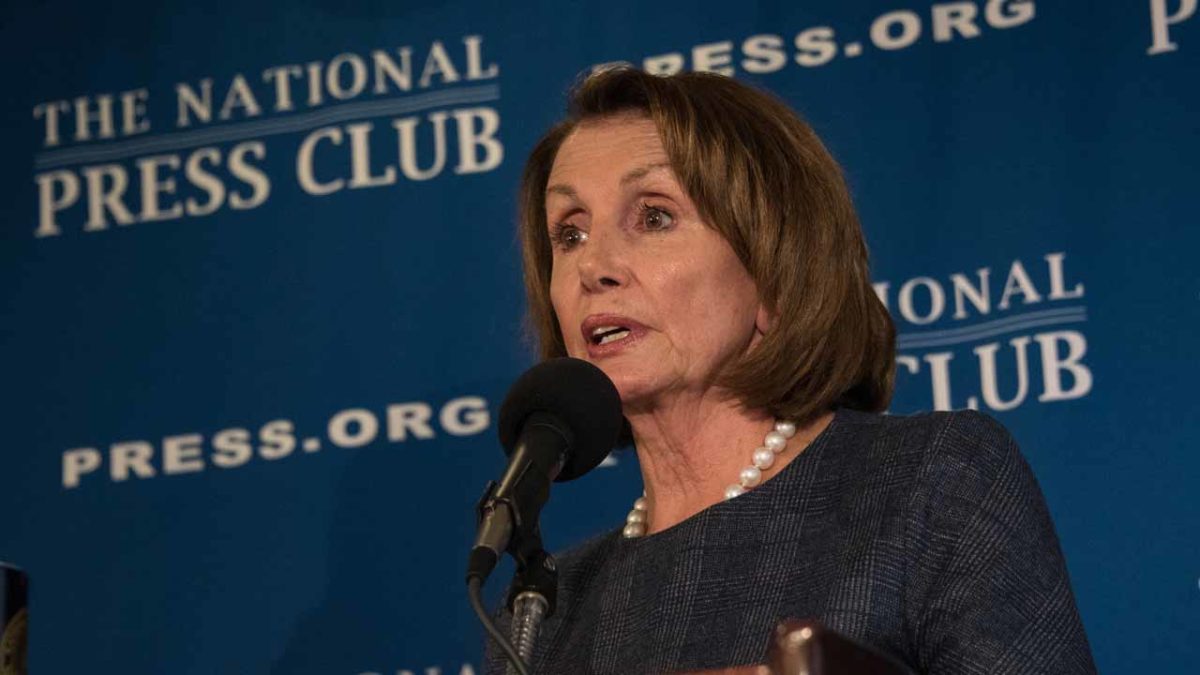
Next-gen political manipulation: Altered videos of Nancy Pelosi spread online

Truth is taking a beating online.

Nancy Pelosi

With each successive political campaign, we see new tools being used to spread misinformation. In 2016, social networks were used to target certain groups. After seeing a constant stream of mistruths and outright lies, many voters made their choice without an accurate picture of the candidates and policies on both sides.

Today, the misinformation war is becoming even more heated. Doctored videos of House Speaker Nancy Pelosi are being shared on social media:

The doctored video has been viewed on Facebook more than 2.4 million times. We don’t know whether these videos are being produced by a single person, a group, or as part of some kind of larger campaign, but the effects can be devastating.

Political misinformation is nothing new, but we’re now seeing extraordinary amplification of these stories thanks to actual politicians and their social media accounts. Last night, former New York City mayor Rudy Giuliani (President Trump’s personal attorney) shared the altered video on Twitter with the message, “What is wrong with Nancy Pelosi? Her speech pattern is bizarre.” Giuliani later deleted the tweet.

The President himself shared a highly edited video to push his chosen narrative of Speaker Pelosi.

Any amount of editing can change the slant of a story. We often hear complex conversations summarized in one brief soundbite on the news. Even the selection of a specific photo can paint a positive or negative picture of a candidate. In 2004, Howard Dean’s political campaign was completely derailed because of a scream caught by a microphone:

But the thing is, the people in the room couldn’t hear Dean’s scream. It was incredibly loud in the venue. But because TV networks had access to Dean’s isolated microphone, we didn’t hear the sound in context. It didn’t matter. The die was cast.

So political narratives have been shaped from an out-of-context scream and now, doctored videos. The biggest threat, however, is yet to come. Deepfake videos can make anyone appear to say or do anything. AI can generate fake humans. Just as the computer graphics in Hollywood blockbusters become more convincing, we are quickly closing in on an era when we won’t be able to believe our eyes. And that leads us to a very dangerous place.

George Orwell called it in “1984:”

“The party told you to reject the evidence of your eyes and ears. It was their final, most essential command.”

Except in this case, the evidence being presented to our eyes and ears is being manipulated. Politicians have always lied and mischaracterized their opponents. But we are quickly moving into an era where those lies can be backed up with faked video evidence, then amplified across social media until the damage is too great to overcome.

A quote often misattributed to Mark Twain says, “A lie can travel halfway around the world while the truth is putting on its shoes.” And that’s been true since before the days when everyone in the world had immediate access to an audience of billions.

The social networks themselves aren’t helping. YouTube took down the altered Pelosi after Axios got in touch with them. Facebook said it would only reduce the video’s reach if they felt it was misleading, but they wouldn’t remove it. Twitter is allowing the altered clip to remain online.  How do you fight back against global platforms and itchy clicking fingers?

It’s up to all of us to slow down before retweeting or sharing something shocking. Today, and in the years to come, the faked videos will become even more sophisticated. It’s up to our vigilance and reliable news organizations to make sure the truth isn’t twisted.

WhatsApp cracks down on clone apps

WhatsApp has sent out cease and desist letters to a number of clone apps.

WhatsApp logo

Recently, WhatsApp has been gripped by a number of crises as fake news has spread across its network. This fake news has been used to aid political campaigns but has also seen terrifying attacks carried out by crowds whipped into a frenzy by horrifying stories that weren’t true.

In response to this, the messaging app has enacted a number of initiatives, with the most prominent being limitations to message forwarding.

WhatsApp Messenger Download Now ►
8

The first move saw a new Forwarded tag appearing above a message that didn’t originate from its current sender. This then evolved into a Frequently Forwarded tag. A tag becomes a Frequently Forward tag if the message had been shared more than four times. Eventually, WhatsApp set a limit on how many times a message could be forwarded at all. Thanks to this move, WhatsApp messages can only be forwarded five times at once.

Problem is though, the people who were spreading all of that fake news in the first place want to continue doing so. This means there is a demand for software that will help them bypass WhatsApp’s message forwarding limits and, accordingly, WhatsApp clone apps have sprung up that do just that.

Tech 2 reports that these clone apps can cost as little as $14 yet give users the ability to send up to 100,000 messages per day, if not more. A report by Reuters found that these tools were available to buy on Amazon. They were also being used to subvert WhatsApp’s new policies for political reasons as well as in marketing attempts for regular businesses.

WhatsApp has sent out cease and desist letters to a number of clone apps

WhatsApp’s response to these clone apps has been strong. The messaging app wouldn’t even allow Reuters to use one for test purposes.

WhatsApp responded, “We are continuing to step up our enforcement against imposter WhatsApp services and take legal action by sending cease and desist letters to hundreds of bulk messaging service providers to help curb abuse… We do not want them to operate on our platform and we work to ban them.”

As well as ordering the owners of the fake apps to stop operating, WhatsApp is also banning accounts that use them.

Whatsapp's fake news problem
WhatsApp knows it has fake news problem and is trying to stamp it out.

This isn’t the first time WhatsApp has taken strong action against users of unofficial versions of the app. Recently, users of GBWhatsApp and WhatsApp Plus were targeted with temporary bans. Some lost their entire chat histories in the process. Those apps were built to offer more user-friendly features like themes and added customization options.

This time, however, the clone apps have a much more criminal underworld feel to them. This money being made facilitating attempts subvert attempts by WhatsApp to make its network a safer place. There is a real battle taking place on WhatsApp, and we all need to hope that the right side wins it.