
What happens to your Facebook page after you die?

Take these steps today to assist your loved ones after you’re gone.

Digital grave

Even though our physical bodies have a relatively short shelf life, our online presence is basically immortal. 

If you’re like us, it’s hard to go even half an hour without checking Twitter, Instagram, and Facebook. If you’re going to invest that much time into your social media presence, you might as well make sure it’s taken care of when your time is up.  

Chance are you know someone who has died, but their Facebook page lives on for their friends and family. Facebook has several options for you and your own page for when your time comes.

Below, we listed your options for digging your digital grave on Facebook.

What will the Facebook AI do for you?

It can be an awkward and depressing moment when Facebook suggests that you wish a happy birthday to your deceased friend. It’s even worse when Facebook suggest that you invite your dead grandfather to your birthday party.

Luckily, Facebook announced that new AI will stop profiles of deceased users from popping up in painful situations. (It’s unsettling to think exactly how this AI will know we’ve passed away. Details are unknown.)

Memorialized Facebook page
Memorialized Facebook page

There are currently more than 2 billion users on Facebook. Of those 2 billion, there are millions of dead users. 

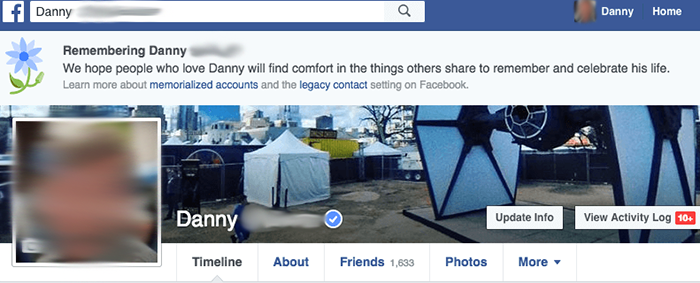
For the dearly departed, Facebook does have the option to memorialize your account. Facebook’s Help Center lists the following features for memorialized pages:

  • The word “Remembering” will be shown next to the person’s name on their profile.
  • Depending on the privacy settings of the account, friends can share memories on the memorialized timeline.
  • Content the person shared stays on Facebook and is visible on Facebook to the user’s audience.
  • Memorialized profiles don’t appear in public spaces such as in suggestions for People You May Know, ads or birthday reminders.
  • No one can log into a memorialized account.
  • Memorialized accounts that don’t have a legacy contact can’t be changed.
  • Pages with a sole admin whose account was memorialized will be removed from Facebook if we receive a valid request.

Facebook tributes

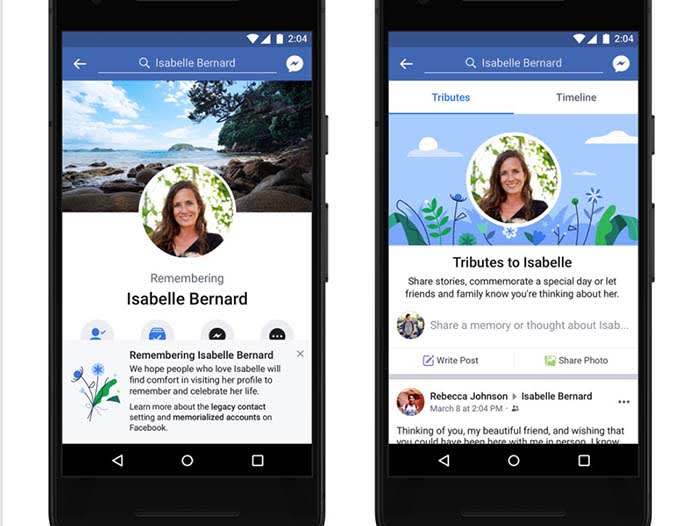
Facebook is also offering a tributes section on memorialized pages. Aside from what normally appears on the timeline, users can click a tab to see posts from others offering condolences.

Tributes are meant to allow grieving friends and family members to sift through their loved one’s content easily.
Facebook Tributes

Designate a legacy account on Facebook

To reduce confusion, setting up a legacy contact is a good best practice for Facebook users.

From the home page access the settings menu. From settings, click the “Manage Account” tab. From here, you can send a request to a trusted friend or family member to serve as your legacy contact.
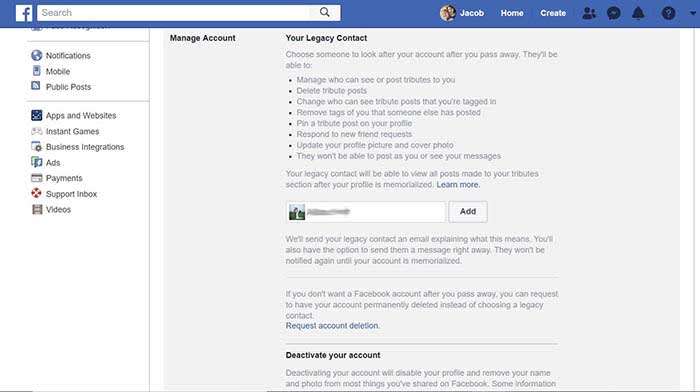
Legacy contactYour legacy contact has permission to do the following to your page, according to the Facebook Help Center:

  • Write a pinned post for your profile (example: to share a final message on your behalf or provide information about a memorial service).
  • View posts, even if you had set your privacy to “Only Me.”
  • Decide who can see and who can post tributes, if the memorialized account has an area for tributes.
  • Delete tribute posts.
  • Change who can see posts that you’re tagged in.
  • Remove tags of you that someone else has posted.
  • Respond to new friend requests (For example: old friends or family members who weren’t yet on Facebook).
  • Update your profile picture and cover photo.
  • Your legacy contact will be able to turn off the requirement to review posts and tags before they appear in the tributes section.
  • Request the removal of your account.

Your legacy contact will not have the ability to log into your actual account. This means that they cannot read your messages, or remove or add friends. Legacy contacts can respond to friend requests, but cannot actively seek out friends. 

Users under 18 cannot designate a legacy contact, but Facebook now allows the parents of the user to serve as the legacy contact.

Paying respects to Facebook

You could easily leave a note for your next of kin saying, “Here’s my login info; sign in and delete my account.” However, Facebook has streamlined the process with all these features so you don’t have to worry.

While grieving, the last thing most of us are thinking about is the online persona of the dearly departed. When the time comes to work on their Facebook page, Facebook has given you the tools to make the process as painless as possible. 

5 video games that have actually killed people

Discover the weird, terrifying ways some players have died because of video games.

Though gaming may seem like a pretty safe hobby, the reality is that playing video games can be seriously dangerous and detrimental to your health… and sometimes, even fatal. Hard as it may seem to believe, cases exist from all corners of the globe detailing gamers who have died while playing video games. The question is… what games could possibly be capable of killing their players? Here’s our list of some of the world’s most dangerous games.

The 5 deadliest games

5. Berzerk

berzerk arcade game
Image courtesy Atari

The first recorded case of a video-game related death dates back to the 1980s. Jeff Dailey, a 19-year-old gamer, hoped to make history by posting a high score in the arcade game Berzerk. Berzerk involved players controlling a human character, guiding their avatar through a maze-like arena while dodging incoming laser fire from opposing aliens. After a marathon session at his local arcade, Dailey posted a high score of 16,660 points immediately before suffering a fatal heart attack.

This story doesn’t end with Dailey, however. The very next year, gamer Peter Burkowski died in almost the exact same way, succumbing to a heart attack after making the high score list. Rumors still persist that some kind of curse hangs over Berzerk, but it seems more likely that the combination of the high-intensity game and marathon sessions led to the demise of the two teens.

4. World of Tanks

world of tanks
Image courtesy Wargaming

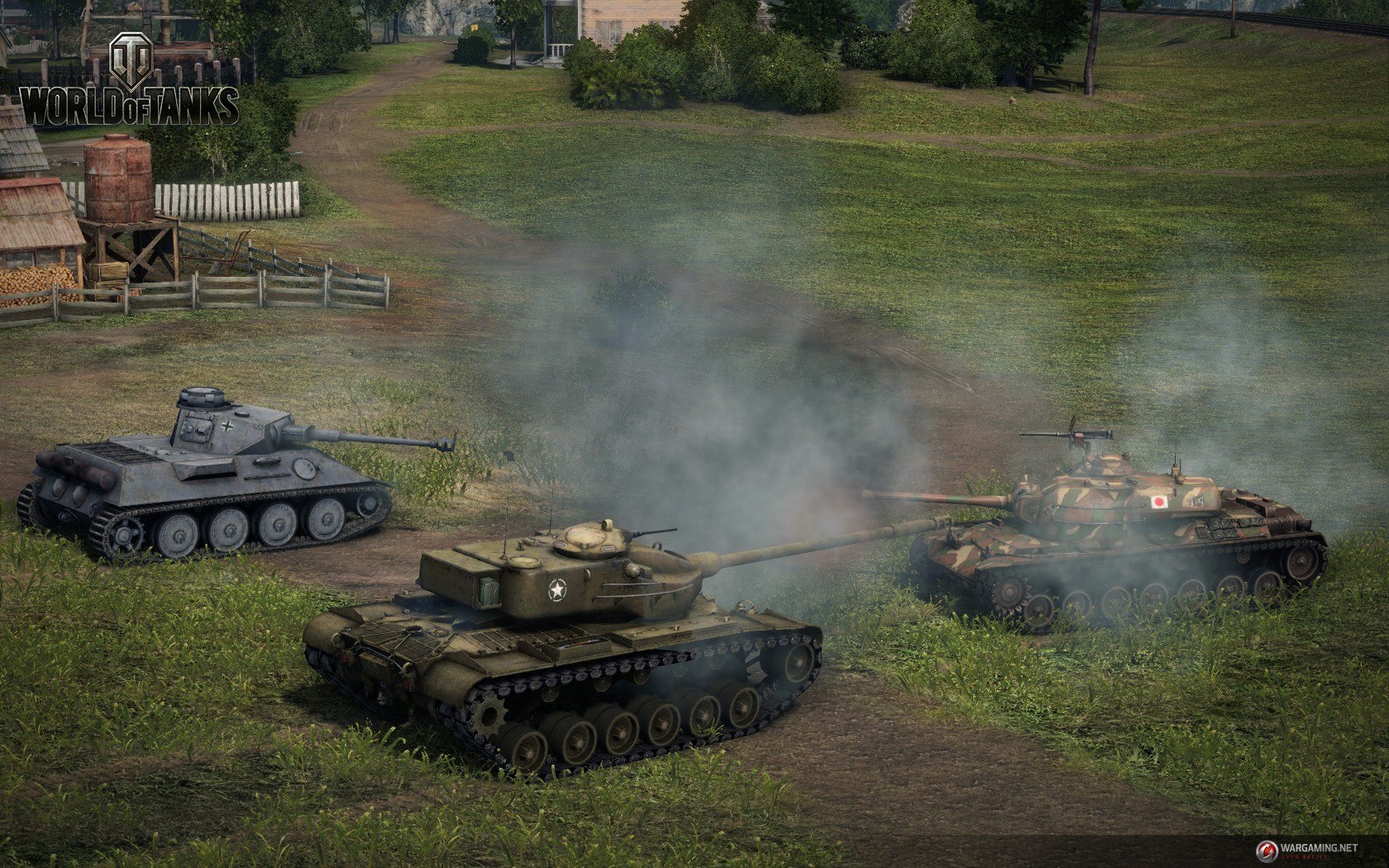
Twitch streamers are known for going to ridiculous lengths to attract viewers to their stream, such as the Fortnite streamer who recently dabbed for 10 straight hours. In 2017, World of Tanks player Brian Vigneault, also known by the username Poshybrid, had planned a similar marathon stream. His goal was to stream the game for 24 uninterrupted hours as part of an effort to raise money for the Make-a-Wish foundation.

Unfortunately, Vigneault only made it to hour 22. At around 3:30 on February 19th, Vigneault took a quick smoke break and never returned to the stream. Though most viewers assumed that Vigneault had simply drifted off, a friend who attempted to contact him later via Discord was informed by a detective that Vigneault had tragically collapsed and died.

3. Wii Fit

wii fit
Image courtesy Nintendo

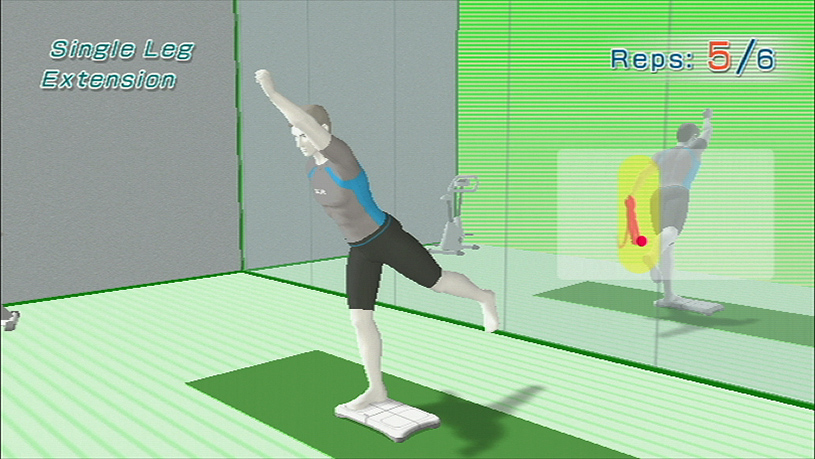
It seems somewhat ironic that a game designed for fitness could be fatal, but that’s exactly what it was in the case of 25-year-old Tim Eves. According to friends and family, Eves was the picture of health, working as a scout leader and moonlighting as the drummer for a local rock band. Eves had recently returned to England from a trip to Portugal to celebrate his mother’s birthday. While hanging out with his girlfriend, Eves decided to get in a workout using WiiFit. As his girlfriend looked on, Eves collapsed during a jogging session and was later pronounced dead. His official cause of death remains uncertain, but his otherwise excellent health has led some to suspect Sudden Adult Death Syndrome.

Unfortunately, Eves isn’t the only person to have been killed by a Wii. As part of a contest held by a local radio station, San Francisco resident Jennifer Strange died after drinking and holding two gallons of water, hoping to win one of the consoles. She died due to water intoxication, and the station was slapped with a whopping fine of $16 million.

2. Halo

halo 3
Image courtesy Bungie

Halo is a classic franchise with die-hard fans, although a few have taken their passion for the sci-fi shooter too far. In 2007, teenager Daniel Petric attempted to murder his parents after they took away his copy of Halo 3. After his parents banned him from playing the game, he managed to access his father’s gun safe. Retrieving a handgun, he shot both of his parents in the head. Though his father survived, his mother tragically died, and Petric himself is currently serving a lengthy prison sentence.

In 2011, gamer Chris Staniforth was known among friends for his Halo fanaticism. He reportedly engaged in marathon sessions that would last 12 hours or more multiple times per week. Unfortunately, these lengthy sedentary periods led a blood clot to develop in his legs. The clot eventually came loose and traveled to his lungs, leading to Staniforth’s sudden and regrettable death.

1. Starcraft

starcraft
Image courtesy Blizzard

It goes without saying that Starcraft can be incredibly addictive, with sessions potentially lasting for hours at a time. Some people, unfortunately, don’t know when to call it quits, and Starcraft addiction has been the cause of more than one fatality.

The case of Lee Seung Seop is perhaps one of the more famous instances of a gaming-related death, garnering global publicity when the story first broke in 2005. After quitting his job and breaking up with his girlfriend, Seop went to an internet cafe in South Korea, where he began his marathon Starcraft session. He played from Wednesday straight through to Friday evening, reportedly barely eating and drinking and only standing to use the restroom. On Friday, after friends begged him to return home, Seop suddenly collapsed in his chair. His death was later attributed to a combination of exhaustion and malnutrition.

In China, a man died under similar circumstances, eventually passing away after playing Starcraft for an unbelievable 27 straight days. In similar fashion to Seop, the man reportedly subsisted solely on a diet of Ramen Noodles and barely left his chair over the course of the lengthy session.

Compared to other hobbies like extreme sports, playing video games is a relatively safe pastime. Like most other things, however, games should be enjoyed responsibly. While it may be tempting to lose yourself in the virtual world, proper diet and exercise are necessary to avoid meeting a tragic and avoidable end.