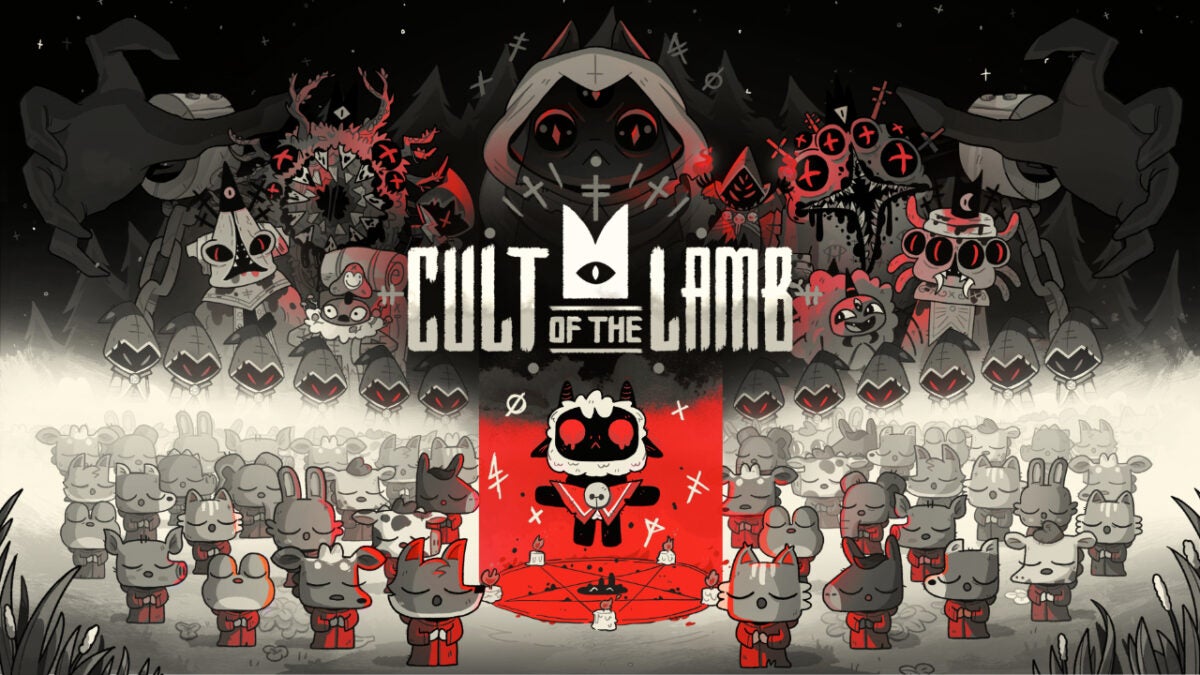
That’s right – Cult of the Lamb takes all the difficulty of a rogue-like and pairs it with cutesy characters, base-building, and sim-like mechanics. The art style and soundtrack give the game unique appeal, but there’s more behind the would-be sacrificial main character than meets the eye.
Let’s dive into the game to see why Cult of the Lamb might appeal to more than just fans of games like Binding of Isaac.
Story, setting, & tone
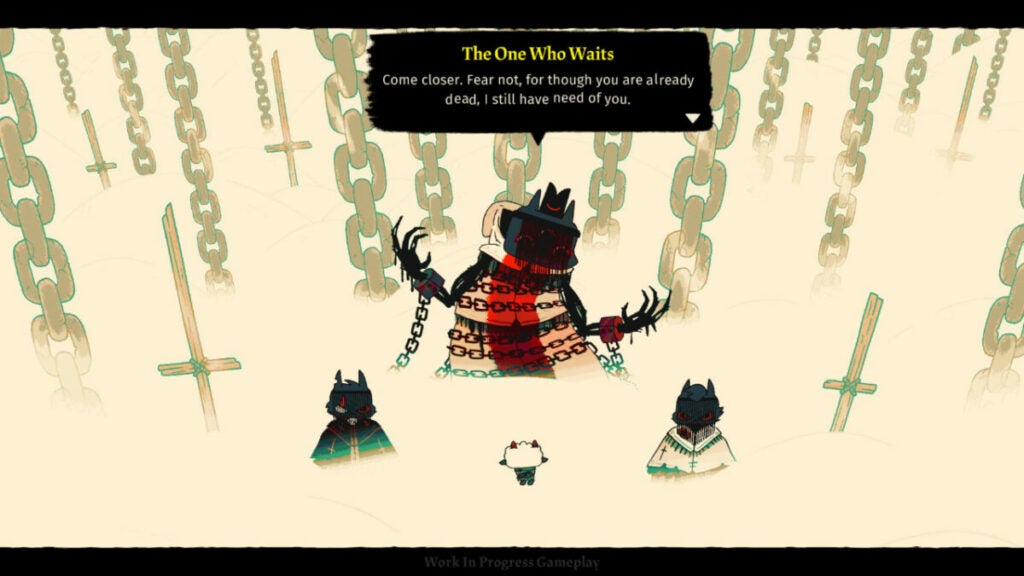
The setting of this game is very simple in that it’s established from the beginning moments of the game. You are a sacrifice to other-worldly gods for something called the “Old Faith.” Except, you aren’t quite sacrificed; instead, something calling itself “The One Who Waits” revives you at the cost of creating a cult in its name.
To that end, you roam around various areas controlled by Old Faith followers, recruiting people to your cult and slaying heretics. This may not have Warhammer levels of lore, but the game establishes its story much more by “showing” than “telling.”
Characters, though their existences seem bleak, have personality and a certain whimsy about them. The pairing of this levity with darkness keeps the narrative from feeling too overbearing or simplistic.
Cult of the Lamb performance
Massive Monster built this game on the Unity engine, so it runs very smoothly. The only hiccup I encountered was when I first loaded into the game. It did not natively detect my monitor’s aspect ratio and I had to set it manually. In the grand scheme of things, however, this is not a deal-breaker.
Most computers should be able to run it well along with the consoles on which it is available:
Nintendo Switch
Xbox One
Xbox Series X/S
PlayStation 4
PlayStation 5
Cult of the Lamb gameplay and functions
Since Cult of the Lamb is rogue-like, players do “runs” or attempt to beat the game until they run out of life. When that happens, they must start all over at the beginning of the game. However, as you progress through the game, you’ll get more powerful spells, weapons, and other perks. This can help you progress through the game.
But the other facet of Cult of the Lamb is the cult management simulator aspect. The player must take care of their “flock” so to speak, by feeding them and providing for them regularly. However, this works to your advantage as your followers can aid you in battle.
UI and interface
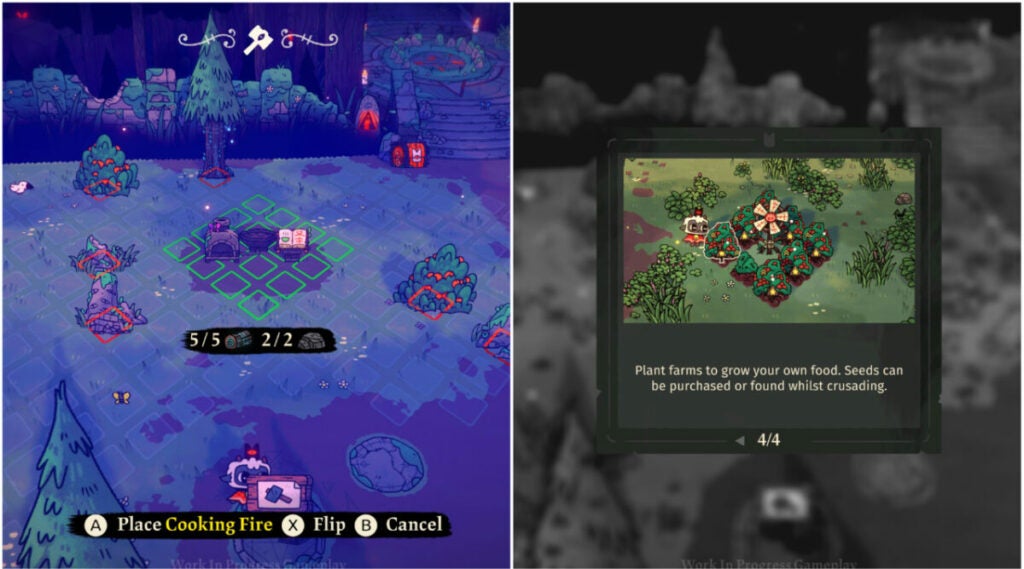
The UI for this title is uncluttered and straightforward. As with most rogue-likes, it’s best played with a controller. This might make the building aspects a bit cumbersome for players used to the freedom of a mouse and keyboard, but Cult of the Lamb smartly approaches this challenge.
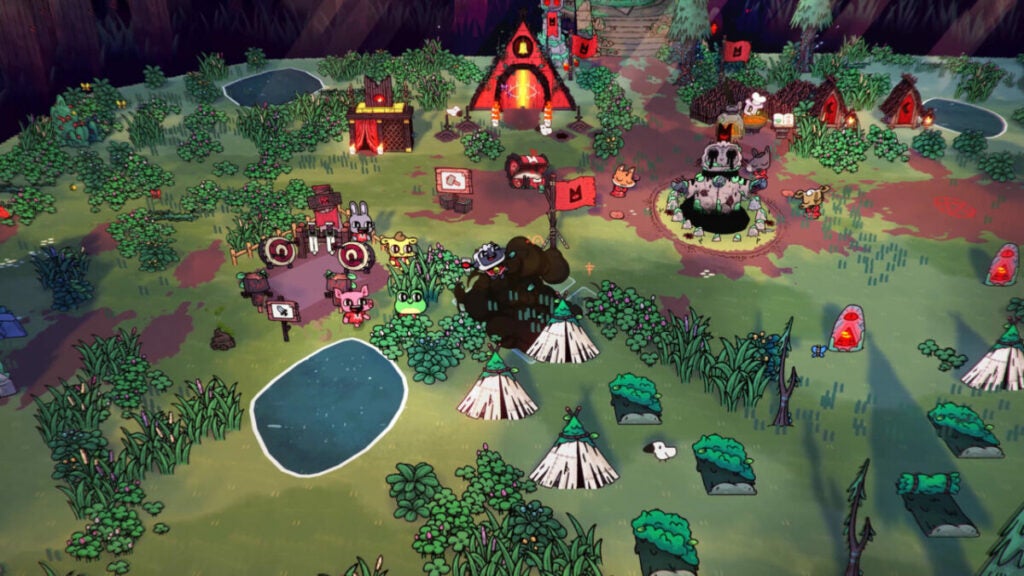
As you can see above, players can place their structures in set places. The red squares indicate occupied spaces (by resources in this case) while the green spaces indicate buildable land.
When it comes to combat and inventory, there is a simple radial menu players can access that displays whatever items they are using at the time. You can upgrade or swap out your weapons and spells/curses throughout the game as you discover them.
Control schema
Cult of the Lamb offers multiple control schemas for different playstyles. The default is a fairly standard setup, but you can customize it if desired. Again, this game is experienced best with a controller.
Key mechanics & combat
Players have three core mechanics for combat:
attack
dodge roll
unleash curse
The enemies are very mobile from the very beginning of the game, so you’ll need to learn how to time your dodges. The penalty for missed attacks can also be pretty punishing if you don’t time things right. In that vein, the game rewards players who take the time to learn enemy movements and tactics.
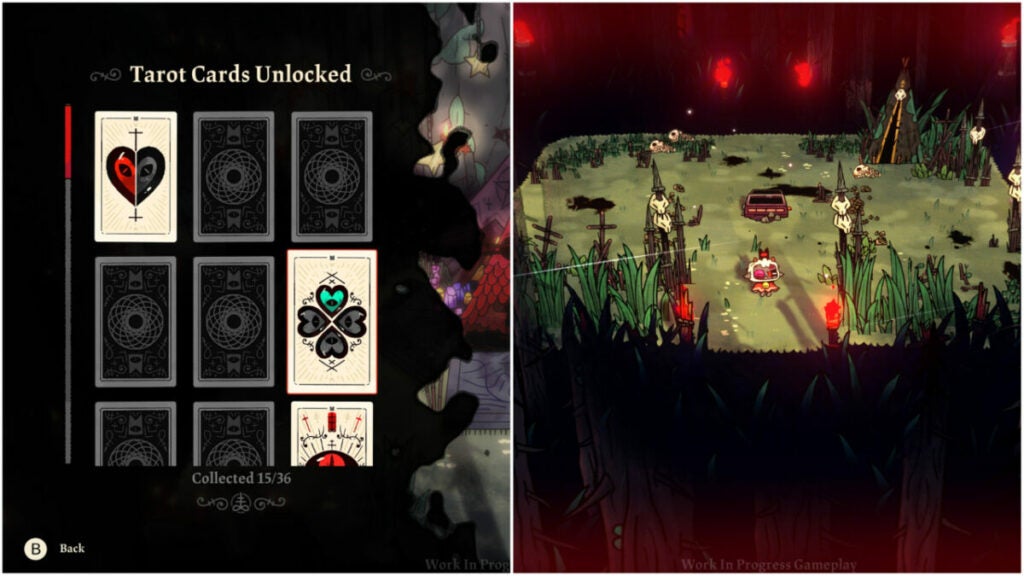
Beyond that, there are the Tarot Cards players can unlock as seen above. These provide buffs such as additional hearts, damage modifiers, and more. If you played Hades, think of it as the buffs you get from the various gods in the game.
Cult of the Lamb world, sound, & character design
It isn’t often that you get a beautifully colorful world with such a dark mission in a game. After all, you are running around as an inter-dimensional god-powered prophet slaying non-believers and recruiting followers at any cost. But you’re such a darn cute little innocent lamb!
Therein lies the crux of the game’s core design intent.
Sound design: pivotal to the experience
Many early reviews have raved about the phenomenal soundtrack in Cult of the Lamb. It’s almost a requirement of any good rogue-like game at this point since players spend a great deal of time exploring the game world. Though the game is procedurally generated, it ultimately has players treading similar ground.
The soundtrack keeps things fresh and provides adrenaline boosts in key moments during big fights. It can also set the atmosphere while you are constructing your cult camp. See if you can identify musical motifs for different characters.
The characters speaking different languagesis another detail that can’t be missed. It adds to the feeling that these are real people in a real-world dealing with…terrifying cult monsters.
Character design: behind those cute smiles are sharp fangs
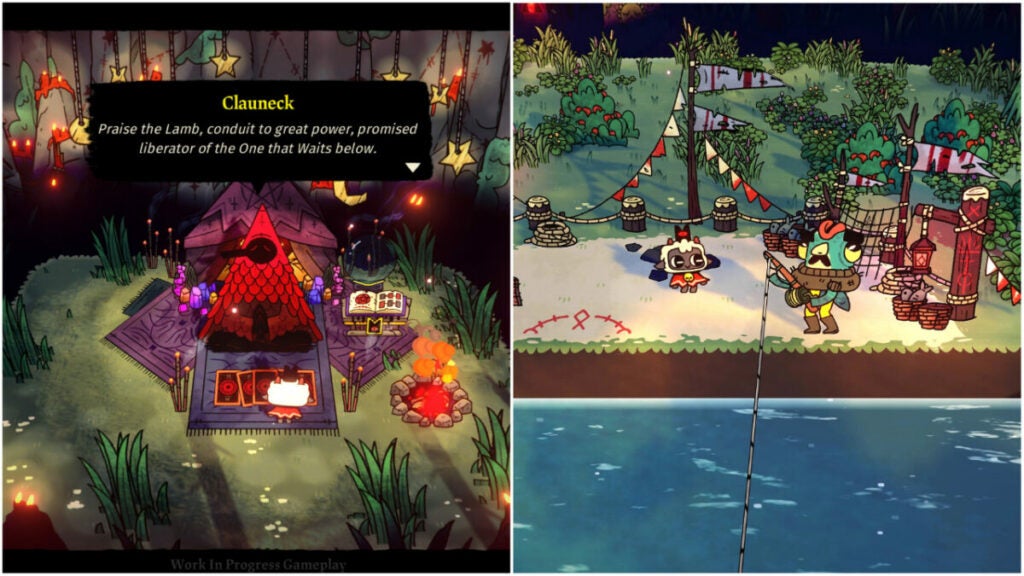
Despite being an adorable farm animal, the protagonist is a murder machine. Every character exudes this juxtaposition in Cult of the Lamb. There is always just something a bit off about many of the characters that the player meets. Clauneck, for example, seems welcoming and helpful. But why is this dude chillin’ in a forest infested with zealous cultists handing out buffs?
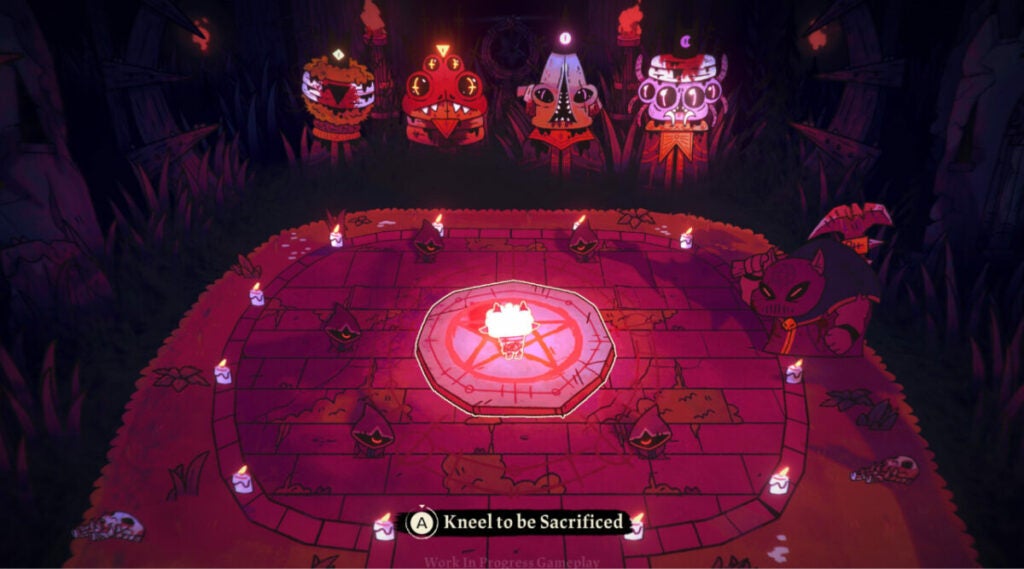
The Old Faith gods are also quite the sight. They invoke classic themes of horror like spiders, eldritch creatures, and more. Again, there is a juxtaposition to the player character (a lamb) who will one day defeat them. And that requires followers.
Part of the fun of the game is playing with how you build your base and care for those followers. You can also customize them, give them unique names, and deal with various positive and negative traits.
World design: a lived-in, beautiful disaster
Though there isn’t a dedicated overworld, Cult of the Lamb still has a lot to offer in terms of world design. The individual encounters, while simple in their setups, keep things interesting with different set dressings, enemies, and obstacles.
The cult camp you can create is also highly customizable. Though a bit flat, the character that your followers bring to the space does a ton of work to make things feel more chaotic (in a good way).
This, in tandem with the four different areas of the Old Faith realm, offers the player lots of variety to experience. Overall, the whimsy, color, and richness of the world design help the characters feel all the more real.
Verdict: Cult of the Lamb is great for any gamer
Cult of the Lamb really does have something for everyone. Fans of games such as Valheim or even The Sims will appreciate the base-building and follower monitoring mechanics.
The combat may prove a bit frustrating at times, but this game is meant to be played over and over again. Ideally, you will get farther each time you play it. And with a game so easy to pick up and put down, it’s simple to do just that.
PROS
Fantastic art style
Incredible soundtrack
Straight-forward control schemas
In-depth tutorial system
Great replayability thanks to procedurally generated maps and customizable builds in each run
CONS
Useful, but limited accessibility features
Rogue-likes aren’t for everyone
Fans of keyboard and mouse sim games may find the controller more cumbersome
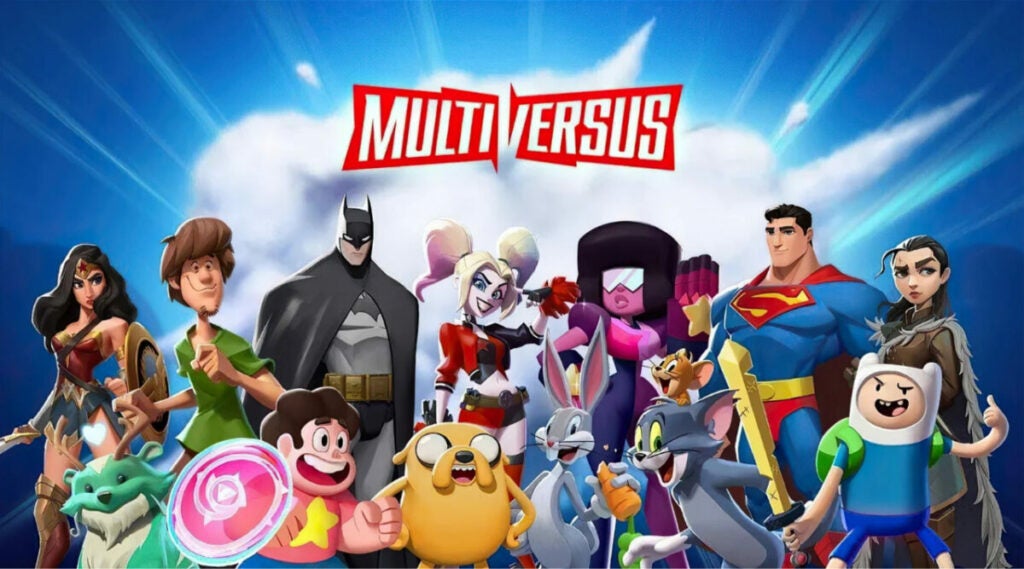
The fighting game smashes together characters from all over animation — but not all of them are the best beginner characters in MultiVersus. Though the game has familiar mechanics, everyone has to start somewhere, right?
Dive in with a little insider knowledge to see which character playstyles work best for you. Let’s break down the best characters in MultiVersus for beginners.
For the best beginner characters in MultiVersus, start with Shaggy
Cost: 1500 Gold or 700 Gleamium
The hapless Scooby Doo investigator really brings it on the battlefield. Categorized as a bruiser type, Shaggy excels at getting in your face and retreating quickly. You can put down lots of damage with his basic attack alone. In tandem with his “Zoinks!” ability, you’ll do even more damage and you can heal others by throwing them sandwiches.
If you want to get a feel for the game physics, the maps, and how the game handles overall, beginners should try Shaggy first. Unfortunately, Shaggy does not start out as an unlocked character.
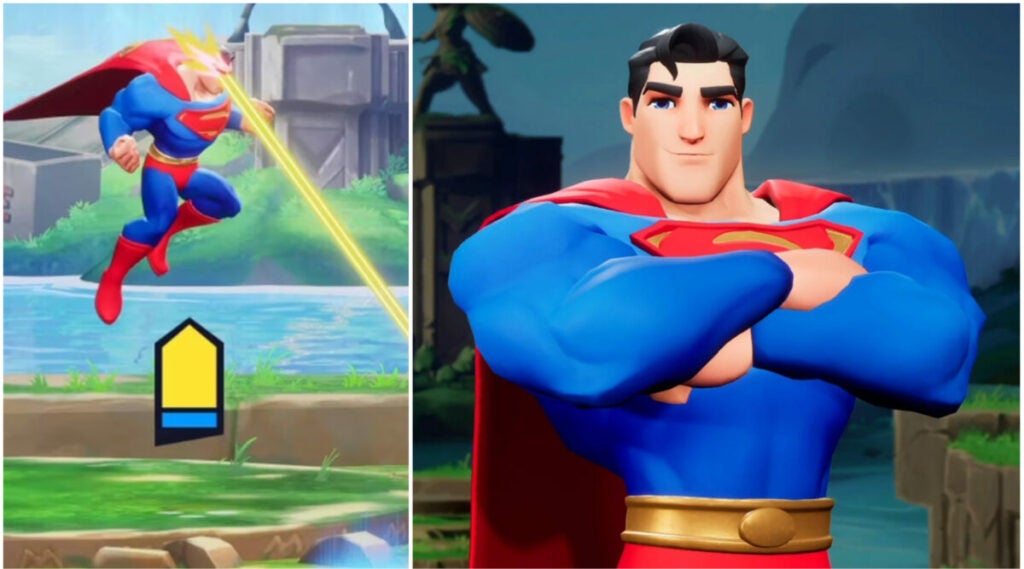
Learn to tank with Superman
Cost: 2000 Gold or 700 Gleamium
If you want to learn the basics of MultiVersus, Superman makes for a fantastic introductory character. The man of steel comes equipped with everything one needs to be a super tanky fighter. He can take many hits and still keep on coming.
Unlike characters like Wonder Woman, Superman offers more inherent versatility. He isn’t as impaired by cooldowns and his elemental abilities provide useful ranged options.
Bugs Bunny the Magician, see?
Cost: 2000 Gold or 700 Gleamium
The classic cartoon sass machine is one of the best mage-class options in MultiVersus. Typically, mage types tend to be less robust than other characters. But Bugs has a surprising amount of survivability making him ideal for anyone trying to learn the mage class.
Use “Bunny Burrow” to evade enemies if you feel in danger. That gives you time to regroup and reposition. This character is also fantastic for people who want to practice against real people instead of AI with less anxiety.
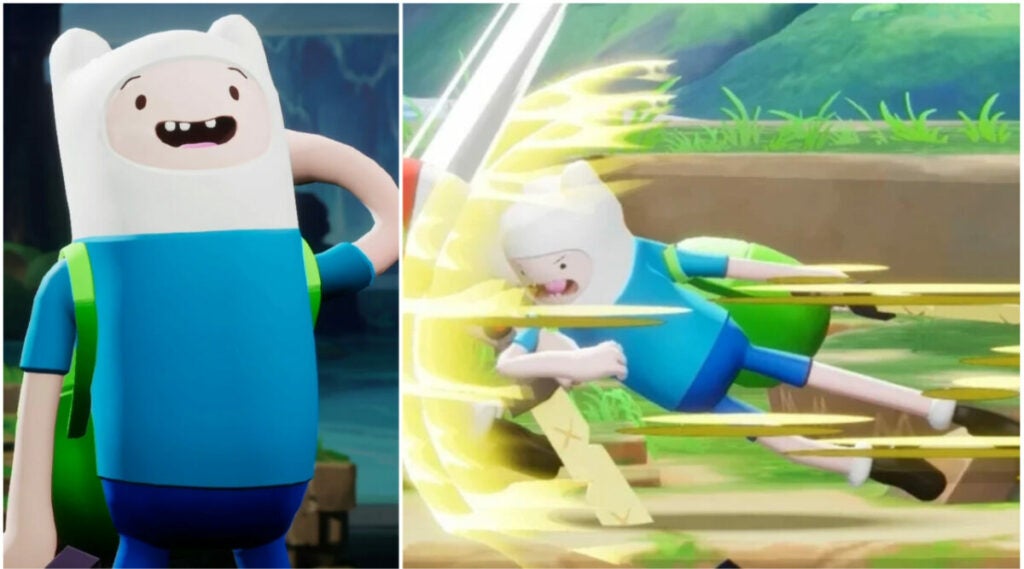
Finn the human: one of the best beginner characters in MultiVersus
Cost: 2000 Gold or 700 Gleamium
Affable, good-natured Finn actually falls under the assassin class in MultiVersus. This makes him very susceptible to damage, but also able to deal explosive damage quickly. If you are the type to quickly ambush an enemy and then quickly flee after a couple of hits, Finn is the character for you.
Finn is great to learn basic assassin mechanics, but new players can get distracted by his coin collection passive ability. Every coin you collect grants you additional damage, but you shouldn’t go for a single coin if it means you will take lots of damage.
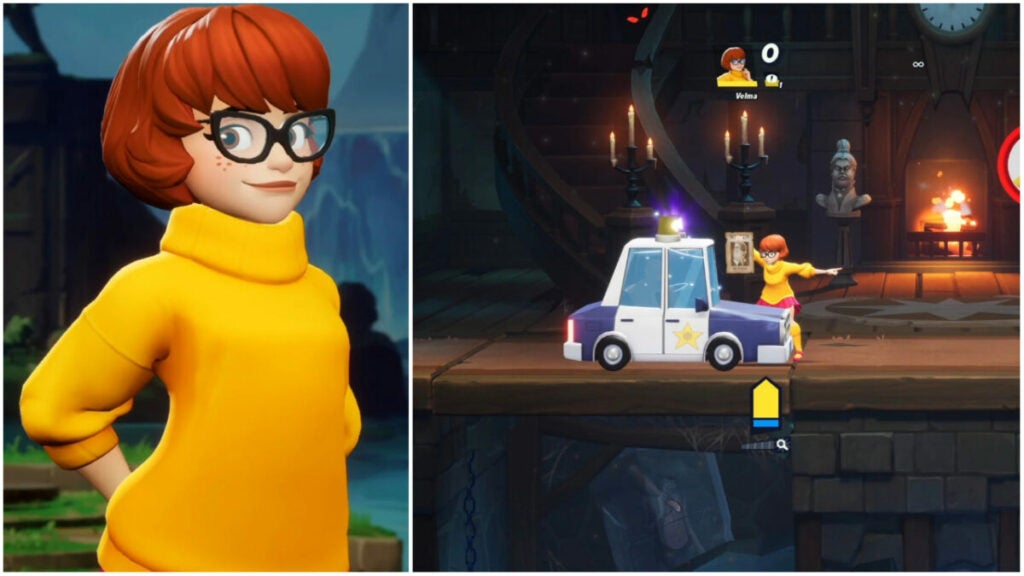
From super-sleuth to super support with Velma
Cost: 2000 Gold or 700 Gleamium
Playing a support class character in MultiVersus is a developing process. But Velma is a solid place to start to get the hang of how best to help your teammates. However, Velma can do damage herself.
Her mobility and speed come in handy when keeping apace with teammates. Players can also collect “evidence” in order to summon a police car in battle. As with other games such as League of Legends, support roles are focused on buffing, debuffing, and crowd control.
Jake the dog teaches you timing
Cost: 2000 Gold or 700 Gleamium
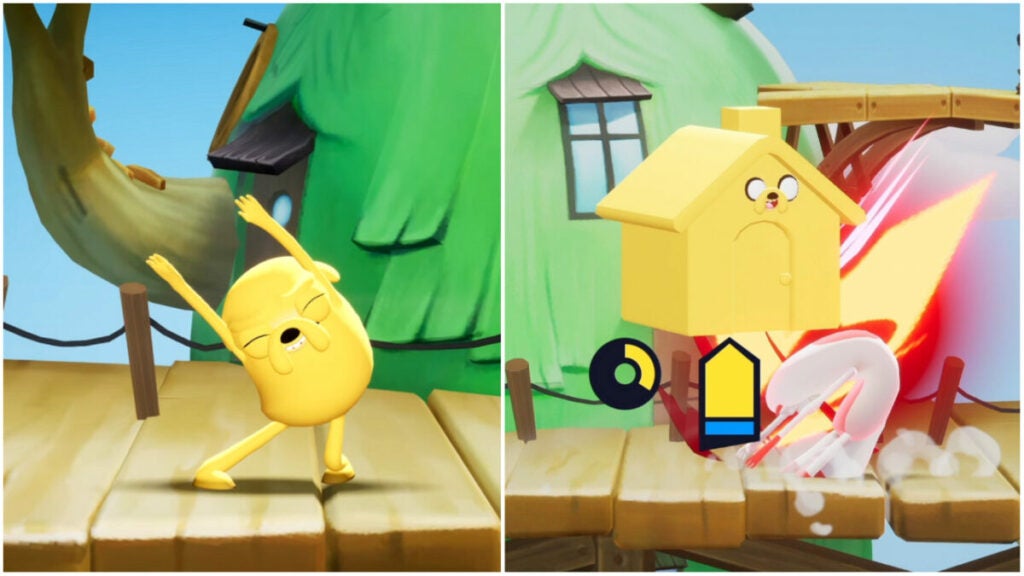
Another Adventure Time character, Jake is deceptively simple despite seeming difficult to learn. He’s a bruiser with lots of active abilities and the power to transform. This freedom is what may take some new players time to adjust to, but Jake is one of the best characters for learning the ins and outs of MultiVersus.
Fall back on the basics of the fighting game then start to experiment. You’ll learn when to time abilities for maximum benefit and when to engage or disengage in combat.
Get up close and personal with Harley Quinn
Cost: 2000 Gold or 700 Gleamium
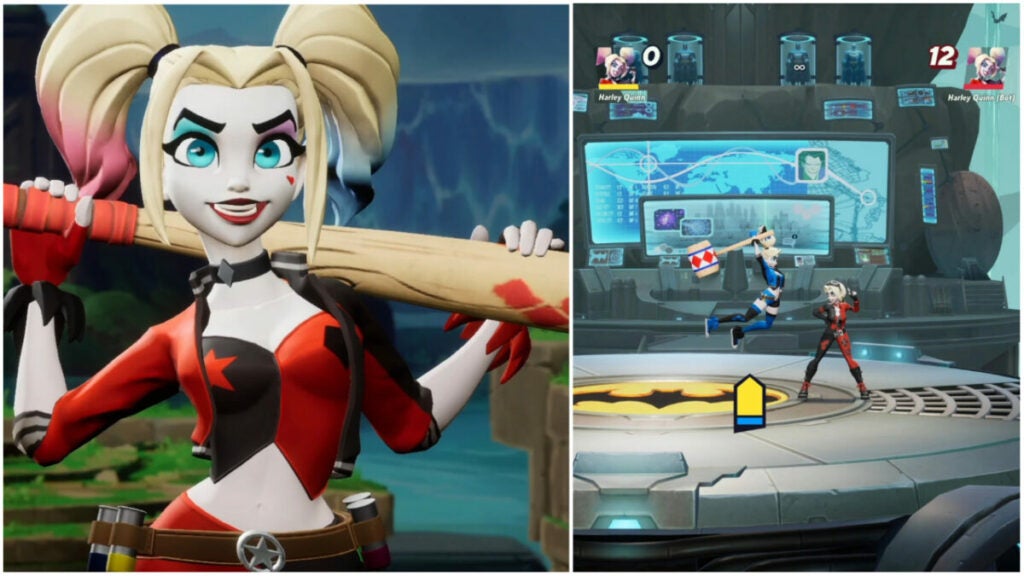
The in-your-face psychiatrist turned villainess/occasional good guy is another assassin character in the game. What makes Harley one of the best characters for beginners in MultiVersus is her easy-to-pick-up skillset.
You can use her close-range attacks for damage but maintain distance while still doing damage with ranged abilities. The biggest learning curve lies in her “Confetti Debuff” ability as timing it can be a bit tricky.
Reindog: a different kind of support character
Cost: 2000 Gold or 700 Gleamium
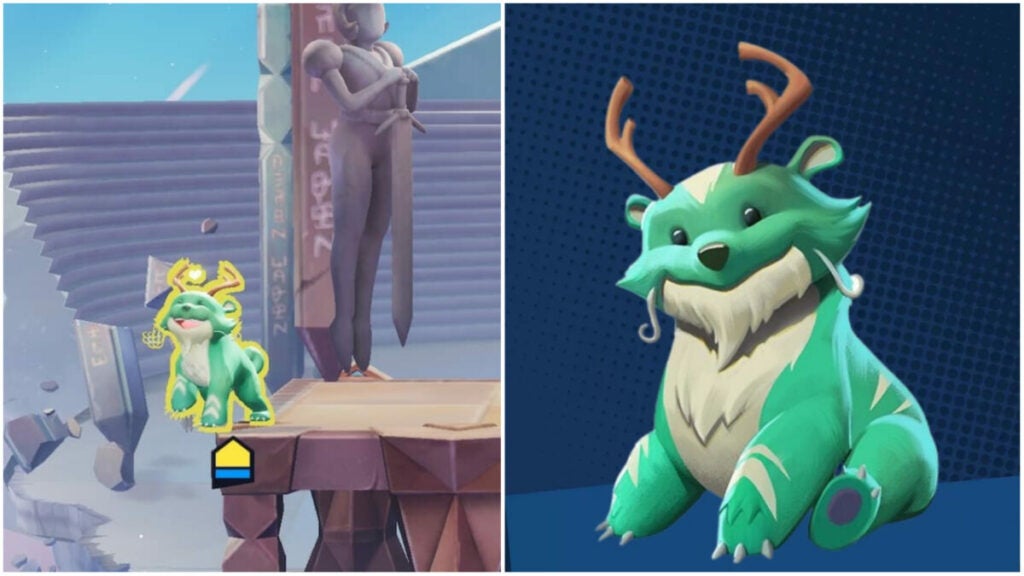
Reindog is another support class character in MultiVersus and the only original character so far. His skill set is very accessible for new players in how straightforward it is. You can attach a tether to another character that damages enemies who touch it.
This makes Reindog a fantastic option to learn positioning in the game. He’s also an adorable hybrid of a reindeer, a dog, and some kind of teddy bear Pokémon.
Taz: hard to balance, but easy to learn
Cost: 1500 Gold or 700 Gleamium
Taz’ skill set is so hard to balance, but it never stops being fun to play. Even if the game keeps changing around his damage numbers and other stats, he remains of the best characters for beginners in MultiVersus.
Another bruiser character, Taz has high mobility and can even transform his enemies into food for himself or teammates using a debuff. Just be careful not to fling yourself off the map with his spin attack accidentally.
How do I get free characters in MultiVersus?
Unfortunately, it’s not easy to obtain characters in MultiVersus. There is a free-to-play character rotation every 2 weeks with just 4 characters available. If you want more variety or a specific character, you’ll have to pay the Gold or Gleamium cost.
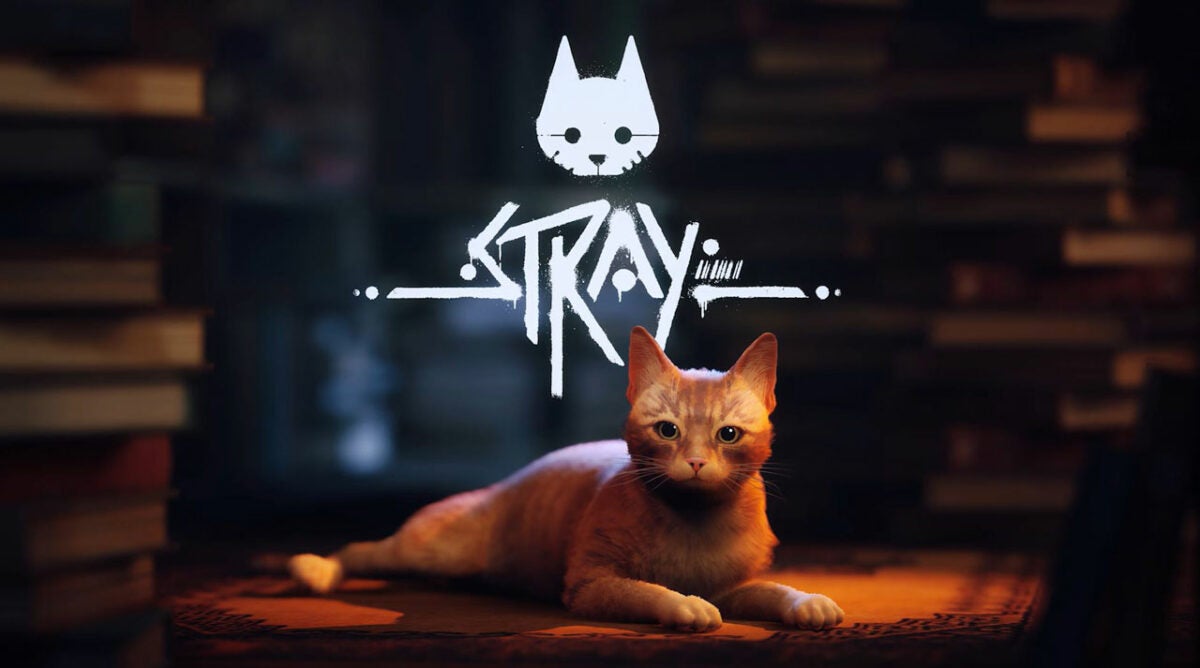
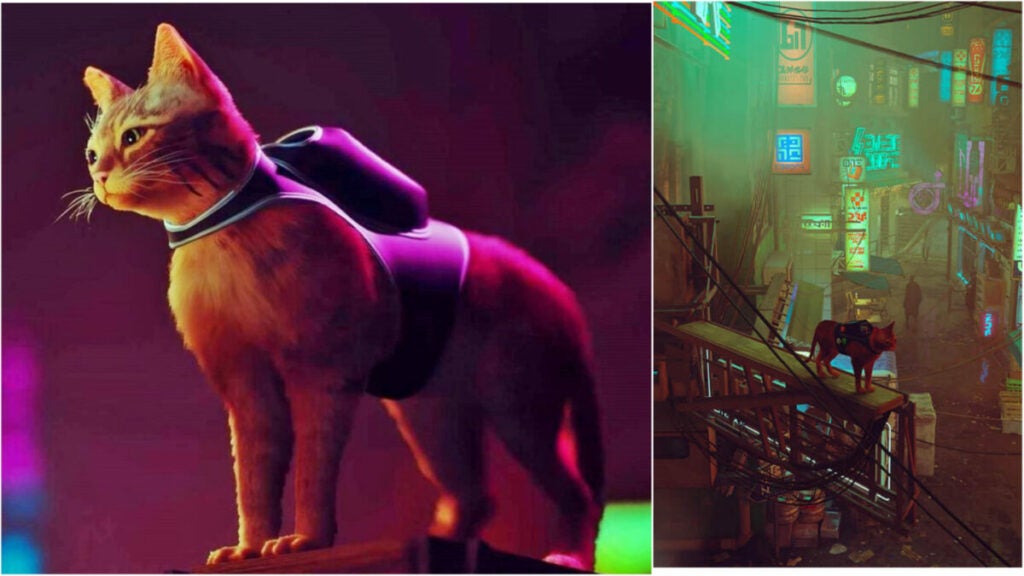
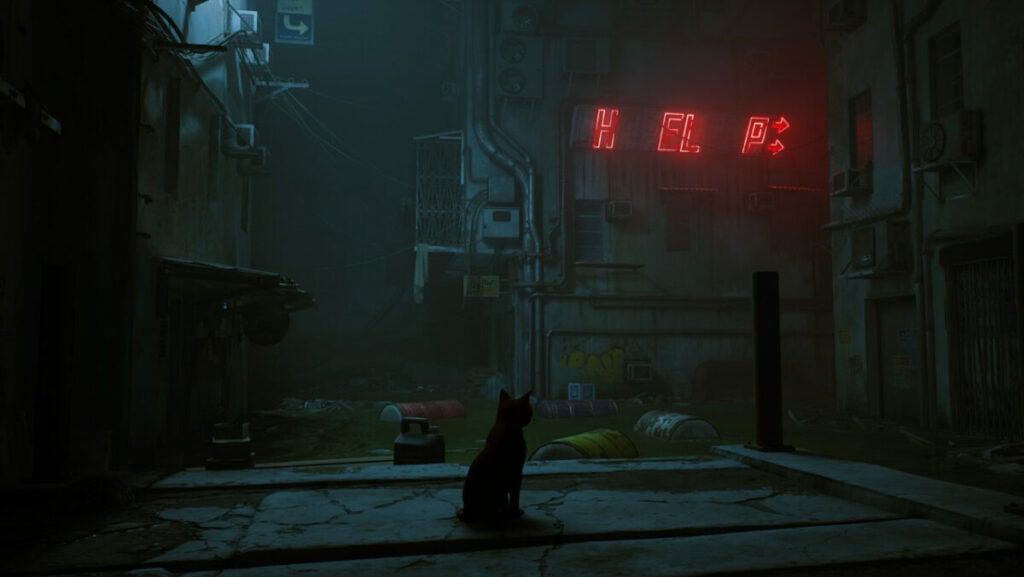
Stray, the long-anticipated game from BlueTwelve Studio and Annapurna Interactive where you play as a cat in a cyberpunk landscape, finally dropped. The game features some unique elements in that the type of gameplay players experience can be on rails at certain points. This means that you’ll need to adjust your overall playstyle to the game’s choices.
But don’t worry: you can still jaunt around and knock pots off of shelves as a cute little stray cat. You can even wear a backpack (and totally hate it at first). Here are the 5 best tips for Stray.
Curiosity has its pros and cons in Stray
Like cats in real life, it pays to be curious in Stray. Explore all of the nooks and crannies — especially when you visit hubs. As mentioned, the game tends to dip in and out of genres and styles. Sometimes, you’ll be more of a detective, trying to sniff out hidden quests or items.
If fetch quests with character like those found in Ghostwire: Tokyo aren’t your bag, you don’t have to do all of them. Just keep in mind that the game tends to reward those who explore more.
But be wary not to explore too far ahead of where you’re supposed to be in the game’s story progression. You could get locked out of an area. In addition, if youpoke around too much at random objects, you might get your head trapped in a bag — just like a real cat would.
Embrace the verticality
In the same vein as exploring everything, players need to remember to exploit the game’s verticality. While you can’t always jump, you should take advantage of all the times that you can. You’re a cat after all, so why not perch on a roof somewhere?
This also affords you a better view of the city and, since cats cannot use or read maps, this might also give you a better idea of how to get to a place you want to visit. Knowing what’s coming might also help you in combat.
Enjoy being a stray cat
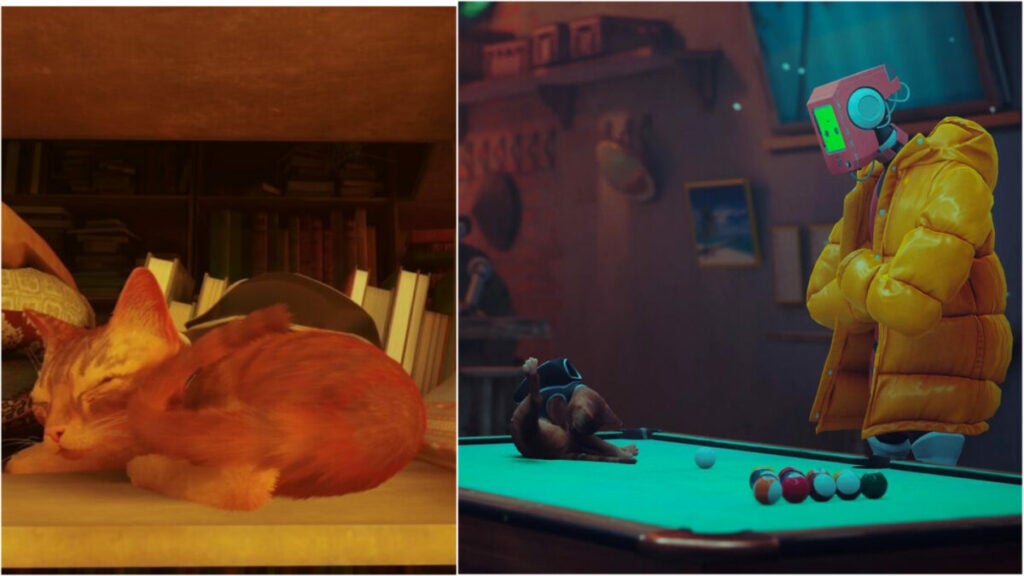
Stray is about playing as a cat. That means that you can do lots of behaviors like real cats such as purring, nuzzling NPCs, jumping, etc. You can even curl up and nap in a cozy area for a spell and the game has lots of these nooksfor you to do just that.
In fact, the game seems to encourage you to indulge in the cat-like behavior. If you warm up to the android NPCs, they will lean down to pet you. A controller will vibrate when you purrand you can also spam “meow” to get attention, attract enemies, or just for fun.
Another pro-tip: your meow will cause issues with the city’s electrical grid early on in the game. After you meow, a neon arrow will flicker to guide you in the direction you need to go in.
Signs and vending machines
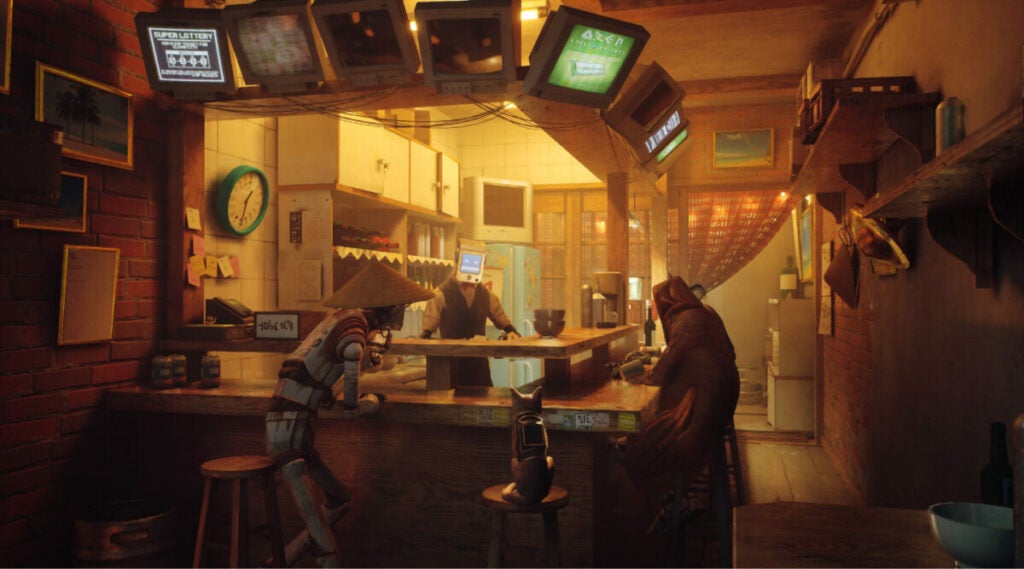
The environment in Stray is just as fulfilling and full of life as the main character itself. The rich background brims with details and secrets. One such secret is that the various signs you come across can provide hints at where to go next or how to find something interesting.
Additionally, vending machines provide currency (energy drinks) for the world. You shouldpick up all the ones you can to trade them later on in the game.
Certain actions reveal items and areas
So, getting a good look from a high vantage point can help you with the city layout. But these are two other key things to do to find items and areas.
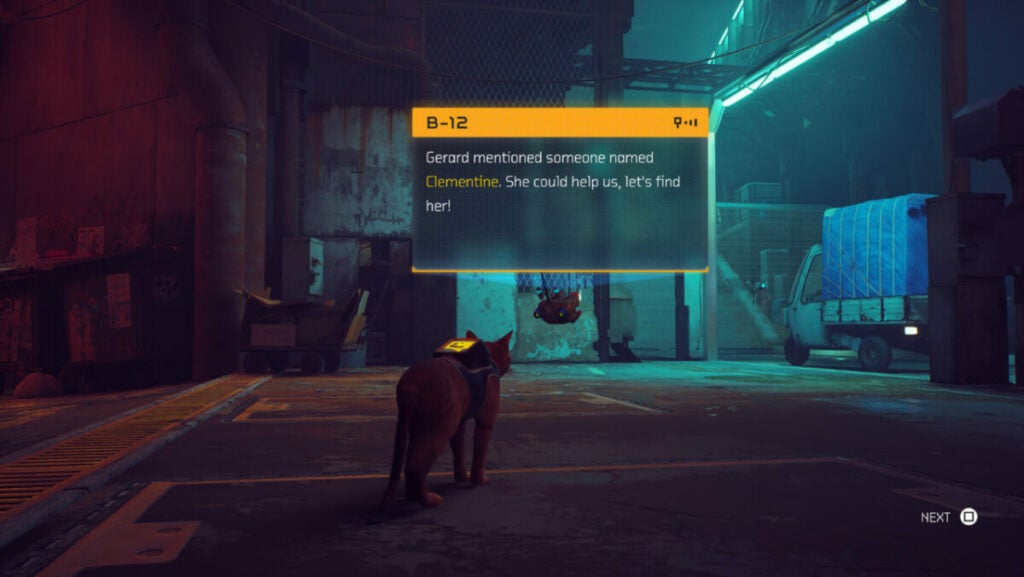
First, the B-12 backpack lights up when the stray is near something such as a terminal or dialogue opportunity. Don’t miss out on this critical visual cue if you want to get achievements and experience all the game has to offer.
Secondly, as with meowing and other cat behaviors, sharpening your claws on various real-world scratching posts will reveal areas. For instance, you could claw at a drape or paw softly at a closed door. Someone may end up opening the door for you and open up an entirely new spot to explore.
Where can I play Stray?
The game is set to get a full physical release with preorders starting on July 12th. For now, players interested in experiencing life as this adorable feline can play digital versions on Windows PC, PlayStation 4, and PlayStation 5.
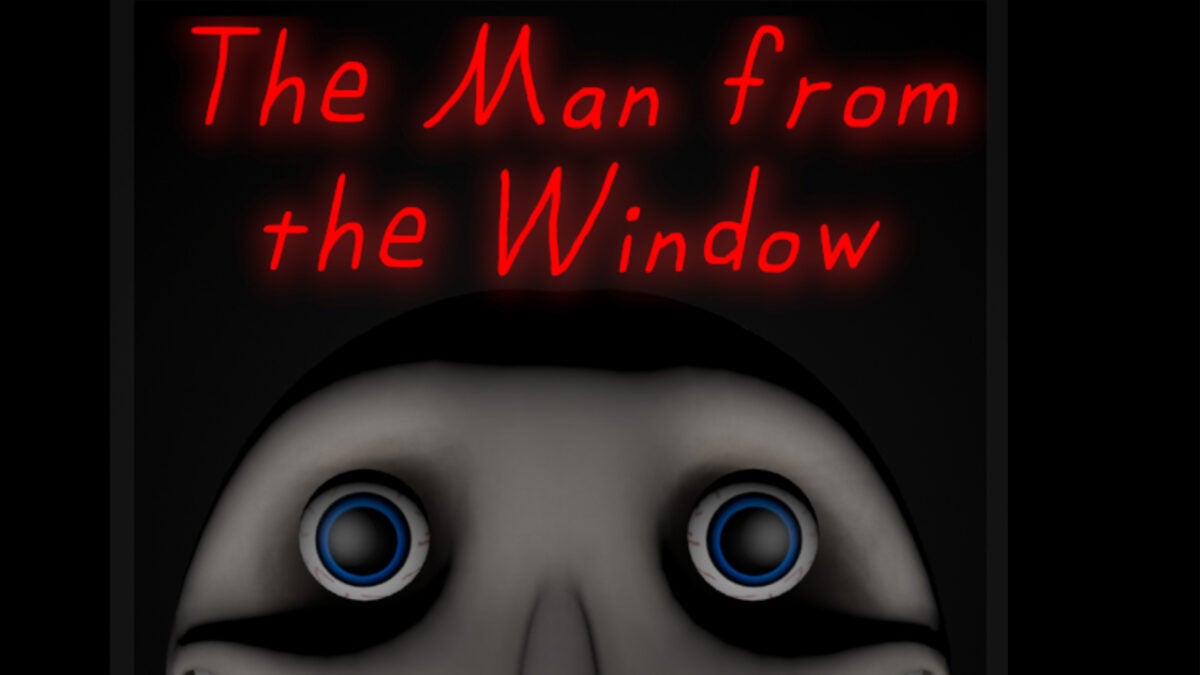
Survive those terrifying 5 minutes using these The Man from the Window survival tips. The game takes place at a home with a small child and his overworked single mother and involves a seemingly innocuous storybook for children.
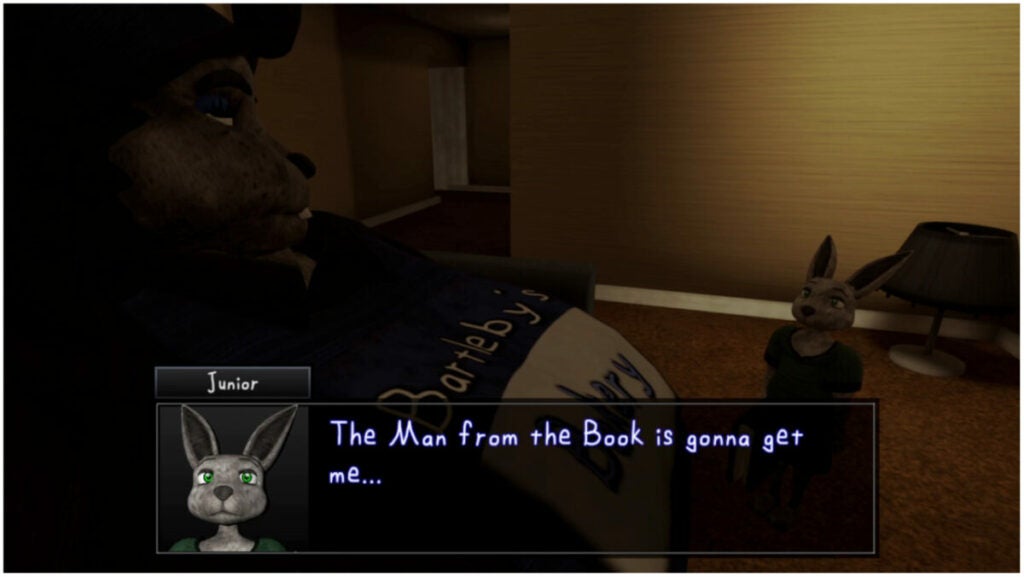
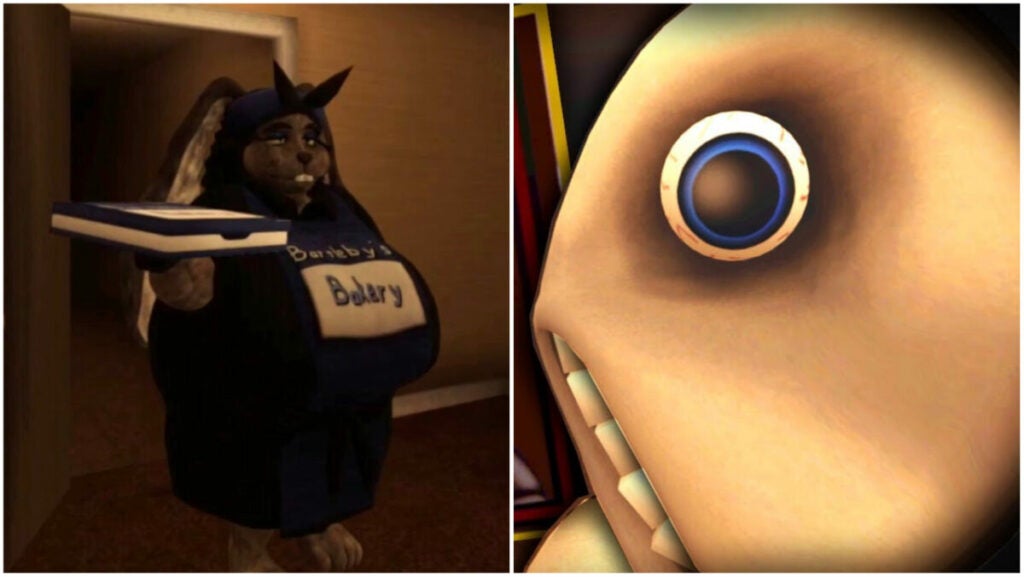
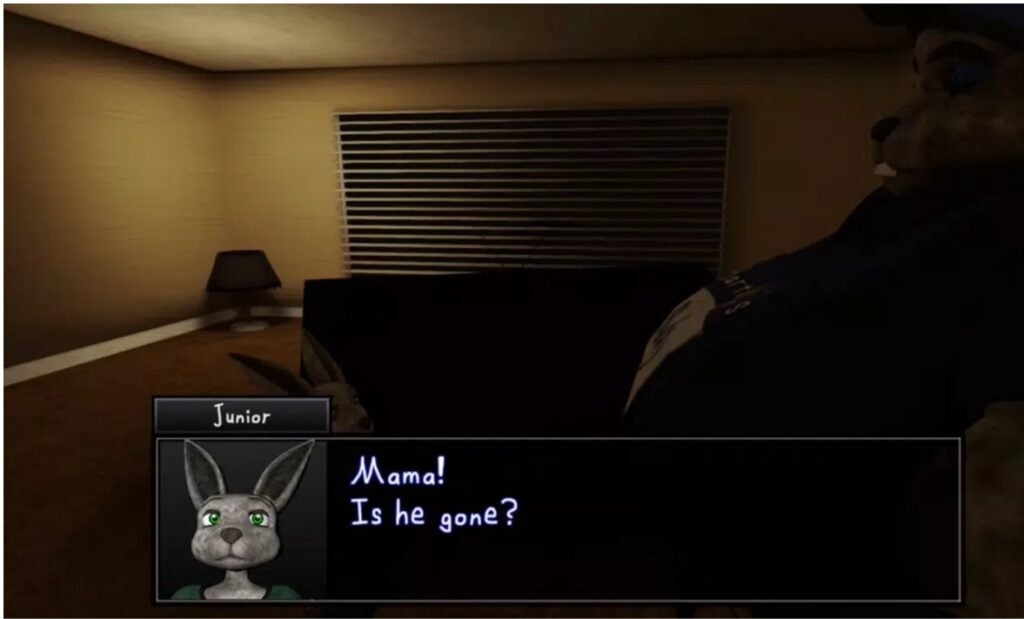
The characters, who happen to be humanoid rabbits instead of ordinary humans, must find suitable hiding places and stay hidden to prevent one of them from becoming The Man’s latest “Friend”.
What is The Man from the Window?
Before we jump into The Man from the Window survival tips, let’s cover what The Man from the Window is for those who may not know. This game, similar to many other very small indie titles like the original Slenderman game, is a horror story centered around exploration and avoiding a scary monster.
Unlike something like Five Nights at Freddy’s which has mechanics with flashlights and multiple “monsters”, this game really only has one: distracting The Man to find a place to hide. But the first half of the game takes place in Mama’s perspective and the latter half takes place from The Man’s perspective.
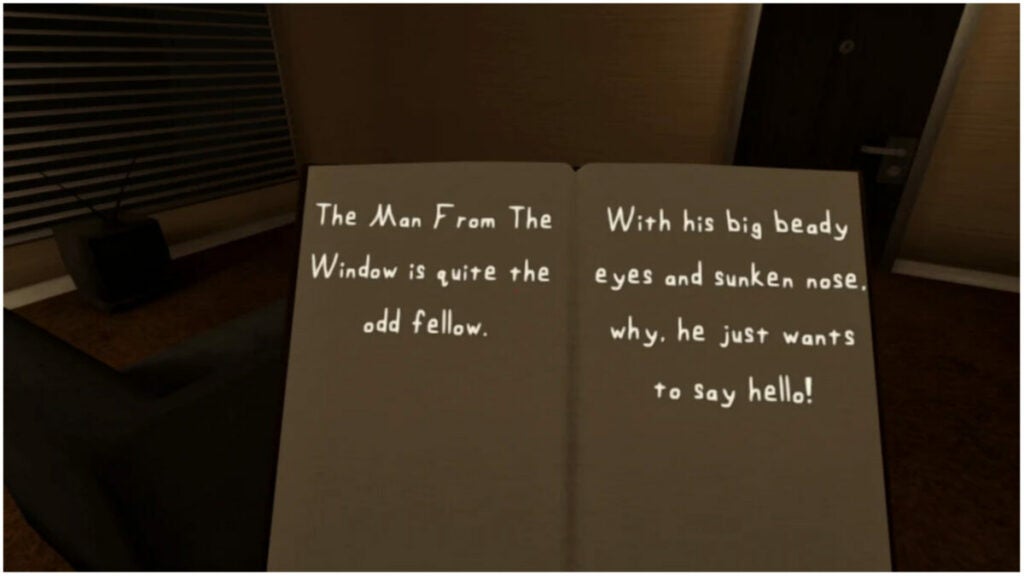
When it comes to finding a good hiding place, Mama must use the Book for clues on what to do. There are 3 possible endings for the game, but these survival tips should help both Mama and Junior survive The Man.
Pay attention to what the book says for The Man from the Window survival tips
As mentioned earlier, the book’s rhymes offer the best tips on how to avoid The Man when hiding. It will list all of the places he will search for a “Friend” and in what order.
Of course, these hints can be interpreted in a variety of ways. The phrase “what holds water” could be the refrigerator or the tub or under the sink. Pro-tip: he checks everywhere you might think he would.
Reread the book for every playthrough
We already know that the book indicates where The Man will check for Junior and Mama Rabbit. However, players can also learn in what order he checksplaces each time they play.
It will change every time you start a new game, so be sure to read the book each time you start a new game. That’s the only way you’ll be able to survive the entire 5 minutes.
Use the donuts and furniture to distract The Man
Mama Rabbit brings home donuts when she gets home from work and leaves them on the table. Later on in the game, these same donuts can be used to distract The Man from attacking the player. Leave the box open and he will take one minute to eat them. This gives you more time to survive the 5 minutes he will have to find you.
Similarly, Mama Rabbit can make a furniture blockade to distract him, as well. Players can use the chair or the couch to barricade the door. But each of them distract The Man for different amounts of time.
The Man cannot find Mama Rabbit in the tub despite how visible she is
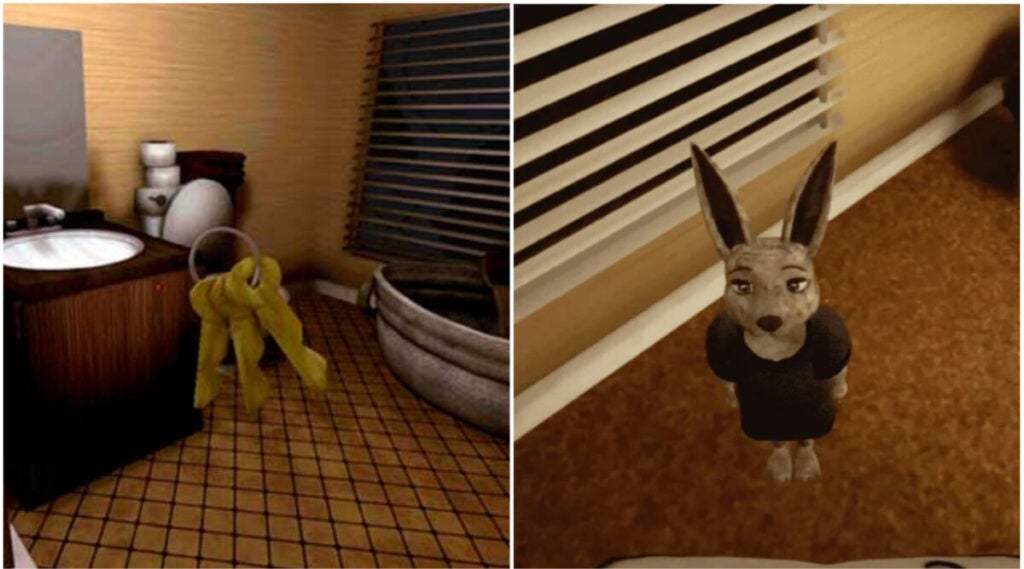
Though not a realistic element to the story, Mama Rabbit can use the tub to evade The Man from the Window. For some reason, he will not be able to find her if she hides in it (provided The Man wastes his entire 5 minute search period).
Perhaps the developers intended this as a safe space; perhaps they just overlooked it. Either way, use this to your advantage.
Pick up Mama’s keys off the table
Fans of games in the Warhammer and Warhammer 40K universe will understand the importance of door lock mechanics. A locked door can be the difference between victory and certain destruction. The Man from the Window has a similar feature where locking a door can buy you more time to survive.
Players can lock the bedroom, bathroom, and front doors. Though The Man will not always look in a particular spot first, he will spend 30 seconds destroying the door locks. Use this to your time advantage along with the time you get from all of our The Man from the Window survival tips.
More games like The Man from the Window
Slenderman: The Eight Pages and Five Nights at Freddy’s are obvious choices if you want more games like this one. But the are others that might offer more unique challenges or more intriguing experiences, too.
Erie
This game, set in 1966, has the player searching for survivors at a power generator where a meltdown supposedly took place. Erie is much bigger than The Man from the Window and has more scares, so be prepared for them!
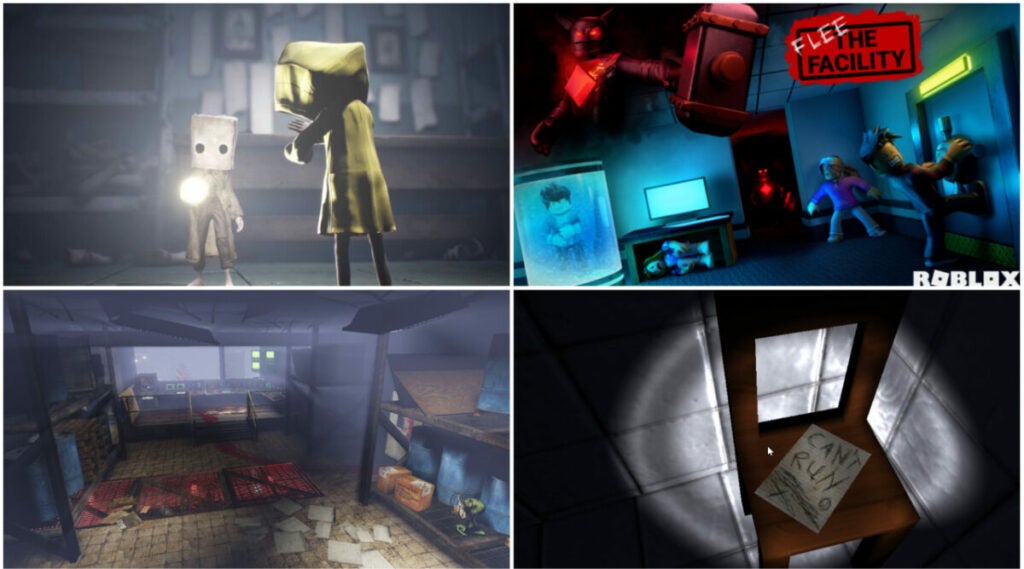
Little Nightmares
Little Nightmares is a bit more involved and definitely longer than The Man from the Window. But with that comes a more engaging story and many more puzzles to work your way through. There is even a sequel in the form of Little Nightmares 2, as well.
Roblox Horror Games
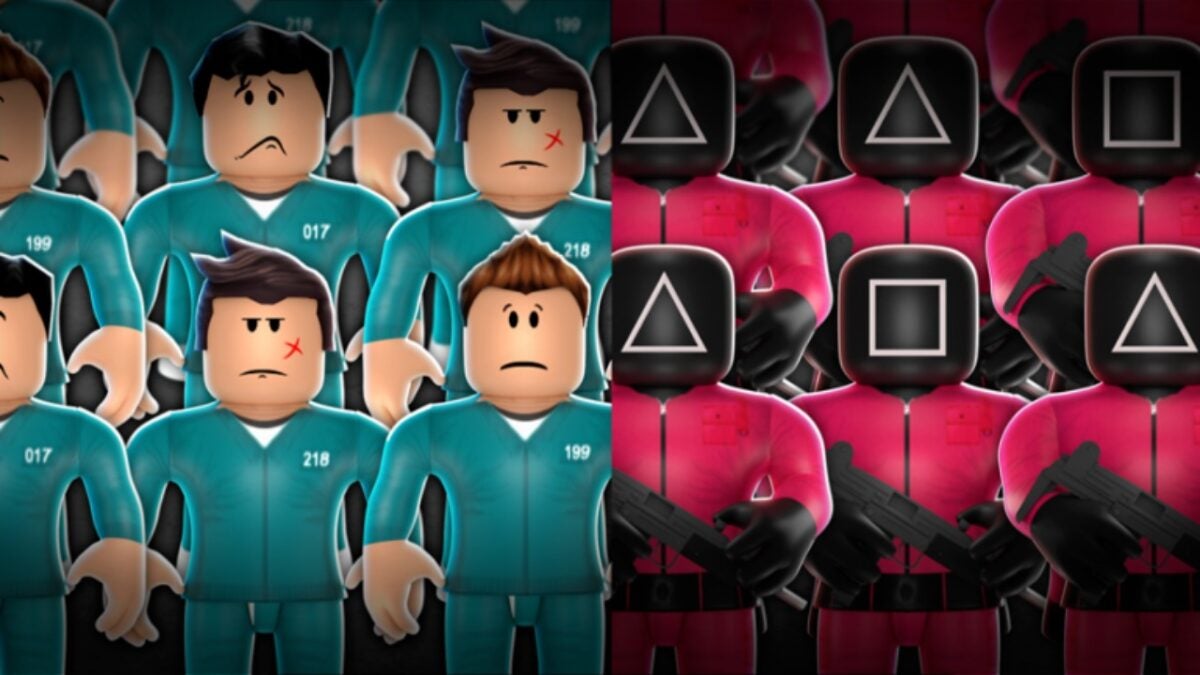
Roblox has many many different genres of games and many of them are free-to-play, too. This extends to horror games like Murder Mystery, Flee the Facility, and The Horror Elevator. The latter two would be great options if you want a game like this title.
The addicting, cut-throat game Fall Guys recently went free-to-play and now offers tons of rewards with Crown Clash Challenges. Players can unlock all kinds of unique in-game cosmetics for other Epic Games-sponsored titles. This includes Fortnite and Rocket League.
The event only runs from June 29th, 2022 to July 11th, 2022, so learn how to unlock all Fall Guys, Fortnite, and Rocket League rewards for Crown Clash challenges here before you run out of time.
How To Earn Crown Clash Challenges Rewards In Fall Guys
It’s not often that various game titles can link up to offer rewards across the games. Think of when No Man’s Sky enabled players to pick up the Normandy from Mass Effect for their fleet. Thanks to Epic owning all of these titles, they can sponsor this event for players to pick up many rewards.
Similarly to how Battle Passes work in Fortnite, players must complete specific challenges to obtain the rewards. Thankfully, the challenges in Fall Guys are very simple: just complete more and more rounds to earn more and more rewards.
But first, you’ll need to make sure your account is set up to save your progress.
Ensure Linked Accounts
Download Fall Guys with the same account you have connected with Fortnite and Rocket League. Alternatively, you can just link your Epic Games account with all three games. For console players, you’ll need to link Epic Games to your console.
Trying to use multiple Epic Games accounts is not recommended; it will disallow you from having all of your rewards transfer properly.
Fortnite Crown Clash Rewards
The free-to-play Battle Royale titan has had crossovers with what feels like every franchise. Marvel, DC, Naruto, and John Wick are just the tip of the iceberg. They even include fan-inspired designs and characters based on streamers and musicians.
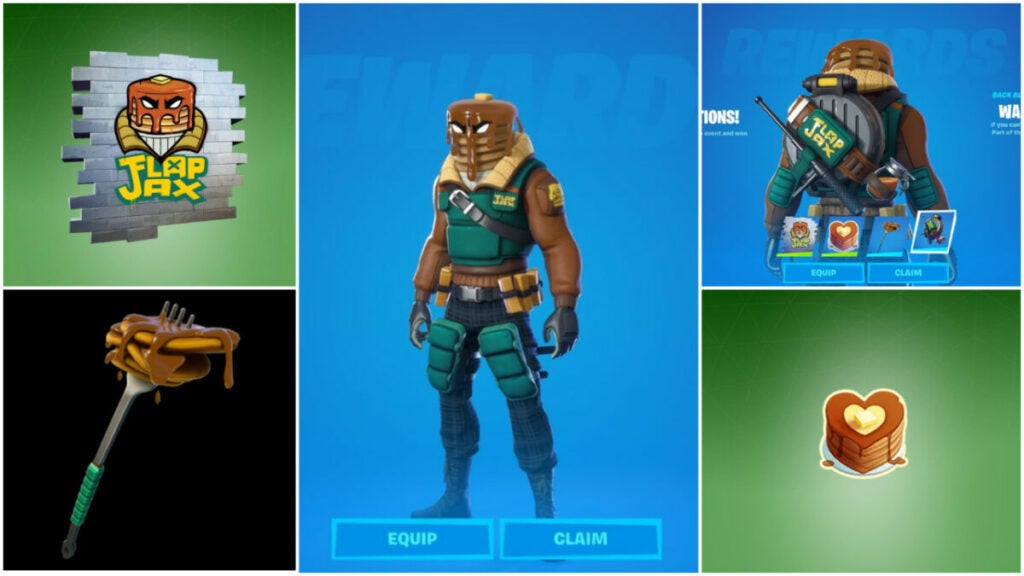
Fortnite rewards for Crown Clash reimagine a previously introduced character with a new skin and other items. To pick them up, just do the following in any show:
Complete 10 Rounds: Stacked! spray
Complete 20 Rounds: Stacked with a Love Emoticon
Complete 40 Rounds: the Sweet Clementine Pickaxe
Complete 70 Rounds: the Waffler back bling
Complete 100 Rounds: the Major Mancake skin
Whether you’re a die-hard completionist or you just really love pancakes, picking up these in-game items is probably easier than actually making pancakes.
Rocket League Crown Clash Rewards
This Hot Wheels and soccer hybrid has been a casual “turn your brain off” game option for many years now. The number of sick goals and trick shots keeps people coming back, but so does the ever-growing list of cosmetic items.
Rocket League features lots of customization options for players from team colors and names to unique wheels, patterns, and car trails. The Fall Guys Crown Clash Rewards take advantage of that with the following rewards:
Complete 10 Rounds: Colorful Canines player banner
Complete 20 Rounds: Colorful Canines topper
Complete 40 Rounds: Med. Rare wheels
Complete 70 Rounds: Cluster Buster decal
Complete 100 Rounds: Fallout boost
As showcased by Rocket League Garage, you can see the trail and the topperin action in the image above.
Fall Guys Crown Clash Rewards
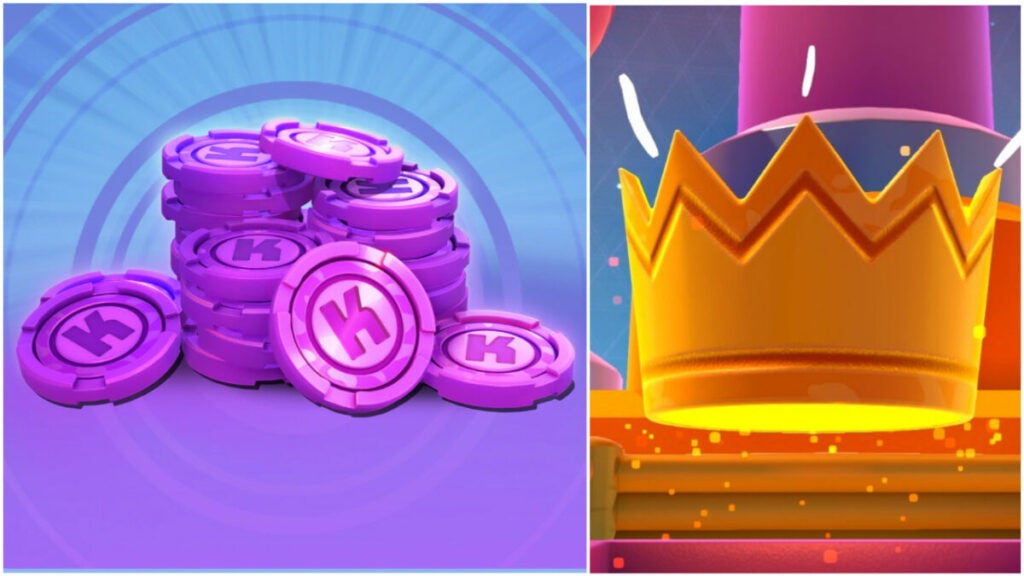
Grabbing the coveted crown in Fall Guys gets you rewards for the base game, too. They just aren’t as varied as in the other games:
Complete 10 Rounds: 300 Kudos
Complete 20 Rounds: 500 Kudos
Complete 40 Rounds: 800 Kudos
Complete 70 Rounds: 1,000 Kudos
Complete 100 Rounds: 1,200 Kudos
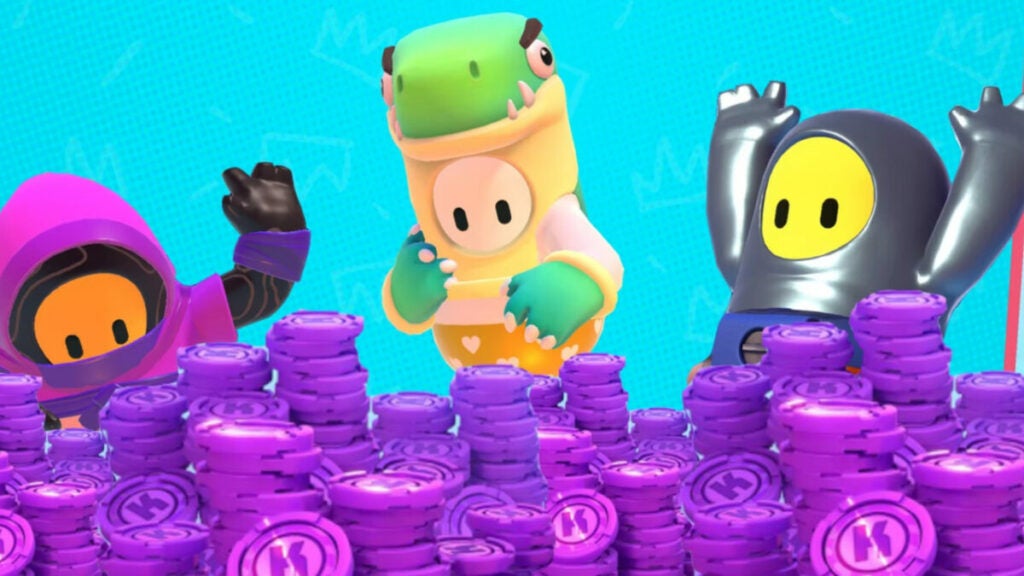
That means that players who complete all 100 rounds get a grand total of 3,800 Kudos to spend on anything they desire in Fall Guys.
Pros & Cons of Crown Clash Challenges
Unlike with other crossover events, there are no loot boxes with rewards based on chance. It’s also not extremely difficult to get any one reward vs. another. The biggest commitment to these challenges is time.
If you can invest the time to complete 100 rounds of Fall Guys, you can get the rewards! You don’t need to be the best of the best, sir (with honors), or be needlessly ruthless to other players (unless you want to be). All you have to do is play.
V Rising tips don’t end with “stay out of the sun” or “don’t carry silver“. The surprising indie hit has captured the attention of many people thanks to a successful Early Access and backing for Stunlock Studios from Tencent. While the game mayfeel familiar for fans of titles like Diablo and Valheim, we could all benefit from a road map sometimes.
Beyond following the quest guide and objectives, here are some V Rising tips for things you should always be doing. Or, at least, you may find yourself always doing it whether you like it or not.
Always be farming
Like any game with a resource system and base building, you’ll always need to be farming materials for building and crafting. The exchange rate can be especially brutal and take a long time. But, that just gives you more time to go out and farm more materials!
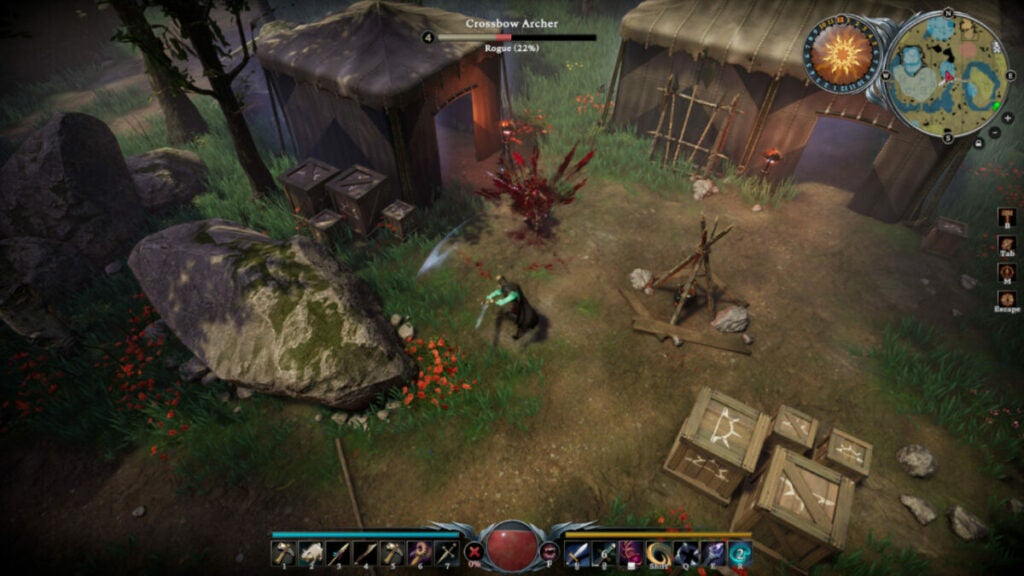
The biggest of V Rising tips here is to use the right tool for specific jobs. Swords are great for vegetation while axes are great for chopping wood. When harvesting stone, copper, or other hard materials, use the mace instead.
Loot all enemies and camps
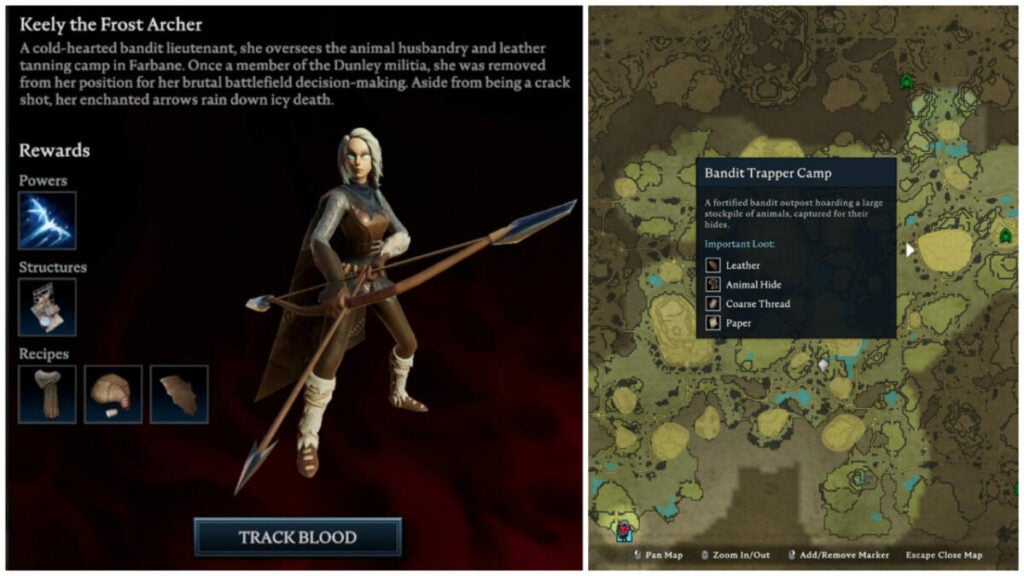
As with games such as Assassin’s Creed, players can find materials and items as they attack bandit camps and other locations. Early on, this is especially necessary as you may not know all of the recipes needed to craft certain items such as new armor or building materials.
Just be careful that you don’t handle Silver too much; it sucks away your health as you carry it.
Track V Blood carriers
Not only are V Blood carriers integral to completing quests, but you also need the helpful abilities and recipes you get when you take them down. For instance, Keely the Frost Archer provides your first unique ability: Frost Bat. This is especially useful against brutes and warriors who charge you head-on as it slows them down.
Moreover, being able to craft more and more items will help you improve your castle. And that’s really the whole point of the game, isn’t it?
Hide from the sun
It goes without saying that, as a vampire, you should avoid the sun at all costs. Even with things like sun potions or additional sun resistance, you can quickly die from sun exposure.
When you need to travel in the daylight hours, utilize tree shade in wooded areas or hale bales in villages. If you are working on your base before you can craft roof tiles, utilize a mist brazier to block out the sun. It’s a life saver of an item in the early game.
Use cave passages to travel distances
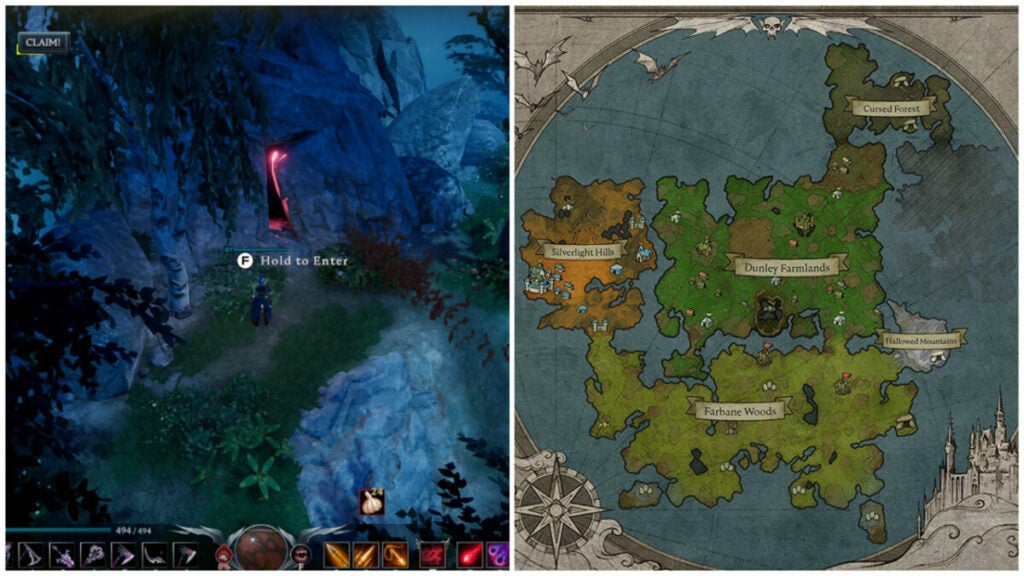
Waygates require you not to have any resources in your inventory. That’s difficult in a game where resource gathering is a core mechanic. So, cave passages represent a useful shortcut that helps you get from one area to another — especially during daylight hours.
Try out new ability combos
Games like Diablo are all about creating unique builds and load-outs with armor and abilities. V Rising trades in this, as well, offering players many avenues to become a dominant nightstalker once again. So don’t be afraid to switch things up as often as you want to — especially early on.
In addition, certain abilities may be extremely effective against one V Blood carrier or boss, but useless against another. Keep that in mind as you traverse the world of Vardoran.
Keep an eye on your blood type
Feeding on different creatures or types of humans can alter your blood type. For instance, at the beginning of the game, you are set to “Frail” since you’ve only had rat blood so far. This quickly changes once you feed on a human or wolf. Different characters have different purity percentages, as well, which dictate the level of stat boosts you get.
In total, there are 6 blood types including:
Creature – think bears, wolves, or other animals. This type boosts your health regeneration and movement speed initially. At higher levels, it provides damage reduction and sun resistance.
Rogue – archers and thieves provide this blood type. You’ll get buffs to critical hits, crit chance, cooldown reduction, and movement speed from it as you level it up.
Brute – this type initially provides life steal when you drink from bandits. You’ll eventually get attack speed, movement, and health recovery boosts, as well.
Warrior-armored bandits and militia soldiers provide physical power boosts at level 1. At higher levels, you’ll get weapon skill cooldown increases, damage reduction, and chances to parry incoming attacks.
Worker – non-violent or weak NPCs qualify as the “Worker” blood type. This increases your resource gain, horseback speed, damage against resources, and more.
Scholar – scholars provide spell power, spell life leech, and spell cast cooldowns.
Bonus V Rising tips: different forms & DLC
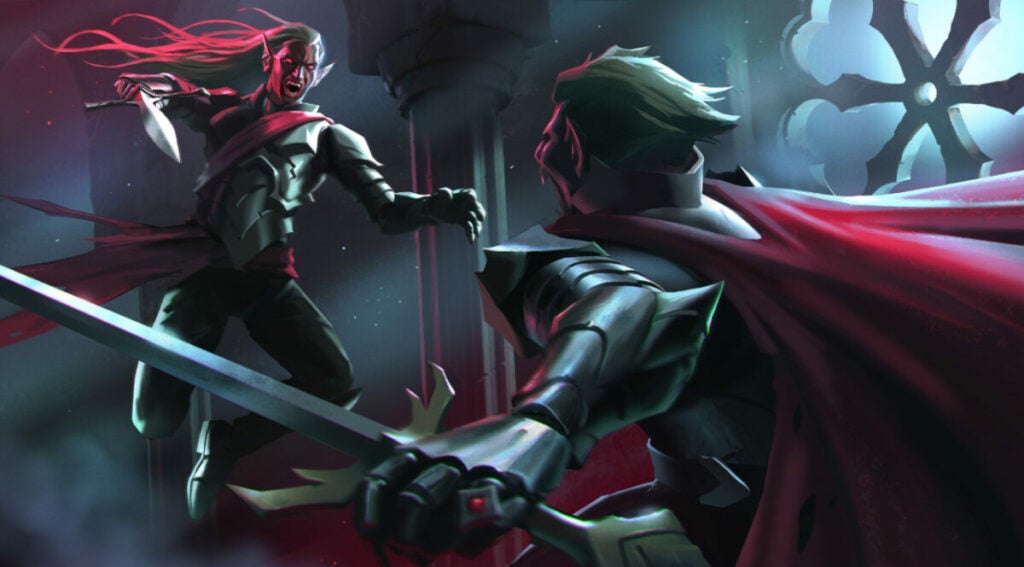
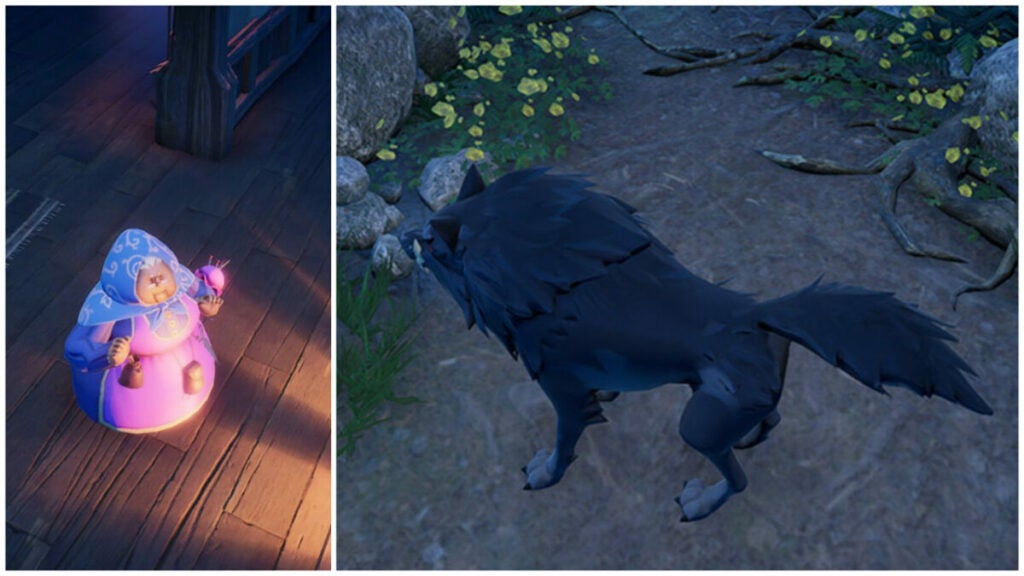
The various forms you acquire by collecting V Blood carriers include the very first one: wolf form. This has many perks such as faster movement speed to help you traverse land more quickly. However, other animals like bears will not attack you while in wolf form. Don’t forget to use all the various forms to your benefit.
The optional DLCs are also a great way to support the developer further while picking up some unique cosmetic items along the way. The cheaper option provides Dracula’s regalia while a more expensive option includes unique cosmetic items and new forms including that cute, unassuming grandmother you see above.
The meme-worthy and chuckle-inducing title Garry’s Mod is almost irrevocably tied with Valve and, by proxy, the Steam shop. However, the funny little sandbox game came from a single designer and programmer: Garry Newman. Hence the name Garry’s Mod.
Since it is a sandbox game, users can do a great deal with it. You can just play games created by others, create addons or maps for games, or create your own unique title within Garry’s Mod. Though out for about 15 years, the game finally hit 20 million units sold in 2021. But the sustained interest in Garry’s Mod has helped the studio commit to new titles like Rust.
So what is it about this game that keeps players coming back? Let’s review all of the features in Garry’s Mod and see how it stacks up to similar sandbox games.
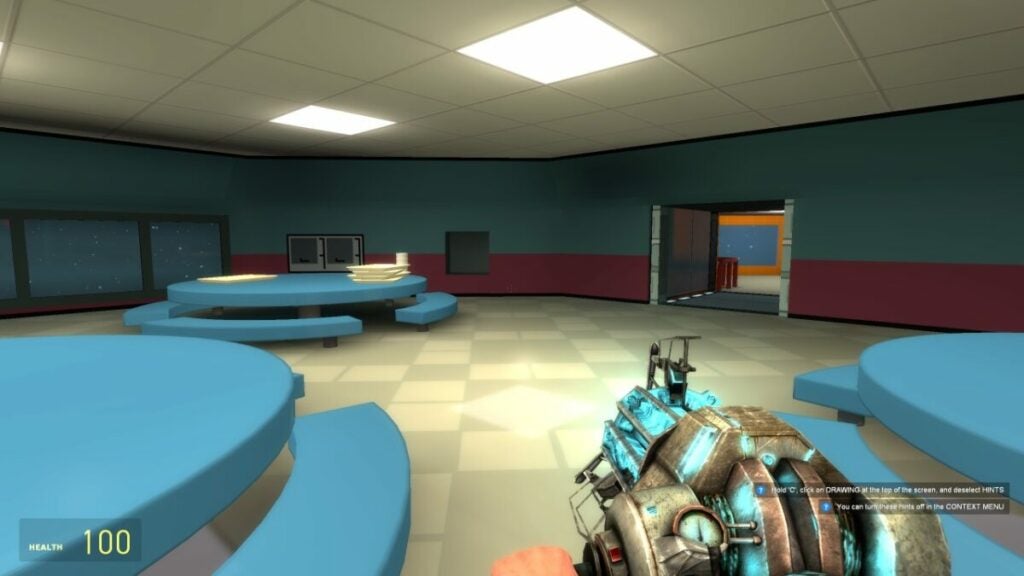
Released in2006, Garry’s Mod base game mode featured no objectives and just allowed players to manipulate objects in space. Players can spawn as NPCs, props, and other interactive items then manipulate them with the “physics gun”. Other modes such as Prop Hunt came from mods from other developers as found in the Steam Workshop.
But user-created content really made Garry’s Mod shine with popular mods that came to be known as “addons”. Roleplay became a popular option, as well, with people creating custom in-universe characters then interacting in that universe. Half-Life and Star Wars remain two of the most popular roleplay servers.
Garry’s Mod machinima
The term “machinima” or “machinema” is a bit of a portmanteau on “machine” and “cinema”. It’s where users take game universes and assets then use those to create animated “films”. These can be sweeping tales or something as silly as this Team Fortress 2 universe “Wonderwall” parodyby Neil Cicierega.
Garry’s Mod remains a popular option for machinima thanks to how easily users can craft scenes and manipulate environments and characters.
Half-Life and Team Fortress 2 connections
Since Valve published the sandbox game and it uses the Source engine, it makes sense that Valve titles are found in it. The game also uses a “physics gun” not unlike Gordon Freeman’s Gravity Gun in Half-Life.
But Half-Life and Team Fortress 2 both have such large cult followings and have been out for about the same amount of time as Garry’s Mod. Since these fans have the most experience, demand for assets from those games remains popular.
Physics engine and gameplay
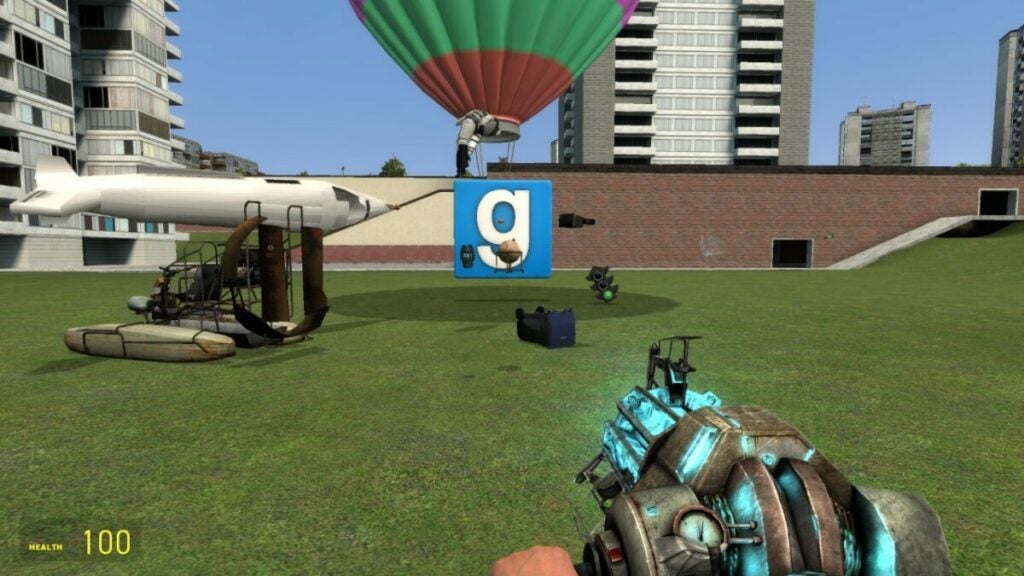
At its core, Garry’s Mod is a sandbox game and physics playground. You can spawn in any number of items from a fan boat to a hamburger or a hot air balloon. Moreover, you can pose individual limbs of whatever creatures or people you decide to put into your game.
When considering the creative freedoms users have when using Garry’s Mod, there is hardly something equal. Players can construct worlds from the ground up to craft something truly unique from Harry Potter roleplay servers to 3D Among Us or Attack on Titan games.
The “gameplay” is the construction and the experience of whatever you create. In essence, your experience is only limited by your imagination and your knowledge of how the controls work in Garry’s Mod.
Game modes
Garry’s Mod features single-player and multiplayer experiences. While the base game mode had no objectives, others had simple goals which made customizing and augmenting those modes so much fun.
The base game modes along with popular addons in Garry’s Mod are:
Sandbox – the base game mode where players can fiddle with physics and game assets.
Flood – players fight each other in a “last man standing” competition in dangerous waters.
Trouble in Terrorist Town (TTT) – though the name has not aged well, this game mode emulates the game mafia with Innocents, Traitors, and Detectives.
GMod Tower – this network of servers functioned as a social media outlet for socializing and minigames. It has since been replaced with Tower Unite.
Prop Hunt – as seen in many AAA games like Fortnite and Call of Duty, one player or team disguises themselves as various props while the other player or team hunts them.
DarkRP – described as a “non-serious” roleplay mode, players adopt various identities from firefighter to black-market dealer on servers.
Spacebuild – this addon lets players construct spaceships to travel to distant planets, found settlements, build space stations, and more.
Elevator: Source – co-op narrative experience with 28 randomized floors. Players choose when to get off (if at all).
Half-Life 2 Roleplay – HL2:RP became popular since it let players create custom characters, join factions, and otherwise interact within that game universe.
Garry’s Mod games
Frequently known as mods or addons, user-created games in Garry’s Mod across all genres and polish levels. While some games look like they could have been made by a studio, others feel more home-grown and “just for fun”. This is entirely the point of Garry’s Mod, so it pays to see what everyone makes.
Though a popular home for horror game mods for titles like Five Nights at Freddy’s, players create riffs on other sandbox games like Minecraft, along with narrative experiences, too.
Maps – variety is everywhere
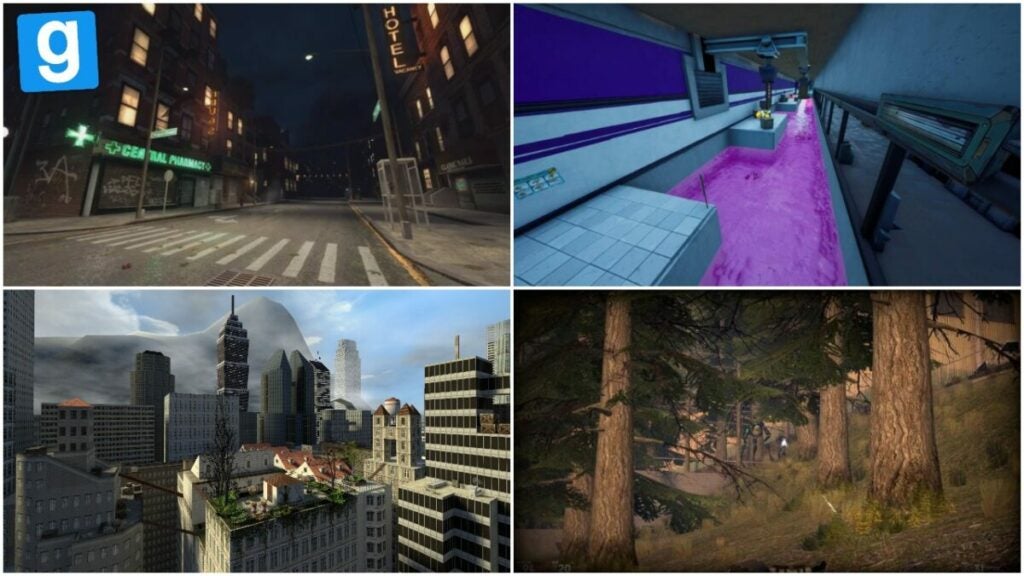
There are so many maps in GMod that it can be a bit overwhelming for new players. Some maps feature stories while others are just for exploration. Some are intricately tied to their game modes such as TTT or zombie survival.
The trick is to see what the game mode is for the map and if it’s what you want. After all, you might not want to play a scary, Slenderman-themed horror map if you’re alone in the house on a Saturday night.
Characters – you might find some of your favorites
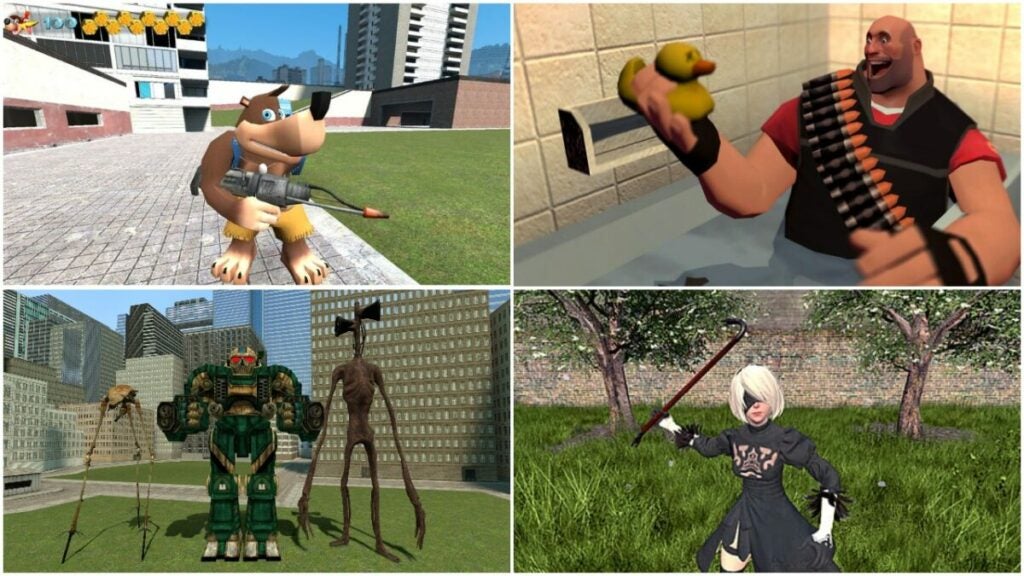
Since the game relies on user-generated content, you can find tons of new characters every time you pop into the game. For instance, in 2017, Steam user Kuma added character 2B from NieR: Automata as you can see in the bottom right corner of the above photo. The addon includes her player model, ragdoll, and NPC.
Of course, fan-favorite characters like the Heavy from TF2 feature in all varieties, but so do nostalgic options like Banjo Kazooie. You’ll even find Warhammer-themed inclusions, too. You will want to check back regularly to see if you find new characters.
Mods – think outside the sandbox
Mods for this game aren’t usually things like “prettier grass” or adding a jukebox to gameplay. It’s more like tools to enhance building capabilities or make certain features more intuitive.
Some popular examples include “Improved Weight” which makes weight-based objects feel more natural or “Wiremod” which adds a catalog of entities players can connect using data wires.
There is just as much variety for mods as there is for maps, so it could take a while to pin down what variables add up to your ideal Garry’s Mod formula.
Known issues
Every game has its bugs and challenges — including a game like this that has no inherent storyline. The user-focused nature of the game can lead to great things…or not-so-great things. Here are a few of the issues with Garry’s Mod.
Accessibility
Not all gamers will be able to get into Garry’s Mod. After all, it’s a physics sandbox vs. a game with overt objectives like Rocket League, Counter-Strike, or even Minecraft — another sandbox title. Reddit user BestServerNA put it best with the question “So Garry’s Mod just changes/modifies things in a certain game? not actually a game itself?”
Trolls and “Minges”
All multiplayer games will have their fair share of toxic players and problematic people. But Garry’s Mod has a unique term for this in the words “minges” and “minging”. This relates to users who break server rules which can sometimes be very strict.
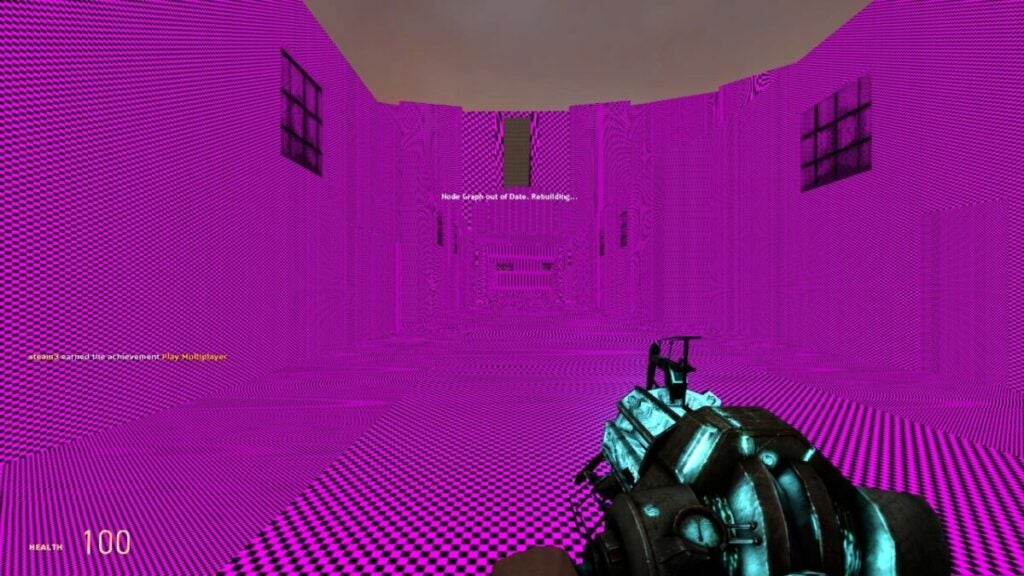
Crashes, ads, and visual bugs — oh my!
Although Valve published the game, support for bug reports is mostly user-operated. There’s even a common list of bugs pinned to the Community tab of the game on Steam.
Everything from crashes to missing UIs to ads appearing in people’s games is on this list. Not connecting to servers is another big issue that is a huge problem given that many games on Garry’s Mod are multiplayer.
Sandbox game competitors
The beautiful thing about sandbox games is their endless nature. Players can consistently revisit them for wildly unique experiences each time. But not all of them offer quality experiences. Moreover, some offer more “sand” in the box i.e. more features for users to create with.
Minecraft vs. Garry’s Mod
Everyone who is even a little bit into video games (or has kids who are) knows about Minecraft. The sandbox game lets users craft incredible worlds or just play along with the in-game story and explore. It also has a free-to-play mode, unlike Garry’s Mod.
However, more robust or persistent realms require monetary transactions. But don’t let that deter you; Minecraft is a fantastic game to play with friends or share with younger siblings or your kids. The game also benefits from a ton of user-generated content from in-game items to guides and Let’s Plays on YouTube.
Roblox vs. Garry’s Mod
Some refer toRoblox as “Garry’s Mod 2.0” and it is in some ways. Both games provide users with tools to create their own digital experiences. You can build maps, characters, story narratives, and more. However, Garry’s Mod does not feature the same kind of money-making aspect that Roblox does.
Roblox is also much more targeted toward a younger audience than Garry’s Mod is. In fact, some mods and games available are adult in nature — a direct departure from Roblox despite some bad actors. If you want something more kid-friendly than Garry’s Mod, Roblox is a wonderful alternative.
Kerbal Space Program vs. Garry’s Mod
Although Kerbal Space Program focuses on aeronautics and space, it is just as much of a sandbox as Garry’s Mod. On top of that, it has the adorable, if totally doomed Kerbals, who carry out experiments.
The game also teaches players similarly to Garry’s Mod. It’s a solid game to pick up if you want something more focusedvs. the extremely open-ended experience of Garry’s Mod.
Review verdict
If you’re looking for a produced game with a firm narrative, Garry’s Mod is not for you. It is an open-ended, objective-less physics sandbox and user-powered community. In that vein, if you want to learn the very basics of game development or roleplay in Half-Life, Garry’s Mod is the game for you.
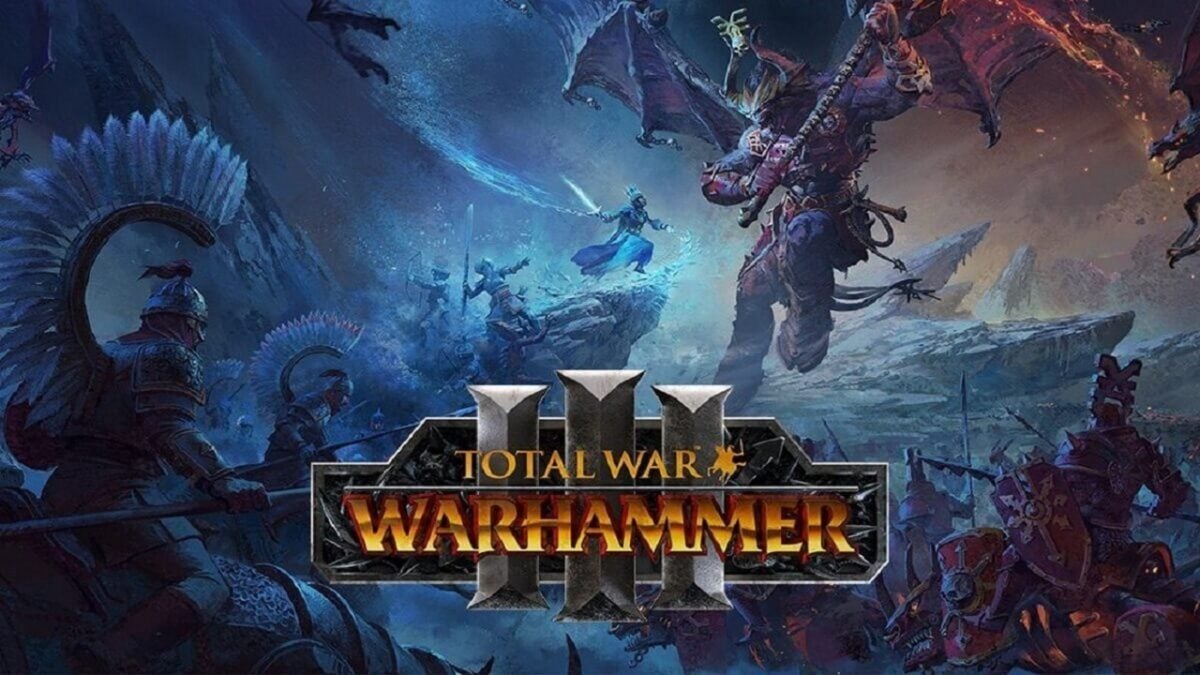
Total War: Warhammer III is the highly anticipated final entry into the franchise. However, the Total War franchise made its first debut in the year 2000 with the game Shogun: Total War. Since then, the series courted many staunch fans including Henry Cavill of Witcher and Superman fame.
But this game has tons of systems, factions, abilities maps, and game modes to learn about. Let’s break down the game into an in-depth review for long-time fans and newcomers alike.
Total War: Warhammer III background
The Total War franchise has a huge catalog of games in many settings and time periods. But the general mechanics remain the same in principle. Players control and manage resources across turn-based and real-time situations.
The game is not available for any console currently. But players can choose to play on Microsoft Windows, macOS, or Linux computer setups. But beware: it does take up about 120 GB of storage space.
For the first time in the series, there’s a dedicated tutorial – a great addition to attract new players to the franchise. There are tons of controls to learn and TW Warhammer 3 gives players a much more transparent experience to enhance accessibility.
However, many of the additions that newcomers will find helpful will make veterans of the franchise cringe or balk. The developers had this in mind so you can disable all of the help-oriented features at your leisure.
Setting and tone
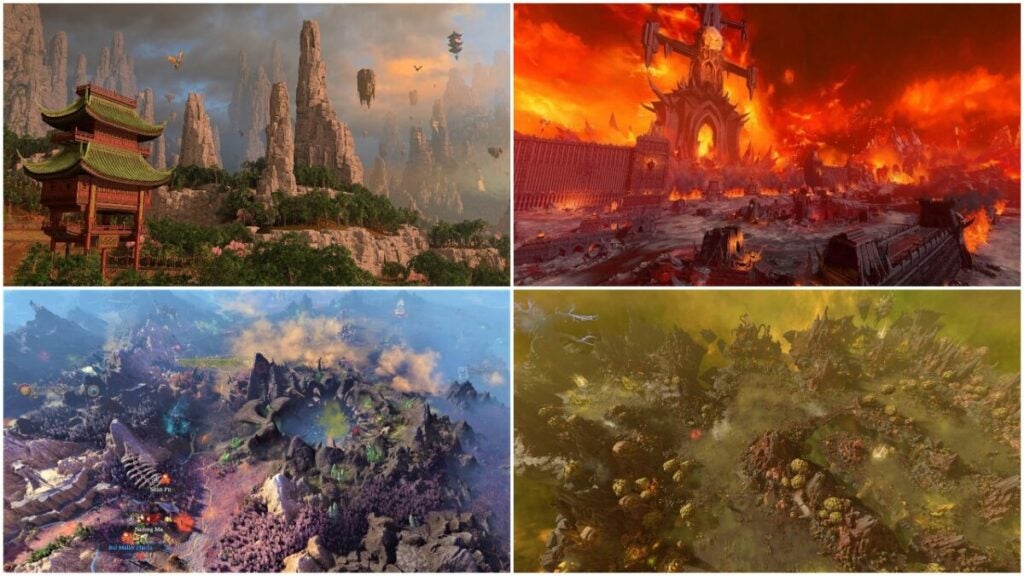
Defining the setting of Total War: Warhammer III is difficult since there are maps for each faction. However, you could say that the story mode setting is fairly consistent. You have Kislev – the snowy realm, Grand Cathay – a lush yet arid empire, and the realms of Chaos according to four ruinous Gods.
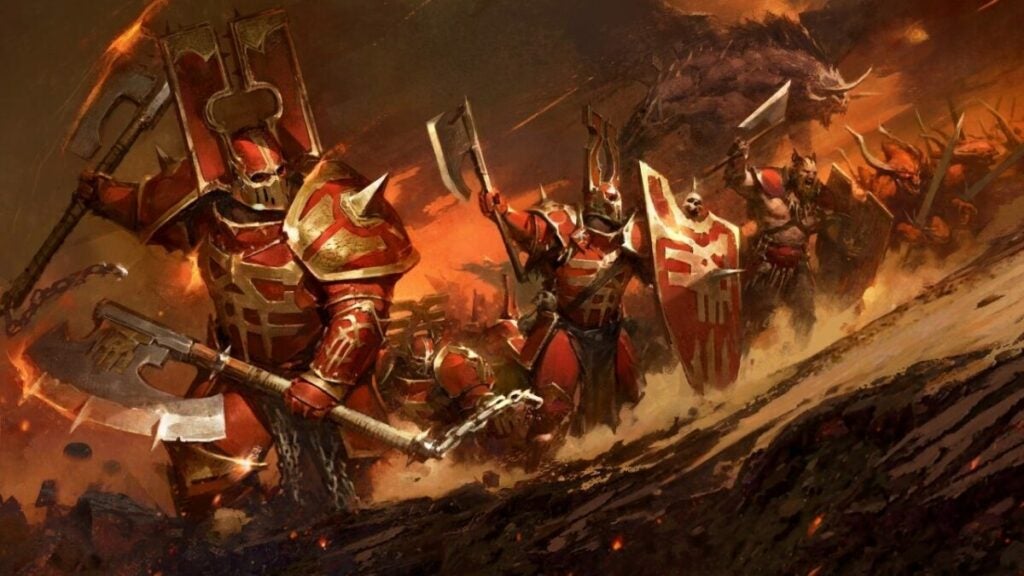
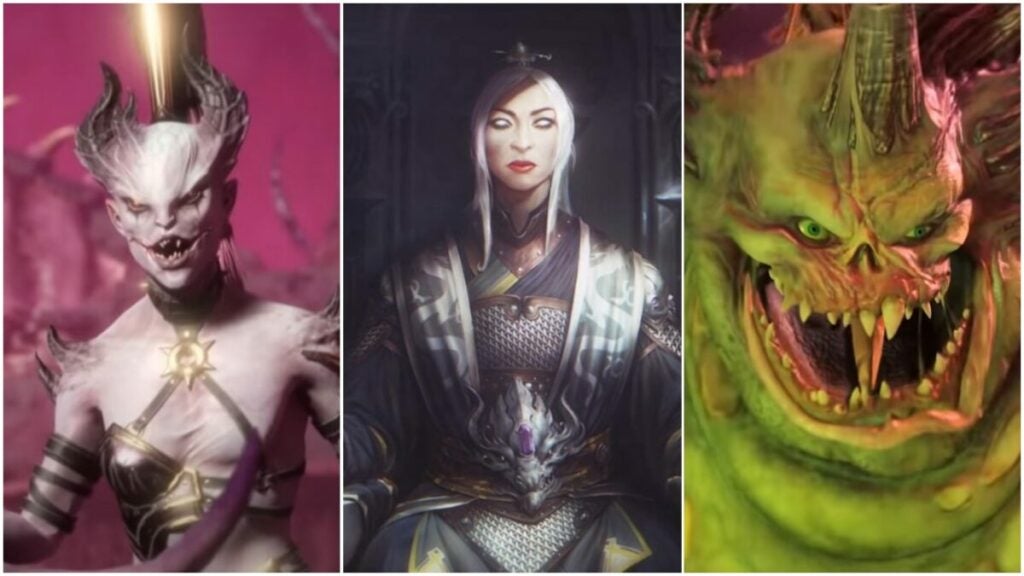
The four Gods are the plague god Nurgle, lord of pain and excess Slaanesh, the “changer of ways” Tzeentch, and god of violence and blood Khorne. Each faction map features unique designs, atmosphere, and music that fits them. The tone can shift wildly as a result with Slaanesh’s settings feeling creepy and suffocating while Nurgle’s realm just makes you really want a bath.
Story
Longtime fans of the Warhammer world will find the story fulfilling and engaging. It centers around preventing the total Chaos apocalypse from coming to the world. Players must claim four daemon prince souls and choose what to do with the bear god Ursun – worshipped by the Kislev peoples.
The tutorial also includes a wonderful storyline about a Kislev Prince named Yuri seeking out said bear god. It serves as a fantastic introduction to the gameplay, but also a great narrative that introduces people to a previously underdeveloped region of Warhammer, setting up the game’s main campaign.
How long to beat Total War: Warhammer III
Obviously, you can’t “beat” multiplayer mode except for winning, losing, or otherwise completing matches. However, how long to beat Total War: Warhammer III boils down to individual playstyle and which faction you choose.
Main Story: ~20 – 30 hours
Main Story and extras: ~40 – 50 hours
Performance
No game is without its issues and bugs; Total War: Warhammer III has some serious problems, too. Alt-tabbing can cause a crash, certain hardware can interfere with framerates, Game Pass players may not see text in the game...the list goes on.
Outside of these game-breaking issues, the game gets regular balance patches starting with its first patch in mid-March. As with all games that feature individual units with distinct abilities, tweaking damage numbers, health amounts, spell costs, etc. will be an ongoing process.
Potential players with less than high-end computers can still enjoy the game at 720p though. Just remember that you need 120 GB of storage space for the game. That is just one of the things it pays to know before starting the game.
Total War: Warhammer III gameplay and functions
UI and interface
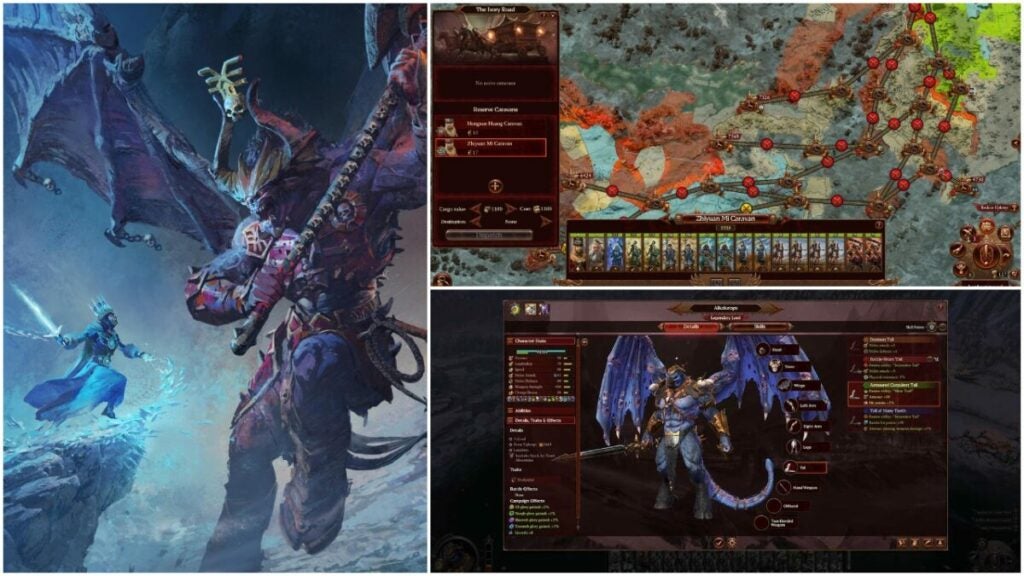
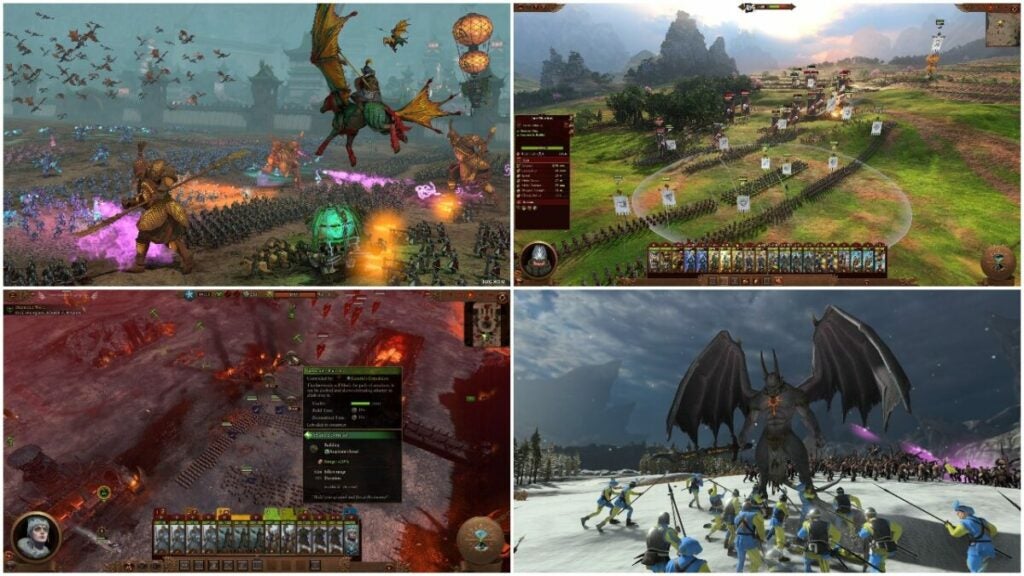
Quality of life changes are the main theme for the UI in Total War: Warhammer III. There are lots of improvements – especially when it comes to single-player mode. However, Creative Assembly made the choice to have a majority red color theme. This may not work for every player.
Many fans of the series were delighted to see a new in-game encyclopedia included. Gone are the days where you had to look things up on a second monitor, cellphone, or alt-tabbed web browser. Instead, you can read about enemy types, units, spells, and more using this feature.
Combat mechanics
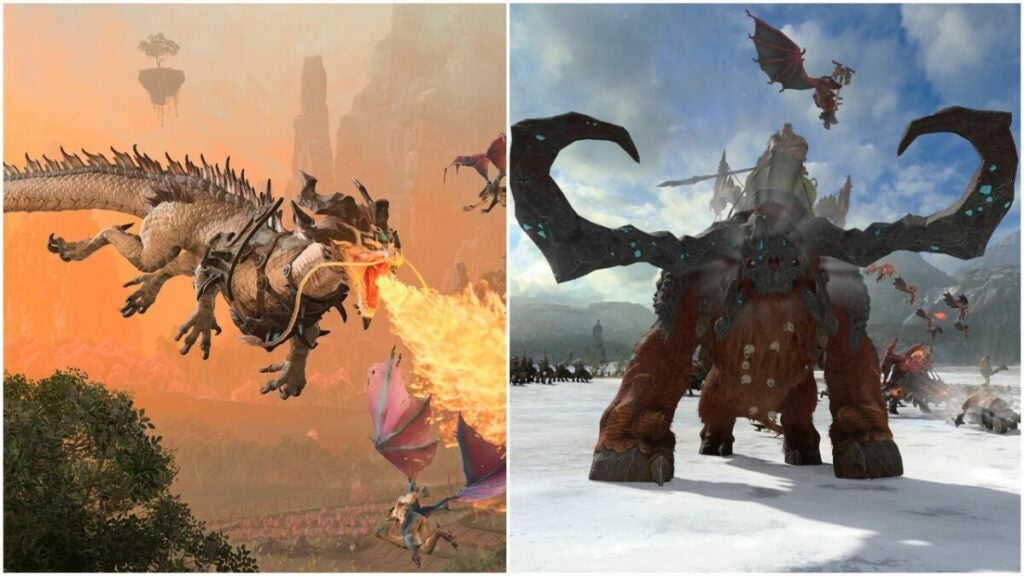
Overall, the combat remains very similar to that of previous entries in the series. You control various units in grand campaigns against enemies. However, there are some new inclusions for the latest game. For instance, flying units can take to the sky or attack on the ground.
The good:
Small UI changes such as the shield icon over units show different states such as being “braced” which helps reduce damage.
Lazy health bars also enhance damage readability throughout combat.
The slow-motion casting options make magic much more accessible in the game, as well.
The Idle Unit hotkey seems especially useful as it can quickly show you any units without orders.
The new “Favor” system lets you borrow army stacks from allies. This lets you fill any holes you find such as ranged units or heavy units to better build out your armies.
The not so good:
The AI can be a bit unreliable as they can ignore your directions, get stuck on geometry, or just stay in the same place entirely.
Sometimes, things that should disappear like battering rams will instead block an entrance you just made instead. It can be a frustrating detriment to the experience.
Defensive structuresdon’t seem as effective at repelling enemies as they should.
Total War: Warhammer III factions, heroes, and playstyles
As always, there are tons of character factions in Total War: Warhammer III. Though there are only 8 factions so far, Creative Assembly is sure to add more as time goes on. Let’s break down each faction, their heroes, and the kinds of units and strategies they benefit from most.
Legions of Chaos – don’t talk to me or my dress up demon son Ragnar ever again
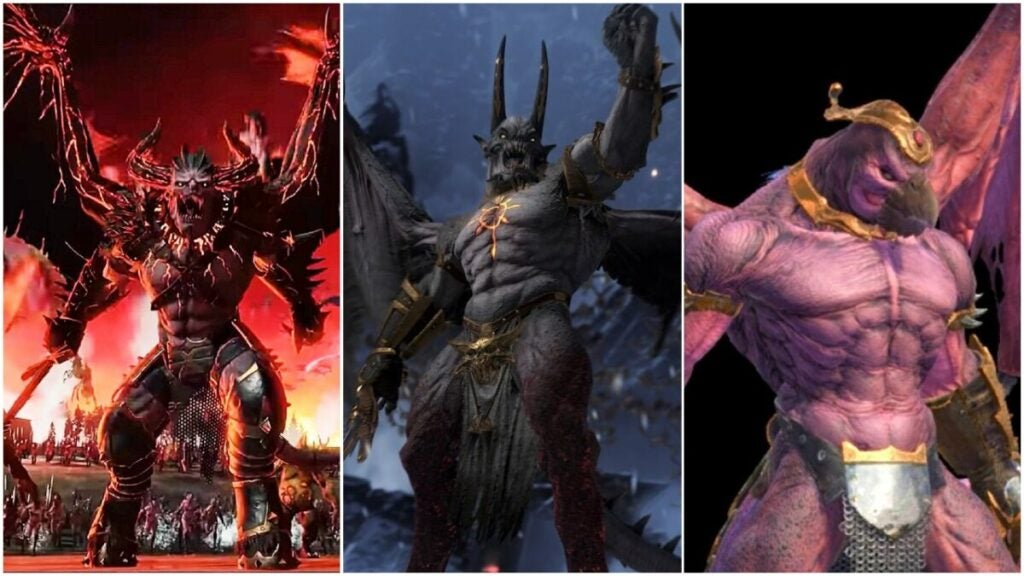
Main resource: Daemonic Glory. Use glory gained to worship and honor one of the four Ruinous Gods to unlock more abilities and gear. Main Hero: Daemon Prince Ragnar
This faction serves as a kind of choose-your-own-adventure situation. But instead, you build a daemon prince named Ragnar who worships a different ruinous power and can be customized in abilities and aesthetics. As you dedicate actions to various Chaos Gods, you’ll receive buffs, war gear, and special units.
From there, you can choose to commit to one God or remain “Undivided” and the game doesn’t really incentivize you to pick just one God. You have access to all units while Undivided and don’t gain access to anything special for trimming down.
Kislev-bear-god worshipping pseudo-religious warriors and ice mages
Main resource: Devotion. Defeating Chaos armies grants this resource that can be spent to honor one of four deities. However, two sub-factions compete for control within Kislev – the Great Orthodoxy and the Ice Court.
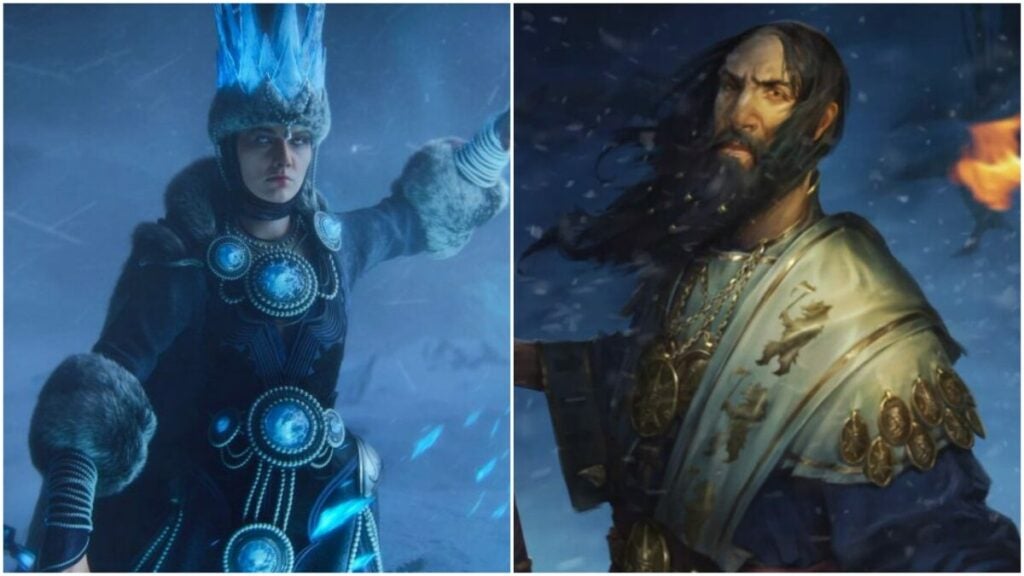
Main Hero: TzarinaKatarin and Kostaltyn of the Great Orthodoxy
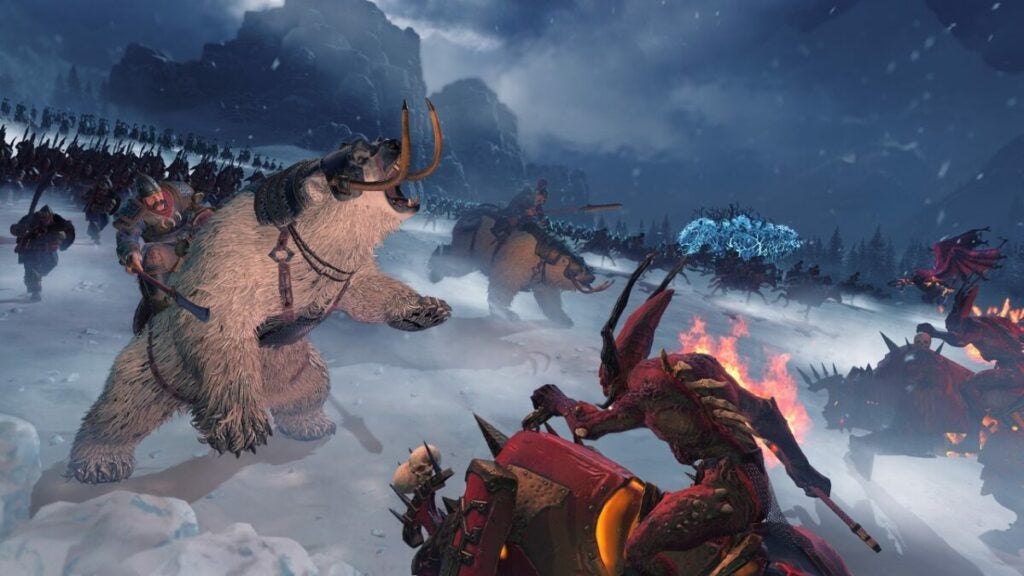
Modeled after Russian and Slavic cultures, the Kislev people reside in an extremely snowy landscape. The demanding environment has made its people hard, but it’s the routine interdimensional invasions that keep things interesting. The Ice Witch Queen Katarin faces trouble from the Rasputin-esque Orthodoxy leader Kostaltyn.
From a lore perspective and skill selection, Katarin seems like the optimum choice. Kostaltyn still has access to ice magic even though he views Katarin’s approach as heresy. Despite this odd choice, the Kislev faction is very fun to play with lots of options for gaining supporters, buffs, and more.
Their units serve great hybrid roles, often being able to attack at range and hold their own in melee combat. The heavy units also have handguns for shiggles and the mounted polar bear units can smash epically through smaller units. Then, of course, there’s the new ice magic you have access to, as well.
Players who like to adapt in each battle should try the Kislev faction for lots of variety. Plus, you get a sweet and enormous ice bear if Katarin and Kostaltyn place nicely for long enough.
Tzeentch – “tricksy hobbitses, a short story by H.P. Lovecraft”
Main resource: Grimoires. Unlock “Ways of Change” with them to enact diplomatic incidents, spy on others, and generally plot.
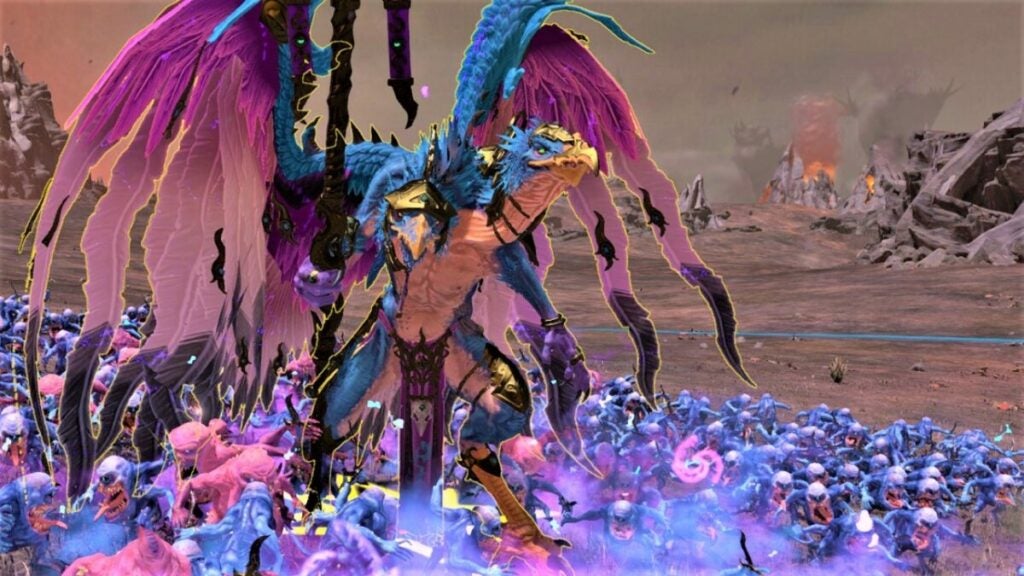
Main Hero: Kairos Fateweaver
Like a combination of Ravenclaw and Slytherin, Tzeentchfocuses on manipulation, knowledge, plotting, and magic. The faction’s hero Kairos Fateweaver trades in trickery and misdirection with “Changing of the Ways”. Use this to look into the future and play around with faction expectations. This incentivizes players to sow chaos among and within other factions via settlement takeovers.
The units mainly focus on ranged attacks including a unit that resembles a fleshy, beaked arm that slings purple fire. The Lore of Metal takes this to another level causing tons of damage with spells to satisfying ends. But each unit also has an innate shield generator in tandem with HP that benefits from buffs. Once broken, they can also recharge.
The downsides to this faction are its limited variety of units and straightforward combat strategies. Some fans have also called the faction designs for Tzeentch less inspired and unique compared to other factions.
Khorne-battle-obsessed demons with a very simple request: your skull
Main resource: Skulls. Blood for the blood god, but also skulls for the skull throne.
Main Hero: Skarbrand
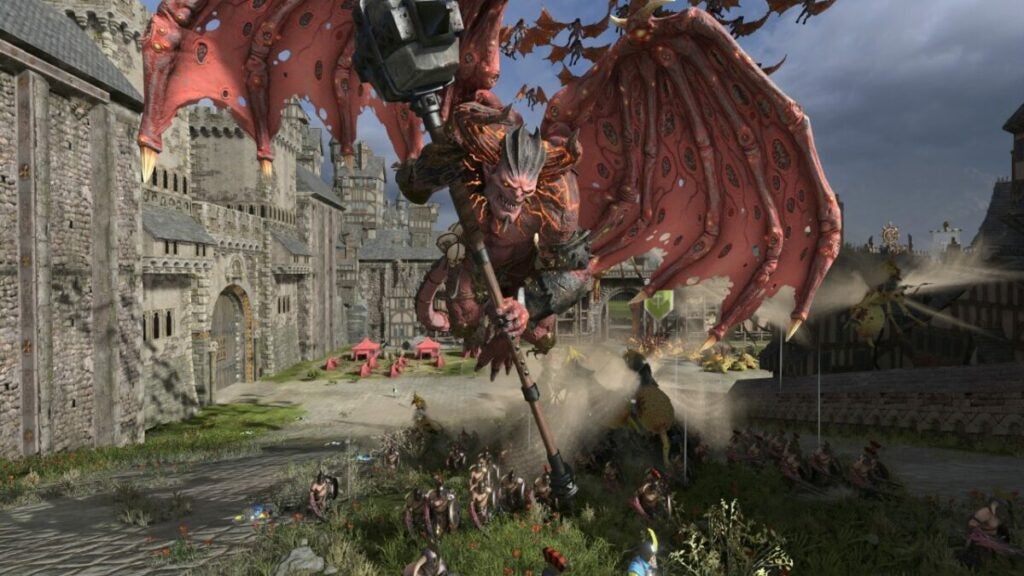
Known as a god of violence and blood, Khorne’s faction feature Skarbrand as its leader. The savage, demonic-looking giant thrives on the battlefield and he wants to get more skulls for Khorne’s skull throne. If you want to battle, battle, battle, and battle some more, this is the faction for you. However, you can also scavenge battlefields for skulls, as well.
Then, use these skulls to unlock different technologic advancements that make rage more worthwhile. Unlocking more technologies means that blood armies last longer and spawn in larger sizes. But you must keep fighting for these armies to stay spawned.
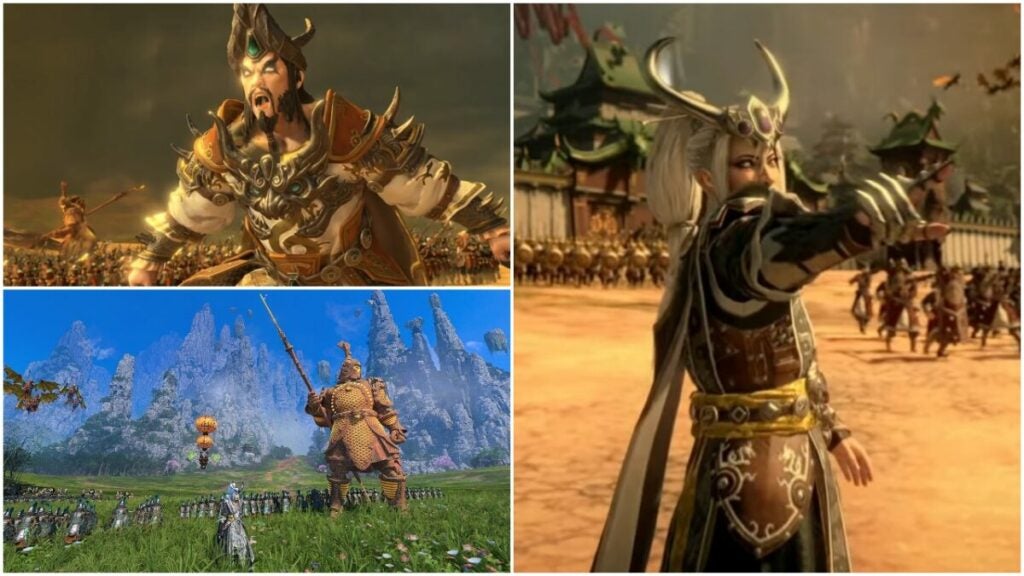
Grand Cathay – everything changed when the Chaos nations attacked
Main resource: None. Instead of using a dedicated resource, players must maintain a balance between Yin and Yang. Choosing abilities and technologies assigns Yin or Yang scores, causing debuffs on your units and buildings if not in balance.
Main Hero: Miao Ying and Zhao Ming
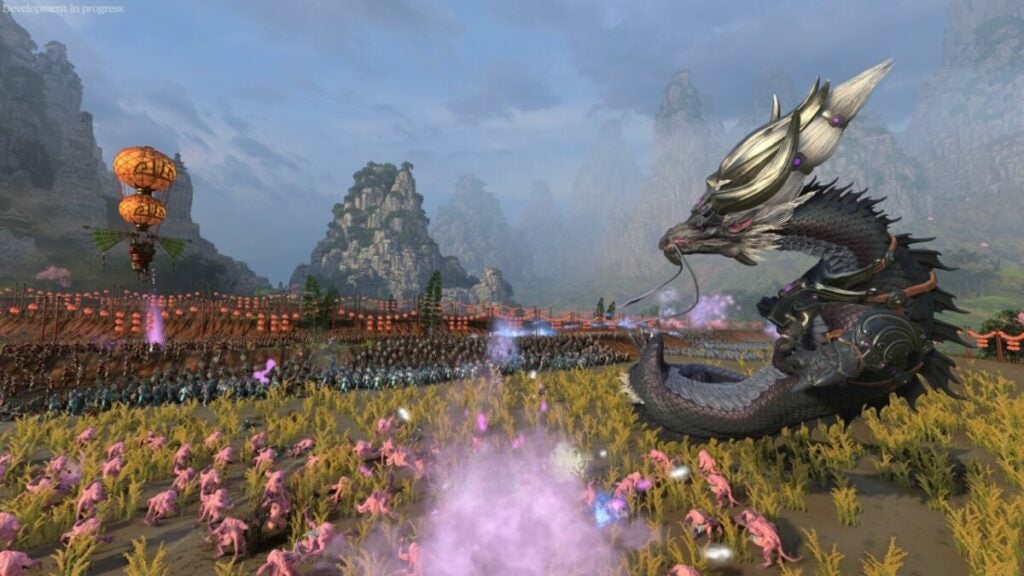
Serving as the largest human empire, Grand Cathay has one of the most unique units available in the form of immortal dragons. Players can control two dragons known as the Storm Dragon or Miao Ying from the Northern Provinces and Zhao Ming or the Iron Dragon ruling over West Cathay and the Sky Road. Canonically, the region prospers despite attacks from Chaos Realms, thanks in part, to the Bastion of Cathay. It’s a bit like the Great Wall of China.
This faction benefits from players who like grand strategies as the Yin/Yang balance mechanic requires more forethought and planning. It also makes use of Trade Caravans for players who like to turtle defensively or reach out via non-violent means. Defending Bastion gates against Chaos forces serves as the main conflict.
Pairing the right units together matters a great deal as many of them are highly specialized. But the faction boasts one of the best special units with the Terracotta General.
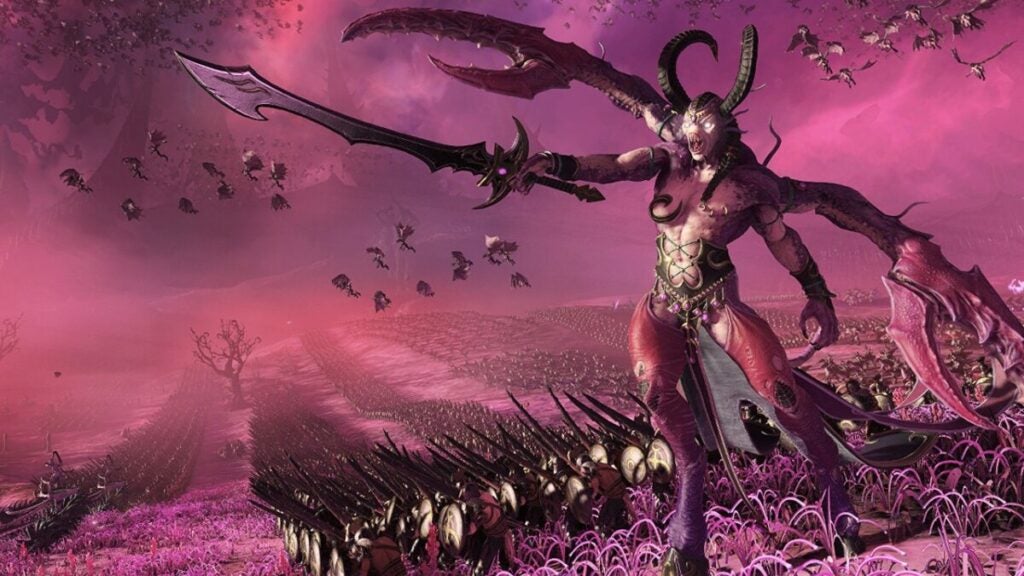
Slaanesh – like MK Ultra but with more leather
Main resource: Devotees. Leverage the power, love, and existence of thralls to collect upgrades and then repeat the process. Recruit others to fight for you since your own units are quite brittle.
Main Hero: N’kari
Led by N’kari (a daemon), the Slaanesh faction serves the god of debauchery and pain. You’ll find mortal followers, daemons, and other creatures in the mix with this faction. On top of quick units, this faction has access to Lore of Shadows magic. Players who favor debuffs, area of effect spells, and an overpowered giant slashing attack will like it.
This faction thrives most when you focus on flanking, attacks from the rear, and identifying weak points in opposing forces. Units tend to be very fast, as well, only reinforcing the focus on movement and positioning for the Slaanesh faction. A quick strategy is to corral your enemy into position and then charge them with your cavalry.
On the non-combat side of things, players will want to build influence with other races. They can leverage this to manipulate them until you can mindbreak or overtake them. Then, control these thralls diplomatically and use their units for extra support.
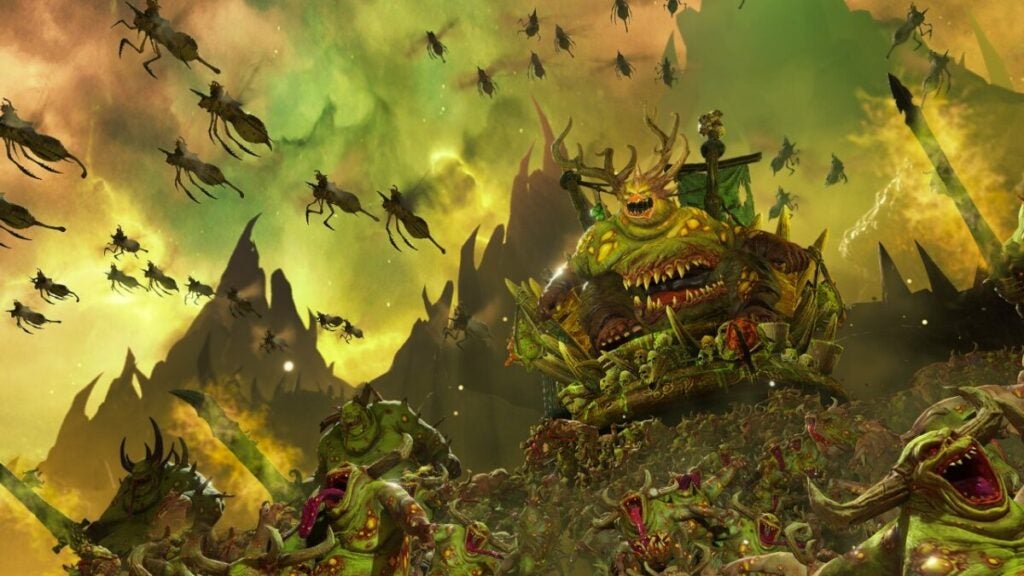
Nurgle – burping, biting, and lots of bodily fluids
Main resource:Plagues. Though not a spendable or even a collectible resource, how you modify your plagues will impact how successful your faction becomes. Infecting other settlements helps you grow your own power and spread more corruption. But this faction also benefits from Unholy Manifestations and cults.
Main Hero: Ku’gath Plaguefeather
Disease is life for Nurgle and Nurgle followers. This faction is all about city growth, plague generation, and infecting other cities. You can even have Nurgle cults unleash random plagues on people and unlock new sub-symptoms. Technology makes it easier to spread plagues, thereby growing your faction power. In addition, you can create custom plagues in your Plague Cauldron after unlocking plague recipes.
In keeping with Nurgle’s themes of the life, death, and rebirth cycle, the faction buildings follow this process, too. This makes it necessary to regularly check up on them as you don’t really know what they might be doing. Growing units can take time, but you can summon them instantly after growth. Players who like to build robust economies can parlay that into fast army recovery.
It’s all about weakening an enemy and sustaining that battle until they can be overtaken. Your army is slow but steady and you have lots of area-of-effect options, so use that to your advantage.
Ogres – smash, gnosh, trash talk, and repeat
Main resource:Meat. Yes, you read that right: meat.
Main Hero: Greasus Goldtooth
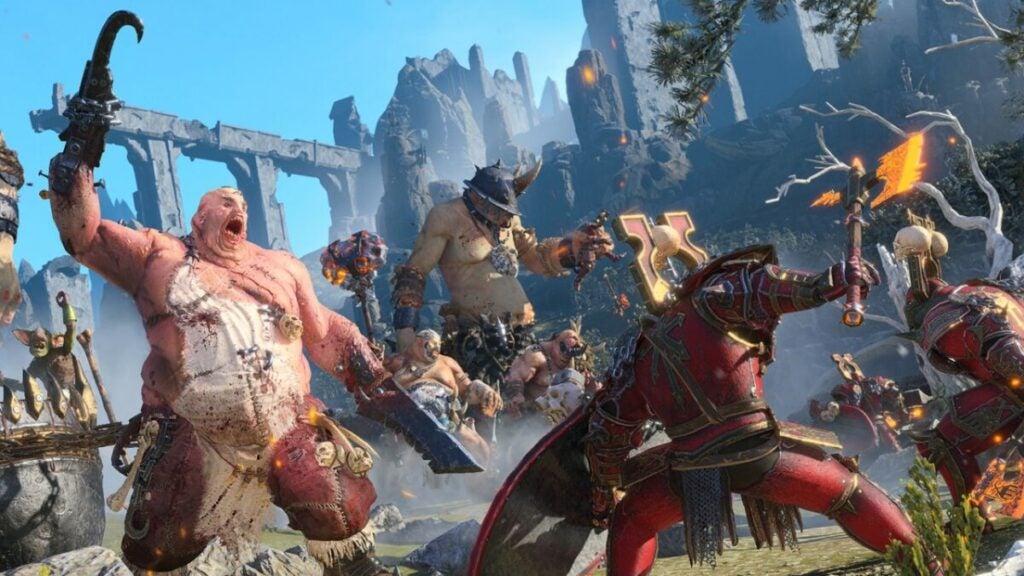
Ogres aren’t generally known for their sweeping intellect and that rings true in Total War: Warhammer III. Some have modified arms with giant knives for hands and all of them love to do two things: eat and fight. All of this is done in service to the Great Maw which apparently taught the Ogres magic. In fact, one spell unique to Ogres is “Fist” where a giant gauntlet appears over enemy units and punches down.
This makes them brutal combatants while also being savvy traders, as well. For example, Ogres can take on mercenary contracts from other factions to get extra resources. You can also just raid trade convoys, too. Pro-tip: if Ogres don’t have enough of their unique resource (meat), they will eat each other.
However, this faction does offer more unique customization options for more diverse strategies and playstyles. Charging is the name of the game for Ogres with their large units and heavy attacks.
Total War: Warhammer III Game modes
Singleplayer
The singleplayer campaign focuses on the Kislev deity Ursun and his capture. Though many veteran players might skip the tutorial, it is worth playing to get that extra bit of lore and story.
Multiplayer
In comparison to past Total War entries, Total War: Warhammer III has some of the most robust multiplayer features yet. Simultaneous turns represent a huge game-changer, but so does the addition of multiple kinds of multiplayer matches.
Please note: many players have reported issues with multiplayer lobbies, regional disconnects, and lagging. If you’ve encountered bugs, reporting it to the developer is the best option.
Realms of Chaos Mode – Rifts into the Chaos Realms appear across the map, spawning enemies along with distinct problems and challenges from rogue armies to tantalizing rewards if you leave sooner. In order to “win” the incursion, players must battle all enemies, overcome a realm trial, and defeat a Daemon Prince. If you fail, you cannot re-enter the realm until all other rifts come back. Staying in Chaos Realms causes characters to acquire negative traits that impact combat.
Standard Campaign Match – this co-op style of multiplayer has room for up to 8 players to go through the main campaign, siding with various factions along the way. What’s quite cool about this is that you can see your friends make their decisions in almost real-time thanks to simultaneous turns. The only downside is that this approach can cause games to hang while the engine resolves turns.
Darkness and Disharmony – save or doom Grand Cathay from/to the oncoming demonic hordes with up to 8 players. Consider it a territory race with settlements granting a single victory point per turn. Getting to 40 points first fulfills thewin condition and ends the game.
Something Rotten in Kislev – designed for just 1 to 3 players, this game mode has players defending Kislev from demon armies for a simpler, shorter campaign.
Immortal Empires – this “mega campaign” evolved from Total War: Warhammer II’s “Mortal Empires” mode. It combines maps and factions from other games. While not available at launch, Creative Assembly said it will be made available soon.
Ranked – play against other players in a competitive mode with a ranking system.
Visuals, sound, and enemy design
Sound design
Music and combat sounds can take a game from a fun experience to a work of art. When it comes to a game in the Total War franchise, this matters even more considering players traverse multiple realms and countries of the Warhammer universe. That said, this game’s sound design makes for an exceptional experience when wearing headphones.
Panning around the battlefield has shouts, screams, and the clashing of weapons grow and fade. The hooves of horses, crunching of bones, and even General speeches can be heard clearly. It’s just one more feature that helps to immerse players in the world experience.
In contrast, the music in Total War: Warhammer III remains more in the background as with previous entries in the franchise. But there is a greater variety of music across factions that adds excitement and diversity. Across the whole Total War series, Total War: Warhammer III has some of the best music and sound design so far.
Enemy design
Total War games always feature many original and tailored character designs. But given the fantastical nature of the Warhammer universe, the units in the game tend to feature more…esoteric traits.
For instance, N’Kari, the Slaaneshi Hero, has cloven feet and a mixed-gender body. But then you’ve got Ragnar who has thousands of potential visual combinations.
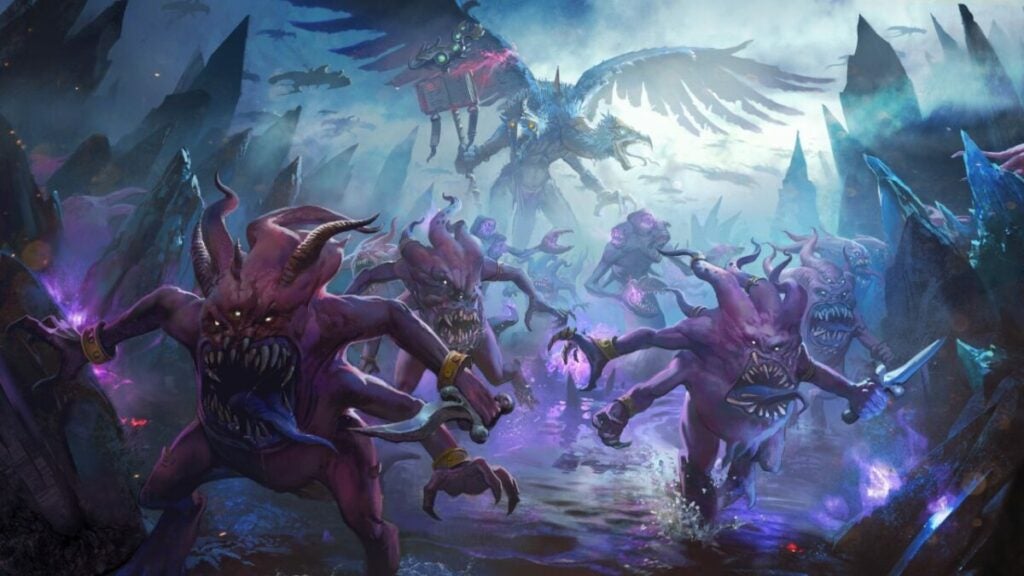
This third entry in the franchise took many old unit designs and animations to the next level. Things like Nurglings have tons of unique animations from idling to combat while creatures from the Ogres toss around huge artillery cannons like they’re feather dusters.
However, some of the mortal followers feel like afterthoughts in comparison to the more fantastical units.
World design
This new entry employs a different art style than the previous entry. As MandaloreGaming noted in his lengthy review of the game, certain elements and color palettes can read “cartoony” in comparison. However, many of the changes do make it easier to digest visual information on the map more quickly.
Each faction has unique maps and the battle maps are incredible. Creative Assembly wanted players to feel the scale of these realms – chaotic or not – and they did a great job of establishing that grandeur for each faction. As an example, city grids are nowhere near as common for sieges and different races now have more distinct building styles.
You might have a methodical Dwarf map vs. a haphazard Orc map or a winding Vampire map vs. a defensive Empire map. That said, as beautiful and full as many of the maps are, there are very few environmental combat variables.
For instance, the realm of Nurgle has poisonous swamps, butyour units don’t have to deal with poisonous gas damage. Including these kinds of environment-based variables could really improve and increase the number of viable strategies in battle.
Total War: Warhammer III Review: verdict and wrap-up
More of a good thing is never bad. Total War: Warhammer IIIdelivers exactly that with a few changes here and there. The new factions make wonderful additions to the catalog with fans already clamoring for more updates and factions.
If you loved the previous game, get Total War: Warhammer III. If you are a newcomer to the hybrid turn-based and real-time strategy genre, this offers a good introduction with its dedicated tutorial. However, veteran players may still find the unreliable AI, bizarre UI changes, and inconsistent designs irksome.
Download the game today and see if you have what it takes to fight off the chaotic storm.
PROS
Many quality-of-life features were added over previous titles in the franchise
Dedicated tutorial for beginners
Unique animations for factions and unit types
Sweeping, huge, and distinct battle maps for different factions
Lots of game modes
Fantastic sound design, music, and voice acting
Great potential for LAN parties
CONS
Can be difficult for newcomers
Some factions are locked behind paid DLC
Difficult-to-read UI at times due to similar color themes
Redundant UI elements that can lead to disorganization or confusion
This Ghostwire: Tokyo review has everything you need from story background to combat mechanics to how it performs on console vs. PC. The game features a very unique world plagued by Japanese Yokai or spirits from Japanese folklore. Human people have vanished, replaced with these often unnerving creatures.
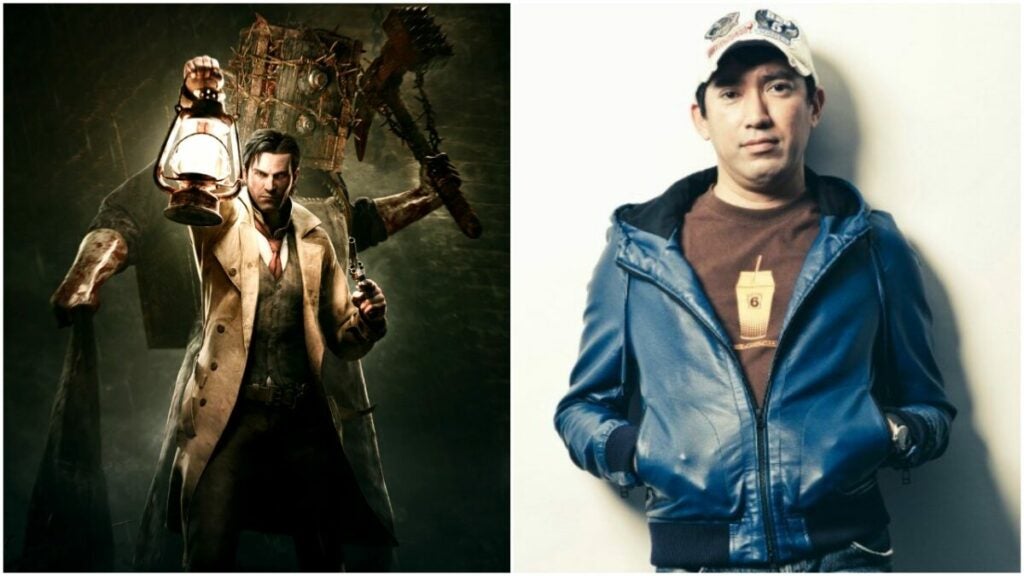
Developer Tango Gameworks gained traction with its series The Evil Within beginning in 2014. Since the team has not released anything from 2017, fans of the studio were eager to pick up their latest release which also comes backed by publisher Bethesda Softworks. Fans know of Bethesda for several high-profile franchises such as Elder Scrolls and Fallout. These single-player RPG experiences appeal to players thanks to their incredible world-building and usually long play-times.
While Ghostwire: Tokyo carries a shorter run-time, the lore of the world is just as deep and engaging. Now let’s dive into the spooky realm full of spirits for a full Ghostwire: Tokyo review.
Ghostwire: Tokyo background
The Evil Within carries a very somber and eerie tone with the main character investigating a mass murder at a mental hospital. Game director Shinji Mikami stated that he had wanted to create a survival horror game that focused more on survival than action with that series. In contrast, Ghostwire: Tokyo features more action as it is an action-adventure game that uses horror elements.
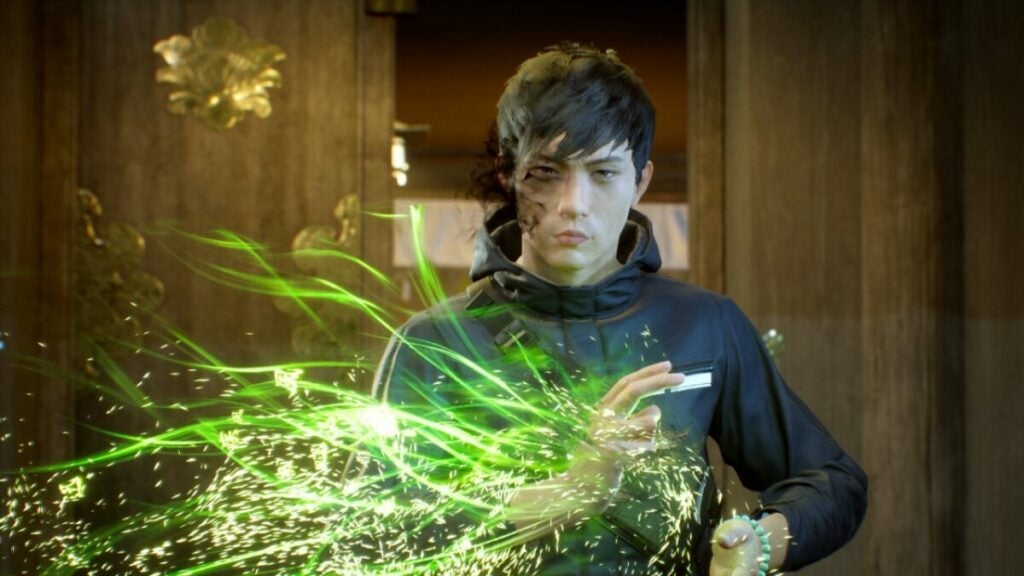
Doom veteran Shinichirō Hara helped develop the game’s combat using inspiration from martial arts like Kuji-kiri. Recent smash Sifu also drew combat inspiration from real-world martial arts, too. This lends the combat an intuitive, natural feel where the hands feel like “organic extensions of the character” as Hara said.
Setting and tone
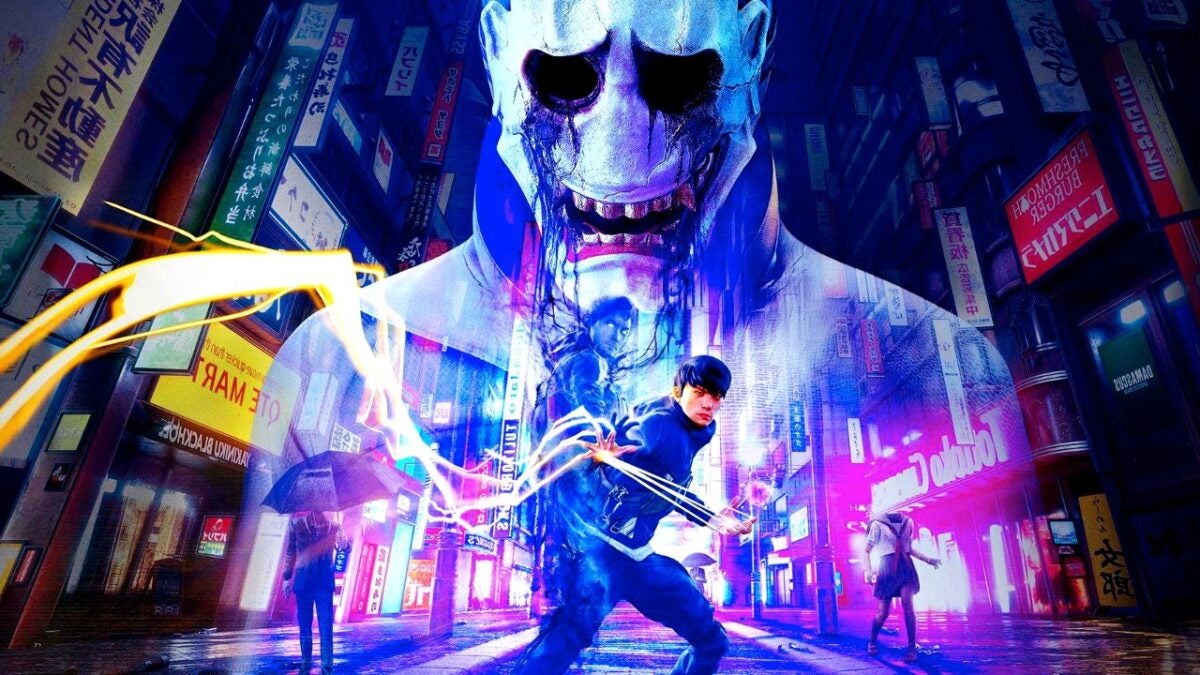
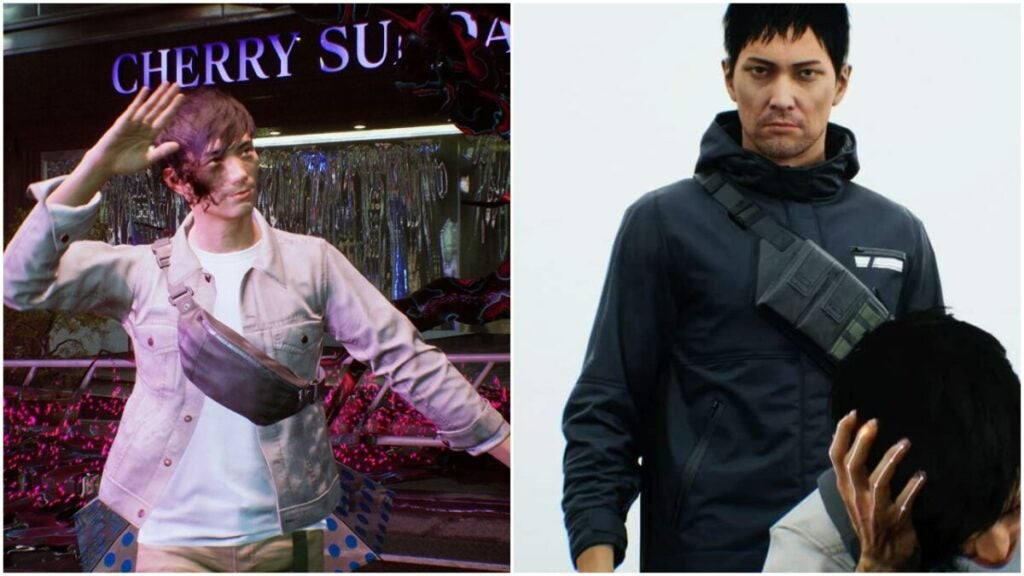
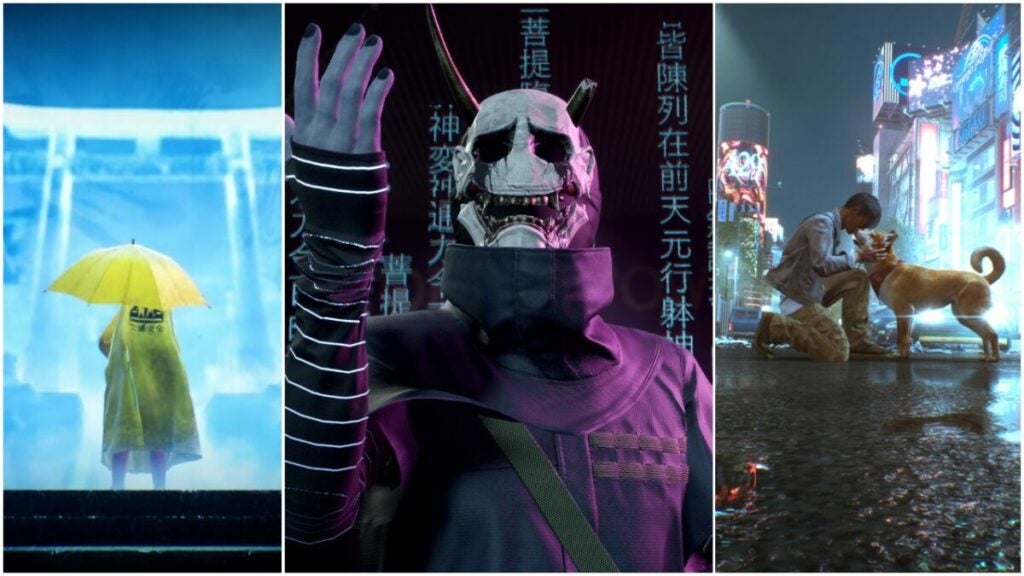
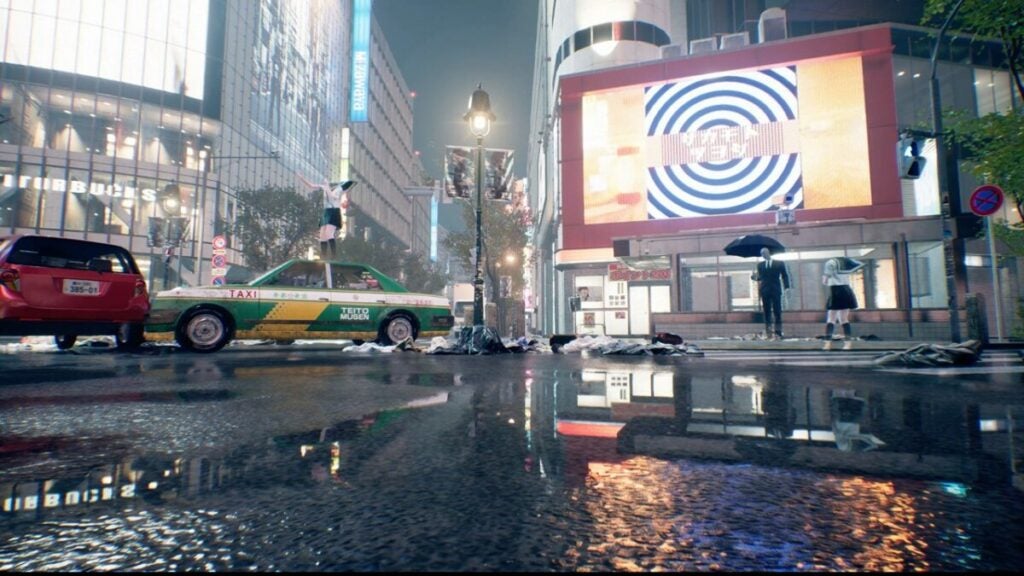
Set in a ghostly Shibuya City, this game juxtaposes the neon lights of a bustling Japanese city against the spine-shuddering visuals of eerie Japanese-inspired spirits. The main character, Akito, must discover what has transpired after a thick fog causes any who touched it to vanish. The clothes of those who disappear litter the ground while different Visitors assault Akito.
Curiously, a ghost and seeming spirit detective by the name of KK seems to have possessed Akito. This gives him the power to dispel the Yokai-themed Visitors – all based on various Japanese urban legends – and learn why all of this has happened.
Story
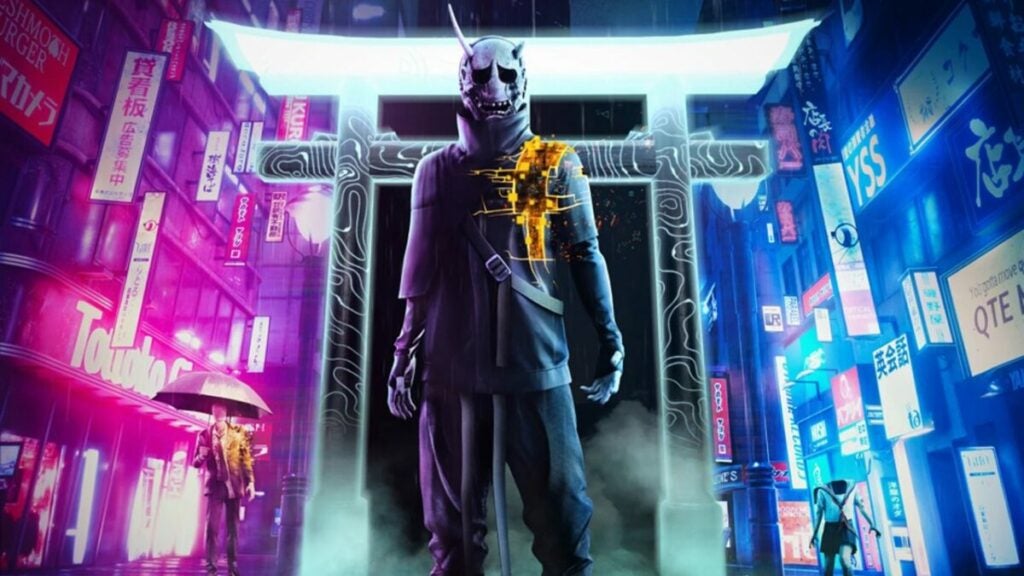
While Akito just wants to find his sister, KK seeks out the Hannya mask-wearing group that seems to be behind the disappearance of everyone. Pro-tip: Hannya masks are traditionally used in Japanese Noh theatre to represent jealous female demons or “hungry ghosts”. The story unfolds as the two battle for control over Akito’s body, fighting through hoards of Visitors, and trackingthe Hannya.
ClearingTorii gates throughout Shibuya city clears fog to reveal new areas, leading Akito and KK closer to the final enemy. However, along the way, the regrets these characters share regarding life choices come to the light. As a result, family features heavily as a running theme in Ghostwire: Tokyo
How long to beat Ghostwire: Tokyo
The game is still rather new, so not everyone has discovered all it has to offer as of yet. However, the developers gave players a guide as to how long it takes to beat Ghostwire: Tokyo.
Main missions: ~15 hours
Main missions with side quests: ~30 – 40 hours
Ghostwire: Tokyo performance
All games released for next-gen consoles tend to deliver stunning graphics. However, better graphics means they also have higher technical requirements. This rings true in this Ghostwire: Tokyo review, as well. If your PC falls below the minimum required specifications from the developers, here are a few tips to help the game run better:
Install it on an SSD (solid state drive) for more consistent and faster reading and writing of data.
Play on lower graphics settings.
Upgrade your hardware such as a new CPU or GPU.
Install more RAM to better help your computer run multiple processes.
PC vs. PlayStation 5
As with many recent games, Ghostwire: Tokyo was only released on PlayStation 5 vs. PlayStation 4 or even Xbox. This could be due to the demanding graphical requirements of the game as it offers six options on PS5 alone. PC gamers can look forward to DLSS and ray tracing supportalong with support for ultrawide displays.
As for which experience you might prefer, high-end PCs will offer a crisper experience, but lower-end PCs with older graphics cards or processors may struggle a bit. Whereas, PS5 players will enjoy top-notch graphics in any mode.
Ghostwire: Tokyo gameplay and functions
Battling against Visitors, the Faceless, and even the Masked Occultist himself requires combat savvy and powered-up skills. Ghostwire: Tokyo delivers these well with an intuitive UI that is relatively uncluttered.
The combat features real-world inspired movements while the first-person perspective puts players right in the action. Let’s break down some of the best Ghostwire: Tokyo skills, important items, quests, and more.
UI and interface
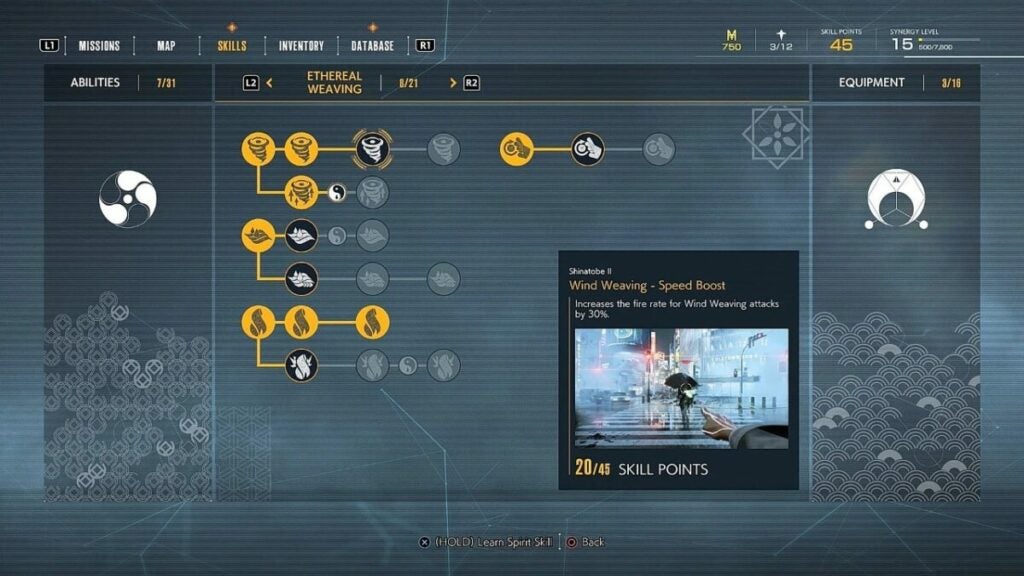
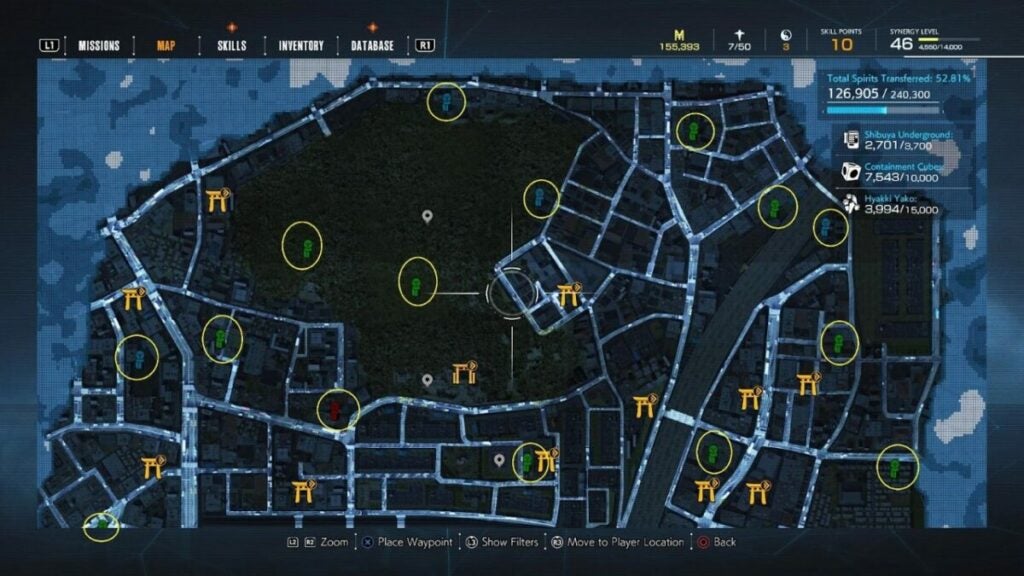
The in-game menu and UI are decently intuitive and familiar. The tabs are very familiar offering a Mission journal, map, skill tree, database of information, and inventory.
The skill tree illustrates skills and describes them well. Players can also view their outfits and buildout in the “Inventory” tab to check their drip.
During combat, the UI remains decently minimal with a minimap in the lower-left corner and a health gauge on the bottom right. Subtitles and prompts will appear in the bottom center of the screen.
Combat mechanics and Skills
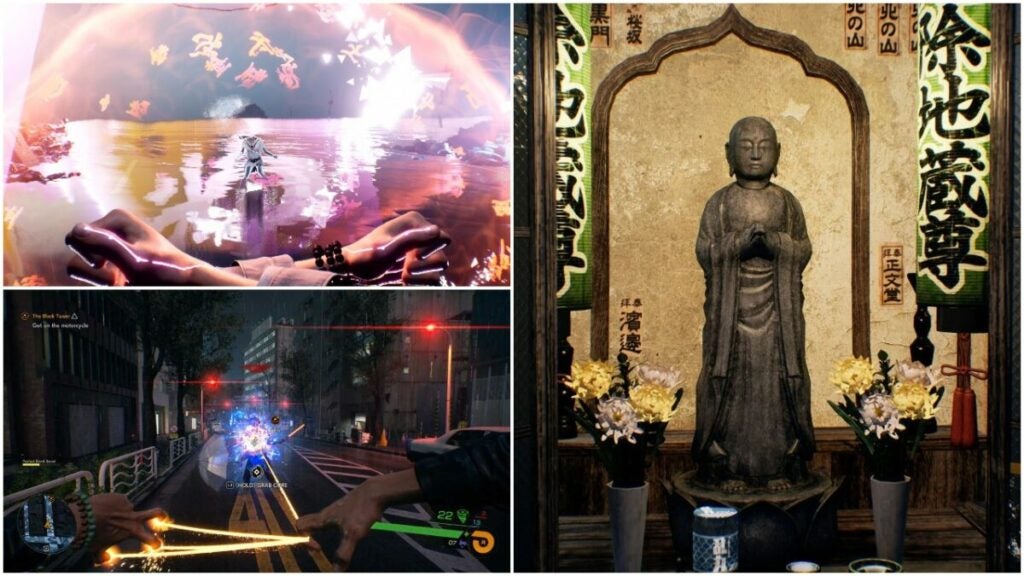
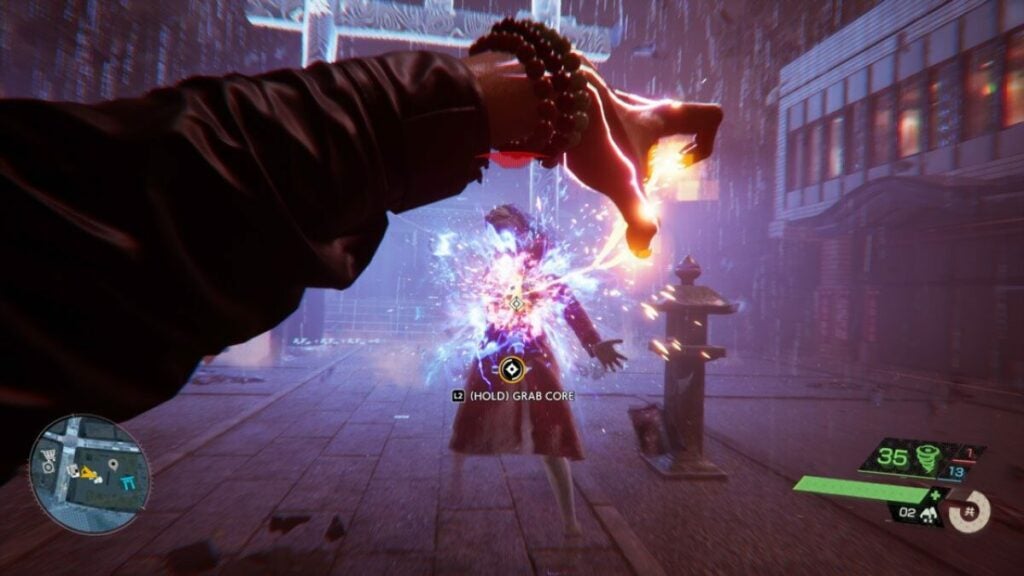
The first-person game features a “Karate meets magic” approach to combat design with Ethereal Weaving. Players can watch their players execute skills via various hand movements and motions. These feel especially visceral and satisfying as you watch Akito rip out enemy cores to destroy them.
The game employs several different elemental attacks that use “Ether” to power them. But Akito only has limited ammo or SP (powers special abilities) for each attack. He does also have a Bow weapon and can upgrade all kinds of Ghost abilities and skills. He can also block using theTatenui ability – something that becomes crucial in the game as it grants you Ether upon use.
Ghostwire: Tokyo seems to incentivize using stealth above all else as you can highlight enemies, purge them silently, and remain undetected in an area. It rings very similar to some Assassin’s Creed games where staying in stealth mode is much better than “going loud”. Using skills like “Faster Sneaking” and gear for Stealth only make it more overpowered.
Ghostwire: Tokyo important items:
Phone booths: used to release and save spirits
Jizo statues: used to upgrade elemental ammo capacity
Golden Ether crystals: grant Akito Meika — the game’s currency
Red Ether crystals: these explode when you shatter then, dealing damage to you and nearby enemies
Ether: the power behind Akito and KK’s attacks. You can find more by destroying corrupted objects highlighted by your “Spectral Vision” pulse
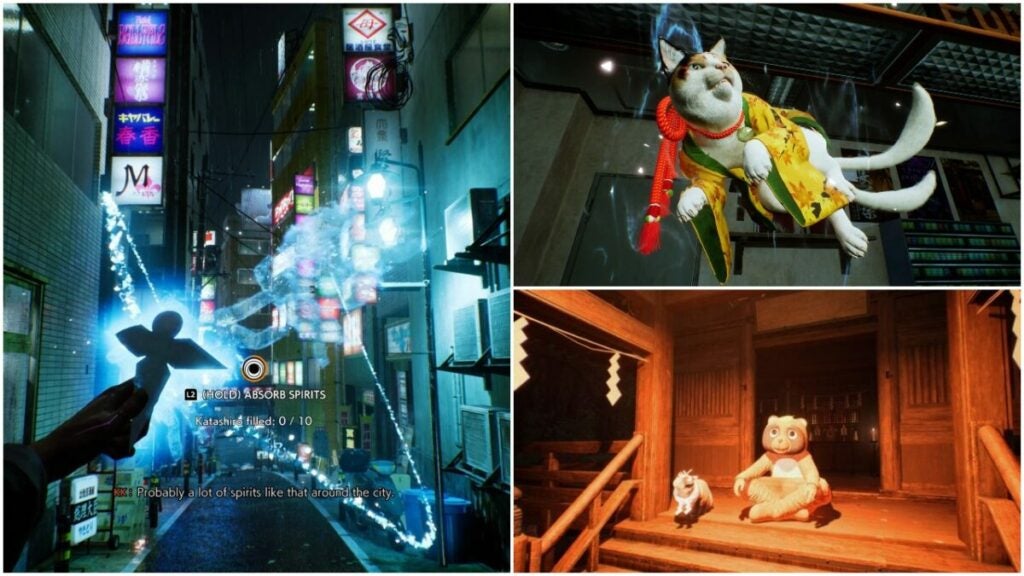
Katashiro: small paper idols used to absorb spirits
Shrines: drawing paper fortunes called “omikuji” can grant Akito certain buffs or debuffs based on luck
What you need to know about Ghostwire: Tokyo Combat:
Wind attacks: swift attacks using weaker projectiles with more ammo available
Water attacks: lower ammo quantity and damage with a wider attack area
Fire attacks: low ammo capacity with slow dispersal rate. However, it has incredibly useful offensive attacks including the “Big Fireball Grenade” that acts like how a shotgun would in a game like Doom
Talismans: these provide varying boons such as stunning enemies, summoning bushes to hide in, and other useful boons
Bow: a traditional bow with arrows for ammo
Strike Attack: attack enemies without using SP
Quick Purge: lets Akito stealth kill an enemy or deal heavy damage to it without being noticed
Tatenui: a skill that lets you block attacks and grants Ether on use
Spectral Vision: lets Akito locate objects like collectibles, animals, points of interest, spirits, enemies, and more
Stealth kills: keep you hidden in densely populated enemy areas
Finishers: how Akito and KK rip out enemy cores
Quests and gameplay
Players looking for a grand, epic ending will be disappointed by the ultimate bad guy in Ghostwire: Tokyo. Though the many Visitors are unsettling and somewhat challenging, the Hunnya leader just wants to absorb souls for power. But this kind of straightforward approach to character motivations can be seen throughout the game.
Many of the quests for the Yokai involve fetching things including toilet paper – yes, toilet paper. One unfortunate spirit is having a very tough time in a bathroom stall. But juxtaposing these kinds of simple, mundane tasks against stopping the Hunnya leader from absorbing souls feels unbalanced.
Though many of the game’s most intriguing details are found in the side missions, the game does not incentivize completing them from a lore perspective.
Ghostwire: Tokyo visuals, sound, and enemy design
As players saw The Evil Within games, Tangoworks created atmospheric gameplay that seriously freaks you out. Everything from the weather to the creaking of the floor beneath your feet and light blinking on a street corner feels lovingly crafted and intentional.
Though parts of the world feels a bit procedural in Ghostwire: Tokyo, the scale of the game is large and the city feels lived-in. The fog that Akito must clear grants an extra aura of eeriness while the Visitors’ unsettling designs make for constant anxiety. The uncanny resemblance to humans with just something slightly off never ceases to send shivers up your spine.
Sound design
Ghostwire: Tokyo is not a shooter, but it still kind of feels like one when it comes to sound design. Akito’s abilities “fire off”, making sounds as they charge up, disperse, and then explode or impact. The ability to interact with the environment also adds to this similarity.
But what really sticks out in Ghostwire: Tokyo from a sound design perspective is the remnants of a once vibrant Tokyo city. Akito can hear music blasting from stores as he walks through the city despite there being no one around. He can hear the buzzing of streetlights or the rushing of water at a shrine.
Then, of course, there’s the unholy whispers or shrieks from various Yokai. When wearing headphones, this makes for an especially spooky experience. The only disappointment has to be the voices of the benevolent spirits that Akito can assist. The pitched voices don’t do much to add to the atmosphere and also feel a bit cliche in comparison to everything else.
Enemy and character design
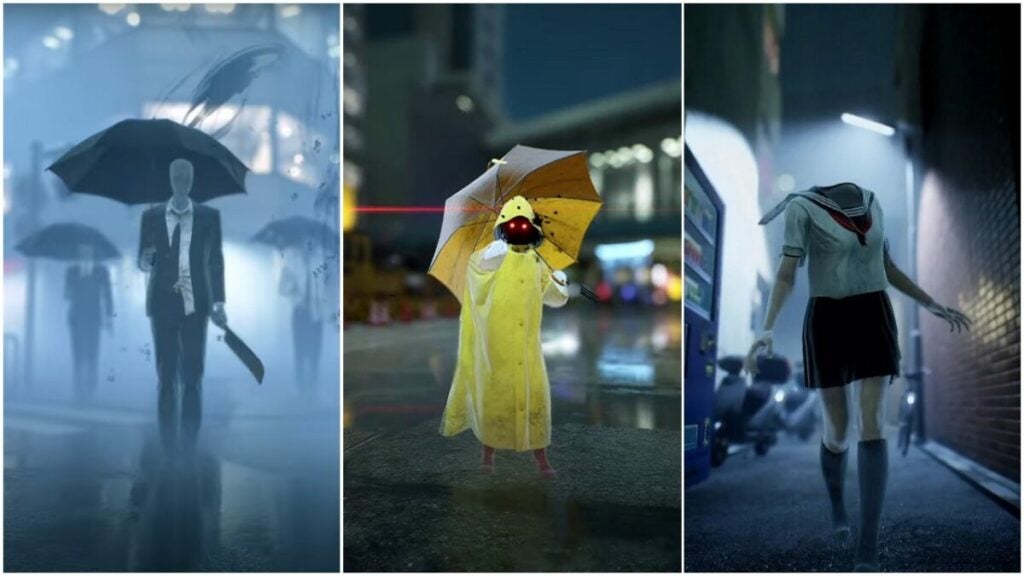
Given that the game takes place in one of the busiest places in Japan, the enemies mirror those very humans who disappeared. Many of them will wear school uniforms or business attire. What’s more: all of these enemies have unique combat abilities and approaches.
For instance, enemies that have umbrellas will use them as shields while headless schoolgirls will perform rush attacks. Deciding how to navigate fights with multiple types of enemies requires knowing their preferredattack methods. Players can tell how close a spirit is to death by how damaged they look — enemies look more damaged as you successfully attack them.
Non-violent spirits
Once discovered, all Yokai remain marked on the map – including floating merchant cats. But Akito and KK will also encounter non-violent spirits that can grant quests.
Though the Visitors are animated distinctly (like the sentient umbrella), the spirits you help are typically spectral outlines that fade in and out of existence. These characters also feature weirdly pitched voices to drive home the point that they are “not of this world”. Although consistent, these spirits stick out as a bit of a letdown in comparison to other Yokai in the game.
World design
The world never seems quite real in Ghostwire: Tokyo. Street signs will begin to float above the pavement. Doors will grow or shrink in size or even lead to a different place altogether than what they showed you before walking in. These touches, along with the grim and foggy atmosphere, go a very long way in creating the mood for the game.
But the game does more than establish an eerie mood and incredibly immersive recreation of Tokyo. It plays with the verticality of the city – requiring Akito to visit building rooftops regularly. There is a “Glide” mechanic that lets Akito float in the air momentarily, but Tengu Spirits are your best bet to get to rooftops.
Tanuki hunt, collectibles, and more
Rely on the ability of “Spectral Vision” to find collectibles. This pulse highlights everything worth checking out in an area such as collectibles, single-use items, Ether, and more.
There are tons and tons of things to discover, so exploring really pays off.
Ghostwire: Tokyo review: verdict and wrap-up
Overall, Ghostwire: Tokyo offers a solid, immersive experience with consistent gameplay mechanics and unique character designs. The game’s graphics are beautiful, rendering Shibuya City and other parts of Tokyo in lovely if unnerving elegance. For players who love collectible hunting or Japanese culture, it offers an especially fun experience.
But the game is at its best when it leads you through segments in an almost fatalistic manner. Though Akito and KK don’t know why the Hannya are doing this, they unravel their own inner turmoil as they discover why. It’s those interactions and the various spirits they encounter and help or dispel that make Ghostwire: Tokyo worth picking up. The game officially launches on March 25, 2022; pre-orders yours today!
Pros
Engaging combat with real-world influences
Enticing stealth mechanics
Incredibly unique character designs based on Japanese urban legends
Immersive recreation of Shibuya and many other aspects of Japanese culture and infrastructure
Open-world feels alive and lived-in (despite the mass disappearance of humans)
Bizarre visual features and environmental effects that enhance the atmosphere
Consistent combat mechanics
Cons
A bit formulaic at first before more unique enemies appear in combat
Enemy AI can be very rudimentary at times, making it easier to take them out without much dexterity or difficulty
Focus on stealth may not be for everyone
Perfunctory-feeling sidequests at times
Muddled motivation for the final boss results in a somewhat hollow ending
By now, you’ve no doubt heard of the blocky, Lego-Esque “game” known as Roblox Studio. But it’s not just one game; it’s hundreds. And they are more or less all user created, as well. There is even a parasocial element such as real-life influencers getting custom Roblox and hosting in-game events like Yoga classes.
Many types of games exist and it is technically free to play, and Roblox is widely regarded as a kid-friendly platform. Of course, that trait has recently been called into question with multiple news sources such as The Washington Post reporting on unfortunate, nefarious actors within the Roblox community.
Let’s review Roblox Studio, list some of the best Roblox games, and see what they’re all about.
Roblox studio history and background
Believe it or not, David Baszucki and Erik Cassel founded the Roblox Corporation all the way back in 2004. They didn’t officially release Roblox until 2006 and the game continued on through the years. It debuted on various platforms starting with Windows then adding iOS, Android, and Xbox One.
Tragically, Cassel passed away in 2013 due to complications from cancer. However, the company received funding through a round of venture capital funding in the amount of $82 million USD in 2016.
The company expanded, receiving more funding in 2020, and eventually got a valuation of billions of US dollars. Going public in late 2020 saw the company’s clout go up even further.
What is Roblox?
Roblox is an online platform where users create and then share their games across the digital world. It’s more like a Steam/YouTube hybrid that’s free to play. Roblox Studio Software creates games ranging from shooters to RPGs and themed games around popular Korean streaming shows.
Roblox developer tools and features
Roblox heavilyincentivizes all users to become game developers with lots of tools and the promise of earning real money or in-game currency. Especially aimed at a younger audience, the platform offers tons of resources from Studio Step articles to a developer console.
The game uses Lua, the programming language, to create digital hangout spaces or full-fledged interactive digital experiences. Users can create the game they’ve always wanted to play but perhaps haven’t found yet. There was even a Lil Nas X virtual concert in 2020.
For anyone looking to learn more about game development with lots of documentation and community support, Roblox is a great way to get started.
Concerns about content and exploitation
Every game, developer, and platform has its controversies and Roblox is no different. There are two major concerns regarding the game platform — one that especially concerns parents since many kids are active on Roblox.
Is Roblox kid-friendly?
Roblox, like any gaming platform, has rules in place for decency. No slurs, nudity, harassment, etc. However, many users experience naked avatars who proposition other players in chatrooms or break other rules. Worse yet, one user had their avatar assaulted in-game in 2018.
Roblox Studio has a laissez-faire approach to overseeing player-to-player interactions, so many of these issues don’t get reported or aren’t addressed. The game platform is an older one and, now, it’s explosively popular and quite siloed in how the company approaches platform management. Retrofitting safety and security features for minors does not seem to be a top priority.
Does Roblox exploit young developers?
As reported by numerous outlets in early 2022 after initial reporting by People Make Games, developers with some as young as age 6 were creating content on the Roblox platform. Not only are there claims of financial exploitation, but of harassment, as well.
The company encourages young creators to sell their work with phrases like “Make Anything. Reach Millions. Earn Serious Cash”. But Roblox takes 30% of any sales of virtual creations. Moreover, older developers take advantage of young developers who don’t understand how to value their work. Then, when the younger partyis dismissed erroneously or not appropriately compensated, they have no recourse against the older parties or even with Roblox who considers themselves a third party in the scenario.
In addition, theolder parties would harass younger users — sometimes in sexually explicit ways. For a platform that bills itself as kid-friendly, these are huge red flags.
Roblox “Robux” system
Robux is the system of in-game currency in Roblox that lets players buy cosmetics, items, and games. The company even has tutorials on how to price games if you are trying to earn Robux with them. Roblox also has a trading system that lets players trade Robux, Limited Items, and Limited Unique Items.
There are several ways to get Robux in-game, but here are some of the most straightforward options:
Build games that become popular to generate revenue
Design custom clothes or items to sell on the platform
Buy memberships that dole out a certain number of Robux every month instead of buying a small chunk of Robux at a time
The best Roblox games including Adopt Me
Roblox players have tons of options when they want to choose a game. Do they want scary Roblox games or something laid-back and casual? Maybe they just want to know what it’s like to work in a pizza shop for a day. On Roblox, downloading a new experience is easy, but not all of them are created equal.
Here are the best Roblox games in terms of popularity among users:
Adopt Me! – a Sims-style game where players take care of their home and pets while exploring the world.
Work at a Pizza Place – roleplay as a pizza place worker in one of the most popular Roblox games of all time. This cooking game has players fulfill customer orders accurately and quickly in one of many roles such as chef and cashier.
Counter Blox – if this reminds you of Counter Strike, that’s on purpose. It has similar movement, mechanics, aesthetics, and maps.
Theme Park Tycoon 2 – similar to games like Roller Coaster Tycoon, this amusement park sim game allows players to create and manage their own parks.
MeepCity – an open world Sims-style game with more focus on home building.
Scuba Diving at Quil Lake – more relaxing than something like Subnautica, this game lets players find treasures beneath the waves and explore caverns for lost artifacts. It features some survival elements such as maintaining air supply and avoiding toxic water.
Jailbreak – users play as criminals or cops in this kid-friendly Grand Theft Auto-style game.
Dungeon Quest – an MMORPG similar to Blizzard’s epic franchise Diablo with tons of loot to find and enemies to slay.
Anime Fighting Simulator – a rich fighting game, this option features lots of diverse items, weapons, and game modes for tons of beat ’em up action.
Murder Mystery 2 – find the killer among you and a group of people before it’s too late.
Roblox games competitors
In 2021, Roblox began to refer to its games as “experiences” instead since the user-created ventures are all so different. The company even replaced the “Games” tab on its UI with a “Discover” option instead. Despite this change, most users agree that they are playing games when they go to Roblox.
Though the platform offers many free-to-play experiences, there are tons of free-to-play options on the market today in both the Indie and Triple-A camps. These competitors all give every Roblox experience a run for its Robux.
Trove
TheMMO sandbox game was originally launched for Windows PCs but expanded to Xbox and Nintendo Switch. Users choose one of many classes, explore different environments, customize their characters, choose professions, and more.
Players looking for a more RPG-style experience should consider Trove as it has great depth of content and a cute, retro art style. The free-to-play game has a wholesome feel to it, hearkening back to pen and paper RPG games. Some parents may enjoy sharing it with their kids as a step toward other video gamesand even Dungeons and Dragons.
Minecraft
Minecraft, available as early as 2009, remains one of the world’s best-selling games. Though users can pay for their own servers, they can also play Minecraft for free. Creative mode allows users to create incredible, unique worlds while still exploring the more RPG-related elements of the game.
It’s a fantastic option for parents and kids to play together; it also has a similar aesthetic to Roblox with blocky figures. However, it is limited to exploring, building, crafting, and survival gameplay. Roblox Studio naturally offers more variety since it hosts hundreds of games.
Fortnite
Though it started as a PvE campaign with base building and zombies, Fortnite gained major notoriety for its popular Battle Royale mode. The free-to-play mode pits single players, squads, or teams against each other in a raucous, third-person shooter battle with all of thecosmetics you could imagine.
Since it is free and easy to pick up, many parents will play it with their kids or just let their kids play. Tons of streamers such as the famous Ninja also give the game publicity. However, since the age range of Fortnite varies so widely, it may not be considered as kid-friendly as games on the Roblox platform.
Lego Worlds
The building block titan created its own sandbox title with Lego Worlds. Like Minecraft, users create their own buildings and structures in a procedurally generated realm. It offers a very similar experience to Minecraft, but with the addition of Lego-branded content.
For lovers of Lego blocks, this makes a fantastic game to pick up since it has buildings, vehicles, animals, and more. Again, it is just one game vs. Roblox’s many, but it offers a more restricted experience for younger players.
Verdict on Roblox Studio
The Roblox Studio game platform is home to hundreds of unique, user-created games. Many of them are riffs on classic or popular Indie and Triple-A titles. The platform is free to download, but not all games are free to play. Moreover, cosmetics and items cost real-world money.
Overall, Roblox is worth it if you want to learn the basics of game development, play casual games with friends, or play a video game with your kids.
PROS
Free to download
Large variety of game types
Great exposure for young people and newbies to game development and other development-related tools
Unique way to earn income selling games
Easy for large groups of friends to play games together
Customizeable avatars
CONS
Microtransactions
Potentially harmful without careful parent oversight
Little recourse for players regarding in-game issues
Not all games are free
Simpler aesthetic that may not suit everyone’s preferences