The merry life of sad dog Cornelius is, without a doubt, the best comic of the year
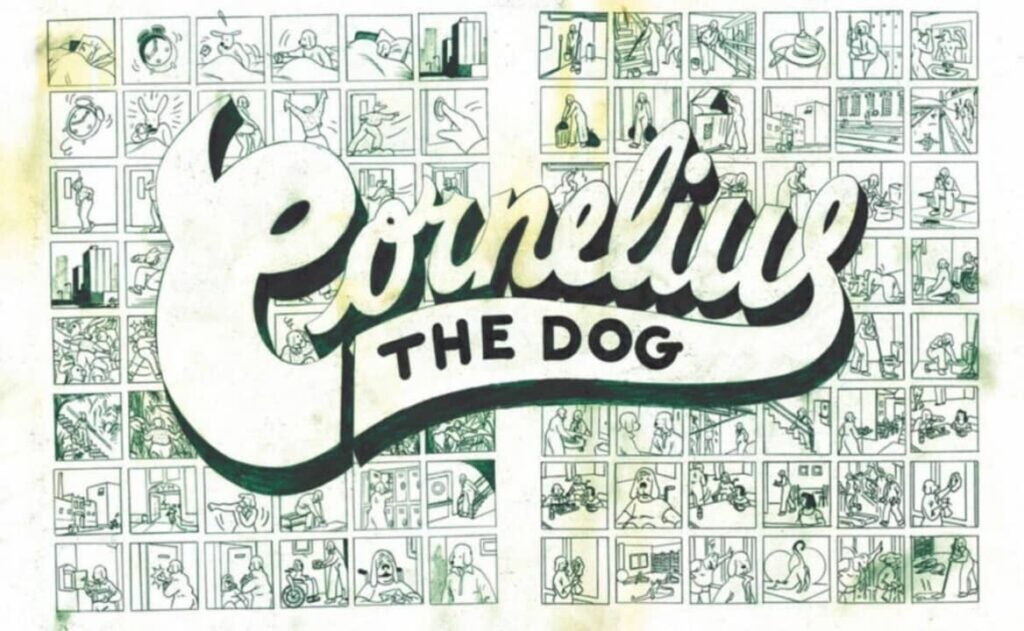
Cornelius is a country dog who works cleaning at a gym. He has a couple of friends, a couple of enemies and a crush on a girl, a normal life that keeps feeling like an absolute loser. Done in as many visual styles as possible, with a gripping river story, hilarious gags and depressing reflections, ‘La alegre vida del triste perro Cornelius’ is, without a doubt, the best comic of the year. And the best part? Its author, Marc Torices, is surprisingly young… And from our country.
‘Cornelius’ is at once absurd, precious, unsettling, thoughtful, hilarious and very, very sad. “Writer? Bah! That’s the stuff of pretending, you know? Pretending to do great thinking, faking a good story, faking depth… Copying… I’m sure you have a great future ahead of you in that, Cornelius!”, says one of the characters shortly after the beginning slapping the author himself. And this is the roller coaster moment of ascent.
Every few pages a laugh, a moment of feeling bad about yourself, the doubt about whether to feel pity or disgust for the protagonist. The best thing about a good complex story is that there are no good guys or bad guys: just gray people. And Cornelius never knows whether he acts the way he does out of foolishness, out of doubtfulness, out of a bad person, or out of that humanity one can only find in a comic book dog.
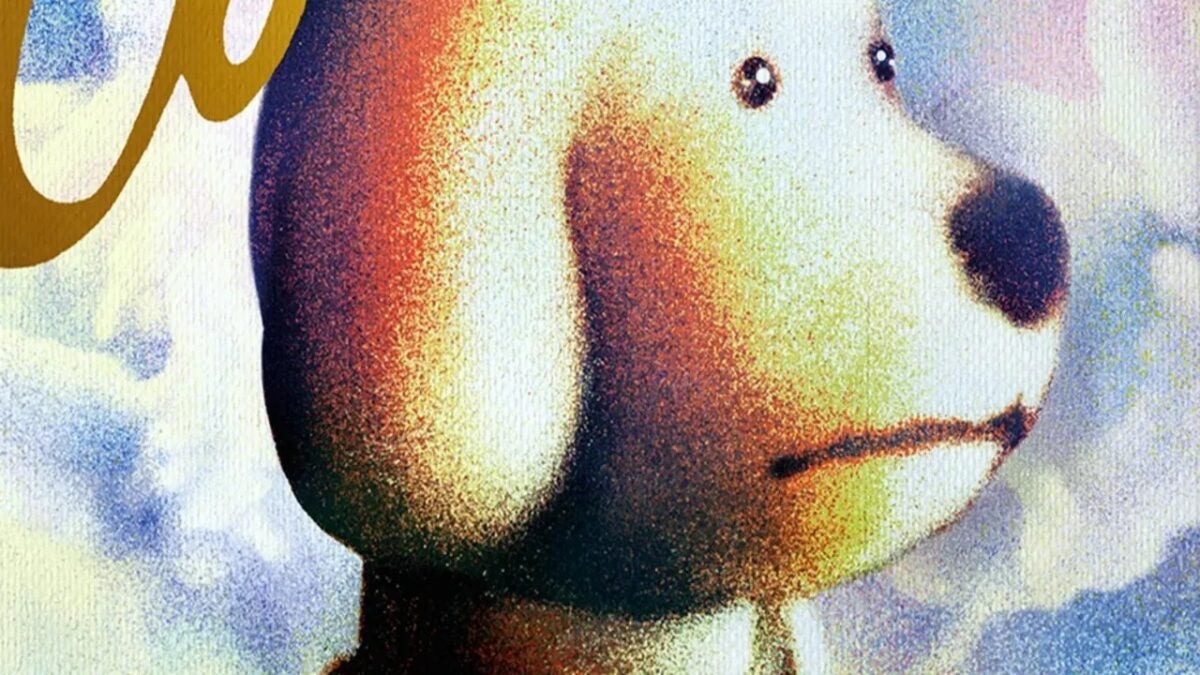
Do not believe, because of the fabulous cover that Apa-Apa has dedicated to it (where you can find it for 33 euros that, frankly, you will more than pay for it) that ‘Cornelius’ is a children’s work or, even more rancid, that because it is a comic book it is for all audiences. Without the need for shady scenes or explicit sex, this comic book is profoundly adult, a story that could only be told in cartoons. At a time when surprises are measured almost algorithmically, there is something in Marc Torices’ work that you won’t find in any other: overflowing originality and creativity.
A titanic, handcrafted work of eight years, aware that the Spanish cultural world is not capable of appreciating comics as an art on a par with cinema or painting. But it should: ‘La alegre vida del triste perro Cornelius’ is a masterpiece and a turning point in the history of modern Spanish literature, a comic to revisit again and again, to admire its stylistic exercise, its narrative capacity and its absolute freedom, as refreshing as it is emotional. In 2035 we will still be talking about ‘Cornelius’. And it will have more than deserved it.
In Germany, Clever & Smart came to have not only two unpublished comics in Spain, but also three censored and redrawed pages of an adventure carried out in honor of the German country.
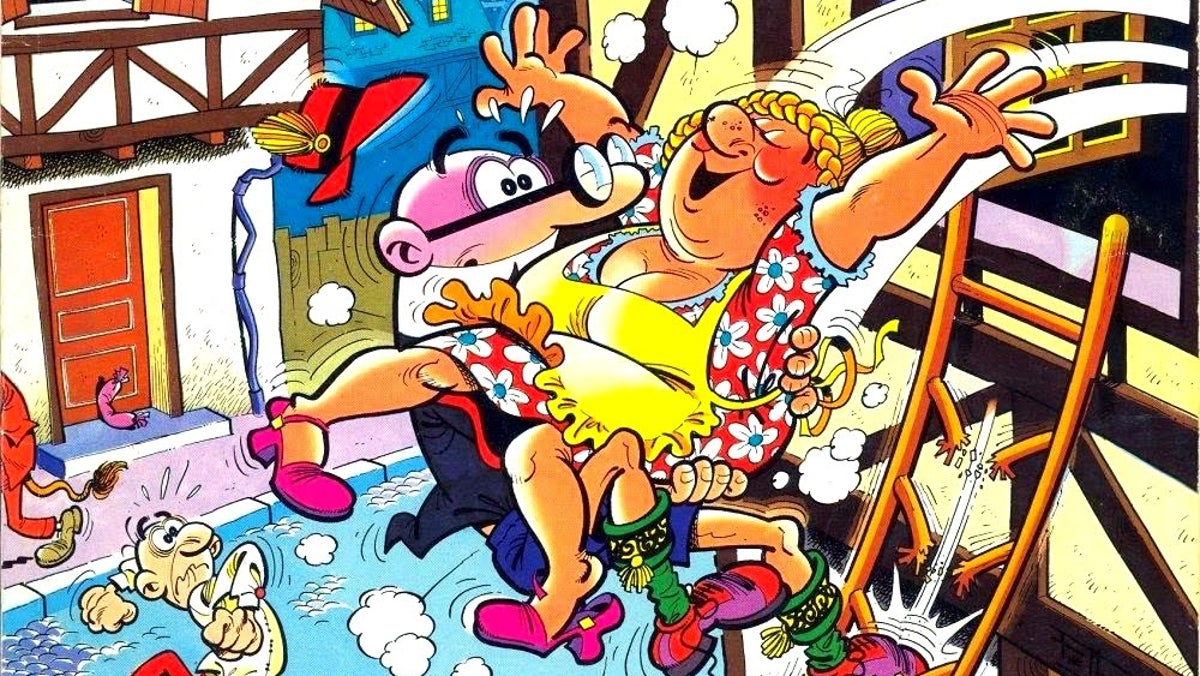
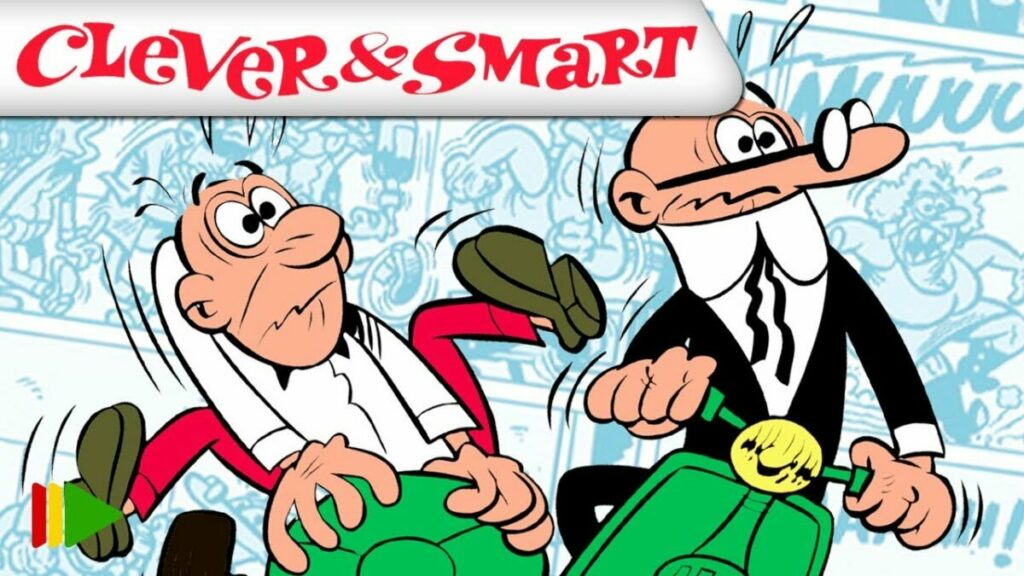
When we talk about the “Spain brand” we often forget one of the products that is most recognized beyond our borders. Although it may seem strange to us because it is still something very “caní”, Mortadelo and Filemón have been a huge success around the world. But maybe nowhere as much as in Germany, where Clever & Smart (the translation of those places) came to have not only two unpublished comics in Spain, but three censored and redrawn pages of an adventure made in honor of the German country. Don’t run, no, you fool, I’m going to give you censorship!
Landing in Germany
The year 1972. Ibáñez had just finished the twelfth long comic book of the TIA agents, ‘Gatolandia 76’, when his cartoons began to land in a Germany still divided by the Berlin Wall. Clever and Smart were still working for the TIA (which instead of ‘Aeronautical Investigation Technicians’ would now be ‘Trans-Internationaler Agentering’), but instead of fighting against GRANDMOTHER they were fighting against the OMA (‘Organisation Militanter Agenten’, it should be said that ‘Oma’ means ‘Grandmother’ in German). The name of the Super was changed to Mr. L.
Small changes that did not prevent Ibáñez from signing Mortadelo comics and comics in Germany. So much so that he even created a character that resembled his German publisher’s secretary, the later ignored Irma. Later, the agents would be known as Flip & Flap. Flip and Flap worked, paradoxically, for the OMA (“Organisation für Meister-Agenten”) and the Super was called “Mr. Knacks”.
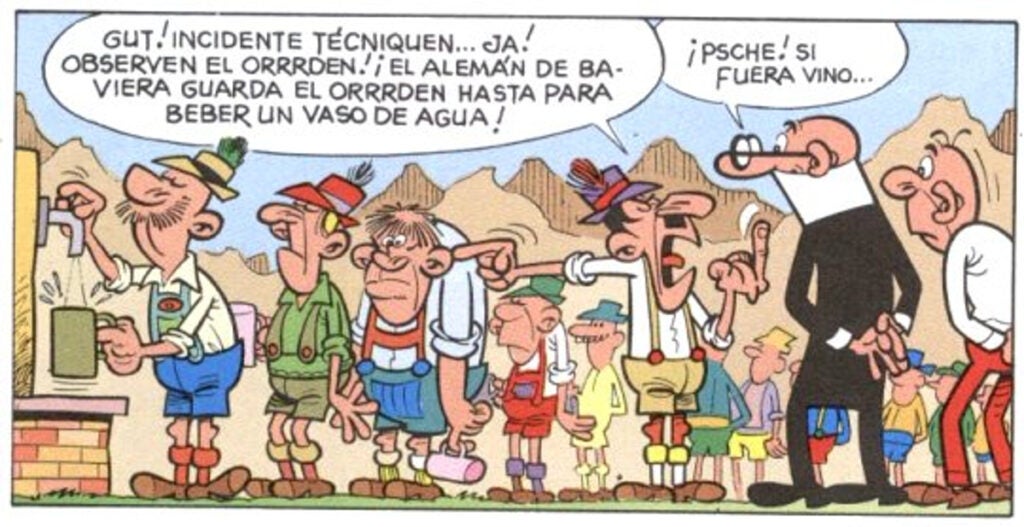
The last way Mortadelo and Filemón would be known in Germany was as Fred and Jeff, the name given to the VHS edition of the short films by Estudio Vara. The thing is that Ibáñez was so grateful to Germany that between 1981 and 1982 he would serialize in Mortadelo magazine a story that would have our agents going around Bavaria or Berlin: In Germany. But the h0menage came out regular.
Apocrypha and censorship
The trip to Germany in question is in search of The Rat and The Pachyderm, two jewel thieves who have stolen Queen Elizabeth II’s jewels (“Her Majesty, the Queen, will have to attend the opening ceremony of the Parliament with a beret because of the theft of her crown and other jewels that blah… blah…”). And of course, to avoid problems between the two sides, all references to East Berlin were deleted in the German country.
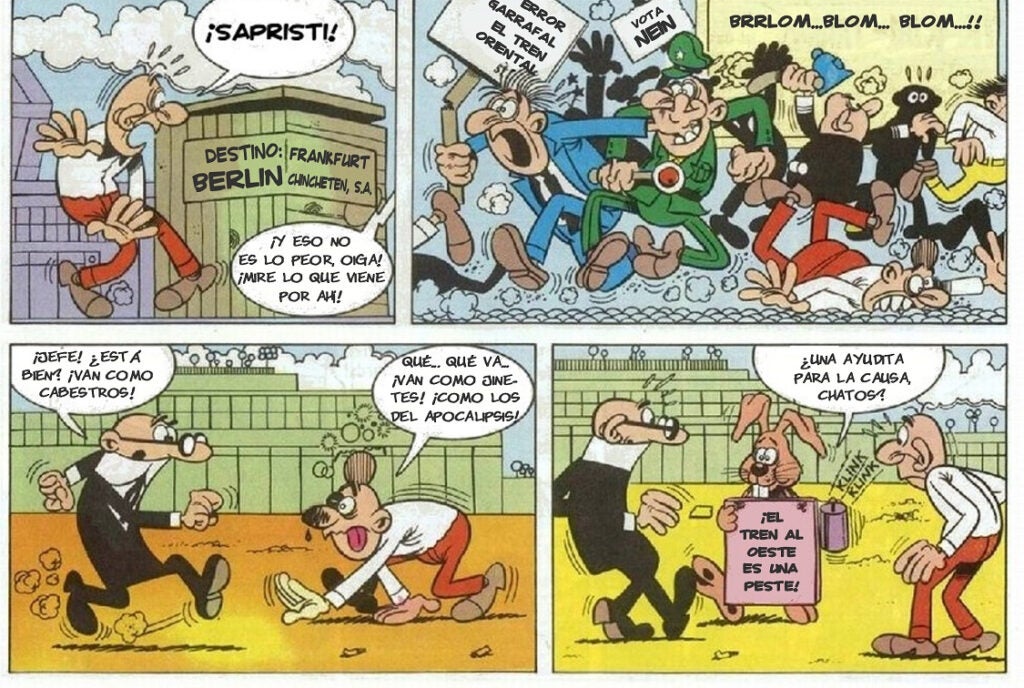
In the first censored page (and translated thanks to the Unofficial Page of Mortadelo and Filemón), Filemón discovers that they have arrived in East Berlin and end up knocking out a policeman who asks them for their papers. This could not be allowed in Germany, so what they discover instead is that they have arrived in Frankfurt, where there is a demonstration around the train. Finally, a rabbit appears with the slogan “The train to the West is a pest!” and asking them for a donation. The drawing tries to imitate Ibáñez’s, but it is between a copycat and forced. It doesn’t succeed.
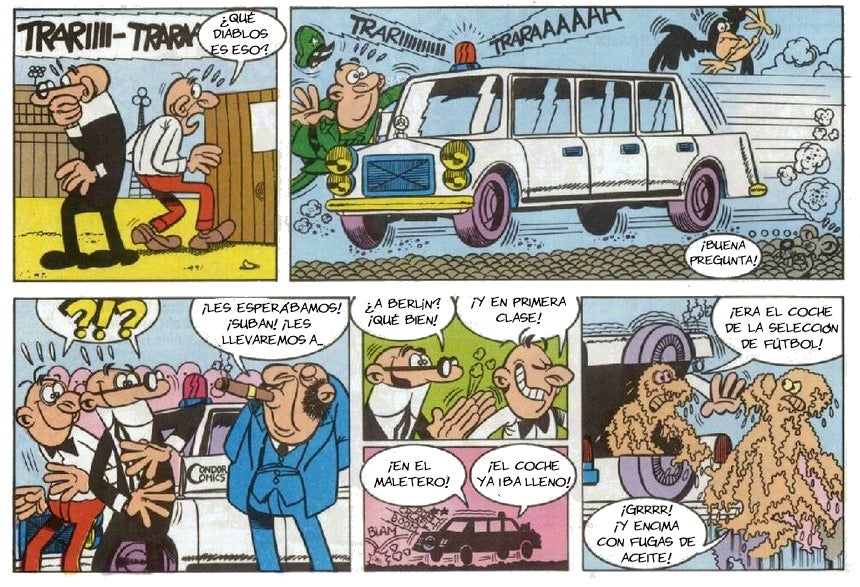
The second one is completely original, and it is worth reading to understand how difficult it is to make a good Mortadelo comic book. In the original, the agents try to cross the Berlin Wall from underneath but end up unblocking a pipe: the bad smell makes them pass through, leaving everyone disgusted. However, in the German version they doubt whether they are in Frankfurt or New York because there are “too many vandals on the loose” and end up arriving in Berlin in the trunk of the soccer coach’s car, which was leaking oil (justifying that they were muddy to continue the story).
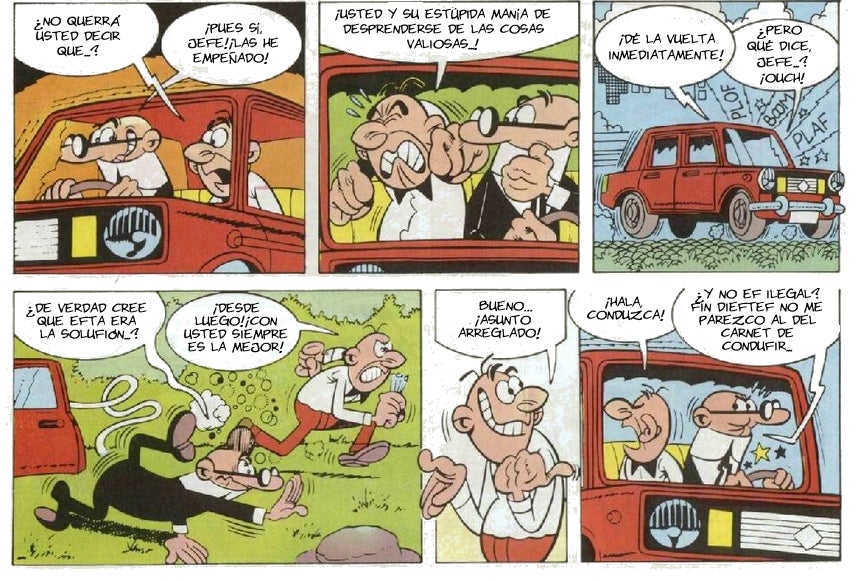
The third and most flagrant replaces a gigantic and hilarious cartoon in which the agents sneak into East Germany and everybody shoots at them (“Headquarters? Yes, send six fighter-bombers! And prepare the surface-to-surface missiles!”) with six in which Mortadelo acknowledged having pawned the crown jewels and turned around to get them back (“Well… matter settled!”). A masterpiece of absent-mindedness and the most profound ridicule.
Unpublished comics
In the 80’s, Ibáñez’s fame was such in Germany that 280 new strips of 13 Rue del Percebe were created, long comics by Botones Sacarino with stellar appearances by Mortadelo and Filemón (in one of which they get to meet Ronald Reagan while they prevent Tete Cohete from blowing up the Statue of Liberty and in another, for example, they use Professor Bacterio’s inventions in the writing of El aullido vespertino (The Evening Howl).
And, of course, there were also two completely unpublished Mortadelo and Filemón stories: ‘Nur kein Gehetze, wir haben Arbeitsplätze’ (translated by the TIA forum as ‘¡Que no cunda el pánico! Tenemos trabajo!’) came out at a time of very high unemployment in Germany, and shows the two agents testing methods to reduce it. In fact, its cover announced “Have you also been left on the street and without a job? Mortadelo and Filemón will give you some advice”. Just the people you want to get job advice from.
The second, ‘Vom Affen gelaust und losgesaust’ (translated by the TIA forum as ‘Monos con garrapatas… y huidas por patas!’) has a more Spanish line but is clearly not drawn by Ibáñez. In the story, both agents were fighting a poacher. These are mere curiosities that deserve to go down in the history of Spanish comics. Or German. European in any case! Don’t run, no, I’m going to give you apocryphal!