Tom Felton, known for his iconic role as Draco Malfoy in the Harry Potter saga, is back making appearances on the small screen playing a recurring role in the third season of the series The Flash, which has excited his fans. However, his most recent film project, Altered, has received a very different reception. An absolute critical failure The film, directed by Timo Vuorensola, known for his work on Iron Sky, hit theaters in the United States a couple of weeks ago, but has gone almost unnoticed among the public. The reviews have been harsh, […]
Tom Felton, known for his iconic role as Draco Malfoy in the Harry Potter saga,returns to make appearances on the small screen playing a recurring role in the third season of the series The Flash, which has excited his fans. However, his most recent film project, Altered, has received a very different reception.
An absolute critical failure
The film, directed by Timo Vuorensola, known for his work on Iron Sky, hit theaters in the United States a couple of weeks ago, but has gone almost unnoticed among the audience. The reviews have been harsh, with an average of just 3.8/10 on IMDb, highlighting the low-quality CGI effects and a narrative that many have labeled as low-budget science fiction. Viewers have pointed out aspects such as the lack of emotional depth and questionable political opinions as negative points of the production.
Altered presents an alternative world where genetic enhancements are common, forcing those who cannot use them to live in hiding. The plot revolves around the struggle of a few brave individuals to balance a society that seems to inhabit a dystopian horizon. Despite having an intriguing premise of superheroes in a cyberpunk setting, expectations have been disappointed by the destructive criticism the film receives. “Be clear about what you are exposing yourself to,” warns a reviewer on Rotten Tomatoes, highlighting that the trailer is a true reflection of the film’s quality.
As Altered continues its journey, no release date has been announced in Spain. Fans of Tom Felton and the science fiction genre will have to wait to see if the film manages to capture the audience’s attention upon its international release.
On November 26, Netflix released A Very Merry Heist, a movie that has received a great reception on the platform. Since its launch, the film has quickly climbed the popularity charts, reaching number 1 in 70 countries, including Spain, where it managed to displace the successful Eight Moroccan Surnames. This Christmas-themed movie has managed to capture the attention of viewers, establishing itself as one of the most-watched titles during the festive season. A movie that is taking the streaming world by storm The plot revolves around Sophie and Nick, two inexperienced thieves who team up […]
On November 26, Netflix premiered A Very Merry Heist, a movie that has received a great reception on the platform. Since its release, the film has quickly climbed the popularity charts, reaching number 1 in 70 countries, notably Spain, where it displaced the successful Eight Moroccan Surnames. This holiday-themed movie has managed to capture the attention of viewers, establishing itself as one of the most-watched titles during the festive season.
A movie that is taking the streaming world by storm
The plot revolves around Sophie and Nick, two inexperienced thieves who team up to carry out a heist at a famous shopping mall in London. However, in the midst of their plan to take revenge on the owner of the place and improve their financial situation, they both develop unexpected feelings for each other. The blend of romantic comedy with crime elements has resonated positively with the audience, providing a fresh and entertaining approach to the Christmas narrative.
Olivia Holt, known for her role in the first season of Cruel Summer, and Connor Swindells, whom fans will recognize from Sex Education, are the protagonists of this story. The direction is in the hands of Michael Fimognari, who had already made his mark in the romantic genre with To All the Boys: Always and Forever.
The film has also surprised critics, receiving a 60% positive rating on Rotten Tomatoes, an indicator that, although modest, denotes a better reception than expected for this type of production. In a year where Netflix has released a series of titles with a Christmas theme, A Very Christmas Heist emerges as one of the most attractive and successful offerings on the platform during the season.
The future of Spain in the Eurovision contest is at a crossroads, marked by a growing political and ethical crisis related to Israel’s participation. The controversy intensified after the televote of the 2025 edition, which, despite international criticism of the Israeli offensive in Gaza, resulted in massive support for the country, sparking protests and calls for a boycott from several nations, including Spain. From the river to the sea, RTVE, the Spanish public television, has remained firm in its stance on Israel’s participation, stating that this […]
The future of Spain in the Eurovision contest is at a crossroads, marked by a growing political and ethical crisis related to Israel’s participation. The controversy intensified after the televote of the 2025 edition, which, despite international criticism for the Israeli offensive in Gaza, resulted in massive support for the country, sparking protests and calls for a boycott from several nations, including Spain.
From the river to the sea
RTVE, the Spanish public television, has remained firm in its stance on Israel’s participation, stating that this country has repeatedly violated rules in the last editions of the contest. A spokesperson for the organization has declared that “any other country would have been sanctioned if it had done the same”, and has stated that the new rules of the European Broadcasting Union (EBU) regarding transparency and participation in conflicts are not robust enough.
As the decisions about Eurovision 2026 approach, the tension persists. Although RTVE has not yet confirmed its participation in the upcoming contest, the discussion about human rights and ethics in the context of competitions like Eurovision has become central. Negotiations will continue in Geneva next week, and public dialogue on these issues is expected to intensify.
This scenario represents a historic challenge for RTVE, which must decide whether to maintain its tradition of participating in the festival, while facing significant pressures due to the international political context. Debates about Spain’s continuity in Eurovision have intensified, making this year’s participation more complicated than in previous editions.
On February 23, 1981, Spain experienced one of its most critical moments with the attempted coup d’état led by Lieutenant Colonel Antonio Tejero. This event, etched in the collective memory of the country, left an indelible mark on Spain’s democratic history. That day, the Congress of Deputies was stormed by a group of Civil Guards, an incident that paralyzed the institutions in a country still fragile after the transition to democracy. A series about a dramatic moment in the country The series Anatomy of an Instant, produced by Movistar Plus+, arrives to review […]
On February 23, 1981, Spain experienced one of its most critical moments with the attempted coup d’état led by Lieutenant Colonel Antonio Tejero. This event, recorded in the collective memory of the country, left an indelible mark on Spain’s democratic history. That day, the Congress of Deputies was stormed by a group of civil guards, an incident that paralyzed the institutions in a country still fragile after the transition to democracy.
A series about a dramatic moment in the country
The series Anatomy of a Moment, produced by Movistar Plus+, arrives to review this historical chapter from a human perspective rather than an epic one. Based on the work of author Javier Cercas, the series emphasizes the decisions and contradictions of key figures during the coup, such as Adolfo Suárez, who, in a moment of political vulnerability, emerged as a symbol of institutional dignity.
Alongside him, Manuel Gutiérrez Mellado, a military officer committed to the modernization of the Armed Forces, faced the coup plotters in the chamber, symbolizing the resistance to a return to old authoritarian regimes. Another crucial figure was Santiago Carrillo, the communist leader who chose to remain in his seat during the attack, demonstrating a political sacrifice that he later reconsidered in his role in Spanish politics.
The intervention of King Juan Carlos I was decisive in deterring the coup. His televised message on the morning of February 24 marked the defeat of the coup attempt. On the other hand, Antonio Tejero, who sought a regime change, ended up symbolizing the failure of a stance that resisted political modernity. The coup, which was not an isolated event, was also the culmination of tensions that had been latent in Spain.
Black Mandala, a sales company based in New Zealand, has acquired the international distribution rights for the Spanish horror film Lily’s Ritual, directed by Manu Herrera. The film, which promises to return to the roots of classic horror, primarily uses practical effects, highlighting the use of prosthetic makeup and traditional special effects techniques in about 90% of its production. A film well rooted in the genre, Lily’s Ritual will have its world premiere at Grimmfest, a renowned horror film festival that will take place in Manchester, United Kingdom. The choice […]
Black Mandala, a sales company based in New Zealand, has acquired the international distribution rights for the Spanish horror film Lily’s Ritual, directed by Manu Herrera. The film, which promises to return to the roots of classic horror, primarily uses practical effects, highlighting the use of prosthetic makeup and traditional special effects techniques in about 90% of its production.
A film well rooted in the genre’s roots
Lily’s Ritual will have its world premiere at Grimmfest, a renowned horror film festival that will take place in Manchester, United Kingdom. The choice of this festival provides an ideal platform for the film to reach an audience passionate about the genre, as Grimmfest is known for showcasing innovative and challenging works in the realm of horror.
The film seeks to stand out in a time where digital effects have dominated much of the industry. By focusing on practical effects techniques, Lily’s Ritual aligns with a growing trend among certain filmmakers who wish to revive the sensibilities of classic horror, where the art of makeup and physical effects play a leading role. This aesthetic choice is expected to resonate with genre fans, who appreciate the authenticity and craftsmanship that practical effects entail.
The production has generated expectations within the film community and the audience, and many will be closely watching the premiere at Grimmfest. It is speculated that this work could open new opportunities for independent horror cinema in the international market, especially with the support of Black Mandala, which has shown commitment to the distribution of bold and unique content.
SEGA has responded to the demands of Spanish-speaking fans by announcing that the recent titles in the Like a Dragon series, including Like a Dragon Ishin! and Like a Dragon Infinite: Wealth, will be translated into Spanish. This move is significant for fans in Spain and Latin America, who were hoping for expansions in access to the story and dialogues of the franchise. The release is scheduled for December 8, 2023, and native versions for PS5 and Xbox Series have been confirmed, which will include support for multiple languages, including Spanish. Like A Dragon will now be Como un […]
SEGA has responded to the demands of Spanish-speaking fans by announcing that the recent titles in the Like a Dragon series, including Like a Dragon Ishin! and Like a Dragon Infinite: Wealth, will be translated into Spanish. This move is significant for fans in Spain and Latin America, who have been hoping for expansions in access to the story and dialogues of the franchise. The release is scheduled for December 8, 2023, and native versions for PS5 and Xbox Series have been confirmed, which will include support for multiple languages, including Spanish.
Like A Dragon will now be Like a Dragon
In addition, on the same day of their release, the titles will receive new updates that will include multiplayer modes and support for various languages on PC, PS5, and Xbox Series X|S. This is an important step, as the fan community has been asking SEGA to improve the localization of its games for the past two decades.
As part of the RGG Summit, SEGA also revealed that Yakuza Kiwami and Yakuza Kiwami 2 will receive versions for PS5 and Xbox Series X|S, as well as a physical edition that will combine both titles. On the other hand, on February 12, 2026, Yakuza Kiwami 3 will be released, which will feature a Spanish translation and several visual improvements, in addition to a spin-off titled Yakuza 3 Gaiden: Dark Ties.
Although there are no official announcements yet regarding the possible translation and remastering of Yakuza 4, 5, and 6 for new consoles, it is speculated that these projects could be in development plans. Given the recent attention the franchise has received, it would not be surprising if SEGA considers giving these classic titles a new life for the delight of the saga’s fans.
The third season of The Walking Dead: Daryl Dixon will premiere on AMC and AMC+ on Sunday, September 7, marking the return of iconic characters Daryl (Norman Reedus) and Carol (Melissa McBride), who are trying to get home and reunite with their loved ones while facing new dangers in unknown lands affected by the walker apocalypse. Daryl arrives in Spain and we are ecstatic The teaser for the upcoming season suggests a contrast between moments of calm and despair, emphasizing the idea that tranquility is fleeting in a world dominated by zombies. In the teaser, […]
The third season of The Walking Dead: Daryl Dixon will premiere on AMC and AMC+ on Sunday, September 7, marking the return of iconic characters Daryl (Norman Reedus) and Carol (Melissa McBride), who are trying to return home and reunite with their loved ones while facing new dangers in unknown lands affected by the walker apocalypse.
Reedus, in his characteristic low tone, reflects on a loss in his journey: “It felt like something was lost, the opportunity to really have something.” Carol adds: “First you survive what happened to you, then you start living again.” These words have resonated with fans who have witnessed the evolution of their friendship over the years, making them the last original characters from the first cast of The Walking Dead who continue in the franchise.
Season 3 also introduces new cast members, including Spanish actors Eduardo Noriega and Óscar Jaenada. In addition, it is expected that the narrative will continue to explore not only the struggle for survival but also the emotional connection between Daryl and Carol, which has been tested countless times since their introduction in 2010.
Fans can look forward to a plot full of action and emotional moments. The series, adapted from the comics by Robert Kirkman, Tony Moore, and Charlie Adlard, promises to continue surprising its loyal audience with unexpected twists and a renewed focus on human relationships amidst the zombie chaos.
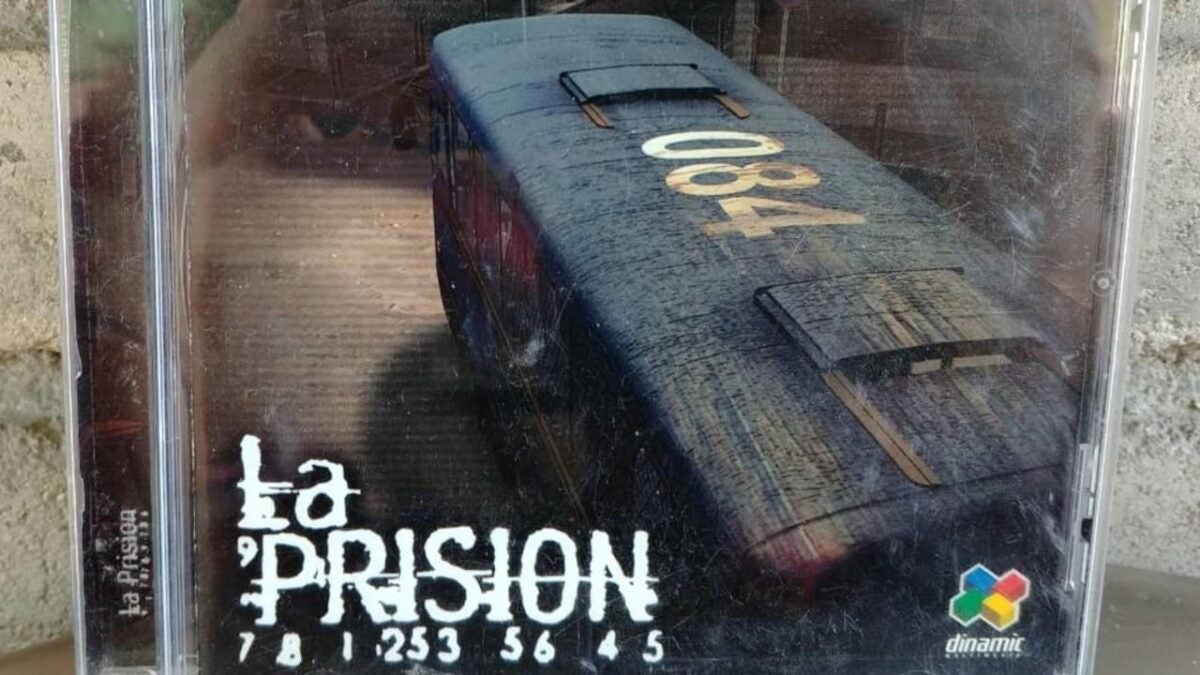
Are you ready? Leave your personal belongings here: we open the doors of ‘La Prisión’.
If we were to conduct a survey asking about the most famous online game of all time, the most likely result would include three titles: ‘Minecraft,’ ‘Fortnite,’ and ‘World of Warcraft.’ However, years before these games, a small Spanish title emerged and showcased originality, fun, and above all, a great deal of chaos in the gaming world that was not prepared for the improvisation of a small group of developers. Are you ready? Leave your personal belongings here: we’re opening the doors to ‘La Prisión.’
Not all great projects have an epic start. In this case, in 1998, the owner of Dinamic, a Spanish video game company, seeing the success of ‘Ultima Online’ and ‘Everquest’ in the United States, decided to venture into the online world. The problem? Spanish modems were only 56k, the internet was still in its infancy, and the programmers had no clue how to do what was being asked of them. But as they say, when the boss makes a request, there’s no other choice but to find a way.
The first step was deciding what the game would be about: considering the limitations of the time, having large maps and fantasy settings was out of the question, especially with the computers most of Spanish society had. So, what now? Suddenly, a light bulb went off in their heads: of course. A prison that would always be the same setting but where players could do different things. Perfect. Well, sort of.
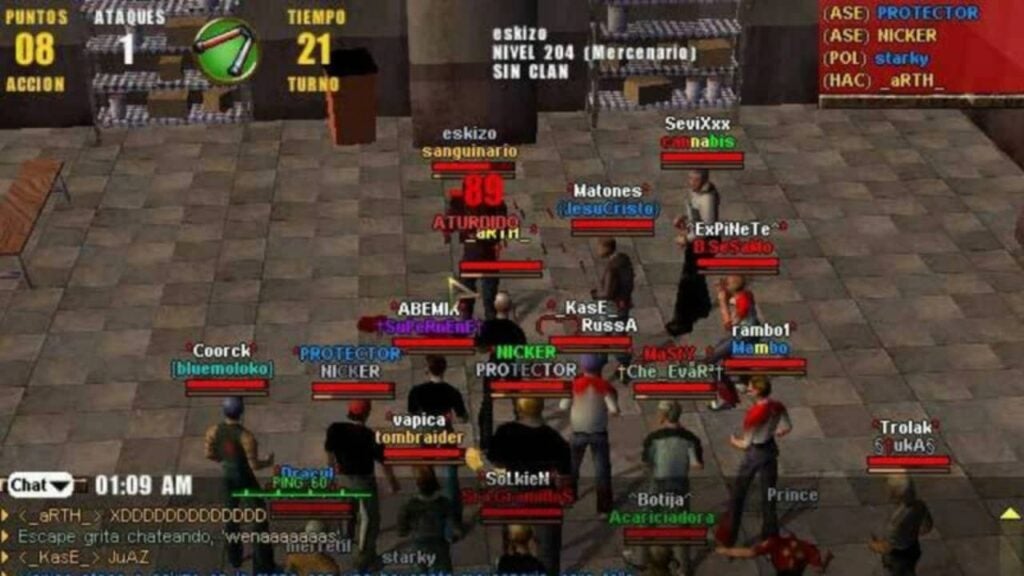
And the next step was the truly difficult one to solve: if it’s a prison, that means the goal of the game is to escape, right? And what happens when you escape? Is there an ending? Does it turn into ‘Prison Break’? Pondering over the matter, they came to the conclusion that it would be a game without an ending, where the novelty would be in interacting with other players: when they introduced the ability to fight and create clans after a few months, the real adventure began. And what they thought would be their biggest disadvantage became their distinguishing factor.
Twitter? What’s the point, having a jail
‘La Prisión’ was released in 1999. Six years before Twitter, five before Facebook, and even four before MySpace. It quickly became a sort of social network where people could meet, complete missions together, and chat every afternoon, depending on what the modems of the time allowed. As it didn’t have a real objective beyond passing the time, the game became a vital part of the Internet’s genesis for many millennials.
Millennials with money, it must be said. After all, the game cost around 4000 pesetas (24 euros at the time) and, for the first time, required an additional monthly payment of 1000 pesetas (6 euros) to continue playing. Nowadays, it seems normal to pay for Netflix, HBO Max, Game Pass, and even for fruit delivery to our homes, but back then the idea of having to keep paying for an unfinished game was strange. It seemed like a recipe for disaster.
But no. 20,000 people bought the game in the first few days and flooded the servers… Although ‘La Prisión’ couldn’t prevent the downfall of Dinamic. With the company going bankrupt, the same developers ended up creating the first expansion (‘La fuga de Don Vitto’) at Cryo Networks, which also went under quickly. It’s now 2003, and the chaos has been so great that all players have lost their accounts. Now, is it finally the end of the game, or what?
Always locked up
The developers, now free from publishers, promised to take care of the game more than ever for those who wanted to create new characters from scratch. It even started selling again on CD-Rom under the name ‘La Prisión Online: Reincidentes’. For ten years, there were more or less regular updates until, finally, one day in 2018, the servers were shut down and never turned back on.
The original developers wanted nothing to do with a reboot or a sequel: ‘La Prisión’ had been defeated by the MMORPGs we all know, and towards the end, it was just a small club of friends who had found their niche in the uncomfortable cells. But with a niche, there’s no business (unless you’re an undertaker), and neither attempts to create a spiritual remake called ‘Imprisoned’ nor accumulated nostalgia have yielded results.
‘La Prisión’ opened many doors in the gaming industry that weren’t even considered before: patches, updates, monthly payments, online gaming, social networks… The gaming world of today was already present in a game from 25 years ago, created by a group of developers with little idea of what they were doing. It’s something to be proud of to have shared a cell with these comrades, isn’t it?
Believe it or not, it’s a Nintendo DS game titled… Imagine Being a Fashion Designer. There you take it.
Surely reading the headline you are already making your guesses: Is it ‘Commandos’, or ‘The Abbey of Crime’ in its multiple versions, or maybe the surprise comes from ‘Castlevania: Lords of Shadow’? The solution may disappoint you, but, believe it or not, it’s a Nintendo DS game titled… ‘Imagine Being a Fashion Designer’. There you have it.
In October 2007 the Nintendo DS was more than established in the world of video games. The Big N had found the key to appeal to everyone, and with an audience consisting of literally anyone, of course, come games with a previously unheard of audience. It was the perfect moment for Ubisoft to prepare ‘Imagine being a cook’ and ‘Imagine being a mom’, dedicated to a target of stereotypical girls that until then had not had a market niche.
And in this panorama, the Spanish developer Virtual Toys was able to get its hands on two of the games of this first batch of the “Imagine” saga: ‘Imagine being a veterinarian’ and ‘Imagine being a fashion designer‘. We are not going to deceive you: fun, what is fun, it is not, but it fulfills its function perfectly. To the surprise of everyone and no one at the same time, this break with the established was such a bombshell that they sold five million units worldwide. Five. Millions.
Virtual Toys would still launch more games of the franchise, already totally on sale, such as ‘Imagine being an amazon’, ‘Imagine being a presenter: the great fashion contest’ or ‘Imagine being a veterinarian: puppy hospital’. However, its dive in franchises such as ‘Cars 2’, ‘Torrente Online’ or ‘The Muppets: movie adventures’ made that, little by little, the money was going away. In 2016, it went bankrupt after sinking (eeeeeh?) with ‘Pirates: Treasure Hunters’.
For its part, the ‘Imagine Being’ saga culminated in 2013, with versions of its greatest hits (including ‘Imagine Being a Fashion Designer’) for 3DS. Mind you: the DeVuego portal, which broke the news of the game’s five million units sold, later updated its list of biggest Spanish hits and placed it in third place, beaten by ‘Deadlight’ (4,900,000) and ‘RiME’ (4,000,000), leaving Virtual Toys’ game “only” with 2,810,000 units sold worldwide.
Spanish rock went through its moment of glory in the 80s and 90s as the antithesis of pop. Beyond Loquillos and Ramoncines, Spanish rockers did not want to copy American classics
Battles are counted by the victors. The cultural ones too. We have had hundreds of books and movies about the Movida Madrileña, explaining its ups and downs: Alaska, Pedro Almodóvar, McNamara and company have made headlines every time it is time to talk about transgression, as if they had not been supported by television from the very first moment. And yet, the music that was danced to in most of the rest of Spain had nothing to do with stratospheric makeup and ‘La bola de cristal’, but with two guitars, a bass and drums.
Spanish rock had its moment of glory in the 80s and 90s as the antithesis of pop. Beyond Loquillos and Ramoncines, Spanish rockers did not want to copy the American classics and their look was that of a person you would change sidewalks if you saw them at night in a dark alley: tank top, long hair and punk attitude, although the lyrics spoke of love and hopelessness. If you didn’t live through that era and still believe that the epitome of modernity was the Pegamoides, here are eight Spanish rock songs that don’t necessarily define the bands, but explain the rage that in Spain flew underneath any media back then. Horns, kalimotxo and guitar playing!
Fito Cabrales has dedicated his adulthood to sing coplas to ‘Soldadito marinero’ accompanied by the Fitipaldis, but in 1990 he released with his friends a small album of ten songs titled ‘Burrock & roll’ which opened with a declaration of intent. Fito was 24 years old and wanted to revolutionize music, making it clear that they were not like the others: “I have two fingers in front and I never use both / And I walk down the street with my bad reputation”. Ten years later, Platero y Tú’s farewell in the back and on the last page of a newspaper traumatized a whole generation that is still waiting for a reunion tour that will never come.
‘Estado policial’ – Extremoduro
Before Robe settled in and came his ‘Vereda de la puerta de atrás’ or his symphonic songs in ‘La ley innata’ and ‘Material defectuoso’, his first albums were downloads of rage that mixed heartbreak with sex, poetry or, why not, his attacks against authority. At the age of thirty and five years after founding Extremoduro, the group released their third LP, ‘Deltoya’, which, between hymns to harmony (‘Ama, ama, ama y ensancha el alma’) and truncated love songs like ‘Sol de invierno’, started with one of those songs that could never have been played in the movida: ‘Estado policial’ is the coarsest Extremoduro, the one that could only have come out in the underground of the 90s and who didn’t care about the consequences of their songs. Lyrics like “Pincho las arruedas de los coches policía, pongo un par de bombas en cada comisaría” (I puncture the tires of the police cars, I put a couple of bombs in every police station) still impress with their crudeness right now.
‘Barrio conflictivo’ – Barricada
Enrique Villareal, ‘El Drogas’ (better known today thanks to the meme in which he acknowledges having taken psychotropic substances) had just arrived from the military in his twenties and his life in Chantrea, the Pamplona neighborhood where fighting with the police, arrests, demonstrations and arrests were the daily bread, made him start a group to tell his reality. Barricada is, perhaps, the epitome of the Basque rock of the 80s and 90s, which in 1985 and under the production of Rosendo himself, created ‘Barrio conflictivo’, a song that with pure guitar told everything that nobody talked about. “Torture in interrogations. Aggressions, anguish and pain. Txantrea sinister nightmare, you are to blame for wanting to live in peace” marked the beginnings of a group that would never stop claiming social rights and the need to understand the past (before getting into internal brawls). A marvel.
‘Maneras de vivir’ – Leño
Since we have already mentioned him, Rosendo Mercado is the grandfather of Spanish rock, and that’s taking into account that the great majority of the groups moved in the upper part of the peninsula. In the center was La Movida, which he was not interested in at all. Maybe that’s why, among so much glam, he released with Leño ‘Este Madrid‘ (“Es una mierda este Madrid que ni las ratas pueden vivir”) as a prelude to the song that changed everything, the most important anthem of Spanish rock: ‘Maneras de vivir’. If when someone sings “No pienses que estoy muy triste” no contestas “Si no me ves sonreir” no podemos ser amigos.(“Don’t think I’m too sad” you don’t answer “If you don’t see me smile” we can’t be friends.)
‘El Congreso de Ratones’ – La Polla Records
Evaristo was 19 years old when he got on stage for the first time to sing his punk nonsense. La Polla Records fired for 24 years (and a small revival in 2019) against everything, including, of course, La Movida: the song ‘Herpes, talc and techno-pop’, as a substitute for the slogan “Sex, drugs and rock & roll”, gives a good account of it. However, in a dialogue with the present day, we have to choose ‘El Congreso de Ratones’, which in 1985 closed their second album, ‘Revolución’, and which years later would be covered by Estopa in some concerts, demonstrating that, deep down, we are nothing: “Camouflaging this fascism in democracy because here the same people always rule”. The day Gen Z discovers La Polla Records there will be some very strange dances in TikTok.
‘Aprendiendo a luchar’ – Reincidentes
Reincidentes was born out of pure chance and the student revolt in Seville, at a time when they felt that music was just another element of support to power and only singer-songwriters and some rock groups were able to be something more. Fernando Medina, at the age of 20, founded a group that has already turned 35 touring the country with hymns like ‘Vicio’ or this ‘Aprendiendo a luchar’ that, in the end, seemed to sing to themselves in their second album in 1991, ‘Ni un paso atrás’: : “¿Dónde estudias, dónde curras, o en una ocupación? Contra el reino del cipote, del dinero y de la cruz”. (“Where do you study, where do you work, or in an occupation? Against the kingdom of the dick, the money and the cross”). Now it may seem almost a childish perrenque, but in the early 90’s they took the Basque Country by storm and it didn’t take them long to release albums non-stop (and, unlike other of these groups, without losing a bit of their DNA along the way).
‘Sarri, sarri’ – Kortatu
It is curious that one of the few songs in Basque (the other, perhaps, being ‘Ilargia’, by Ken Zazpi) that sounds beyond its borders is one that celebrates the escape from prison of Piti and Sarri, two ETA members who escaped from Martutene prison in 1985. That same year, and on the music of the song ‘Chatty Chatty’, Fermín Muguruza and his band made a comical portrait of what had just happened (“Today the radio broadcasters were broadcasting live that they would eat paella, and Piti and Sarri, right under their noses, were plotting it without them noticing”). Years later it was used as a spearhead against Muguruza, but it led to nothing. In fact, it’s still played at weddings of people who don’t know what they’re dancing to. Luckily.
‘Nos quieren detener’ – Boikot
Before Boikot, the group created in 1987 with ska influences, turned to a more supportive and avant-garde type of rock, they had time to release songs like ‘Eskeletos radiaktivos’, ‘Serrindemadriz’ or ‘Karraskal’. But on the verge of their change of style in 2002, the group came out with a song as was usual for them: short, to the foot and without leaving witnesses. Between hymns and trilogies of albums dedicated to Che Guevara and claims almost of demonstrations in ‘Pueblos’ was hidden a little song that spoke against illegal detentions and how the middle class turned a blind eye. Did you want music against the Movida? Boikot were from Madrid and they couldn’t make it any clearer: “Y burgués, tú nunca entenderás, los problemas de la calle no son de los demás” (And bourgeois, you’ll never understand, the problems of the street don’t belong to others).
We could go on here for long hours, video clips, analysis of Platero y tú’s ‘Juliette’ or Barón Rojo’s albums, or even ask ourselves if Def Con Dos deserves to be here. What is clear is that, as it is sold today, it seems as if the vindictive rock never went beyond the anecdote at the bottom of the page, a suburban movement between the Movida and the “Donosti sound”. But the truth is that there were hundreds of groups that shaped a whole generation and who are hardly remembered.
Manolo Kabezabolo, Siniestro Total, Asfalto, Triana, Obús, Mago de Oz, Cicatriz, Tijuana in Blue, Negu Gorriak and many others found a small refuge outside the audiovisual in a television that protected certain groups and annihilated others: it was time for concerts and Tipo stores at a time when, before social networks, this was the best way to be indignant. Guitars, drums, pogo and screams: When will a series in the style of ‘La ruta’?