Google Lens, the Google service that is responsible for scanning what can be seen on the screen, will receive important improvements in its service, and it will do so by implementing its functions through Chrome. Thanks to this, the functions that this tool enjoys can be used in a much more efficient way while using the official Google browser in its desktop version.
Being Google Chrome a service with a lot of daily users, it is important for Google to continue making improvements of this kind. The competition is strong and there are browsers like Edge or Firefox that are also making great strides in their improvements, so Chrome cannot stay behind if it does not want to lose users.
Changes for Google Lens within Chrome
As users are reporting through social media, Google Lens is getting ready to be integrated into Chrome and thus offer a wide experience thanks to capturing the content that appears on the screen. With this, users will be able to use the content they see on the screen to carry out searches on particular elements they are interested in.
Google Lens and similar applications have great popularity on smartphones, as they allow users to easily find all kinds of content. Therefore, this improvement would be another step by Google Chrome to continue advancing in desktop user experience.
Google Chrome remains on top
Google Chrome, a browser developed by the company of the same name, has been at the top for many years as the most used browser in the world, and by a wide margin compared to its competitors. However, this is mainly due to the success of Android mobile devices, where Chrome becomes the browser par excellence. But on computers, Chrome’s advantage is not as overwhelming as on mobile devices.
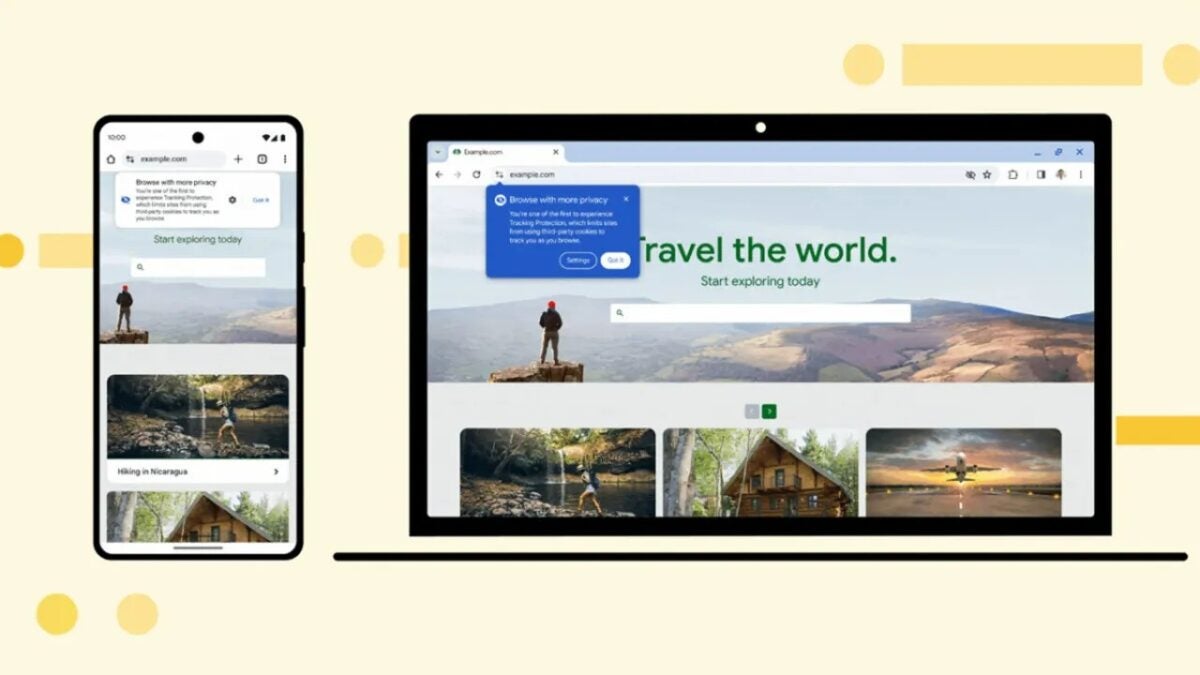
That is precisely why Google Chrome is constantly working on new improvements that continue to show the company’s interest in ensuring that users enjoy a high-quality service in their desktop versions. As a result, there are advancements in security that the company carries out, redesigns through Material You, or Google’s plans to design a navigation with an alternative and cookie-free model.