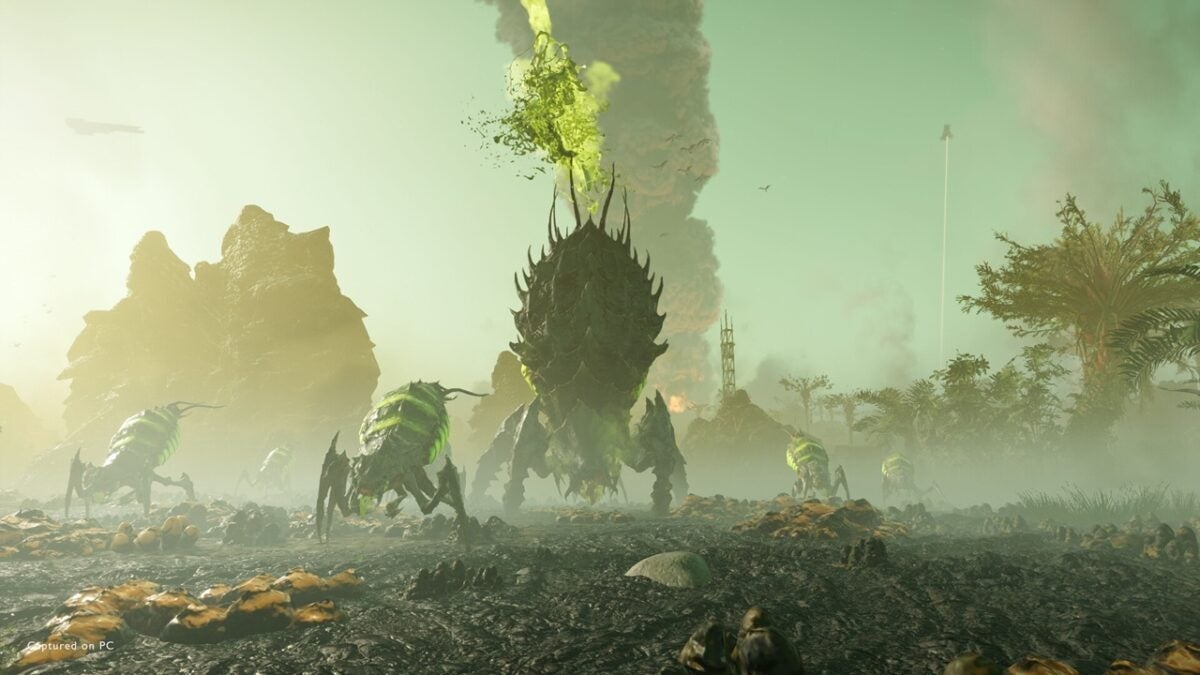
Johan Pilestedt, director of Helldivers 2, has shared his concerns about the direction many video game developers are taking, arguing that they should focus more on creating fun experiences and less on seeking a perfect balance in their games. During a panel at the Game Developers Conference 2025, Pilestedt expressed that developers are obsessed with balance, often spending too much time making nerfs and buffs, as seen in popular titles like Diablo 4 and Overwatch. Studios should not focus so much on balancing their games “Balance is a myth. Fun should be the […]
Johan Pilestedt, director of Helldivers 2, has shared his concerns about the direction many video game developers are taking, arguing that they should focus more on creating fun experiences and less on seeking a perfect balance in their games. During a panel at the Game Developers Conference 2025, Pilestedt expressed that developers are obsessed with balance, often spending too much time making nerfs and buffs, as seen in popular titles like Diablo 4 and Overwatch.
Studies should not focus so much on balancing their games
“Balance is a myth. Fun should be the priority, and balance should only take up 5% of the work being done,” said Pilestedt. This approach suggests that the relentless pursuit of perfect balance dulls the player’s experience, turning what should be an interesting game design into a mere technical issue. “If you start to think of balance as the method of success, you’re an idiot,” he added, emphasizing the idea that true game design lies in the experience, not in mathematical perfection.
Despite its statements, Helldivers 2 has faced its own balance challenges since its release. According to Pilestedt, the issues in the game can be attributed more to leadership problems than to the game’s content itself. Despite the patches implemented, the title still suffers from a bug that allows players to slide chaotically, which, while annoying to some, has also added a touch of humor to the gameplay.
The game’s design director, Michael Eriksson, described the game’s journey since its launch as a “roller coaster,” highlighting that despite the challenges, the Arrowhead team feels fortunate to experience this. However, Pilestedt continues to emphasize that the development of Helldivers 2 must remain focused on fun rather than balance perfection. And if you disagree, you can always play their board game.
If you’ve already had time to burn through Helldivers 2, you’ll be happy, as very soon we’ll have a new War Bonus, which will take place in the black hole of Meridia. This update, which will be released on February 6, promises to offer a renewed arsenal and innovative mechanics to face the challenges of the Super Earth universe. / It goes boom and appears by your side Among the most notable additions are three new weapons: the double-edged LAS-17 Scythe, a semi-automatic energy rifle; the Ultimatum GP-20 grenade launcher, with more powerful projectiles; and the Seeker G-50 grenade, […]
If you have already had time to burn through Helldivers 2, you’ll be pleased, as very soon we will have a new War Bonus, which will take place in the black hole of Meridia. This update, which will be released on February 6, promises to offer a renewed arsenal and innovative mechanics to face the challenges of the SuperEarth universe.
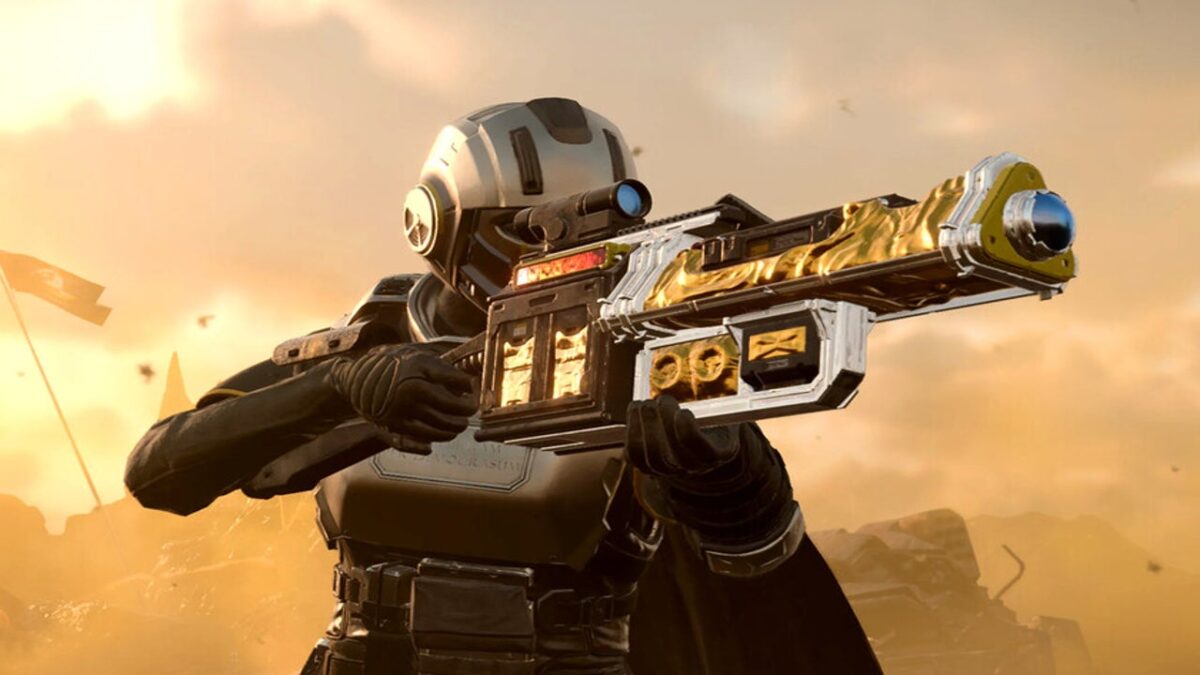
Among the most notable additions are three new weapons: the LAS-17 Double-Edged Scythe, a semi-automatic energy rifle; the Ultimatum GP-20 grenade launcher, with higher power projectiles; and the Seeker G-50 grenade, which acts like a drone that flies towards its target to detonate. Undoubtedly, these new explosive gadgets will bring a fresh dynamic to combat tactics in the game.
However, what has really caused a stir is the inclusion of the Hell Bomb, a portable explosive that players can carry as a backpack. Once activated, players have 10 seconds to escape, adding a new level of strategy and adrenaline to each encounter. Alongside this, the Martyr IE-3 and Honored IE-12 armors have been introduced, which have the special ability to turn the bodies of Helldivers into bombs, evoking mechanics from popular titles like Call of Duty.
To complete this renewed experience, new gestures and titles will be implemented to enrich the game’s customization. Those interested in this expansion can purchase the War Bonus for 1,000 SuperEarth credits, equivalent to 10 euros. With these new features, Arrowhead promises to take the action to new heights, keeping players on the edge of their seats in this epic fight for intergalactic democracy.
Sony is a huge multinational. That doesn’t escape anyone. Even beyond video games and its other technological businesses, it is a giant in film, television, and music that can extend its tentacles in any direction it sees fit. That’s why it’s strange that, with all the franchises it has, some of them very powerful and recognized, it has never bet on something that has been in vogue in Japan for decades and in the US they have been trying to figure out how to exploit for almost ten years: transmedia. The possibility of taking success from one medium to another and turning […]
Sony is a huge multinational. That doesn’t escape anyone. Even beyond video games and its other technological businesses, it is a giant in film, television, and music that can extend its tentacles in any direction it sees fit. That’s why it’s strange that, with all the franchises it has, some of them very powerful and recognized, it has never bet on something that has been in vogue in Japan for decades and in the US they have been wanting to know how to exploit for almost ten years: transmedia.
The possibility of taking the success of one medium to another and turning a franchise into multiple media is a sweet opportunity that Sony has never shown much interest in. Until now. They have started to convert many of their most important franchises into other audiovisual formats.
The Near Future of Sony: Series and Movies for Everyone
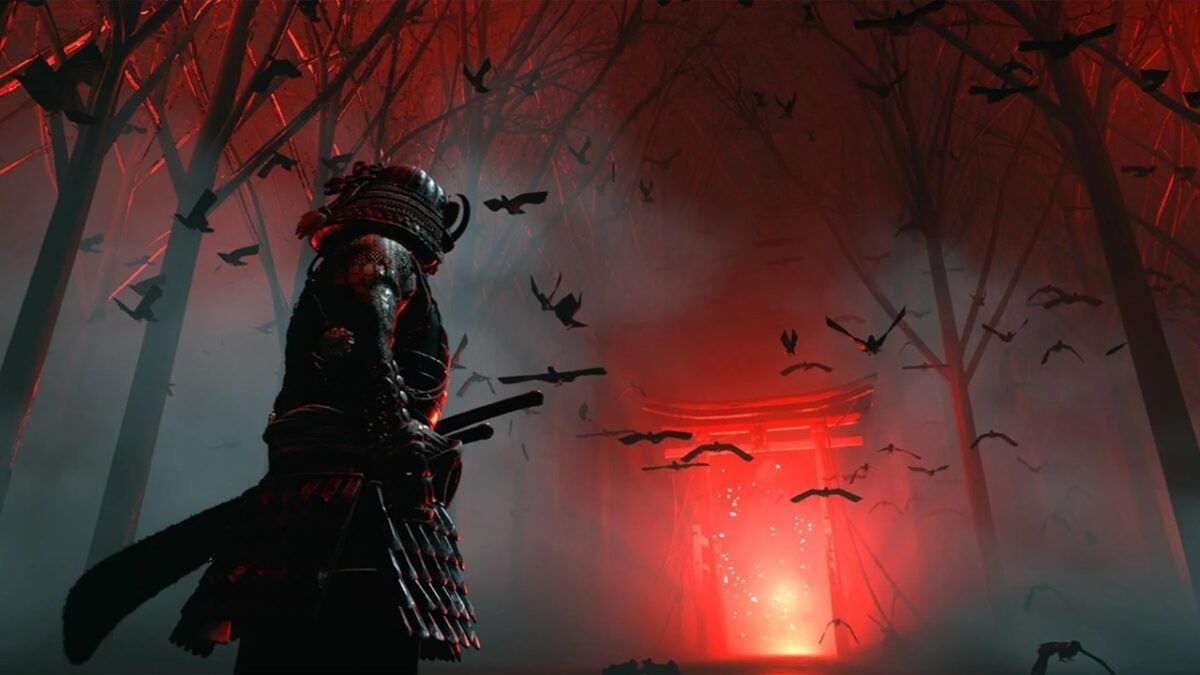
Sony made a presentation at the past CES in Las Vegas, showcasing some of their new projects. All of them related to audiovisuals. Announcing that they are making live-action movies of Helldivers and Horizon: Zero Dawn, as well as an anime of Ghost of Tsushima: Legends, they wanted to confirm that their idea is to focus on their best-performing franchises and continue working on them. With shorter developments and entering the transmedia world to leverage their popularity.
This should not catch us by surprise. Sony already confirmed last year that they were developing ten other movies based on their video games. And we also know that the three games have, if not sequels, at least other derivative projects already in production. Which should only be a half surprise.
The question is, why now? It’s not a decision they’ve made suddenly. They haven’t jumped into the pool without first knowing if there was water. Sony has been testing for several years to see if there is a market for this kind of product and they have found, to their satisfaction, that there is. And it’s very strong. Finally deciding to do something that many other companies do without even having proof that there is an audience for their plans.
But how have these approaches to transmedia by Sony worked in the recent past? The most pessimistic might think poorly. Terribly. Except for honorable exceptions, which have worked well. Exceptionally well. And they would be wrong. The things that have not worked well have not worked so badly —and we could even say that, in business terms, they have worked quite well—, and the things that have worked well have worked as well as it seems. That’s why it’s worth taking a look.
Good or bad are relative concepts, because what a viewer thinks and what an executive thinks are very different things
Gran Turismo and Uncharted are two of Sony’s most recent major productions. With big names involved in the production and a large budget, they were movies that failed spectacularly among critics, demonstrating that it is impossible to make good video game adaptations. Except that’s not exactly the whole story. While it’s true that as movies their quality is more than questionable and as adaptations they are, at best, not very faithful, both performed well with the audience. But they did so especially at the box office. Especially in the case of Uncharted, which managed to be such a success that it has secured a sequel.
Is that the impression it gives from the outside? The truth is, no. They are not movies that captivate hardcore gamers, but they work quite well among an audience that matters a lot: the casual viewer. Who apparently, is also a casual gamer and recognizes the names of these games and is not so obsessed with fidelity or quality, but rather with having a good time watching an interesting movie.
That is not the case for fans of The Last of Us. A fandom obsessed with fidelity, canonicity, and the quality of the original work. Sony is aware of this, and that’s why it’s surprising that, when it came to making an adaptation, they chose the television series format and did it with such a powerful business partner as HBO. And the result was as expected: a critical and public success that occupied all imaginable public space throughout its entire broadcast period.
The other big news during CES 2025 has been, in fact, the confirmation of when the second season of the series premieres: April of this year. Something that has stirred up even more buzz than all the other announcements. Together. Demonstrating that Sony is not wrong with its focus on transmedia.
If there is one undeniable thing, it is that it is a smart move they should have made even earlier
We don’t even need to ask ourselves if this is the beginning of an approach of this kind. It is. It’s a fact, and we knew it even before CES. What confirms that there are two movies and an anime series of these characteristics is the approach they want to give to this transmedia approach to their franchises: certain products will be aimed at the general public, without necessarily seeking to please the more hardcore audience or critics, while another will be specifically aimed at the more specialized audience and critics. Going case by case depending on the interest of each of their franchises in particular among the public.
Is this the best move Sony could make right now? Probably. It allows them to have a global direction for the future, while also giving a breath of fresh air in two directions to an increasingly dying film section: it provides franchises to work with that will succeed and, if they achieve success, they can turn them into video games in the future. And if that ends up happening, how can we deny that this was the right move?