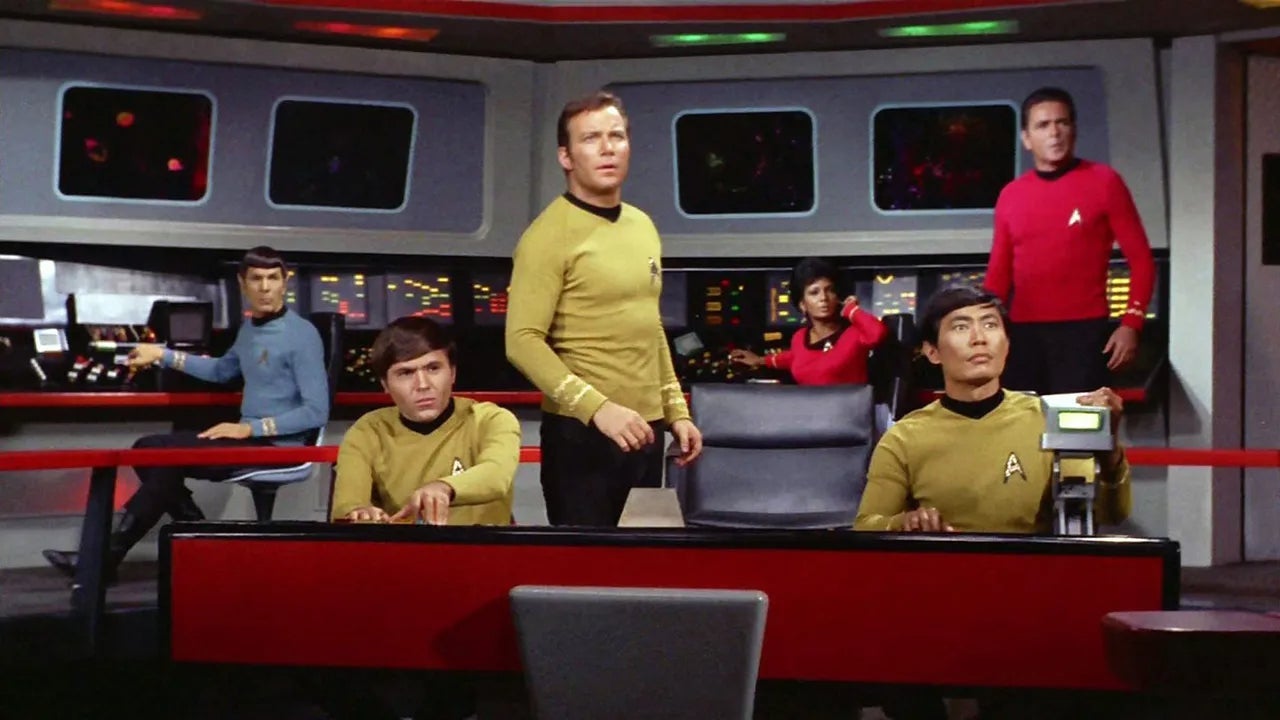
There may be no saga like Star Trek. Born in 1966, six decades later it continues to enter strongly and conquer new fans, always going where no man has gone before. And the credit is usually given exclusively to Gene Roddenberry, who conceived the original series. But things are never that easy: Roddenberry had to visit all the television studios of the time and only received continuous rejections. In fact, CBS passed on it to give its slot in the programming to Lost in Space, and NBC only accepted because they toned down the science fiction theme and promised them it would have western elements. But, really, there is another person even more important than Roddenberry in this story: Lucille Ball.
I love Spocky
To trace the beginnings of Star Trek, we must go back to 1951, when the United States met (and fell in love with) Lucille Ball, or as she was known for years, Lucy. The comedian starred in 180 episodes of I Love Lucy, one of the original sitcoms and probably the most successful in history: even now, so many years later, it still attracts 40 million viewers annually. The sitcom showcased the love story between Lucy and Ricky, or in other words, between Lucille Ball and Desi Arnaz, a couple both on and off the screen (more tumultuous in real life, to be fair).
The series was created by the actors’ own production company, Desilu, which continued to be called that even after they divorced when it ended. Arnaz left his position as president in 1962, which was taken over by his ex-wife, who was willing to make many changes with the money and fame that I Love Lucy had left her. However, everything she created failed, except for the derivatives of her series, like The Lucy Show. However, just the year before selling her company to Gulf+Western, the actress, star, and businesswoman managed to land two consecutive hits: Mission Impossible and, of course… Star Trek.
By the way: Lucille Ball couldn’t care less about Star Trek and was not familiar with its plot or what they wanted to do, but without her presence at the forefront, a project like this would never have been approved and sold. The unexpected part was that they were about to cancel the series just before airing its first episode because at Desilu, which was on the brink of bankruptcy, they were afraid of moving from half-hour series to two very expensive hour-long ones. Herbert F. Sollow, the production director, was able to convince Ball to continue investing in them, and seeing that we are still talking about both today, it can be said that they hit the mark.
That said: the series was never meant for success, and they were about to cancel it in 1967, if it weren’t for the fact that its main audience was young people, exactly what advertising companies were looking for. The rest you already know: Rodenberry ended up making a fortune with Star Trek and, apart from five movies that no one remembers, the rest of his life was dedicated to the Enterprise in a thousand and one different ways.
For her part, Lucille Ball has gone down in history as the first great businesswoman in the industry, who did not stop working until very shortly before her death in 1989. In fact, in 1986 she premiered Life with Lucy, a new installment of her character, now as a 74-year-old grandmother. A whole life dedicated to television, to comedy, and, why not say it, to making Star Trek see the light. A great.