A new movie from the iconic science fiction franchise Star Trek is in development, confirmed by Paramount during the recent annual CinemaCon event held in Las Vegas. Although the company has provided few details about the project, the news has generated great excitement among fans of the saga. This new installment is expected to represent a completely new version of the Star Trek universe, with no connections to previous series or projects. Ready to bring back the franchise that has given us so much joy In November 2025, it was reported that Jonathan Goldstein and John Francis Daley, […]
A new movie from the iconic science fiction franchise Star Trek is in development, confirmed by Paramount during the annual CinemaCon event, recently held in Las Vegas. Although the company has provided few details about the project, the news has generated great excitement among fans of the saga. This new installment is expected to represent a completely new version of the Star Trek universe, with no connections to previous series or projects.
Ready to bring back the franchise that has given us so much joy
In November 2025, it was reported that Jonathan Goldstein and John Francis Daley, known for their work on Spider-Man: Homecoming and Dungeons & Dragons: Honor Among Thieves, were in charge of writing, directing, and producing this film. However, their names were not mentioned at CinemaCon, which has raised uncertainty about their involvement in the film’s development. Despite this ambiguity, the possibility that their proposal is still under consideration by the studio cannot be ruled out.
Star Trek, one of the most beloved and enduring franchises in science fiction, has been active for nearly six decades. The latest revitalization of the saga occurred between 2009 and 2016, with a trilogy that managed to modernize the narrative and visual approach of the original story from 1966. The films, directed by J.J. Abrams and Justin Lin, were well received by critics and audiences, raising hopes that the new movie can capture the same energy and enthusiasm after years without film productions.
Although details remain limited, the return of Star Trek to the big screen is shaping up to be one of the best-kept secrets of the future of entertainment, leaving fans eager for more news about the development of this new adventure in the vast Star Trek universe.
The Star Trek universe has been known for its exploration of new frontiers, but the announcement of the cancellation of the animated series Lower Decks in 2024 has left many fans disappointed. After five seasons, the show, which had captured the comedic essence and spirit of the franchise, was considered premature in its ending. The series, which focused on marginal characters in a Star Trek narrative, had secured a special place in the audience’s heart, and its cancellation was seen as a significant loss of creative potential. After the cancellation, it has not been able to […]
The Star Trek universe has been known for its exploration of new frontiers, but the announcement of the cancellation of the animated series Lower Decks in 2024 has left many fans disappointed. After five seasons, the show, which had captured the comedic essence and spirit of the franchise, was considered premature in its ending. The series, which focused on marginal characters within a Star Trek narrative, had secured a special place in the audience’s heart, and its cancellation was seen as a significant loss of creative potential.
After the cancellation, he hasn’t been able to stay still
However, the creator of Lower Decks, Mike McMahan, shows that he is not one to give up. He is currently working on a new animated project titled Odd Jobs, in collaboration with CBS Studios and Prime Video. This new show proposes a darker vision of the future, set in the year 2127, in a world dominated by extreme capitalism. Odd Jobs follows a group of gig workers who face dangerous tasks through an app called ODD JOBS, and it presents itself as a dark comedy that addresses themes of a dystopian world in a manner similar to Futurama.
McMahan and his co-producer Dominic Dierkes have described Odd Jobs as a commentary on the bleak future they witness, a markedly different twist compared to the inherent optimism of Star Trek. “As we wandered through nature, we accidentally found a portal that took us hundreds of years into the future, where we witnessed strange and grotesque omens about the course of humanity”, the creators expressed in a statement. This proposal, which promises to mix humor with social critique, will be animated by Titmouse, the same studio that brought Lower Decks to life.
Although the conclusion of Lower Decks left a bittersweet feeling, the arrival of Odd Jobs could offer McMahan fans a new series that keeps their interest, transforming warnings about the future into an intriguing animated narrative.
Star Trek fans have reasons to celebrate, as the highly anticipated video game Star Trek Voyager: Across the Unknown has just announced its official release date: February 18. This title will be available on various platforms, including PS5, Xbox Series X|S, PC, and the new Nintendo Switch 2. The developer Gamexcite and the distributor Daedalic Entertainment have shared the exciting news, emphasizing the improvements made since the last demo shown at Gamescom 2025. Live long and prosper Over the past few months, the game has received significant updates to its interface and in […]
Star Trek fans have reasons to celebrate, as the highly anticipated video game Star Trek Voyager: Across the Unknown has just announced its official release date: February 18. This title will be available on various platforms, including PS5, Xbox Series X|S, PC, and the new Nintendo Switch 2. The developer Gamexcite and the distributor Daedalic Entertainment have shared the exciting news, emphasizing the improvements made since the last demo shown at Gamescom 2025.
Long life and prosperity
Over the past few months, the game has received significant updates to its interface and combat system. One of the main issues with the previous demo was the control feedback, which has been revised to provide a smoother and more precise experience. Now, players will be able to assign characters to the ship’s bridge, who will have a more prominent role in confrontations, allowing for better aiming and more strategic decisions during combat.
A central aspect of the game is its ability to allow players to rewrite iconic moments from the series, starting with the pilot episode The Guardian. This gives trekkies the opportunity to make decisions that can change the course of the narrative, offering alternative endings to those they already know from the screen.
In addition, a Deluxe version of the game is planned that will integrate more content, new races, and technologies that were not seen in the series. This edition will also significantly extend the game’s duration, which in a normal playthrough will range from 15 to 20 hours.
A new demo of the game will be available in digital stores, and those interested can now pre-order both the standard and Deluxe editions on various platforms.
The iconic science fiction saga, Star Trek, will say goodbye to Netflix on January 8, ending a presence that has lasted for nine years on the platform. Since its arrival in Spain in 2016, Netflix has made it easier to access the classic series from the universe created by Gene Roddenberry, which had never before been available continuously on national television. The arrival of the 727 episodes allowed a new generation of fans to relive classics like ‘The Original Series’, ‘The Next Generation’, ‘Deep Space Nine’, ‘Voyager’, and ‘Enterprise’. Star Trek bids farewell to Netflix and Spain […]
The iconic science fiction saga, Star Trek, will bid farewell to Netflix on January 8, ending a presence that has lasted for nine years on the platform. Since its arrival in Spain in 2016, Netflix made it easier to access the classic series of the universe created by Gene Roddenberry, never before available continuously on national television. The arrival of the 727 episodes allowed a new generation of fans to relive classics like ‘The Original Series’, ‘The Next Generation’, ‘Deep Space Nine’, ‘Voyager’, and ‘Enterprise’.
Star Trek says goodbye to Netflix and Spain
However, the departure of these iconic series poses a dilemma for fans, as currently most titles are not available on SkyShowtime, the joint streaming service of Paramount and Comcast (NBCUniversal) in Spain. While more recent Star Trek content, such as ‘Star Trek: Discovery’, ‘Strange New Worlds’, ‘Prodigy’, and ‘Picard’, can be found on SkyShowtime, the classics could be left in limbo after leaving Netflix.
This change occurs in a context of tension between Netflix and Paramount, especially after Netflix’s acquisition of Warner Bros., which has complicated their relationship. While Netflix was crucial for the relaunch of the Star Trek brand and its international distribution, Spanish users now face uncertainty about where they will be able to binge-watch their favorite series after January 8.
The series ‘Starfleet Academy’ is expected to arrive soon on SkyShowtime, which offers some hope for fans. However, the question remains about what will happen to access to the classic episodes, leaving many wondering if they will lose the option to enjoy these productions at their own pace. As events unfold, Star Trek fans will have to stay tuned for updates on streaming platforms.
There may be no saga like Star Trek. Born in 1966, six decades later it continues to come in strong and conquer new fans, always going where no man has gone before. And the credit is usually given exclusively to Gene Roddenberry, who conceived the original series. But things are never that easy: Roddenberry had to go to all the television studios of the time and only received continuous rejections. In fact, CBS passed on it to give its slot in the programming to Lost in Space, and NBC only accepted because they toned down the science fiction theme […]
There may be no saga like Star Trek. Born in 1966, six decades later it continues to enter strongly and conquer new fans, always going where no man has gone before. And the credit is usually given exclusively to Gene Roddenberry, who conceived the original series. But things are never that easy: Roddenberry had to visit all the television studios of the time and only received continuous rejections. In fact, CBS passed on it to give its slot in the programming to Lost in Space, and NBC only accepted because they toned down the science fiction theme and promised them it would have western elements. But, really, there is another person even more important than Roddenberry in this story: Lucille Ball.
I love Spocky
To trace the beginnings of Star Trek, we must go back to 1951, when the United States met (and fell in love with) Lucille Ball, or as she was known for years, Lucy. The comedian starred in 180 episodes of I Love Lucy, one of the original sitcoms and probably the most successful in history: even now, so many years later, it still attracts 40 million viewers annually. The sitcom showcased the love story between Lucy and Ricky, or in other words, between Lucille Ball and Desi Arnaz, a couple both on and off the screen (more tumultuous in real life, to be fair).
The series was created by the actors’ own production company, Desilu, which continued to be called that even after they divorced when it ended. Arnaz left his position as president in 1962, which was taken over by his ex-wife, who was willing to make many changes with the money and fame that I Love Lucy had left her. However, everything she created failed, except for the derivatives of her series, like The Lucy Show. However, just the year before selling her company to Gulf+Western, the actress, star, and businesswoman managed to land two consecutive hits: Mission Impossible and, of course… Star Trek.
By the way: Lucille Ball couldn’t care less about Star Trek and was not familiar with its plot or what they wanted to do, but without her presence at the forefront, a project like this would never have been approved and sold. The unexpected part was that they were about to cancel the series just before airing its first episode because at Desilu, which was on the brink of bankruptcy, they were afraid of moving from half-hour series to two very expensive hour-long ones. Herbert F. Sollow, the production director, was able to convince Ball to continue investing in them, and seeing that we are still talking about both today, it can be said that they hit the mark.
That said: the series was never meant for success, and they were about to cancel it in 1967, if it weren’t for the fact that its main audience was young people, exactly what advertising companies were looking for. The rest you already know: Rodenberry ended up making a fortune with Star Trek and, apart from five movies that no one remembers, the rest of his life was dedicated to the Enterprise in a thousand and one different ways.
For her part, Lucille Ball has gone down in history as the first great businesswoman in the industry, who did not stop working until very shortly before her death in 1989. In fact, in 1986 she premiered Life with Lucy, a new installment of her character, now as a 74-year-old grandmother. A whole life dedicated to television, to comedy, and, why not say it, to making Star Trek see the light. A great.
The Star Trek fan community has expressed its skepticism and discontent regarding the recent trailer for Star Trek: Starfleet Academy, which is shaping up to be one of the most different productions in the saga. Many fans have compared the approach of the new series to teenage dramas, calling for a return to the classic essence that characterizes the franchise. The negative comments have been emphatic, with opinions such as the series feeling like “a sensation of living in space.” A very different series within the franchise Despite the general discontent, the return of […]
The Star Trek fan community has expressed its skepticism and discontent regarding the recent trailer for Star Trek: Starfleet Academy, which is shaping up to be one of the most different productions in the saga. Many fans have compared the approach of the new series to teen dramas, calling for a return to the classic essence that characterizes the franchise. The negative comments have been emphatic, with opinions stating that the series feels like “a sensation of living in space.”
A very different series within the franchise
Despite the general discontent, the return of the Emergency Medical Hologram character, played by Robert Picardo, has generated positive expectations. This character, who captivated fans during Star Trek: Voyager, is one of the few elements that seems to resonate favorably with a portion of the audience. However, many question whether this return will be enough to attract viewers in a context that some consider deviated from the saga’s roots.
Starfleet Academy, which will premiere on January 15 on Paramount+, will focus on the lives of Starfleet cadets, exploring their friendships and rivalries in an iconic setting of the galaxy, set after the events of Star Trek: Discovery. The series aims to capture the attention of both classic era fans and new audiences, a goal that is undoubtedly testing the identity of the franchise.
In addition to Starfleet Academy, the fourth season of Star Trek: Strange New Worlds is anticipated with a more serious approach, moving away from the comedy present in previous episodes. Although the release date has not yet been confirmed, the new approach promises emotional adventures aboard the U.S.S. Enterprise. In a context where Paramount seeks to better position itself in the market following a possible merger with Warner Bros., more Star Trek productions are expected to be announced to satisfy both classic fans and newcomers.
Paramount+ is the app for the streaming platform of the same name from ViacomCBS. It offers hundreds of episodes of TV series, shows, and movies of all genres.
With the release of the new IDW comic, Star Trek: The Last Starship, the Star Trek narrative expands into the 32nd century and beyond, addressing key previously unexplored events in the franchise’s timeline. This comic, published on September 24, 2025, is set in the context following the cataclysm known as the Burn, which collapsed the Federation in the early 32nd century, a mysterious event that had remained as an unseen prologue in Star Trek: Discovery. Fixing the unfixable In The Last Starship, readers see how the starship Sagan attempts […]
With the release of the new IDW comic, Star Trek: The Last Starship, the narrative of Star Trek expands into the 32nd century and beyond, addressing key events previously unexplored in the franchise’s timeline. This comic, published on September 24, 2025, is set in the context following the cataclysm known as the Burn, which collapsed the Federation in the early 32nd century, a mysterious event that had remained as an unseen prologue in Star Trek: Discovery.
Fixing the Unfixable
In The Last Starship, readers see how the starship Sagan attempts to intervene in a peace negotiation with the Gorn, only for the dilithium in the cores of their ships to destabilize, leading the galaxy into chaos. This comic not only explores the immediate consequences of the Burn but also provides a new perspective that intensifies the fear of this cataclysmic event, connecting the dots that Discovery had left vague.
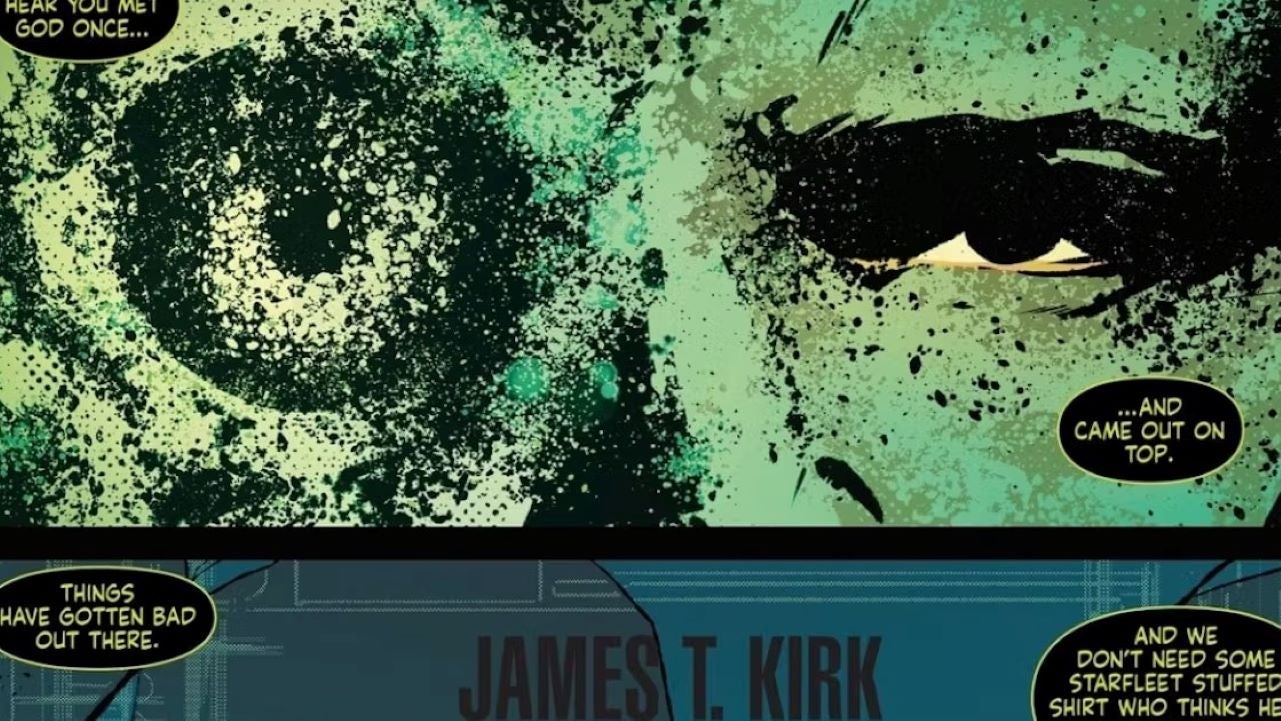
Another notable aspect is the return of Queen Borg embodied by Agnes Jurati, whose appearance adds new layers to the plot. In an unexpected twist, Jurati uses Borg technology to help the Federation while reviving the iconic Captain James T. Kirk, who had died in Star Trek Generations. This resurgence not only connects past and present events but also represents a significant canonical shift, implying that the resurrected Kirk could be a younger version of himself, reconfiguring the history of the Federation in the 31st century.
The Last Ship positions itself as a bold narrative that integrates various elements of the Star Trek canon, from Star Trek: Picard to the iconic figures of its history, underpinning the rich and vast narrative of the Trek universe, while raising questions about its future.
In a recent presentation at MagicCon in Atlanta, Wizards of the Coast unveiled most of its product lineup for 2026, a year that promises a notable number of returns to existing planes and two exciting crossovers from Universes Beyond, as well as a set inspired by Star Trek and another titled Reality Fractures. Star Trek joins the franchises that will come to the game The beginning of this year will be marked by the release of Lorwyn Eclipsed on January 23, a set that returns to a plane dating back to 2007, which is […]
In a recent presentation at MagicCon in Atlanta, Wizards of the Coast unveiled most of its product lineup for 2026, a year that promises a significant number of returns to existing settings and two exciting crossovers from Universes Beyond, as well as a set inspired by Star Trek and another titled Reality Fractures.
Star Trek joins the franchises that will come to the game
The beginning of this year will be marked by the release of Lorwyn Eclipsed on January 23, a set that returns to a plane dating back to 2007, which is inspired by Celtic mythology and will feature double-faced cards focused on the theme of light and darkness. In April, fans will be able to explore even more the environment of Strixhaven: School of Mages with the set Secrets of Strixhaven, which promises to offer an in-depth look at the lives of the students who have attended the prestigious magical university.
One of the most anticipated moments will be the release of the Marvel Super Heroes set in June. This set will feature iconic characters from the Avengers and the Fantastic Four, as well as other heroes like Squirrel Girl and Wolverine, and notable villains like Killmonger and Loki. The popularity of the Marvel universe will undoubtedly attract new players and collectors.
In August, the land of Middle-earth will be explored again with a set based on The Hobbit, which will include iconic characters like Smaug, Bilbo, and alternative versions of Gandalf and Gollum. Subsequently, in November, the Star Trek universe will be the focus of a set that spans from the original series to Strange New Worlds, incorporating mechanics centered around spaceships, such as the famous Starship Enterprise.
Finally, the narrative of the year will culminate with the Reality Fractures set in October, which will close the storyline called Metronome, previously initiated. Additionally, an unannounced set for March is mentioned, which keeps the anticipation among fans.
Magic: The Gathering Arena is a free online card game for Windows developed by Wizards of the Coast. Magic is undoubtedly one of the most important and iconic collectible card games, with millions of players worldwide and official competitions with great prizes. Now, thanks to Magic: The Gathering Arena, you can enjoy this card game on your computer for free.
Lego has released a teaser suggesting the imminent arrival of an official Star Trek set inspired by the iconic series The Next Generation. In a video shared on the company’s social media, the emblematic transporter room is shown, along with a figure of Captain Jean Luc Picard, which further raises expectations among fans and collectors. Beam me up! The anticipation for this new set is palpable, as interest in Lego for science fiction franchises has been increasing in recent years. This set could include a model of […]
Lego has released a teaser suggesting the imminent arrival of an official Star Trek set inspired by the iconic series The Next Generation. In a video shared on the company’s social media, the iconic transporter room is shown, along with a figure of Captain Jean Luc Picard, which further raises expectations among fans and collectors.
Teleport Me!
The anticipation for this new set is palpable, as interest in Lego for science fiction franchises has been increasing in recent years. This set could include a model of the Enterprise-D ship or a representation of the bridge, providing the opportunity to incorporate minifigures of various characters from the series. Therefore, many fans are eager to see how this set will develop, which could take a prominent place on the wish lists of many. Its popularity is expected to be comparable to that of other iconic Lego sets.
At the end of the teaser, there is a message in Klingon that says ‘coming soon’, suggesting an upcoming release. This creates expectations that the full reveal of the set will be announced in a short period of time, following Lego’s trend of making quick announcements after releasing teasers. However, it is still unclear what other elements or details the set might include, although it is rumored that it could be a model of the Enterprise or the command bridge, which would open the door to a variety of minifigures.
The excitement for Lego Star Trek has been a topic of conversation for quite some time among fans, and the teaser has confirmed that the project is underway, which has been met with great enthusiasm. The reveal of this set marks a milestone in Lego’s collaboration with the franchise, and many are already speculating about what the final product will look like and what surprises it might offer.
The future of the Star Trek franchise could be receiving a new boost thanks to the recent acquisition of Paramount by Skydance. Simon Pegg, who played Montgomery ‘Scotty’ Scott in the trilogy, revealed at a recent convention that the new president of Paramount, David Ellison, is a big fan of Star Trek. This enthusiasm could be a sign that the studio is willing to move forward with the production of a new movie, as Ellison cares about the series. A big fan of Star Trek, Pegg expressed his desire to reunite the original cast, especially remembering […]
The future of the Star Trek franchise could be receiving a new boost thanks to the recent acquisition of Paramount by Skydance. Simon Pegg, who played Montgomery ‘Scotty’ Scott in the trilogy, revealed at a recent convention that the new president of Paramount, David Ellison, is a big fan of Star Trek. This enthusiasm could be a sign that the studio is willing to move forward with the production of a new movie, as Ellison cares about the series.
Very much a fan of Star Trek
Pegg expressed his desire to reunite the original cast, especially remembering the late Anton Yelchin, who played Pavel Chekov. It would be wonderful to get together again, Pegg commented, adding that it would be interesting to see how the characters have evolved ten years after the last mission. Since their last appearance in Star Trek: Beyond in 2016, the project for a fourth installment has faced multiple creative setbacks.
In more hopeful news, writer Steve Yockey has been assigned to develop the script for Star Trek 4. This marks a good start for the plans to reboot the film saga, although Chris Pine, one of the main actors, has mentioned that he has not yet seen any script, suggesting that production is in a preliminary stage.
The franchise is also expanding into television, with the third season of Star Trek: Strange New Worlds now available. Additionally, a new series, Star Trek: Starfleet Academy, has been announced and is scheduled to premiere in early 2026. Another movie is also in development under the direction of Toby Haynes, which will offer an origin story set decades before the events of the reboot.