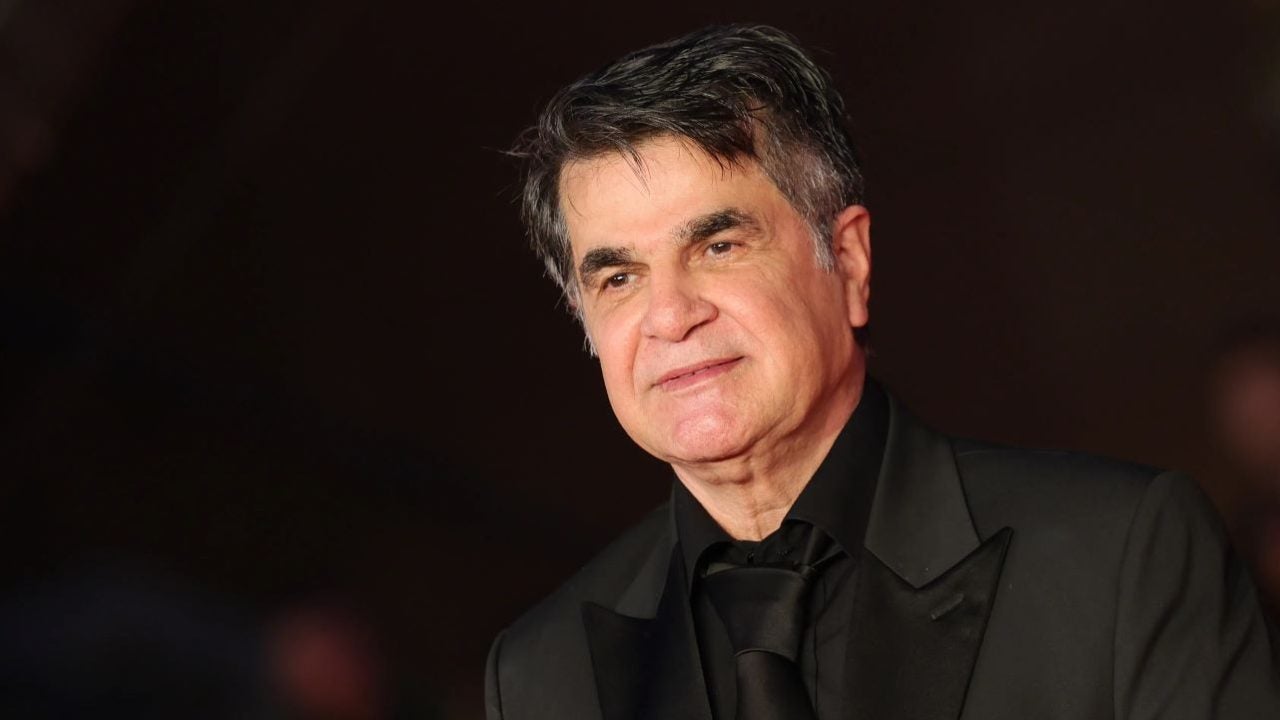
The most well-known Iranian director asks us to talk about the massacre in his country

The situation in Iran has severely deteriorated in recent weeks, with reports of violent repression against protesters in the streets. In a moving speech during the National Board of Review gala, renowned filmmaker Jafar Panahi denounced that “the state of Iran is shooting at protesters and a savage massacre is evidently continuing in the streets of Iran.” This call to action is resonating not only among filmmakers but also among artists around the world. Are we going to look the other way? Panahi, known for his criticism of the Iranian regime and for […]

The situation in Iran has severely deteriorated in recent weeks, with reports of violent repression against protesters in the streets. In a moving speech during the National Board of Review gala, renowned filmmaker Jafar Panahi denounced that the state of Iran is shooting at the protesters and a savage massacre continues, evidently, in the streets of Iran”. This call to action is resonating not only among filmmakers but also among artists around the world.

Are we going to look the other way?

Panahi, known for his criticism of the Iranian regime and his commitment to freedom of expression, urged “artists and members of the global film community” not to remain silent in the face of barbarism. Images and accounts of indiscriminate violence have reached international media, documenting how repression is affecting the civilian population. According to reports, numerous deaths have occurred, and the humanitarian implications are particularly troubling.

The arrest and repression of discontented protesters have been characteristics of the Iranian regime, but the recent increase in violence has drawn attention to the desperation of the citizens. Panahi, whose work often portrays the struggle for human rights and individual freedoms, emphasizes the responsibility that artists have to make these realities visible. “I consider it my duty to make a call to the global community to take a stand, he stated.

As the international community watches, the future of Iran and its leadership’s response to these protests remains uncertain. The gravity of the situation has unleashed a torrent of condemnations and calls to action, highlighting the urgent need for a united global response to the human rights violations occurring. The moment demands deep reflection on the role of art and culture in defending human dignity.

The most famous Iranian director, sentenced to one year in prison

The acclaimed Iranian filmmaker Jafar Panahi, winner of the Palme d’Or, has been sentenced in absentia to one year in prison in Iran, as well as a decree prohibiting him from traveling. This sentence, confirmed by his lawyer through the AFP news agency, has raised concerns in the film community, as it could affect his ability to attend various film festivals in the future. Panahi, to jail Despite the conviction, Panahi was recently seen at an event in Los Angeles, where he was able to participate without apparent restrictions. His presence in the city […]

The acclaimed Iranian filmmaker Jafar Panahi, winner of the Palme d’Or, has been sentenced in absentia to one year in prison in Iran, as well as a decree prohibiting him from traveling. This sentence, confirmed by his lawyer through the AFP news agency, has raised concerns in the film community, as it could affect his ability to attend various film festivals in the future.

Panahi, to jail

Despite the conviction, Panahi was recently seen at an event in Los Angeles, where he was able to participate without apparent restrictions. His presence in the Californian city has raised questions about the real impact of the sentence on his international activities and his commitment to the global film community.

The filmmaker, known for works like Taxi and The Circle, has maintained his relevance in the international film festival through his bold and committed work, although always facing the risks associated with his criticism of the repression in his homeland. In this context, Panahi is expected to attend the Marrakech Film Festival, which begins on Thursday, which could be a demonstration of his persistent commitment to the art of cinema and his struggle for freedom of expression.

However, it is rumored that his trip could be complicated due to the imposed ban, which would raise even more concerns about artistic independence in Iran and the treatment of filmmakers by the authorities. Panahi’s case is not only a reflection of the challenges faced by artists in repressive regimes but also highlights the vital importance of international solidarity in supporting dissenting voices.

This is France's selection to compete for Best International Feature Film at the Oscars

France has selected the film ‘It Was Just An Accident’ by Iranian filmmaker Jafar Panahi as its official entry for the Best International Feature Film category at the 98th Academy Awards. This announcement underscores the support for Panahi’s work, who has been a symbol of resistance in the film industry, facing restrictions imposed by his own government. The Iranian director competing at the Oscars The selection was overseen by the National Center for Cinema and the Moving Image in France, which has a committee of experts made up of professionals from both the artistic and industrial sides of cinema

France has selected the film ‘It Was Just An Accident’ by Iranian filmmaker Jafar Panahi as its official entry for the Best International Feature Film category at the 98th Academy Awards. This announcement underscores the support for Panahi’s work, who has been a symbol of resistance in the film industry, facing restrictions imposed by his own government.

The Iranian director competing at the Oscars

The selection was supervised by the National Center of Cinema and the Moving Image in France, which has a committee of experts made up of professionals from both the artistic and industrial fields of cinema. This decision not only reflects the growing appreciation for international cinema but also France’s willingness to defend works of impactful storytelling that question social and political reality.

‘It Was Just An Accident’, a film that addresses deep themes of life and uncertainty, has been well received by critics since its release. The work is framed in the distinctive style of Panahi, who has managed to merge everyday life with a critical exploration of the social context in which it unfolds. This approach has led the film to become a favorite at multiple international film festivals.

The selection of this film for the Academy Awards is a testament to the ability of cinema to transcend borders and connect audiences from different cultures. The 98th Academy Awards promise to be a remarkable event in the industry, highlighting the diversity and rich cinematic storytelling.

And the movie is one of the favorite candidates in its category, considering Panahi’s legacy and the impact that his works have had globally.

Will the Oscars change one of their main rules? There is a director who is begging for it

The Iranian filmmaker Jafar Panahi, recognized worldwide for his cinematic work, has garnered multiple awards at the most prestigious film festivals, including the Golden Lion in Venice, the Golden Bear in Berlin, and the Palme d’Or in Cannes. However, his name has never been present in the running for the Oscars, an omission that raises curiosity and debate in the film industry. We want an Oscar! The reason behind this absence lies in the decisions of the Iranian government, which has not submitted any of Panahi’s films to the awards […]

The Iranian filmmaker Jafar Panahi, recognized worldwide for his cinematic work, has garnered multiple awards at the most prestigious film festivals, including the Golden Lion in Venice, the Golden Bear in Berlin, and the Palme d’Or in Cannes. However, his name has never been present in the race for the Oscars, an omission that raises curiosity and debate in the film industry.

We want an Oscar!

The reason behind this absence lies in the decisions of the Iranian government, which has not submitted any of Panahi’s films to the Academy Awards. This director is known for his dissenting approach, and his works often criticize aspects of Iranian society, an alignment that the country’s authorities do not want to associate with. Despite his stature as a filmmaker and his international recognition, censorship and cultural control continue to be significant barriers to his legacy.

Since the beginning of his career, Panahi has used his talent to address critical and often taboo subjects, becoming an emblematic figure both in Iran and in the global film arena. Although he has made a considerable impact in criticism and has received numerous awards, the lack of representation at the Oscars highlights a paradox: Panahi’s immense ability to captivate international audiences while being silenced in his own country.

In this narrative, the history of art, politics, and the struggle for freedom of expression intertwine, making Panahi’s journey not only fascinating but also a refuge for dialogue about censorship in cinema. His legacy could be even more remarkable if the barriers that limit him were torn down and his voice could resonate in every corner of the cinematic world.