Year 2003. Running With Scissors, the video game studio (which, somehow, is still open), releases Postal 2, the sequel to one of the most violent and crude games in history. In this open world, you can commit all the acts of violence you want, and in fact, the game rewards you for it, to such a sickening extent that it was banned in New Zealand, under penalty of 10 years in prison and $50,000. It faced issues all over the world, but no one stopped talking about it and it became, […]
Year 2003. Running With Scissors, the video game studio (which, somehow, is still open), releases Postal 2, the sequel to one of the most violent and crude games in history. In this open world, you can commit all the acts of violence you want, and in fact, the game rewards you for it, to such a sickening extent that it was banned in New Zealand, with a penalty of 10 years in prison and $50,000. It faced issues all over the world, but no one stopped talking about it, and it inevitably became a brutal bestseller despite the critics not being very impressed. And then, the third part arrived.
More violence than ever!
In Running With Scissors, it took eight years to continue the saga, until in 2011 they finally released Postal III, a game that, on paper, was supposed to be a true revolution both graphically and in gameplay… until players discovered, resigned, that it was a complete disaster. It was released exclusively for Windows and abandoned the open world to focus on specific missions with a new third-person perspective that nobody ended up liking. It took all the steps backward that the franchise could have taken and became a resounding failure both critically and commercially.
In fact, the ports that were planned for Xbox 360 and PS3 were never even made, fearing that the backlash would be heard throughout the entire gaming world. There was a reason why Postal III was so bad, of course: the studio was going through the inevitable economic problems that come from having released only two moderately successful games in 15 years, and didn’t know what to do with the license, so they took their initial designs and handed them over to Akella, a Russian producer who developed it for five years. You do it, because it makes me laugh.
But wait, because there’s more: the 2008 crisis wreaked havoc in Russia and ended up further damaging Akella, which categorically refused (aware of the absurdity they were committing) to allow Running With Scissors access to Postal III. What was the result? On one hand, the original studio could not create enough patches to alleviate the mess. On the other, Akella declared bankruptcy immediately, and that is never a good sign. The studio had no choice but to bear the burden and try to release patches to improve the experience, until in 2012 they decided to remove it from their store, asking people to buy their two previous titles, “a far superior product for less money.”
They could not allow this to continue, and in 2015 they prepared an expansion for Postal 2 called Paradise Lost, which began with the protagonist waking up after an eleven-year coma. In other words, completely erasing Postal III from existence and leaving it as a figment of his imagination. In the end, in 2022 Running With Scissors managed to complete their Postal IV which… nobody liked either, this time without any Russian developer to blame. Surely they could say the typical phrase of their protagonist: “I regret nothing!”.
Many times a new release is talked about as one of the worst video games in history. The reality is that the bar is set so high that it is very difficult for anything published to reach that level. That’s why we are going to explore some of the games that could very well be the best games in history. To stick to some kind of reference, we will look at their scores on Metacritic and try to determine if they were really that bad. And maybe we will be surprised. Not many, but maybe some. Family Party: 30 Great Games Obstacle Arcade (11 […]
Many times a new release is talked about as one of the worst video games in history. The reality is that the bar is set so high that it is very difficult for anything published to reach that level. That’s why we are going to explore some of the games that could very well be the best games in history. To stick to some kind of benchmark, we will look at their Metacritic scores and try to determine if they were really that bad. And maybe we will be surprised. Not many, but maybe a few.
Winning the title of worst game of 2013 and worst Wii U title from several publications is quite an achievement. Having an 11 on Metacritic, being the lowest-rated title in history, is even more so. But is it really that bad? Considering that it is playable, it doesn’t seem to be the case. That said, the graphics are terrible, it has not a single original idea, the selection of mini-games is dreadful, and the controls and performance leave much to be desired. Is it bad enough to be considered the worst game on Wii U? Probably, to be honest. Is it bad enough to be considered the worst game in history? Let us tell you one thing: we have seen much worse. You can’t even imagine the things we have seen.
Double Dragons is one of the great classics of arcades and 8-bit consoles. An absolute classic with excellent titles and, let’s be honest, some rather questionable games. Double Dragon II: Wander of the Dragons is among the latter. How does it get a 17 on Metacritic? Let’s be honest: it’s a very bad game. The framerate is terrible, the art direction is awful, but is it an absolutely failed game? It has a good soundtrack, a more than decent voice acting, and some quite appealing cutscenes. Moreover, the game is still Double Dragon II, a good game. Is it a bad remake? It’s a very bad remake. How does it deserve a 17, the equivalent of a negative score in video game journalism? It’s not that either.
Among the hilariously bad games, but perhaps not deserving of a 2, is Ride to Hell: Retribution. A game whose cutscenes could provide hours of jokes, the AI of its enemies leaves much to be desired, its controls are terrible, its graphics are questionable, and its music is repetitive, but it’s not much worse than many low-budget games made with little care from that era. This one especially shows little care and effort, but not to the extent of the amount of criticism it received. Should you play it? Oh, no. Don’t even think about playing it.
This game is terrible. No matter how you look at it. And the score reflects both how bad it is and the fact of what it does to a beloved franchise like Alone in the Dark. They had the budget. They had the name. And what they decided to create is a terrible game, full of bugs and problems that can barely hold itself together, with mechanics that don’t work, graphics from a previous era, and that needed at least a couple more years of development. A terrible game that surely felt even worse for being called Alone in the Dark. But it is understandable that it is this way.
Postal has always been controversial. Postal 4 is a game that has performed very well, and Postal II is a game that is held dear. What happened to Postal III? Technically it is a disaster, narratively it is incoherent, the gameplay is more of the same, and the humor perhaps didn’t fit as well in 2011 as it did before or after. Is it as bad as they say? It is bad, both on its own and by the standards of the saga, but not as bad as they portray it. Without a doubt, a game that fans could reevaluate.
This is a peculiar game because it is better known for the meme of its launch trailer than for the game itself. A pretty average RTS, just okay, with dance music and a rather limited execution. Is it a game worth giving a 25? I don’t think so. It’s not a game to give a high score, it’s a barely passing game, just enough to say: creativity and effort are appreciated. Because in the end, that 25 feels a bit like, why do you hate fun and silliness?
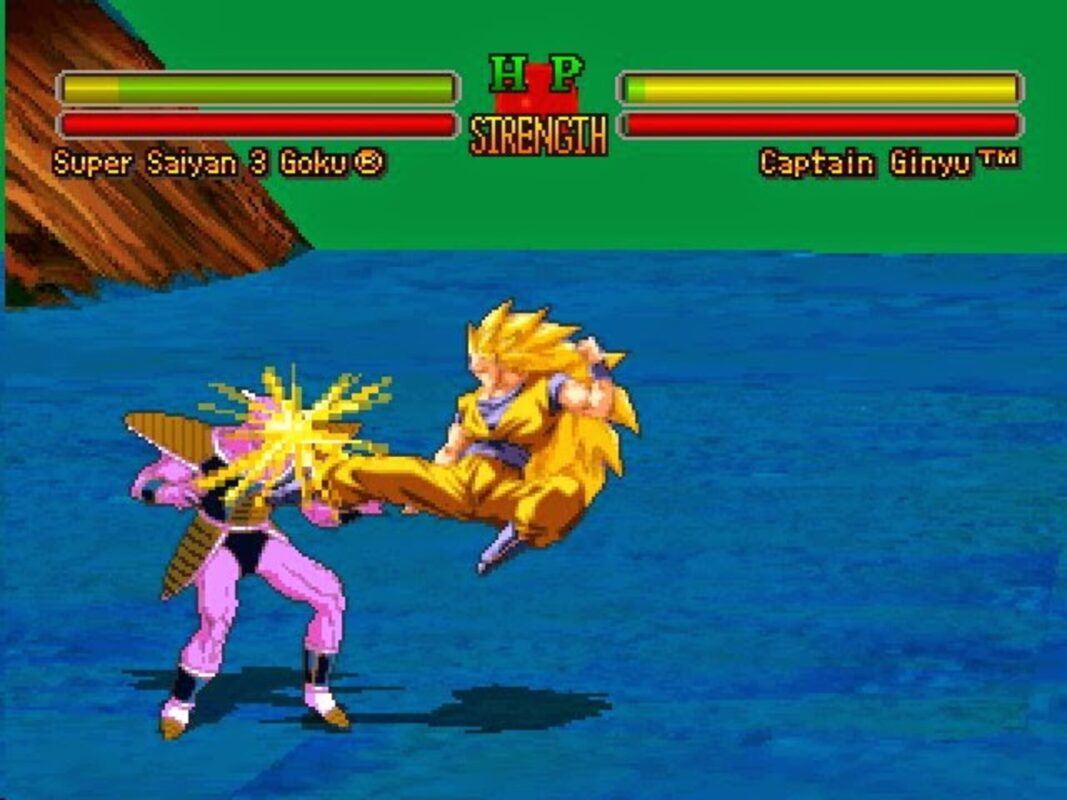
Dragon Ball has had very good and very bad games. It is true that perhaps none has been as bad as Dragon Ball Z: Ultimate Battle 22. If you have never heard of it, that’s normal. It is a 2D exclusive for the original PlayStation, with very clunky movement and an absolutely dreadful graphic and artistic department. But is it really that bad to play? The truth is yes. We can’t sugarcoat it. Even though it has quite a few playable characters, it feels like a game from another era that never even existed; something between 8 and 16 bits that we are not sure should have ever existed.
To conclude, we want to rectify a historical injustice. Jumper: Griffin’s Story is not a bad game. It is not a remarkable game, it is not a game you should rush to play, but it is not a bad game. The graphics are not spectacular, the gameplay flow is nothing particularly spectacular, but it follows the movie’s story well and is enjoyable to play. It is a serviceable game. A barely passing grade, perhaps a bit more if you are a fan of the movie. But a 29? It is not a 29. No matter how you look at it. Because if we talk about the worst games in history, few games on this list can really compete in that category.