U.S. Postal Service testing self-driving trucks

Long-haul mail deliveries are on the roads without drivers.

Self-driving truck

“Neither snow nor rain nor heat nor gloom of night stays these couriers from the swift completion of their appointed rounds.”

That’s the unofficial motto of the Post Office, and something that seems even more possible when the couriers themselves are robotic trucks that don’t need to eat, sleep, or go to the bathroom. Sure, we’re a long way off from the T-1000 showing up at our door with a bag of mail, but self-driving mail trucks are already being tested.

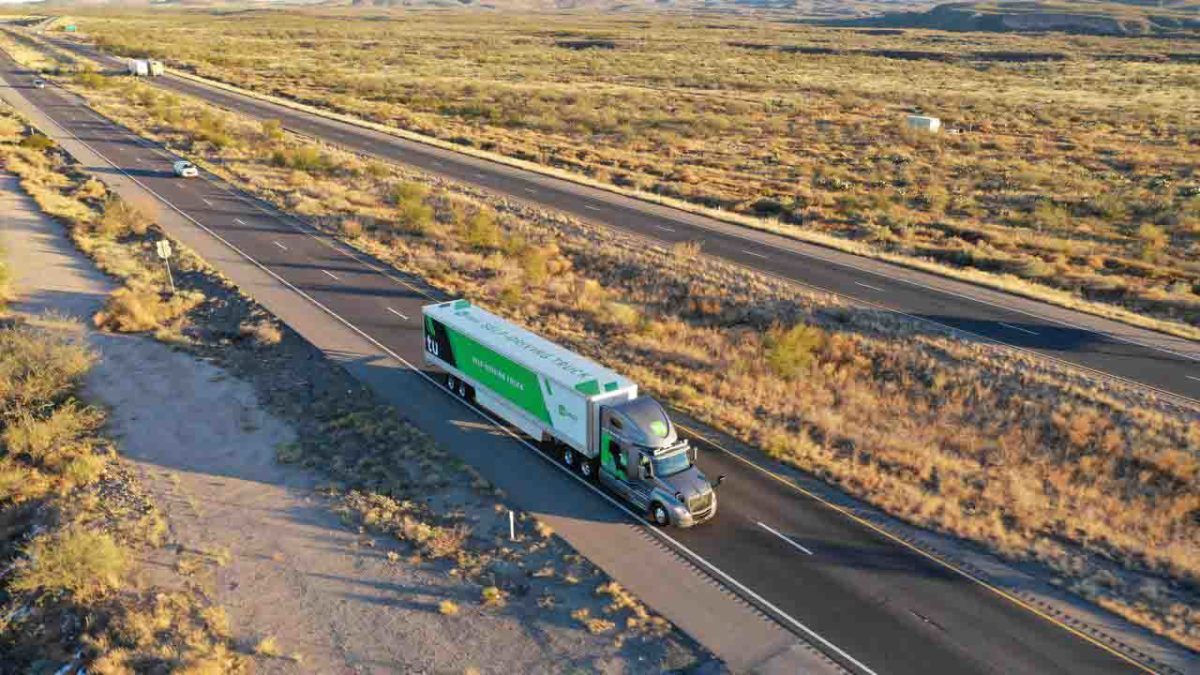
Starting today, the San Diego-based company TuSimple is running a two-week test of mail truck deliveries between USPS locations in Phoenix and Dallas. The self-driving semis will make five round trips, each one 45 hours long. Even if you’re the most ferocious road warrior in the world, wearing a diaper and an IV, that’s probably outside your comfortable driving range.

To keep an eye on things, the self-driving trucks will have a human driver who could jump in. An engineer will ride shotgun.

Self-driving trucks could provide incredible cost savings and efficiency. That will also come at the cost of driving jobs, however. According to Reuters, the American Trucking Associations estimates a shortage of as many as 174,500 drivers by 2024, due to an aging workforce and the difficulty of attracting younger drivers. So self-driving trucks will be great to replace any human shortfalls. The problem, however, will be the drivers who don’t want to be replaced by Robo-Driver 2000.

If all vehicles became self-driving, that would wipe out three percent of all American jobs. Millions of careers that could come to a screeching halt. In many states, “truck driver” is the most popular occupation.

As technology accelerates, we’ll have to be mindful of helping those displaced by its effects. Sometimes making things cheaper comes at a higher cost than we realize.

100 robotaxis coming to China by the end of the year

China moves aggressively to add self-driving cars to its streets.

China is really going for it. Within a few months, Chinese tech giant, Baidu, plans to roll out a new robotaxi service in one of the country’s biggest cities.

Baidu, which is essentially China’s answer to Google, has announced several AI-powered transportation projects, including partnerships with Ford and Volvo, focused on advancing autonomous driving.

China is already home to the world’s largest car market — which makes sense given its status as the most populous country, and now, they’re gaining ground on Silicon Valley when it comes to autonomous vehicle research.

What’s the plan?

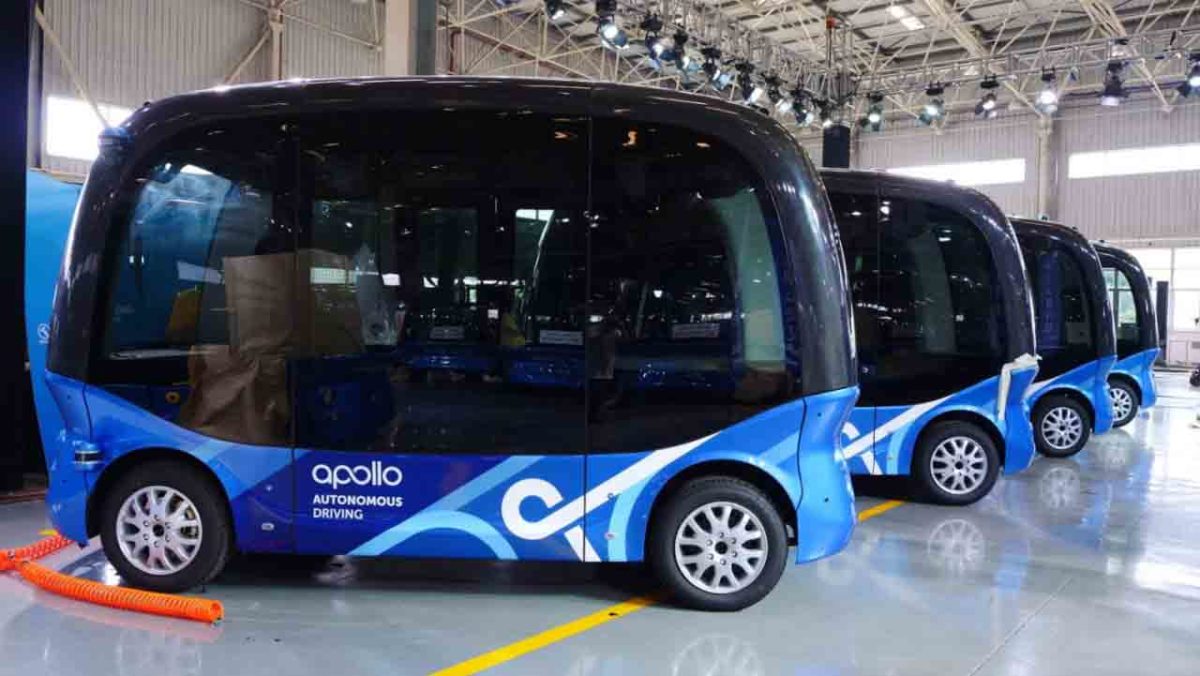
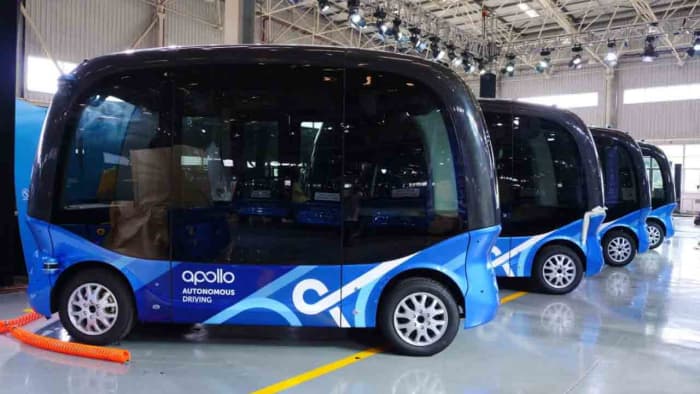
Apollo bus

Autonomous taxis have already hit roads in Singapore, Japan, and Russia — and China’s rollout signifies a potential global shift in how people think about transportation.

Baidu’s plans are the first of its kind. The Level 4 driverless service is powered by Apollo’s Apolong Mini Buses — self-driving shuttles. A quick refresher, the Apollo program is Baidu’s open-source driving platform — essentially software you can drop into any car for an autonomous experience.

The company plans to unveil the taxi service in a few months in the town of Changsha — a city of 7 million in Southern China.

Long term, Apollo’s service can easily be sold to car companies, while the minibusses could be deployed to other markets for commercial use or as a way to fill the gap between buses and individual rideshare services.

Could disengagement be an issue for robotaxis?

Beijing started testing self-driving cars on public roads back in 2017, becoming the first city in China to allow autonomous vehicle testing.

Last year, eight companies tested 56 vehicles, logging roughly 93k miles of driving in the city. Reports just came out last month, detailing the performance of these vehicles, and it seems that they are missing a key safety metric — how often did humans need to intervene?

This metric is called disengagement and refers to any time that a human is forced to take control over the car.

In California, all companies testing self-driving cars are required to disclose the number of miles driven and how often intervention was required. Quartz mentions that while disengagement is a flawed metric, the Chinese tests fail to disclose how often Baidu’s autonomous cars, as well as Pony.ai and Waymo’s vehicles required human intervention.

So, how autonomous are China’s robotaxis?

If you’re not super entrenched in the world of self-driving cars, autonomy is rated on a scale from 0-5.

A level 0 represents no automation — your average car that you control yourself. A level 5 takes over all driving responsibilities. In this case, the passenger can lean back and zone out —answer emails, watch a movie, no need to keep your eyes on the road.

For a little background on the different levels of autonomy, this video provides a deeper dive.

The Apolong buses are level 4 autonomous — so they’ll need to be monitored but will control all aspects of the driving experience.

Between Baidu’s partnerships and the upcoming taxi launch, China could potentially be the world’s largest market for autonomous vehicles.

According to a report from McKinsey, if successful, autonomous vehicles could solve some of the country’s major problems — like traffic congestion and pollution.

But, it’s worth considering the economic implications that come with the move toward self-driving.

The report brings up the point that autonomous vehicles could take over the bulk of the country’s mobility services — which stands to shake up the country’s economic order, shifting the center of the automotive industry to software and data — rather than auto manufacturing jobs.

What we know about Amazon’s foray into self-driving cars

Is Amazon going to swallow the self-driving car industry?

self-driving cars

Amazon just made a significant investment into the self-driving space.

Led by venture capital firm Sequoia Capital, Aurora’s Series B funding round raised a whopping $530m with the help of the tech giant. The contribution is a sign that Amazon doesn’t want to get out of the self-driving race.

Why Aurora, and why now? Well, based on a statement released by Amazon, autonomous technology stands to make the company safer and more productive.

It’s also important to point out that Amazon has been investing in autonomous everything for the past few years. They partnered with Toyota back in 2017, and they’ve been working with Embark, a driverless trucking company for at least a few months.

What is Aurora Innovation?

Aurora isn’t super well-known at this point, however, with Sequoia and Amazon as investors, and autonomous tech vets from Google, Tesla, Uber, and SpaceX, the company already has a decent amount of credibility.

CEO Chris Urmson says most of the money will go toward building out a staff of engineers, as well as roles like HR and operations.

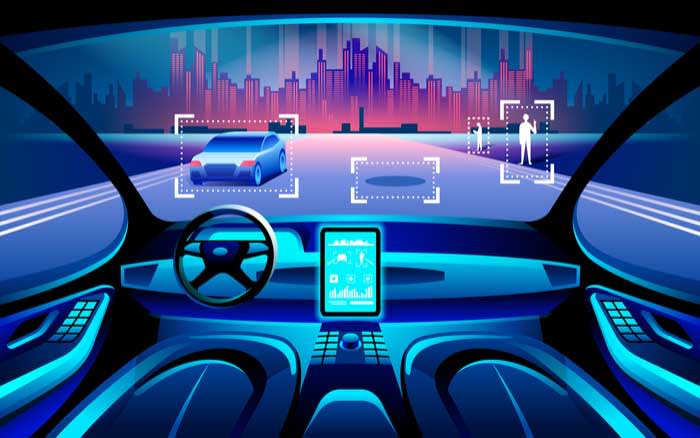
Aurora’s primary focus is on developing a software package that aims to function as a nervous system for cars.

The plan is to market the software as a full-stack solution that automakers can drop into existing makes and models, thus allowing them to take advantage of the tech without fronting the time and money on their own R&D.

What’s interesting about Aurora is, the company doesn’t have any exclusive deals with automakers and doesn’t plan on pursuing such partnerships.

Urmson says that they don’t want to box themselves in with one type of car — which could be part of the appeal for Amazon, as they look for new ways to transport toilet paper, books, and inevitably, counterfeit beauty products across the globe.

They wouldn’t want to limit themselves by working with a company that say, only uses Hondas, Toyotas, or Fords.

Amazon self-driving trucks & more

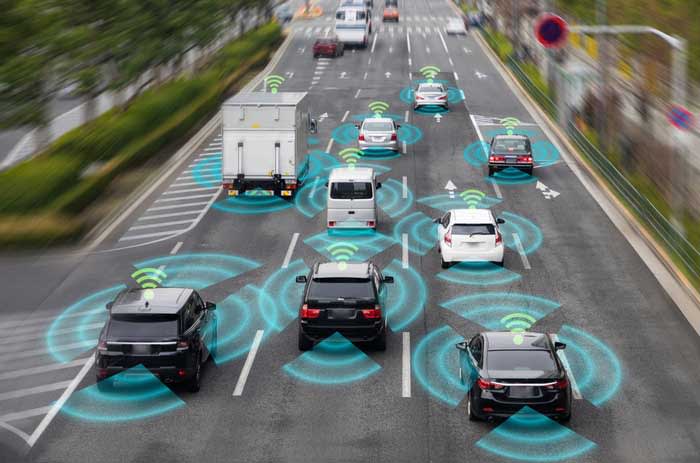
self-driving traffic

Just last month, CNBC found that Amazon was testing driverless deliveries with the self-driving truck startup, Embark.

Like Aurora, Embark doesn’t build their own vehicles. They integrate their software into existing semis, such as Peterbilt, and operate with a test driver inside to ensure everything runs smoothly.

Amazon and General Motors are reportedly in talks to invest in Rivian Automotive, an electric truck company.

Amazon announced they would begin field testing Scout, a six-wheeled delivery robot that aims to take on what’s called last mile delivery.

While Amazon said they created the robot, TechCrunch reported that the tech giant quietly acquired robotics startup, Dispatch.

It’s clear that Jeff Bezos and company are put their eggs in just about every autonomous basket.

Final thoughts

Amazon is obviously interested in leading the autonomous charge — between delivery drones and Aurora, Scout, and potentially, the Rivian deal — they could rule the space when full adoption becomes a reality.

Still, we’re a long way off from riding to work in self-driving cars. But it will be interesting to see where self-driving trucks or robots show up outside of a test setting.