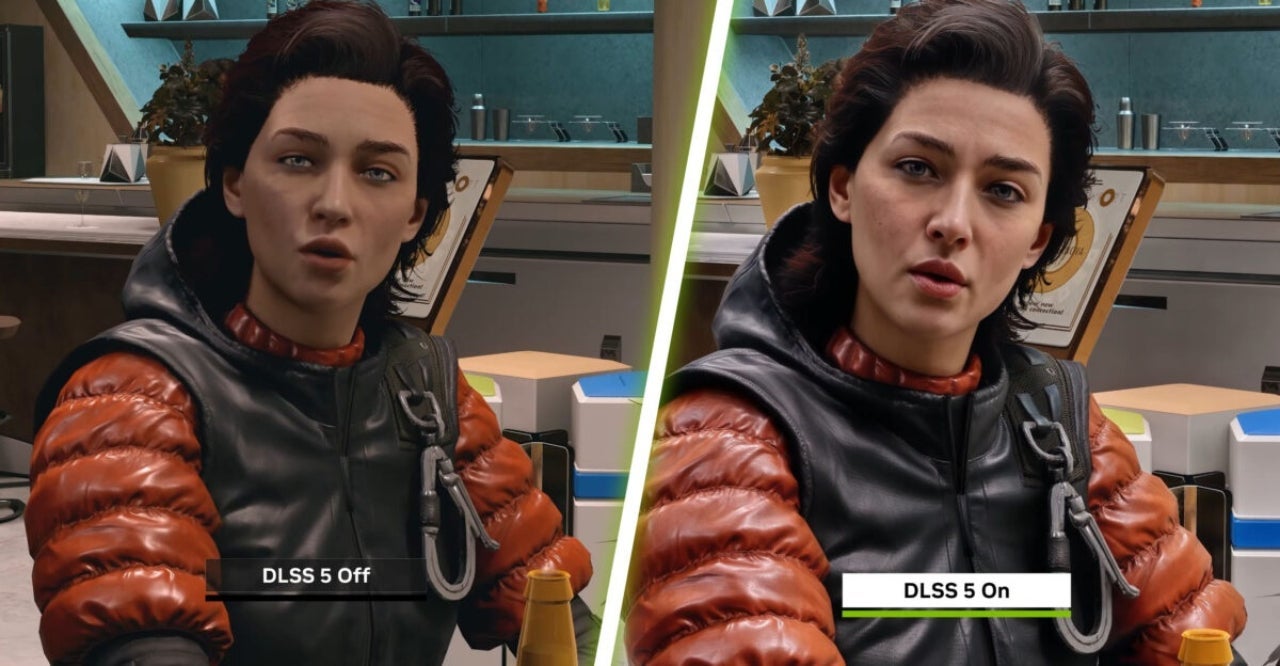
NVIDIA is at the center of controversy following the launch of DLSS 5, an image scaling technology that aims to deliver photorealistic graphics in video games. However, it has received criticism from players and industry professionals, who question both its visual impact and its artistic integrity. Some believe that this tool acts as an aggressive artificial intelligence filter that could sacrifice the artistic intent of developers.
Your explanations make everyone right
One of the most critical voices belongs to Steve Karolewics, a rendering engineer at Respawn, who expressed on social media that DLSS 5 seems like an “exaggerated filter” that alters the original visual quality, generating “radically different” frames. This argument has resonated among many within the community, sparking a debate about the technology’s aspiration to achieve photorealism at the expense of the artistic aesthetics of video games.
In response to these criticisms, Jensen Huang, CEO of NVIDIA, vehemently defended the new technology during his appearance at GTC 2026. He stated that DLSS 5 is not simply a post-processing technique, but an advancement that allows developers to “control geometry, textures, and other aspects through generative artificial intelligence.” Huang emphasized that development studios have detailed control over the use of this technology, ensuring that the unique aesthetic of each game is maintained.
Despite the concerns raised by the community and some experts, NVIDIA maintains that this innovation represents a significant step forward in the pursuit of more realistic graphics, opening the door to new creative possibilities for developers. There is still time to address the criticisms and make improvements to the DLSS 5 tools, which means that the conversation about its impact on the industry will continue in the coming months.