The iconic video game Street Fighter II, released in 1991, not only revolutionized the video game industry but also became a cultural phenomenon, filled with nods and references to characters from popular culture. Among these, Fei Long, a representation of Bruce Lee, and Balrog, a character representing Mike Tyson, stand out clearly. The latter, originally known as Mike Bison, had to change his name in the international version of the game to avoid legal conflicts with the famous boxer. It was literally him, but fictionalized As Mike Tyson rose to worldwide fame after becoming the […]
The iconic video game Street Fighter II, released in 1991, not only revolutionized the video game industry but also became a cultural phenomenon, filled with nods and references to characters from popular culture. Among these, Fei Long, a representation of Bruce Lee, and Balrog, a character representing Mike Tyson, stand out clearly. The latter, originally known as Mike Bison, had to change his name in the international version of the game to avoid legal conflicts with the famous boxer.
It was literally him, but fictionalized
As Mike Tyson rose to worldwide fame after becoming the youngest heavyweight champion in 1986, his influence was felt in multiple areas, including video games. Capcom’s decision to modify the names and characteristics of some characters to fit the perception of the Western market was key to the success of Street Fighter II. Thus, Balrog became a symbol of fighting video games, although his connection to Tyson remained hidden for nearly three decades.
Interestingly, it was in 2019 when Tyson, during an appearance on an ESPN Esports program, discovered the existence of Balrog. This singular moment revealed the connection between the boxer and the character, surprising both Tyson and the fans. Balrog’s story not only highlights Capcom’s clever localization strategy but also underscores Tyson’s enduring presence in the world of video games, where he has appeared in several iconic titles such as Punch Out! and sequels of Fight Night.
As of today, Balrog is still considered the archetype of boxers in most fighting games, further solidifying Tyson’s legacy in gamer culture. With his recent recognition as part of the saga, the circle between the boxing icon and the Street Fighter II character is notably closed.
It’s not easy to take a game that has captivated you and cram it, in any way, into a console with less power than the original, usually in an extremely short period of time and with a small team. Because, after all, who is going to buy a PS5 game on Switch? Who is going to play a classic from PC on the 3DO? Who is going to play Resident Evil on mobile? The answer is “More people than it seems,” and that’s why these atrocities keep coming out and continue to be profitable… even if they turn out badly […]
It’s not easy to take a game that has captivated you and cram it, however possible, into a console with less power than the original, usually in an extremely short period of time and with a minority team. Because, after all, who is going to buy a PS5 game on Switch? Who is going to play a classic from PC on the 3DO? Who is going to play Resident Evil on mobile? The answer is “More people than it seems,” and that’s why these atrocities keep coming out and remain profitable… even if they turn out poorly.
Today we are going to take a look at 7 absolute horrors in video game history, 7 games that were ported and turned out so badly that we all decided to pretend they don’t exist. But oh, they do exist. And yes, most of them, in some way, were profitable… even if it was just because they were so cheap.
7-Arkham Knight (PC)
The classic, right? Somehow, Iron Galaxy Studios are still open after perpetrating what is possibly one of the best examples of why it’s not necessary to port everything. In 2013, their version of Batman: Arkham Origins already made many angry because it was full of bugs and issues, which they themselves responded shortly after by saying… they were not going to fix. And that’s how the game remained, half-finished.
But the worst was yet to come: in 2015, they released the PC port of Batman: Arkham Knight and the result was absolutely disastrous. So much so that Warner Bros had to withdraw the game and apologize (although, in Iron Galaxy’s defense, it should be noted that the company was fully aware that this version had issues and released it anyway). They took four months to fix its errors and re-release it, but this time they placed the responsibility on the shoulders of the big guys, Rocksteady (which, on the other hand, is what should have happened from the beginning). A bat-horror.
6-Spider-man 2 (PC)
But frankly, I think there are even worse ports than Batman: Arkham Knight, which have simply been forgotten because they belong to another time. I’m referring to Spider-man 2, the best game of the spider until the PS4 Spider-man came along, a title from 2004 that was a hit on PS2, GameCube, and Xbox and that, of course, had its corresponding port to PC. Well, more or less.
How is it possible that this port was released for sale? Not only does it run at 12 frames per second, but also, the graphics are infinitely worse, the gameplay is unmanageable, there are no textures, and the fights are like schoolyard brawls… It was a completely different game in which, to interact with enemies and buildings, you had to… click on them. No one understood anything, no one was happy at all with the result, and the studio that made it, Fizz Factor, closed in 2009. It’s hard to feel sad about that.
5-Marble Madness (Game Boy Advance)
You might be thinking “Marble Madness? The arcade game from 1984? How can you mess up something like that?” Well, even though the game had appeared on every console imaginable (from NES to Mega Drive), when it came time to port it to Nintendo’s handheld, which was receiving dozens of games of all kinds weekly, they didn’t overthink it: they bundled it with another classic, Klax, in a cartridge that offered two for one.
Not only that: they also decided that three weeks was more than enough to make a port like this. You can imagine the result: incomplete screens, physics that did not reflect reality, no animations or improvements, and, even worse: three levels were missing. Considering that the original game had six, it can be deduced that exactly half was missing. Spectacular work.
4-Doom (3DO)
By now we already know that Doom has been ported to absolutely everything, including printers and smart refrigerators. If it has a screen, it has a Doom. And of course, among all these versions, there had to be a terrible one. This is the case of the port for 3DO, the console that Panasonic launched in the mid-90s and that didn’t end up interesting anyone despite being considered “product of the year.” As you can imagine, Logicware and Art Data Interactive didn’t exactly put much care into it.
When playing this Doom, you had four screen options: the smaller the screen, the higher the frame rate. The larger the screen, the lower. So to speak: if you wanted to see what was happening on the screen, you couldn’t understand anything that was going on. The chaos was such in its creation that the soundtrack ended up being performed by the CEO’s rock band, the only quality that can be considered hopeful in this catastrophe.
3-Pac-man (Atari 2600)
In 1980, Pac-man consumed any kind of conversation about video games: there was only that yellow ball eating pellets and dodging ghosts through various mazes. Logically, home consoles also wanted their chance. The first to try was Atari 2600, on April 3, 1982 (referred to by Atari itself as “National Pac-man Day”), and it became the most successful game in history after selling eight million copies.
Not bad for a port that was made in just six months by programmer Tod Frye and that was, frankly, terrible. In fact, it barely resembled the original game, its graphics were embarrassing: not even the ghosts had different colors, the mazes were different (much simpler), there were no objects to collect and, of course, no music of any kind when completing a level. If it is in the number 3 spot, it is because, frankly, there were still four years until the NES was released and the world did not know that things could be done better.
2-Resident Evil 4 (Zeebo)
Zeebo was a console exclusive to Brazil and Mexico with very, very little graphical power that decided, why not, to port Resident Evil 4 in a version that took up 7 Mb. Yes, 7 Mb. As you can imagine, the speed at which it moved was reminiscent of PlayStation times, the character models were polygonal, there wasn’t a single cutscene, the music played in Midi… In short. A horror in every way, that 16 years later is still one of the greatest atrocities in the history of video games.
The mechanics, however, were those of Resident Evil 4 Mobile Edition, although there are missing missions, the soundtrack is different, and the Ganados have blue skin for some reason. In 2011, Zeebonet stopped functioning and the game could no longer be downloaded, but there is enough evidence across the Internet to assure us that it was a game that was born a zombie.
1-Street Fighter II (ZX Spectrum)
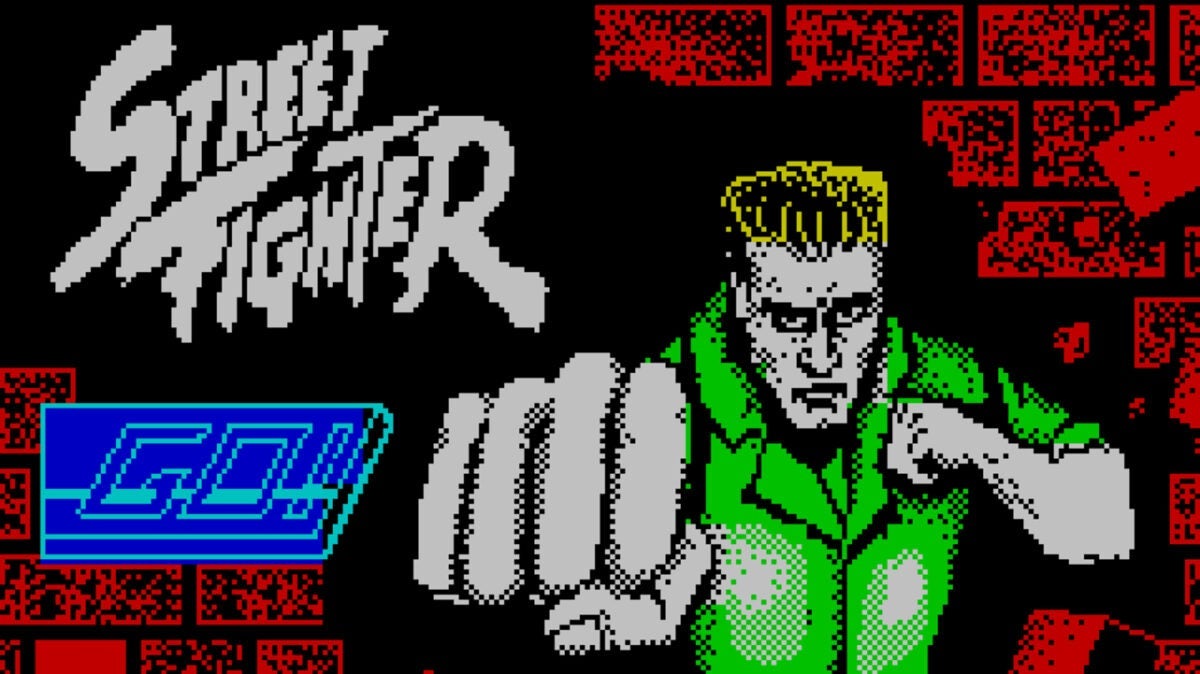
When you become an adult, you learn that you have to know what your limitations are. That, no matter how hard you try, you won’t be able to achieve everything or do everything correctly. And that’s perfectly fine, it’s okay, we must embrace our imperfections. ZX Spectrum completely ignored this rule and released its own version of Street Fighter II in 1992. And it was dreadful, even worse than the Commodore 64 version.
Only two colors on screen and their movements were extremely slow (perhaps one or two frames per second) made the game absolutely unplayable. Yes, a technical achievement to bring Street Fighter II to ZX Spectrum, but it wasn’t necessary. There are those who love this version madly, as the greatest achievement the device ever reached, but honestly, who thinks of this when thinking of Street Fighter? A true embarrassment.
Surely, when you were a kid, you were convinced that the two men fighting on the initial screen of Street Fighter II had names. That they were even unlockable within the game or that they were stylized versions of Ryu and Balrog. However, time has shown us otherwise: not only do they have names, but also hobbies and personalities, even though we will never be able to play a match with them. They fight in the street, indeed. For years, it was thought that their names were Joe and Mike, who appeared in the forgotten original Street Fighter as opponents controlled by […]
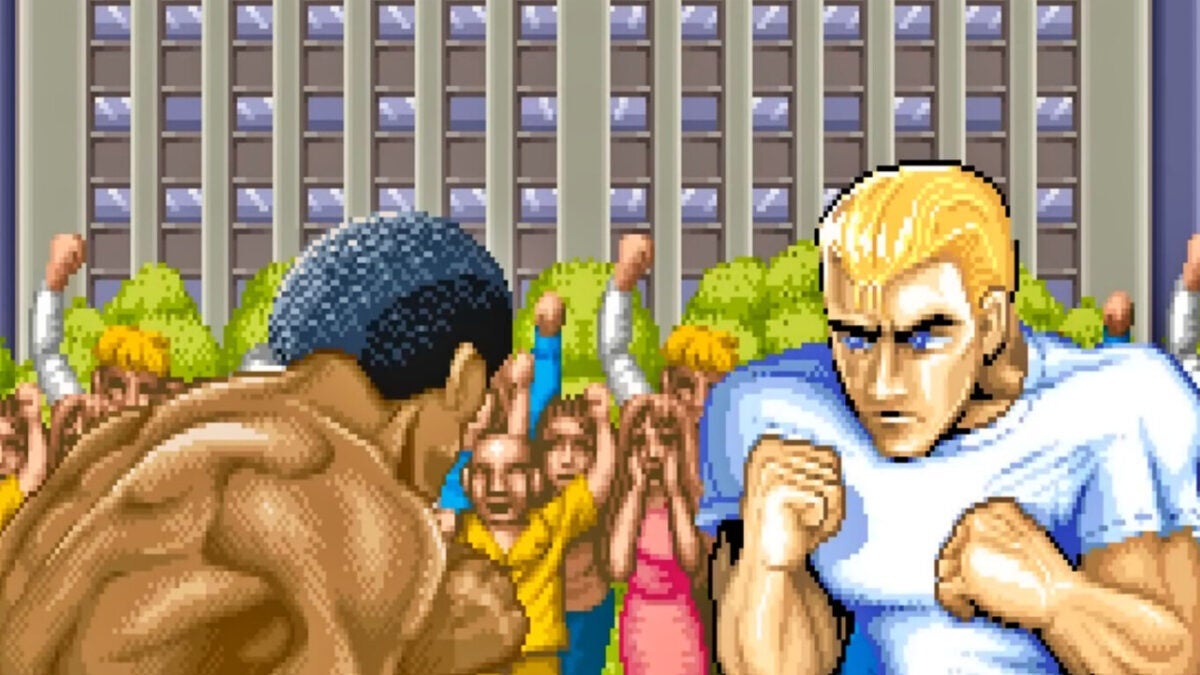
Surely, when you were a kid, you were certain that the two men fighting on the initial screen of Street Fighter II had names. That they were unlockable within the game, or they were stylized versions of Ryu and Balrog. However, time has shown us otherwise: not only do they have names, but they also have hobbies and personalities, even though we will never be able to play a game with them.
For years, it was thought that their names were Joe and Mike, who appeared in the forgotten original Street Fighter as machine-controlled opponents. And it makes sense because, in fact, Joe appears in a Drama CD that told the story of Street Fighter II and was not released outside of Japan. In the Mad Revenger story, Joe wants to face Ken in the Martial Arts Tournament in San Francisco, but before reaching him, Sagat easily defeats him and leaves him knocked out.
However, with the arrival of Street Fighter V they decided to give them names: they are Scott and Max. Scott is a former boxer who now works as a security guard at a bar and often starts street fights in his daily life, but goes fishing at a lake on weekends. Max, on the other hand, is a boxer with great speed and techniques who participates in martial arts tournaments, but causes problems and is often penalized for his bad behavior. To make matters worse, he spends all the money he earns on gambling. The next time you play Street Fighter II, now you know the truth about who those two are. Now, stay away from them, as they are not to be trusted!