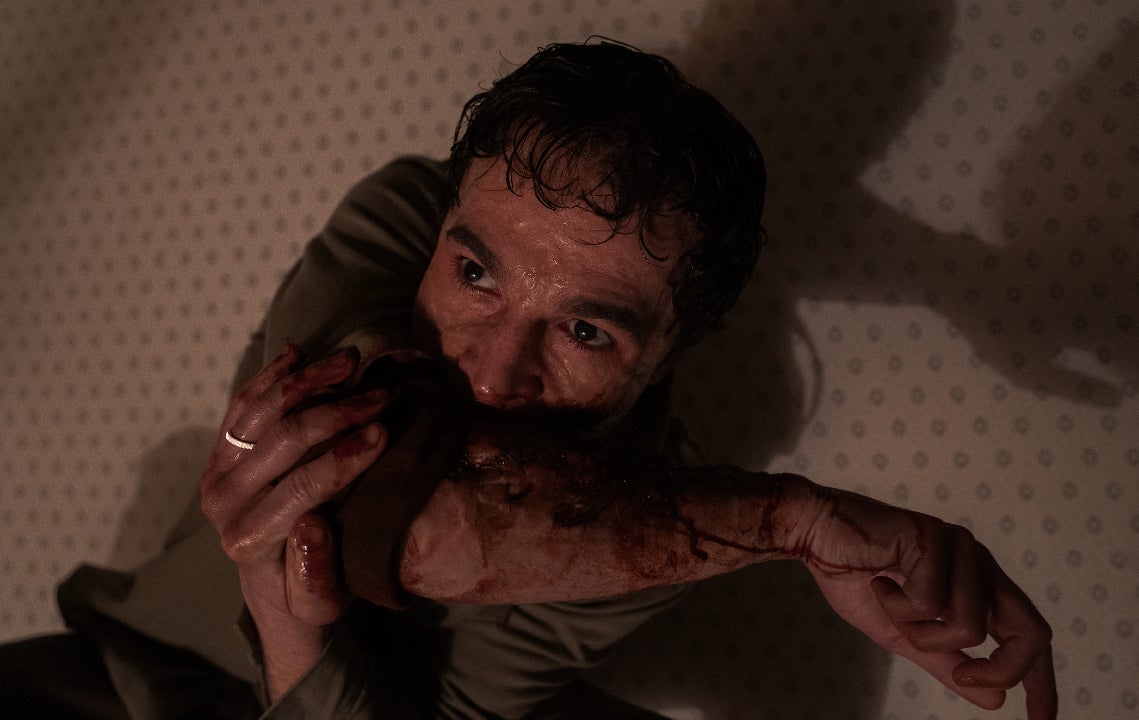
This year, Blumhouse’s attempt to revitalize Universal’s classic monsters with a low-budget approach has shown its limitations, particularly highlighted by its version of The Wolf Man. This new adaptation presents itself as an antithesis to the ambitious 2010 film, which cost 150 million dollars and was a failure both at the box office and critically, barely grossing that same amount. Despite the expectations, the relaunch of this iconic character failed to connect with both audiences and critics.
An iconic story with a new finish
In the story, Lawrence Talbot returns to his hometown of Blackmoor after the tragic loss of his mother. His mission is to help his brother’s fiancée find him after his mysterious disappearance. The urgency increases with the presence of a monster lurking in the woods, causing attacks during the full moon nights. This premise leads Talbot to discover unexpected facets of himself, in a tale that seeks to combine classic horror with a more contemporary approach.
Classic monsters, including the werewolf, have had frequent adaptations over time, reflecting the priorities of cinema in each era. From the early attempts at horror in the 30s to the more melodic versions of the 90s, each era has interpreted these characters in its own way. This new The Wolf Man is set in a period where blockbusters begin to feel saturated by digital effects and repeated formulas.
Despite not being a stellar film, directed by Joe Johnston, it maintains a certain cinematic craftsmanship, achieving inspired moments and a pace that prevents it from becoming monotonous. Although the film has not reached the level of excellence of other works by Johnston, it presents a suitable mix of effects and narrative, somewhat surpassing what Blumhouse has offered this year. And for a stellar performance, we still have Eggers’ werewolf.