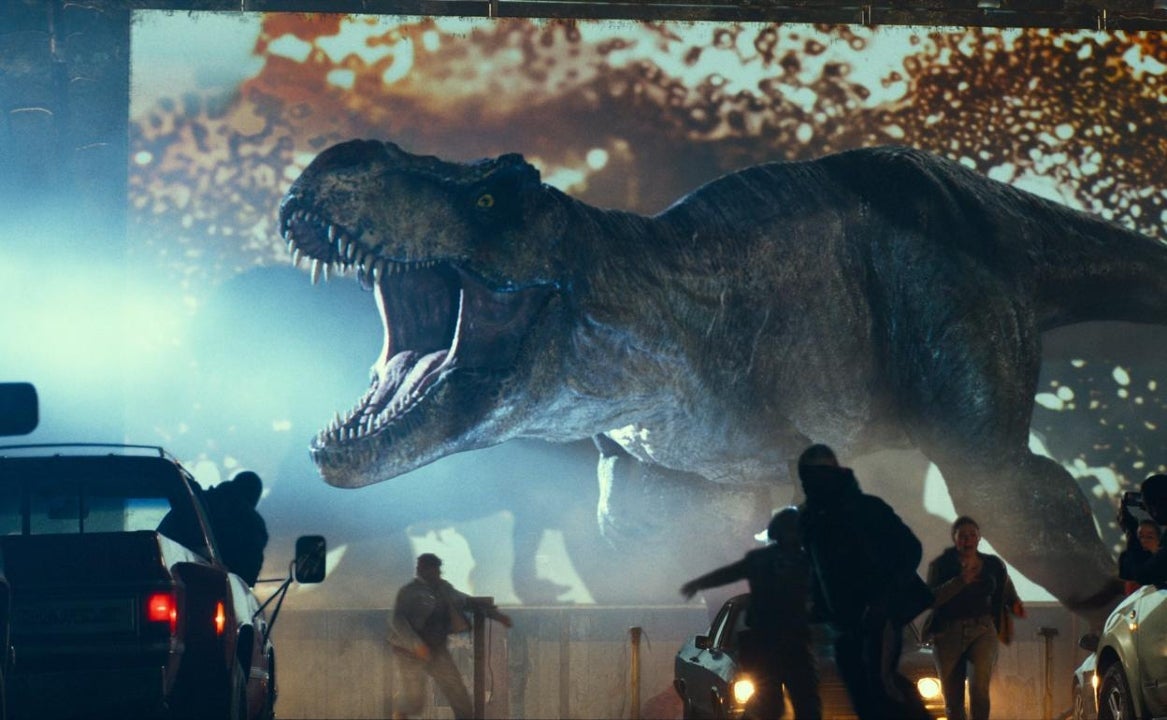
Netflix has demonstrated its willingness to invest considerable sums of money in film productions, as evidenced by the ambitious project Electric State. However, despite its efforts, the company has yet to release a film that matches the titans of Hollywood cinema in terms of cost and production. Although this could change, as recently Jurassic World: Dominion joined its catalog, quickly reaching the top in popularity on the platform. As expensive as actually building Jurassic World: Dominion has not only become a streaming phenomenon, but […]
Netflix has shown its willingness to invest considerable sums of money in film productions, as evidenced by the ambitious project Electric State. However, despite its efforts, the company has yet to release a movie that matches the titans of Hollywood cinema in terms of cost and production. Although this could change, as recently Jurassic World: Dominion joined its catalog, quickly reaching the top in popularity on the platform.
So expensive to really build the park
Jurassic World: Dominion has not only become a streaming phenomenon, but it also holds the title of being the most expensive movie in history, with an initial cost of 584 million euros. Fortunately for Universal, the tax benefits provided by the UK government allowed that final expenditure to be reduced to 465 million euros. Despite these impressive numbers, it remains a challenge to recoup this investment, especially considering the mixed reviews it has received.
The movie, although it managed to gross over $1.004 billion at the box office, has been labeled by some critics as the least effective of the franchise, calling its artistic quality into question. The production delays caused by the coronavirus pandemic played a crucial role in the escalation of costs, in addition to the high salaries of its star cast, which includes veterans like Sam Neill, Laura Dern, and Jeff Goldblum.
Despite these criticisms, the Jurassic World saga continues to attract audiences and demonstrates the power of its brand. However, many fans and critics agree that the final installment of this trilogy failed to meet the high expectations that had been set, leaving the audience wanting a more enriching adventure.
The cinema of the 80s is remembered with a lot of affection, and it’s no wonder. Some of the most iconic adventure and action movies in film history are from that era. The level of creativity that was present at the time and the directors and screenwriters involved were enviable, leading to unique gems that are still remembered today. And in many cases, they were overwhelming box office successes. That was the success of one of the most remembered trilogies in history, which is still celebrated today: Back to the Future. Conceived by Robert Zemeckis […]
The cinema of the 80s is remembered with great affection, and for good reason. Some of the most iconic adventure and action movies in film history are from that era. The level of creativity that was present at the time, along with the directors and screenwriters involved, was enviable, leading to unique gems that are still remembered today. And in many cases, they were overwhelming box office successes. That was the success of one of the most memorable trilogies in history, which is still celebrated today: Back to the Future.
Conceived by Robert Zemeckis and Bob Gale and produced by Steven Spielberg, this is a franchise that started from a very simple premise. What would happen if a young person traveled to the past and met their parents at the moment they met and fell in love? What kind of disasters could it cause if they made the slightest mistake?
A movie that invented what is now a cliché
While today this story is a cliché for all kinds of series, books, and movies, it is so because of the first installment of this film franchise. Marty McFly was the original rebellious and impulsive teenager who travels through time in a retrofuturistic car driven by the eccentric ideas of a mad scientist friend of his, leading him to a wildly crazy adventure. That will only become more and more outrageous with each new installment of the franchise. But now we will get to that.
The first of the movies, Back to the Future, kept it simple. Set in 1985, the protagonist Marty McFly travels 30 years into the past, to 1955, testing the time machine that his friend and somewhat eccentric scientist Doc has built in a DeLorean. The result disrupts his parents’ relationship, almost causing him to never be born, and ultimately, he manages to return to his time without compromising either his relationship or that of his parents or the space-time continuum.
Tremendously clever and wacky for its time, heavily inspired by the television series The Twilight Zone and Superman’s time travel comics, the film was a tremendous success among critics and audiences. With a budget of 20 million dollars, it managed to make almost 390 million at the box office, not counting everything it has made on television and home formats, being surprisingly praised by most critics of the time as a clever, intelligent youth film that represents a very smart twist on science fiction stories thanks to its humor and narrative, even if its beginning is too slow and overly expository.
Winning numerous awards and being nominated for five Oscars, although it wouldn’t win any, it was the big surprise of 1985. And to no one’s surprise, the sequels arrived.
The Aftermath of the Great Success
It took four years to make their second installment, but they did it. Bringing back all the people involved in the original movie except Crispin Glover, who played Marty McFly’s father but was considered too problematic to work with, the movie promised the same, but with a different twist. This time they wouldn’t travel to the past, but to the future. But Marty, who apparently learned nothing from the first movie, gets into trouble and brings back an object from the future that completely changes the future. Because, what is the present if not the past of the future?
With trips to the future, to the past, and a direct confrontation against his great nemesis since the first movie, the bully Biff, the film is built on the premise of its predecessor, making it bigger, with more consequences, and in a way, visionary. After all, it’s about a millionaire seizing power in the US and ruining everything. But his vision is only half-true: in 1989, the year the movie was released, Donald Trump was already a very important figure in American society and had declared his intention to run for president of the US. And if this movie serves as president, the idea was not exciting even then.
On the other hand, the movie was a success again. With a budget of 40 million, it grossed just over 332 million dollars and the critics expressed a healthy enthusiasm once more. Although some critics saw the film as entertaining escapism that lacked the imagination of the previous one and the awards did not shine in the same way as in the previous one.
A beloved third movie
Just a year later and following the final scene of this second film, the third and final movie of the franchise was released: Back to the Future III. With Doc self-exiling to the past, specifically to the year 1885, Marty will have to go to his rescue when he receives a message that something is very wrong and his old friend needs his help. This is resolved in a film with all the tropes of the western, tremendously clever, and which serves as a perfect conclusion to the emotional core of this outstanding trilogy of films.
Costing another 40 million dollars, this time they raised only 245 million, if we can say only when talking about those figures. And the criticism was, surprisingly, much more positive than regarding the second one. Although the ambition of the second installment was much greater, with a more convoluted plot and trying to embellish everything with many superficially deep themes, the much purer and more direct intentions of this sequel to make a fun movie, focusing on the characters and their relationships and how it uses western tropes, captivated the critics. And not without very good reasons.
After the trilogy, the franchise was closed without any further attempts to revive it. Not in the cinema. It has had television series, video games, pinball, biographies of its actors, and everything imaginable in terms of merchandising, but no one has ever proposed a fourth movie. And it’s better this way. Because now you can watch this excellent trilogy on Netflix that, moreover, doesn’t need to become a tetralogy for us to remember how good it is.
Simon Kinberg, known for his work in film and television, has shared his enthusiasm for his new Star Wars trilogy, which will take place after the events of Rise of Skywalker. In a recent interview with Nerdtropolis, Kinberg highlighted the inspiration he has found in the series Andor, created by Tony Gilroy, which he considers an exceptional example of science fiction storytelling within the franchise. “It’s about the best science fiction storytelling you can do in any franchise,” Kinberg stated. A series that will shape the future of the franchise Although the details […]
Simon Kinberg, known for his work in film and television, has shared his enthusiasm for his new Star Wars trilogy, which will take place after the events of Rise of Skywalker. In a recent interview with Nerdtropolis, Kinberg highlighted the inspiration he has found in the series Andor, created by Tony Gilroy, which he considers an exceptional example of science fiction storytelling within the franchise. “It’s about the best science fiction storytelling you can do in any franchise,” Kinberg stated.
A series that will shape the future of the franchise
Although specific details about the plot of the trilogy are still scarce, there is confirmation of Daisy Ridley’s return in her iconic role as Rey Skywalker. Kinberg is both writing and producing this new project, which generates high expectations among fans. He expressed that he is in a state of awe because he never imagined having the opportunity to work on a new installment of this iconic saga. “It’s not just a dream come true, I couldn’t have dreamed it,” he commented with evident excitement.
The new trilogy adds to a moment of revitalization for the franchise, which has witnessed various projects, such as the successful series Andor. The series has renewed interest and the quality of stories in the Star Wars universe, inspiring other creatives to explore new narratives. Kinberg insisted that there are a large number of talents willing to contribute to this universe, which promises a bright future full of intriguing stories that would continue to expand the mythology of the galactic saga.
With Rey’s return and the promise of more details to come, Star Wars fans are eagerly anticipating what Kinberg and his team will bring to this rich and complex narrative.
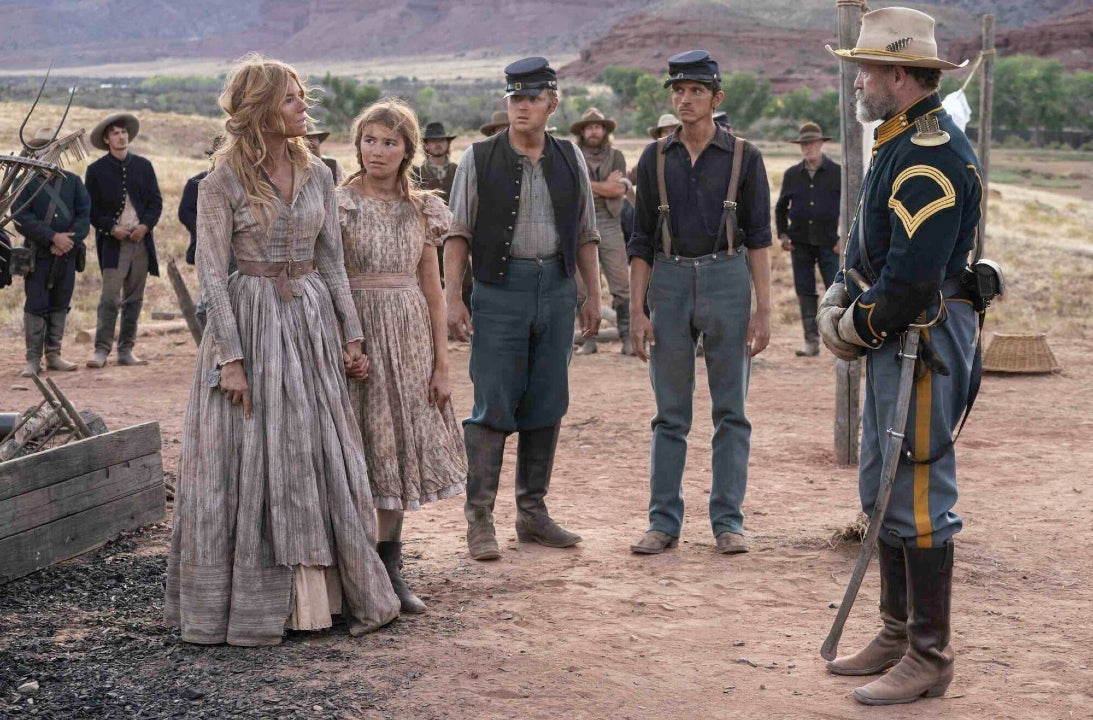
Kevin Costner has returned to directing with his ambitious project Horizon: An American Saga, an epic in the western genre in which he has invested all his savings. Costner, who decided to leave his successful series Yellowstone to focus on this cinematic dream, has released the first installment of his saga, which premiered in June 2024. Despite his passion for this work, the film has not achieved the expected success at the box office, grossing only 38.5 million dollars against a budget of 100 million. However, it received better reception on streaming platforms, which suggests […]
Kevin Costner has returned to directing with his ambitious project Horizon: An American Saga, an epic in the western genre in which he has invested all his savings. Costner, who decided to leave his successful series Yellowstone to focus on this cinematic dream, has released the first installment of his saga, which premiered in June 2024. Despite his passion for this work, the film has not achieved the expected success at the box office, grossing only $38.5 million against a budget of $100 million. However, it received better reception on streaming platforms, suggesting a second wind for the work.
A great trilogy that is sinking
The audience’s response was mixed, and some critics have pointed out that, although Horizon has potential, it could have been better. Nevertheless, the moderate performance of this first part has generated uncertainty about the future of the saga and the possibility that Costner may not complete his ambitious project of four films.
Costner’s career has been marked by ups and downs, with achievements like Dances with Wolves and notable failures like Waterworld and Wyatt Earp The latter, which was directly competing at the box office with Tombstone, suffered a fate similar to Horizon, as it failed to connect with the audience. The question now circulating in the industry is whether Costner will be forced to abandon his project, affecting his reputation and future in Hollywood, just as has happened at critical moments in his career.
The premiere of The Last Jedi eight years ago sparked an intense debate among fans of the Star Wars saga. This controversial film, directed by Rian Johnson, became a recurring topic on social media, where polarized comments about its content and direction remain alive. The cultural impact of the film is undeniable; every time it is mentioned, a torrent of reactions arises, proving its relevance in the Star Wars universe. There were ideas, but nothing formal. Although Johnson had ideas for a trilogy that would have expanded his vision within the […]
The premiere of The Last Jedi eight years ago sparked an intense debate among fans of the Star Wars saga. This controversial film, directed by Rian Johnson, became a recurring topic on social media, where polarized comments about its content and direction remain alive. The cultural impact of the film is undeniable; every time it is mentioned, a torrent of reactions arises, proving its relevance in the Star Wars universe.
There were ideas, but nothing formal
Despite Johnson having ideas for a trilogy that would have expanded his vision within the galaxy, the director clarified in a recent interview with Rolling Stone that the project never went beyond the initial phase. According to his words, only a few ideas were discussed with Kathleen Kennedy, but there was no formal treatment for the trilogy, leaving everything as vague and pleasant concepts: “Nothing really happened. We had a great time working together,” Johnson stated.
Moreover, the director is aware of the displeasure he has generated in some sectors of the fandom, but it seems that it doesn’t affect him too much. He commented: “It’s never pleasant when someone attacks you on the Internet, especially when they do it with things I disagree with about something I’ve created.” However, the story of The Last Jedi may follow a similar path to that of The Phantom Menace, which, after receiving harsh criticism upon its release, is now recognized as an important pillar of the franchise.
Time may offer a new perspective to future generations on Episode VIII, allowing it to be valued in a different way. Meanwhile, Johnson is focusing on his current projects and distancing himself from online comments that could affect his mental health, enjoying the creative process without the distractions of social noise.