Movie theaters continue to face a complicated landscape due to changes in consumption habits driven by the pandemic. Despite the difficulties, Universal Pictures has decided to extend the exclusivity period in theaters for its releases, which represents a ray of hope for the film industry. Starting in 2026, some movies, such as ‘The Odyssey’ and ‘The Day of Revelation’, will have an exclusivity period of five weekends, which translates to 31 days before being available on digital platforms. More time to watch on the big screen This change […]
Cinemas continue to face a complicated landscape due to changes in consumption habits driven by the pandemic. Despite the difficulties, Universal Pictures has decided to extend the exclusivity period in theaters for its releases, which represents a ray of hope for the film industry. Starting in 2026, some movies, such as ‘The Odyssey’ and ‘The Day of Revelation’, will have an exclusivity period of five weekends, which translates to 31 days before being available on digital platforms.
More time to watch on the big screen
This change comes after the drastic reduction of the exclusivity window, which during the pandemic was shortened to just 17 days, and to 30 days for productions that managed to gross more than 50 million dollars in their opening weekend. With the new strategy, Universal aligns itself more with current industry practices, especially starting in 2027, when a 45-day exclusivity will be established for its releases. This decision also responds to the demand from several cinema chains, including the largest chain in the world, which recently requested longer times for exclusives in theaters.
The situation becomes more intriguing when considering Leonardo DiCaprio’s recent statement, in which he expressed doubts about the future of movie theaters, suggesting they could become silos like jazz clubs. His comments reflect the growing concern among filmmakers and actors about the revitalization of cinema in the streaming era and changes in content consumption. According to experts, Universal seems to have taken note of these issues by adjusting its release policies, seeking a balance that benefits both theaters and studios.
Additionally, Universal’s decision aligns with previous commitments from platforms like Netflix, which could set a trend towards stabilizing exclusivity periods in the industry. This situation is a clear indication that, although movie theaters are still in a phase of adaptation, hope and strategy are finding their way.
The Academy Awards, which are held annually to recognize the best films of the year, are approaching at a time when film consumption is evolving. A recent survey conducted by the Pew Research Center reveals that only 53% of Americans reported having attended a movie theater in the past year, which could indicate a shift in entertainment habits among the population. Half of the cinema, is it? The survey, conducted in the summer of 2025, reflects not only the preference for consumption […]
The Academy Awards, held annually to recognize the best films of the year, are approaching at a time when movie consumption is evolving. A recent survey conducted by the Pew Research Center reveals that only 53% of Americans reported having attended a movie theater in the past year, which could indicate a shift in entertainment habits among the population.
Is half of cinema, ci?
The survey, conducted in the summer of 2025, reflects not only the preference for consuming content on digital platforms but also a potential challenge for the film industry facing competition from streaming services and a wide variety of home entertainment options. The trend of declining cinema attendance could influence how award events are developed, including the Oscars, which have historically relied on box office performance and visibility on big screens.
Despite the decline in cinema attendance, it is important to highlight that the love for cinema remains present in American culture. This fact underscores the significance of the Academy Awards as a celebration not only of the films that have hit the screens but also of the artistic achievement and talent that those productions bring with them. However, perhaps the industry should reconsider its approach to attract an audience that seeks different experiences and is increasingly inclined to enjoy cinema from the comfort of their home.
With the Oscars ceremony on the horizon, industry observers and film enthusiasts will be watching how productions adapt to the new dynamics of audiovisual consumption. The challenges are clear, but so are the opportunities that arise in this evolution of the cinematic landscape.
Tom Felton, known for his iconic role as Draco Malfoy in the Harry Potter saga, is back making appearances on the small screen playing a recurring role in the third season of the series The Flash, which has excited his fans. However, his most recent film project, Altered, has received a very different reception. An absolute critical failure The film, directed by Timo Vuorensola, known for his work on Iron Sky, hit theaters in the United States a couple of weeks ago, but has gone almost unnoticed among the public. The reviews have been harsh, […]
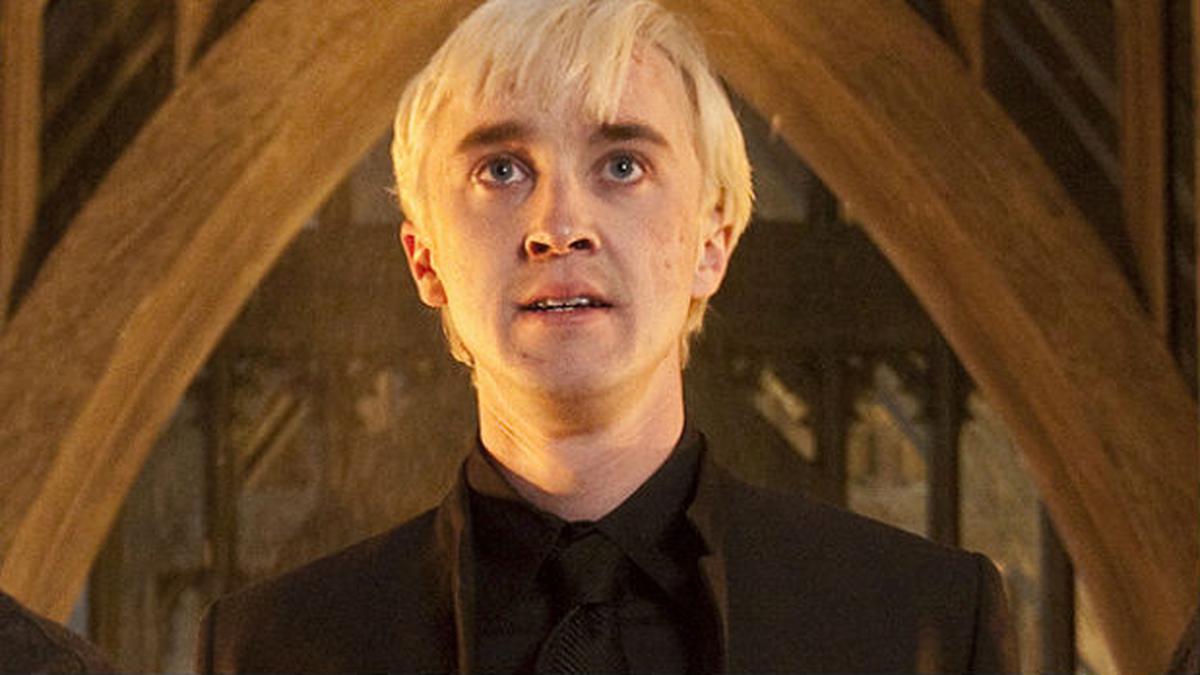
Tom Felton, known for his iconic role as Draco Malfoy in the Harry Potter saga,returns to make appearances on the small screen playing a recurring role in the third season of the series The Flash, which has excited his fans. However, his most recent film project, Altered, has received a very different reception.
An absolute critical failure
The film, directed by Timo Vuorensola, known for his work on Iron Sky, hit theaters in the United States a couple of weeks ago, but has gone almost unnoticed among the audience. The reviews have been harsh, with an average of just 3.8/10 on IMDb, highlighting the low-quality CGI effects and a narrative that many have labeled as low-budget science fiction. Viewers have pointed out aspects such as the lack of emotional depth and questionable political opinions as negative points of the production.
Altered presents an alternative world where genetic enhancements are common, forcing those who cannot use them to live in hiding. The plot revolves around the struggle of a few brave individuals to balance a society that seems to inhabit a dystopian horizon. Despite having an intriguing premise of superheroes in a cyberpunk setting, expectations have been disappointed by the destructive criticism the film receives. “Be clear about what you are exposing yourself to,” warns a reviewer on Rotten Tomatoes, highlighting that the trailer is a true reflection of the film’s quality.
As Altered continues its journey, no release date has been announced in Spain. Fans of Tom Felton and the science fiction genre will have to wait to see if the film manages to capture the audience’s attention upon its international release.
Recientes filtraciones han brindado a los fanáticos un primer vistazo a un lugar icónico del universo de Mario, así como un nuevo villano que se enfrentará al célebre fontanero en la próxima película Super Mario Galaxy. Según información proveniente de un envase de galletas Pillsbury, se ha confirmado que el Observatorio Cósmico, una de las ubicaciones más memorables del videojuego Super Mario Galaxy de 2007, será parte fundamental de la trama. Este lugar ha sido el hogar base de Mario durante su búsqueda de Estrellas Grandiosas, destacándose por ser mucho más atractivo que la nave con forma de Mario del segundo juego.
Las filtraciones cada vez son más particulares
Además, el arte en la parte posterior del envase revela que Bowser Jr., el hijo del famoso villano, estará presente en esta secuela. Este personaje ha sido un antagonista recurrente desde su debut en Super Mario Sunshine en 2002, y su regreso promete añadir más desafío a las aventuras de Mario. A esta ya emocionante revelación se suma la muestra de un render de Yoshi, el querido dinosaurio verde, que se asemeja a la portada de Super Mario Galaxy 2, sugiriendo que habrá numerosas referencias a entregas anteriores de la saga.
Los fanáticos que ya disfrutaron de la primera película de Mario podrán esperar una rica experiencia llena de guiños y homenajes, con la promesa de que los creadores estén trabajando arduamente para ofrecer al menos 100 guiños en esta nueva entrega, ya que la primera reunió 85. Se espera que Super Mario Galaxy llegue a los cines el 3 de abril de 2026, y el interés por la película continúa creciendo tras estas emocionantes filtraciones. Con estos nuevos detalles, los seguidores de Mario están ansiosos por ver cómo se desarrollará esta aventura cósmica en la pantalla grande.
The cinema of the 80s is remembered with a lot of affection, and it’s no wonder. Some of the most iconic adventure and action movies in film history are from that era. The level of creativity that was present at the time and the directors and screenwriters involved were enviable, leading to unique gems that are still remembered today. And in many cases, they were overwhelming box office successes. That was the success of one of the most remembered trilogies in history, which is still celebrated today: Back to the Future. Conceived by Robert Zemeckis […]
The cinema of the 80s is remembered with great affection, and for good reason. Some of the most iconic adventure and action movies in film history are from that era. The level of creativity that was present at the time, along with the directors and screenwriters involved, was enviable, leading to unique gems that are still remembered today. And in many cases, they were overwhelming box office successes. That was the success of one of the most memorable trilogies in history, which is still celebrated today: Back to the Future.
Conceived by Robert Zemeckis and Bob Gale and produced by Steven Spielberg, this is a franchise that started from a very simple premise. What would happen if a young person traveled to the past and met their parents at the moment they met and fell in love? What kind of disasters could it cause if they made the slightest mistake?
A movie that invented what is now a cliché
While today this story is a cliché for all kinds of series, books, and movies, it is so because of the first installment of this film franchise. Marty McFly was the original rebellious and impulsive teenager who travels through time in a retrofuturistic car driven by the eccentric ideas of a mad scientist friend of his, leading him to a wildly crazy adventure. That will only become more and more outrageous with each new installment of the franchise. But now we will get to that.
The first of the movies, Back to the Future, kept it simple. Set in 1985, the protagonist Marty McFly travels 30 years into the past, to 1955, testing the time machine that his friend and somewhat eccentric scientist Doc has built in a DeLorean. The result disrupts his parents’ relationship, almost causing him to never be born, and ultimately, he manages to return to his time without compromising either his relationship or that of his parents or the space-time continuum.
Tremendously clever and wacky for its time, heavily inspired by the television series The Twilight Zone and Superman’s time travel comics, the film was a tremendous success among critics and audiences. With a budget of 20 million dollars, it managed to make almost 390 million at the box office, not counting everything it has made on television and home formats, being surprisingly praised by most critics of the time as a clever, intelligent youth film that represents a very smart twist on science fiction stories thanks to its humor and narrative, even if its beginning is too slow and overly expository.
Winning numerous awards and being nominated for five Oscars, although it wouldn’t win any, it was the big surprise of 1985. And to no one’s surprise, the sequels arrived.
The Aftermath of the Great Success
It took four years to make their second installment, but they did it. Bringing back all the people involved in the original movie except Crispin Glover, who played Marty McFly’s father but was considered too problematic to work with, the movie promised the same, but with a different twist. This time they wouldn’t travel to the past, but to the future. But Marty, who apparently learned nothing from the first movie, gets into trouble and brings back an object from the future that completely changes the future. Because, what is the present if not the past of the future?
With trips to the future, to the past, and a direct confrontation against his great nemesis since the first movie, the bully Biff, the film is built on the premise of its predecessor, making it bigger, with more consequences, and in a way, visionary. After all, it’s about a millionaire seizing power in the US and ruining everything. But his vision is only half-true: in 1989, the year the movie was released, Donald Trump was already a very important figure in American society and had declared his intention to run for president of the US. And if this movie serves as president, the idea was not exciting even then.
On the other hand, the movie was a success again. With a budget of 40 million, it grossed just over 332 million dollars and the critics expressed a healthy enthusiasm once more. Although some critics saw the film as entertaining escapism that lacked the imagination of the previous one and the awards did not shine in the same way as in the previous one.
A beloved third movie
Just a year later and following the final scene of this second film, the third and final movie of the franchise was released: Back to the Future III. With Doc self-exiling to the past, specifically to the year 1885, Marty will have to go to his rescue when he receives a message that something is very wrong and his old friend needs his help. This is resolved in a film with all the tropes of the western, tremendously clever, and which serves as a perfect conclusion to the emotional core of this outstanding trilogy of films.
Costing another 40 million dollars, this time they raised only 245 million, if we can say only when talking about those figures. And the criticism was, surprisingly, much more positive than regarding the second one. Although the ambition of the second installment was much greater, with a more convoluted plot and trying to embellish everything with many superficially deep themes, the much purer and more direct intentions of this sequel to make a fun movie, focusing on the characters and their relationships and how it uses western tropes, captivated the critics. And not without very good reasons.
After the trilogy, the franchise was closed without any further attempts to revive it. Not in the cinema. It has had television series, video games, pinball, biographies of its actors, and everything imaginable in terms of merchandising, but no one has ever proposed a fourth movie. And it’s better this way. Because now you can watch this excellent trilogy on Netflix that, moreover, doesn’t need to become a tetralogy for us to remember how good it is.
The movie The Woman in Cabin 10 was released on Netflix on October 10, based on the bestselling novel by Ruth Ware. Starring Keira Knightley, the plot follows a journalist who finds herself in the middle of a mystery on a luxury yacht after witnessing a tragic incident when a passenger is thrown overboard. Despite its intriguing premise, the film has received unfavorable reviews pointing to bland characters, predictable twists, and a disappointing ending. A clear disconnect between critics and audiences in this case. Critics have expressed their frustration […]
The movie The Woman in Cabin 10 was released on Netflix on October 10, based on the bestselling novel by Ruth Ware. Starring Keira Knightley, the plot follows a journalist who finds herself in the middle of a mystery on a luxury yacht after witnessing a tragic incident when a passenger is thrown overboard. Despite its intriguing premise, the film has received unfavorable reviews pointing to bland characters, predictable twists, and a disappointing ending.
A clear disconnection between critics and the audience in this case
Critics have expressed their frustration with the film, emphasizing that while it starts with promises of excitement, it soon turns into an unsatisfying thriller. In particular, it is noted that the central mystery is resolved alarmingly quickly, leaving viewers with a sense of emptiness. This disappointment is heightened by a second half that many describe as a narrative chaos, with character decisions that seem forced and incoherent.
Despite the criticism, The Woman in Cabin 10 seems to be on its way to becoming a success on Netflix’s popularity charts, with expectations that it will reach number one due to its appeal to subscribers. However, this release adds to a series of underperforming productions on the platform in 2025, where moviegoers have found few recommendable titles.
With an eye on the future, subscribers are looking forward to high-quality movies like A House of Dynamite, scheduled for October 24, and Wake Up Dead Man: A Knives Out Mystery, for December 16. According to rumors, Netflix may have a series of more promising productions in the works that could reverse the current trend and enhance its offerings in the genre.
It is unfair to say that Netflix has always consciously ignored cinemas. In fact, even its first original film, Beasts of No Nation, from 2015, had a limited theatrical release that did not go further: as more and more films were made, they completely abandoned the traditional box office route to focus on gaining subscribers to support them financially. For years, titles of varying significance have filled Netflix’s catalog, with many people lamenting not being able to access them in a more enjoyable format. However, things are […]
It is unfair to say that Netflix has always consciously ignored theaters. In fact, even its first original film, Beasts of No Nation, from 2015, had a limited theatrical release that did not go further: as more and more films were made, they completely abandoned the traditional box office route to focus on gaining subscribers to financially support them. For years, titles of varying significance have filled Netflix’s catalog, with many of us lamenting not being able to access them in a more enjoyable format. However, things are slowly changing, and it is possible that K-Pop Warriors are to blame.
Coming soon, on your streaming…
The idea of theatrical releases from the giant has always been the same: a screening of the most important films for two weeks to build momentum and then their inevitable arrival on the platform. Roma, The Snow Society, The Irishman… All films eligible for the Oscars end up being screened in a theater, because otherwise they couldn’t be nominated. It has never been a financial decision, but a strategic one. If they release, for example, My First Kiss 3 in theaters, they could alienate the native audience of the app, but if they do it with a prestigious film, they can attract new targets to Netflix. It’s a complex balance, but it works for them. It really works for them.
However, The K-Pop Warriors has been a turning point: in addition to being the most viewed in history on the platform, its subsequent release in theaters grossed 19.2 million during the only two days it was screened, on a trajectory surpassing other American animated films of the year. It’s worth considering. Although Ted Sarandos has always said that theaters are a relic of the past, the truth is that he always makes room for them in releases like Knives Out: From the Dead or Frankenstein, which will have their two weeks of rigor before arriving on the platform. Little by little, more and more are doing it. After all, it’s extra income that also adds cachet to the brand and builds hype at almost no cost. What more could you ask for?
On the opposite side, we have Apple, which spends outrageous amounts on its movies for its streaming service, Apple TV+, only to be surprised that no one is watching them. So, of course, they have no choice but to try to release them in theaters to gain notoriety. The difference is that, despite some bumps at the box office, this year they have triumphed with F1, which has already grossed 620 million and has shown that perhaps the salvation for the audiovisual department of modern Apple lies precisely in the “old-fashioned” theaters. They just need to refine their aim better.
It is true that in 2024 they didn’t hit a single one: Napoleon and Argylle, their big bets, didn’t even earn back what they cost, just like Killers of the Flower Moon (although this one compensated thanks to the Oscar buzz). In the future, they have already planned the new Jonah Hill (Outcome), the return of McG (Way of the Warrior Kid), a new Snoopy movie, a murder mystery produced by A24 and Jennifer Lawrence, the new one from Martin Scorsese and Leonardo DiCaprio… Without a doubt, their catalog is the most interesting. The question is whether being interesting alone will be enough for them to survive.
F1 has opened a window for Apple and given a breath of fresh air: perhaps the secret to succeeding in streaming was… to move away from streaming. To do the anti-Netflix: movies designed for theaters that end up exclusively on your app, instead of the other way around. Who knows. Perhaps the “outdated” theaters are the answer to surviving the “modern” streaming, and they are simply still realizing it.
The movie Good Boy is presented as an innovative contribution to the horror genre, standing out for telling the story from a dog’s perspective. This uniqueness not only distinguishes it from other productions but has also led it to receive enthusiastic reviews. Currently, it has an impressive 95% on Rotten Tomatoes, based on 20 reviews. It’s time for man’s best friend to be scared Good Boy is the directorial debut of Ben Leonberg, who is also the owner of the main dog, Indy. This personal connection adds an additional layer of authenticity to the narrative
The movie Good Boy is presented as an innovative contribution to the horror genre, standing out for telling the story from a dog’s perspective. This uniqueness not only distinguishes it from other productions but has also led it to receive enthusiastic reviews. Currently, it boasts an impressive 95% on Rotten Tomatoes, based on 20 reviews.
It’s time for the man’s best friend to be scared
Good Boy is the directorial debut of Ben Leonberg, who is also the owner of the main dog, Indy. This personal connection adds an additional layer of authenticity to the narrative. According to Leonberg, the film explores the unconditional love and loyalty of Indy towards his owner, presented as a “good boy” who is determined to protect him from an evil force that threatens their home.
The inspiration for this originality came from the classic movie Poltergeist, where a dog perceives the supernatural before humans. Leonberg mentions that the idea of telling a horror story from a dog’s point of view arose after watching the aforementioned movie, where a Golden Retriever is aware of the paranormal events in his home. This renewed vision of the typical haunted house trope promises to make us reflect on the bonds between humans and animals.
Good Boy has been well received by critics at its festival presentation, including South By Southwest, where its ability to navigate between horror and emotion was praised. Publications like IndieWire and The Hollywood Reporter have lauded the work, highlighting the emotional depth achieved through the dog’s loyalty to its owner.
The film will premiere in the United States on October 3, although it still does not have a release date in Spain, leaving fans waiting for its arrival in theaters.
The movie How to Train Your Dragon, the highly anticipated live-action remake of the successful animated film from 2010, has conquered the box office in South Korea during the weekend of June 6 to 8. According to data provided by Kobis, the box office tracking service, the film grossed a total of 4 million dollars, managing to attract 540,059 viewers to theaters, which represents a market share of 35.6%. Its performance is surprising for a live-action film This DreamWorks production, which surpasses the local film Hi-Five, has achieved […]
The movie How to Train Your Dragon, the highly anticipated live-action remake of the successful animated film from 2010, has conquered the box office in South Korea during the weekend of June 6 to 8. According to data provided by Kobis, the box office tracking service, the film grossed a total of 4 million dollars, managing to attract 540,059 viewers to theaters, which represents a market share of 35.6%.
Its performance is surprising for a live-action movie
This DreamWorks production, which surpasses the local film Hi-Five, has managed to capture the attention of both new viewers and those who are already fans of the original story. The blend of a familiar universe with a new live-action interpretation provides a unique appeal, which has positively influenced its performance in theaters. As more and more animated titles are adapted to live-action formats, it becomes crucial to understand how audiences react to these changes.
The success of How to Train Your Dragon not only highlights the strength of established franchises but also the power of nostalgia in cinema. Contemporary adaptations of animated classics often find a clear path to commercial success, as evidenced in the South Korean box office. Furthermore, the film is released in a context where local productions are starting to compete fiercely for the audience’s attention, highlighting a constantly evolving film market.
Finally, industry analysts highlight that, although How to Train Your Dragon has had a strong start, the real challenge will be maintaining its revenue pace in the coming weeks and facing competition from other releases both local and international. The film is expected to continue generating interest as more fans of the original story are drawn to theaters.