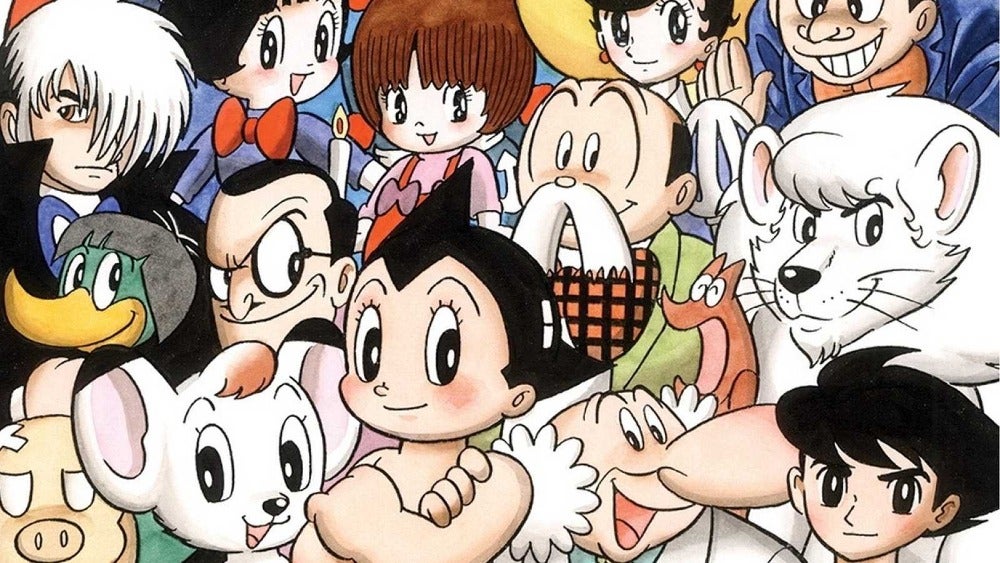
On February 9, 1989, the god of manga left us forever. Osamu Tezuka, who started creating his own stories professionally in 1945, never stopped working until the very moment of his death. He left “Ludwig B” unfinished, a fictionalized biography of Beethoven. Behind him, he left 700 different titles and around 60 animes, totaling 150,000 pages. Doing a quick calculation, that’s about ten pages per day throughout his entire life. And he still wanted to do more.

Manga by the Shoulder
It is curious that Tezuka drew inspiration from Disney films to add more expressiveness to his designs because later on, it was the American company that “got inspired” (to put it mildly, shamelessly copied) one of his works, ‘Kimba the White Lion’. From Kimba to Simba, they didn’t put much thought into it.
Before Rumiko Takahashi, Eiichiro Oda, Clamp, or Tite Kubo, there was Tezuka, who always refused to confine himself to a single genre. He created shonen (manga for boys), seinen (for adult readers), and shojo (his unforgettable ‘Princess Knight’). Although he enjoyed creating, he had so many ongoing projects that he often escaped from editors to have a peaceful drink.
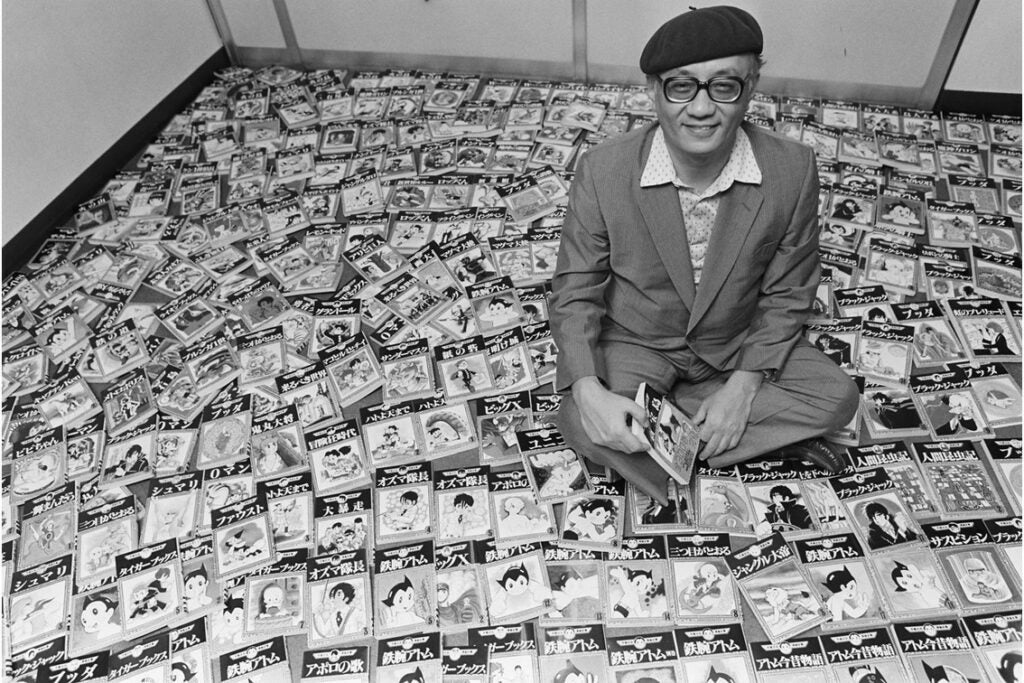
Tezuka’s life was filled with paradoxes and coincidences. He started his adult life by obtaining a medical degree, and his career as a mangaka was built on a work about medicine (the fantastic ‘Black Jack’). Finally, his last words were spoken to a nurse. It is said that when he was lying in bed, suffering from terminal stomach cancer, a professional removed his drawing equipment.
“Please, let me work!” were the last words spoken by the god of manga at the age of 60, knowing that he still had many more stories to tell. His legacy continues to this day with works like ‘Pluto,’ which presents ‘Astroboy’ from a modern perspective. But perhaps the most intriguing aspect of his posthumous career was the discovery made by his daughter. In 1994, five years after his death, she opened a drawer that had remained closed since then.
Inside, she found a half-eaten ounce of chocolate, an essay about Katsuhiro Otomo and his work on ‘Akira,’ various sketches… and a significant number of erotic drawings featuring anthropomorphic animals. Frankly, even forty more years would have been too few for Tezuka.
