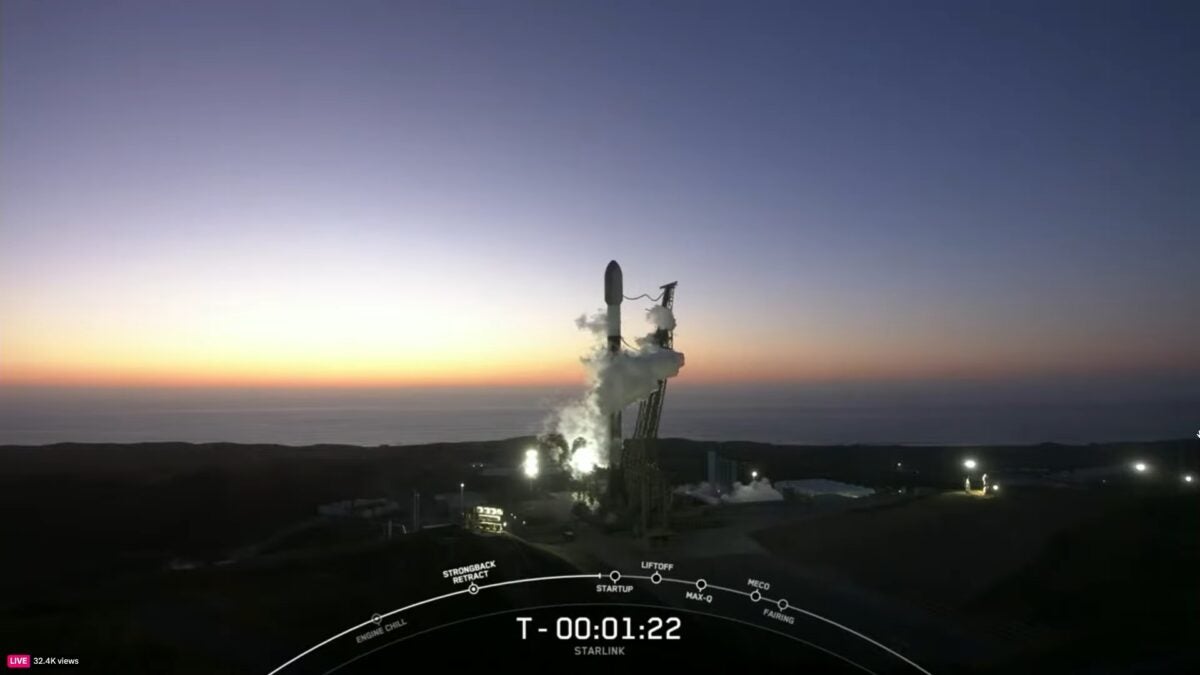
The Falcon 9 rocket from SpaceX experienced an unexpected anomaly during the launch of a group of Starlink satellites from Vandenberg Space Base, California, on Thursday night, July 11th.

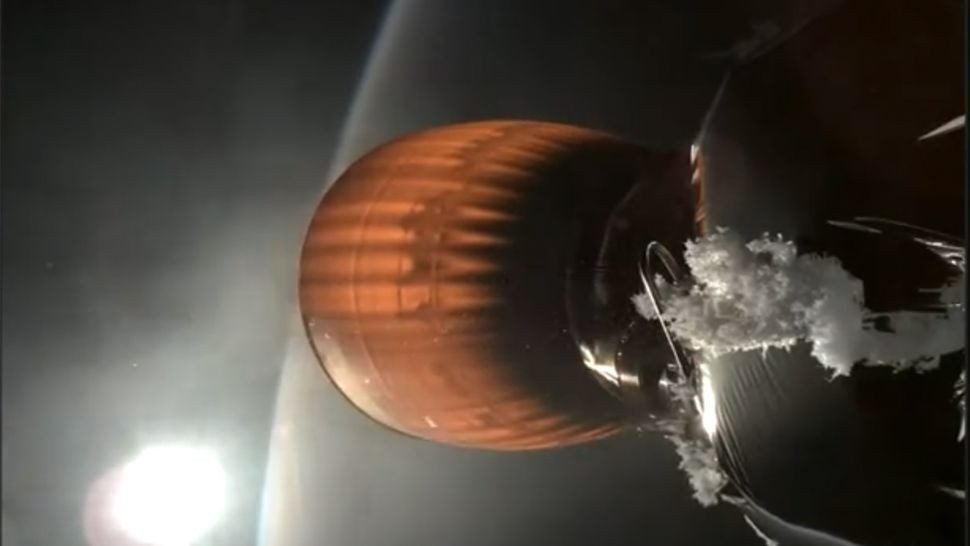
At first, the Falcon 9 worked correctly, separating its two stages as planned and successfully causing the first stage to descend and land on an unmanned ship approximately eight minutes after takeoff. However, the upper stage, responsible for carrying 20 Starlink satellites to low Earth orbit, experienced a liquid oxygen leak, causing the Merlin Vacuum engine to not complete its second ignition, necessary to raise the perigee of the orbit.
“The Merlin vacuum engine experienced an anomaly and was unable to complete its second ignition,” SpaceX explained a day later. Despite this, the upper stage deployed the satellites, but they ended up in an eccentric orbit with a perigee of only 135 km, well below expectations.
SpaceX engineers attempted to raise the orbits of the satellites using the onboard ion thrusters, but the effort was unsuccessful. “It is unlikely that our maximum available force will be enough to successfully raise the satellites,” SpaceX noted. Therefore, the satellites will reenter Earth’s atmosphere and disappear without posing a threat to other satellites or public safety.
The Falcon 9, known for its reliability with 69 launches in 2024, has only had one previous complete in-flight failure, in June 2015. So far, it has completed 13 crewed missions, nine of them to the ISS. The company will have to investigate the cause of Thursday’s anomaly in collaboration with the FAA. “SpaceX will conduct a thorough investigation, determine the root cause, and take corrective actions,” the company explained, highlighting its ability to quickly recover due to its “high launch cadence” and “robust satellite and rocket production.”
Currently, the majority of Falcon 9 missions are dedicated to the Starlink megaconstellation, which has over 6,100 operational satellites. Out of the 69 launches in 2024, 49 have been for Starlink.
