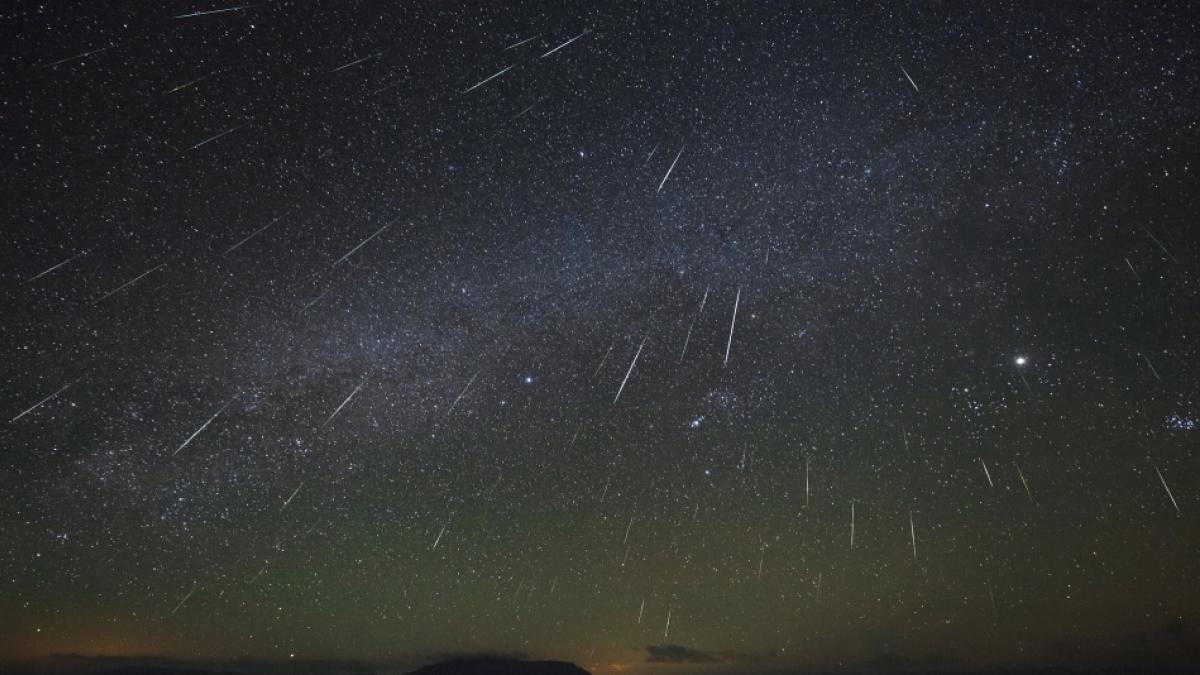
This Sunday the Perseids began, the most popular meteor shower of the year, which will last until September 1, 2024. Although the meteors can already be observed, the peak of this shower will occur on the night of Sunday, August 11 to Monday, August 12. According to the American Meteor Society, the peak will be reached around 04:00 UTC on August 12 (06:00 CEST).

During the peak, it is expected that the Moon, with 43% illumination, will sink on the southwestern horizon just before midnight in the northern hemisphere, leaving the rest of the night free from moonlight (ideal conditions for observing the Perseids).
The Perseids are the remnants of the comet 109P/Swift-Tuttle, discovered in 1862. When entering the Earth’s atmosphere, these remnants begin to disintegrate due to friction and produce a large amount of light, thus generating the famous “shooting stars”. Although rates of up to 150 meteors per hour are mentioned, it is more realistic to expect about 50 shooting stars per hour at its peak.
To observe them properly, the NASA recommends getting away from urban light pollution, finding a place with a clear view of the sky, dressing appropriately (if necessary), and observing the sky for at least half an hour without distractions. Since shooting stars can be seen with the naked eye, using binoculars or a telescope is not recommended, as they would reduce the field of vision.
