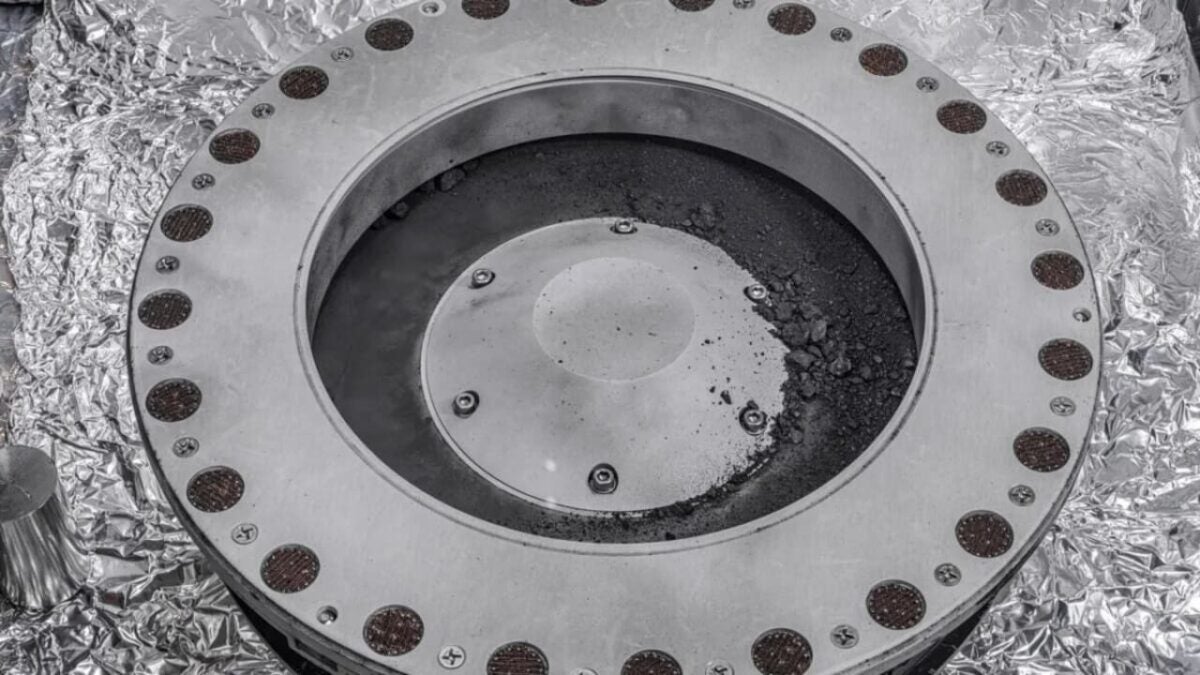
Imagine traveling to the past of our solar system. Although we don’t have the necessary technology for time travel as such (yet), something akin to it might have been achieved by NASA thanks to a sample from a near-Earth asteroid called Bennu.

According to CNN, the sample, which arrived on our planet by parachute on September 24, contains water and a large amount of carbon, suggesting that asteroids like Bennu could have brought the ingredients of life to Earth.
This hypothesis is not new, since in March, a team of Japanese scientists found a molecule essential for the formation of life in a sample from the asteroid Ryugu.
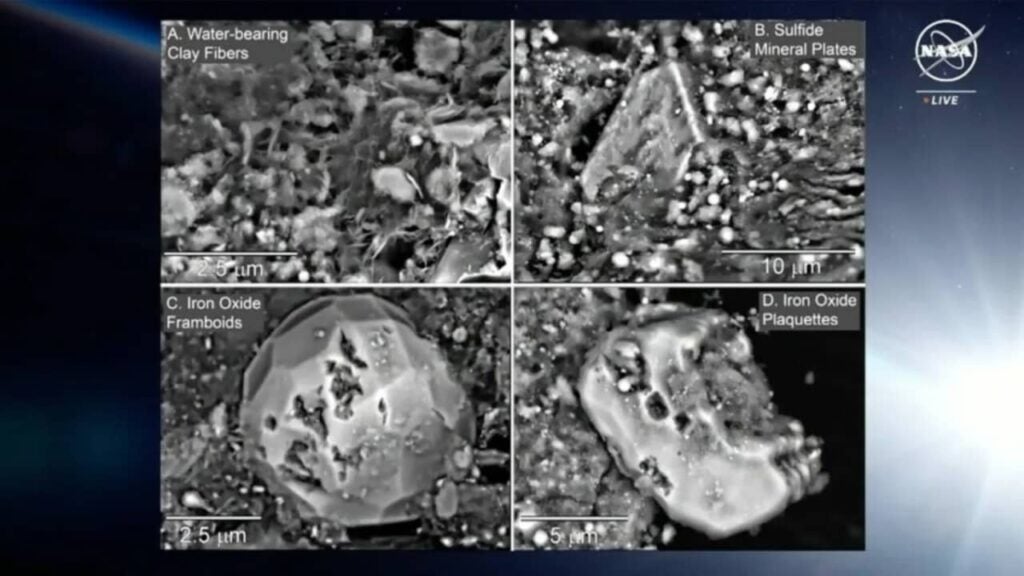
“The first analysis presents samples that contain abundant water in the form of hydrated clay minerals, and contain carbon both in the form of minerals and organic molecules”, explained NASA Administrator Bill Nelson.
The sample was collected in October 2020 by the OSIRIS-REx mission, which traveled to Bennu, approximately 320 million kilometers away from our planet, and briefly touched its surface to capture rocks and dust. The collected material could reveal the history of how the asteroid formed and evolved over time.
Scientists have been completely astonished by the abundance and quality of the sample, which is the largest ever brought back from a carbon-rich asteroid. The sample contains 5% carbon by weight, in both mineral and organic molecule forms. These elements are crucial for understanding the formation of our planet and the origin of life.
Furthermore, studying Bennu can also help prevent potential impacts with Earth in the future since it is a potentially hazardous asteroid. Understanding its composition and orbit is key to designing deflection strategies if necessary.
The Bennu sample, a practical time capsule, is a scientific treasure that will allow us to explore the distant past of our solar system and learn more about our place in the universe.
