NASA expands its collaboration with SpaceX and Blue Origin for human presence on the Moon

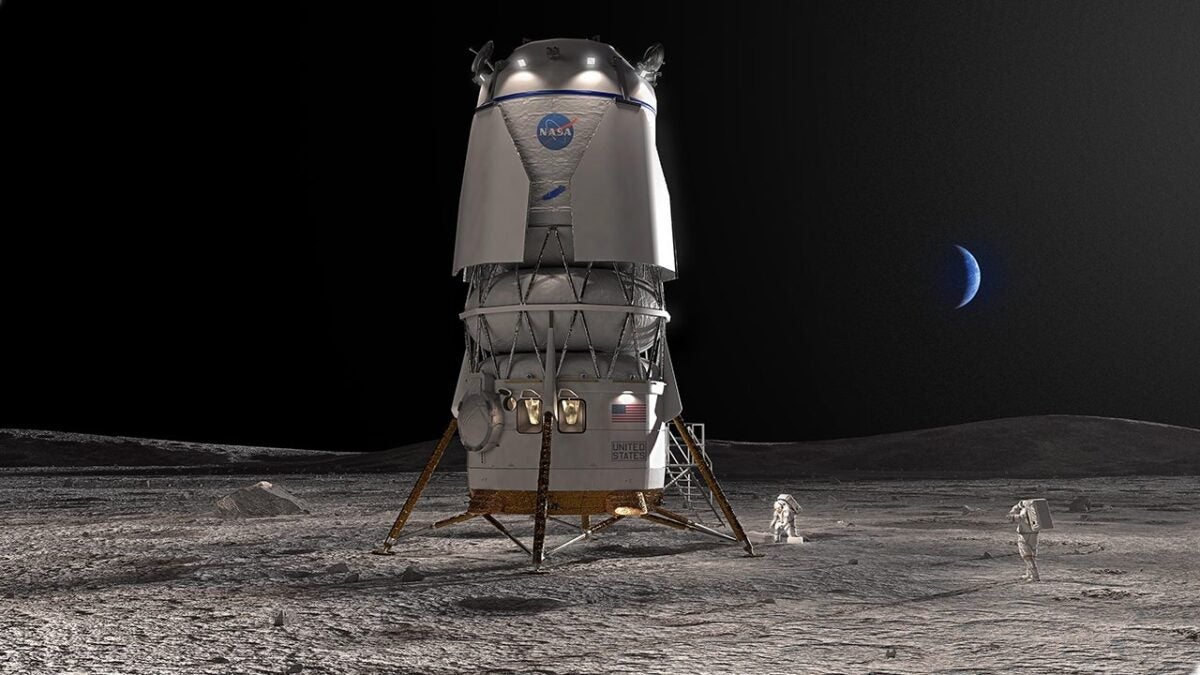
NASA has announced an extension of its contracts with SpaceX and Blue Origin to develop specialized lunar cargo ships for the Artemis missions. These initiatives aim to strengthen humanity’s long-term presence on the Moon and include the delivery of both a habitat and a pressurized rover in future missions. According to Stephen D. Creech from the Moon to Mars office, “having two providers of lunar landing modules with different approaches ensures flexibility and a regular cadence of landings for continuous scientific discovery.” Both companies will carry out demonstration missions after […]

NASA has announced an extension of its contracts with SpaceX and Blue Origin to develop specialized lunar cargo landers for the Artemis missions. These initiatives aim to strengthen humanity’s long-term presence on the Moon and include the delivery of a habitat and a pressurized rover in future missions. According to Stephen D. Creech from the Moon to Mars office, “having two lunar lander providers with different approaches ensures flexibility and a regular cadence of landings for continuous scientific discovery.”

Both companies will carry out demonstration missions after passing the design certification reviews of the cargo variants of human landing systems, requested in 2023 and designed for the Artemis III, IV, and V missions. The Artemis program, which aims to return to the Moon after more than 50 years, has the ultimate goal of paving the way for Mars exploration. This effort combines technologies such as the Space Launch System rocket, the Orion spacecraft, and lunar space stations.

SpaceX continues to develop its Starship spacecraft, crucial for taking astronauts and cargo to the lunar surface. On Tuesday, it successfully completed the sixth flight test of the spacecraft, which will also be used to transport a pressurized rover developed by the Japan Aerospace Exploration Agency (JAXA) starting in 2032. This rover will be essential for missions like Artemis VII and beyond.
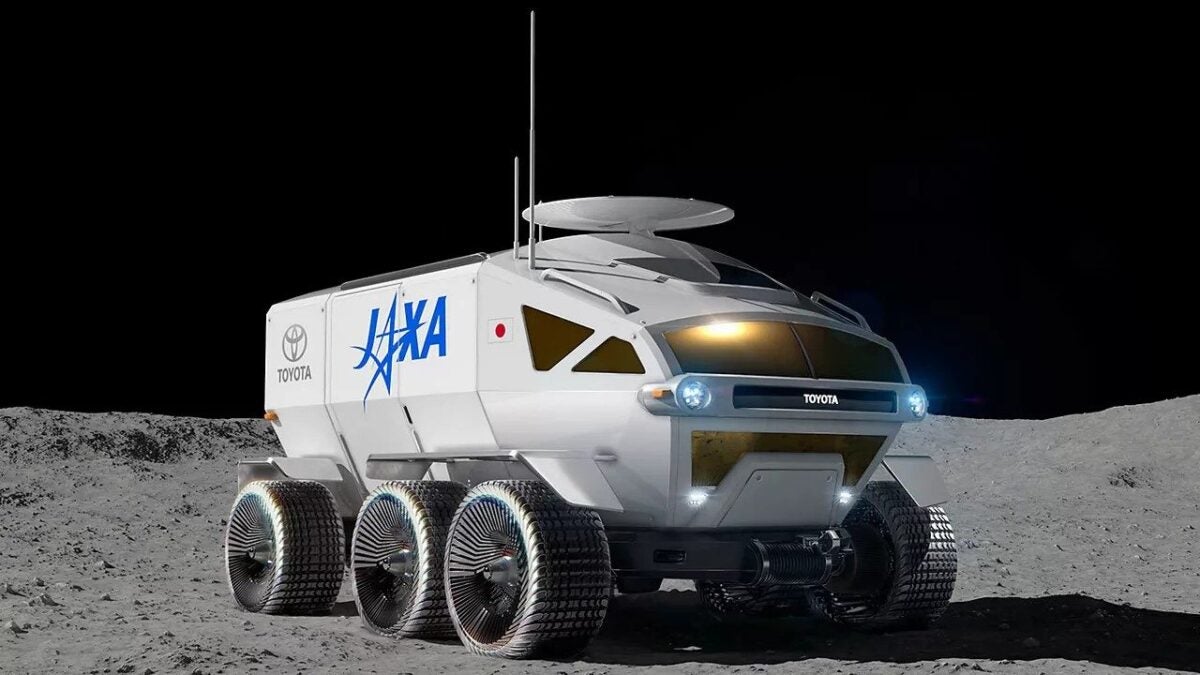
For its part, Blue Origin, which is preparing another space tourism launch for this Friday, will deliver a lunar habitat starting in 2033. NASA assigned these missions based on the design and development progress of the cargo and crew systems. Lisa Watson-Morgan, from the Marshall Center, explained that these demonstrations aim to “optimize the technical experience and resources of NASA and the industry.”

A series of alliances aimed at establishing a sustainable human presence on the Moon and paving the way for future deep exploration missions, while consolidating the goal of turning the Moon into a “stepping stone” to Mars.

NASA App DOWNLOAD

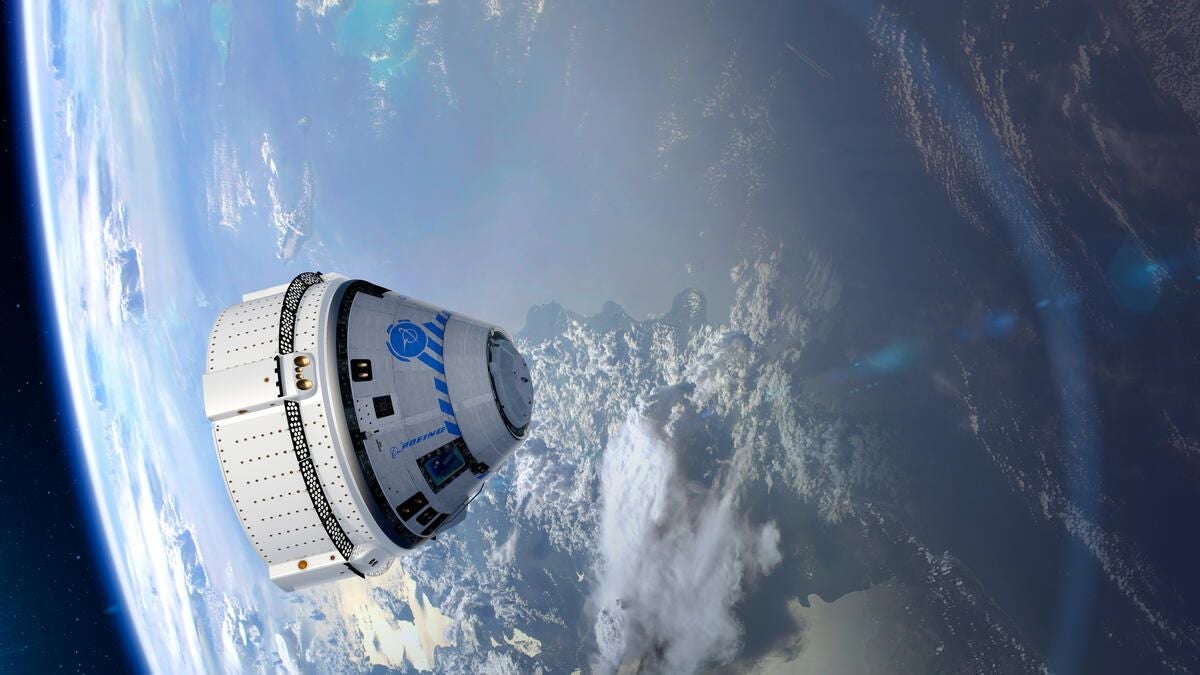
The mysterious noise coming from the Boeing Starliner has been identified (no, it wasn’t aliens)

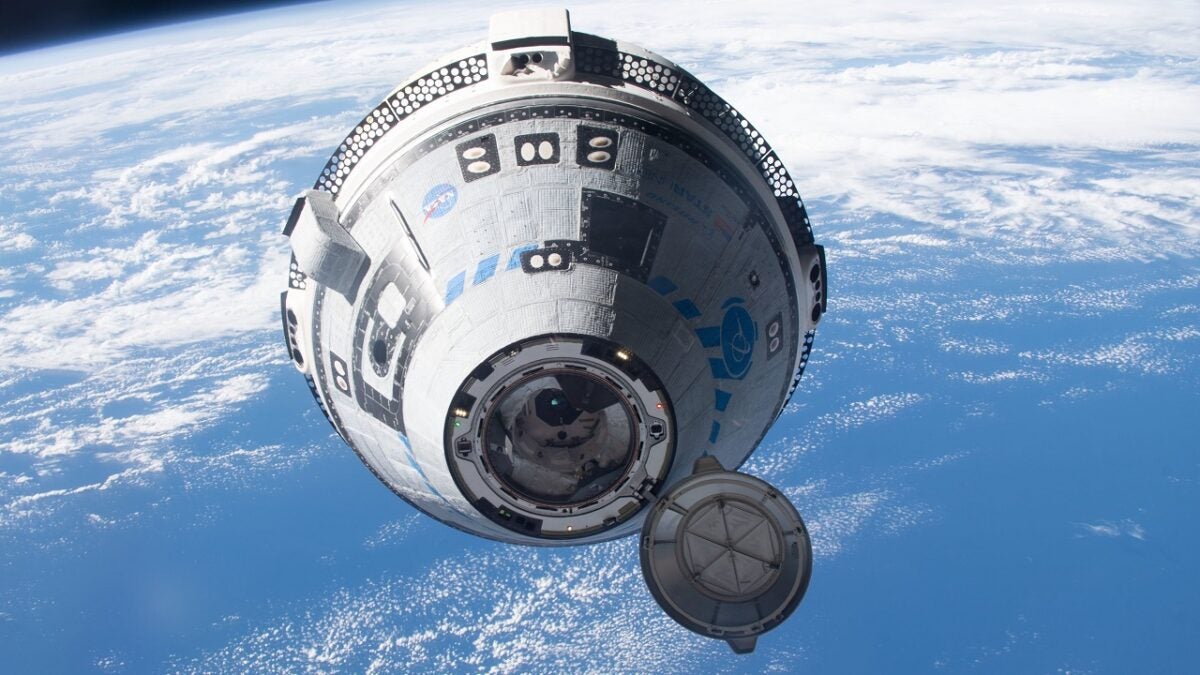
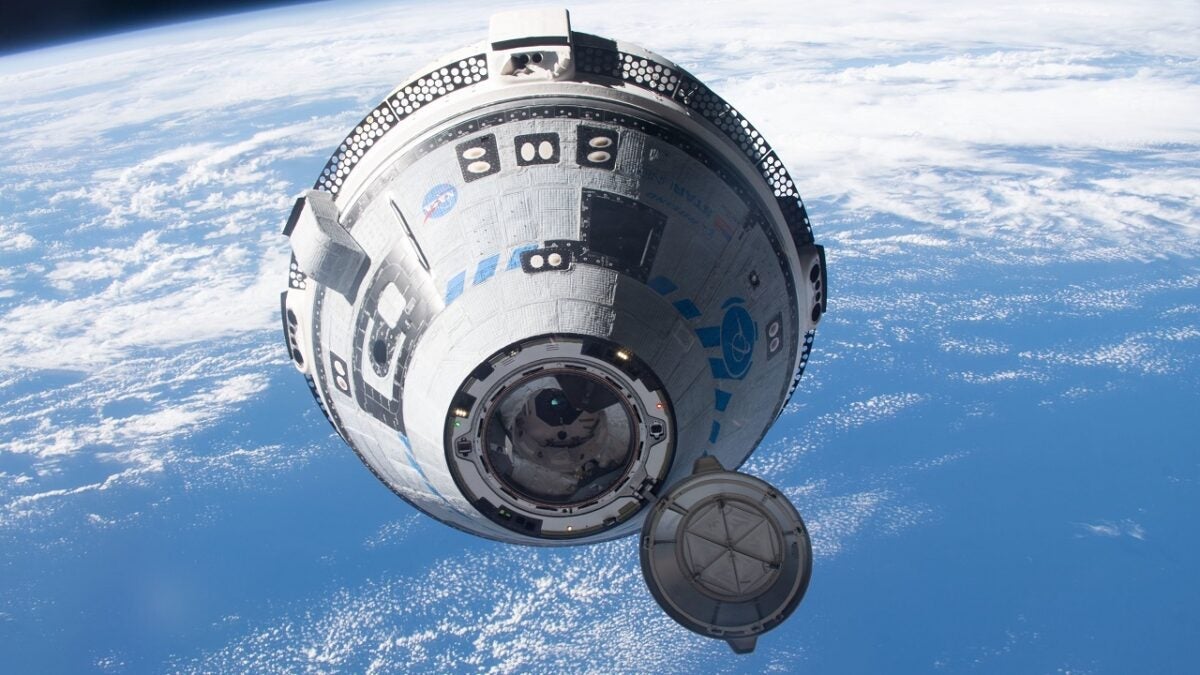
NASA has clarified the origin of the mysterious “radar” sound that was heard in the Boeing Starliner spacecraft. According to a statement issued on Monday, the sound was caused by feedback (coupling) from a speaker, due to an audio configuration between the International Space Station (ISS) and the Starliner.

NASA App DOWNLOAD

The space agency assured that this type of docking is common and confirmed that the pulsating sound has already ceased. Despite this incident, NASA has maintained the planned schedule for the autonomous undocking of the Starliner on Friday.

The unusual sound was reported by Barry “Butch” Wilmore, one of the astronauts aboard the ISS, during a conversation with the control center at the Johnson Space Center in Houston. “You can hear a strange noise through the speaker… I don’t know what’s causing it,” Wilmore said, according to Ars Technica, which published the audio of the conversation.

The control center responded that they were listening to the audio from inside the spacecraft, and described the sound as “a kind of pulsating noise, almost like a sonar ping.” Although the mystery kept many on edge for a day, NASA concluded that the phenomenon poses no technical risk to the crew or the operations of the space station.

The Starliner, which took off on its inaugural flight on June 5th, experienced several technical issues, including helium leaks and failures in the control thrusters, which forced the spacecraft to remain docked to the ISS for a much longer time than planned. NASA plans for the Starliner to return to Earth on Saturday, landing at the White Sands Space Port in New Mexico, while Wilmore and his crewmate, Sunita “Suni” Williams, will stay on the ISS until their return in February aboard the SpaceX Dragon capsule.

NASA App DOWNLOAD

Goodbye, fuel: NASA successfully deploys its impressive solar sail

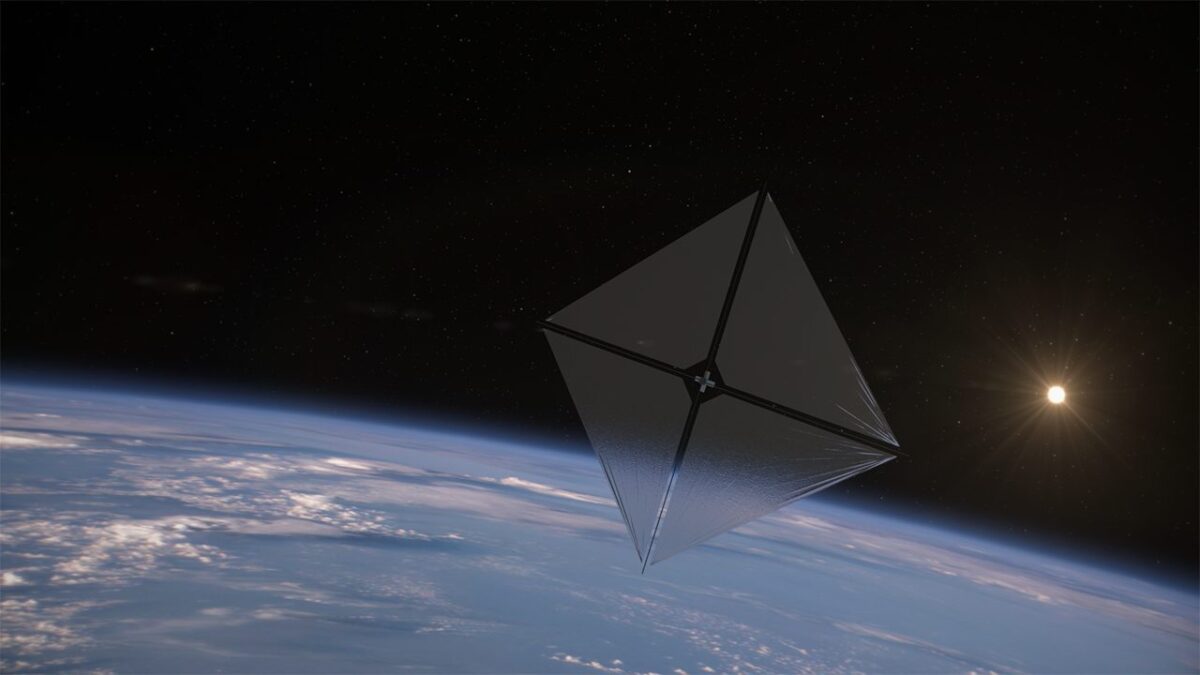
The NASA has successfully deployed its innovative solar sail, known as the Advanced Composite Solar Sail System (ACS3). This sail, launched into space aboard the Rocket Lab’s Electron rocket, was successfully deployed along with the supporting arms, marking a key milestone in the mission to demonstrate the functionality of this technology in low Earth orbit.

NASA App DOWNLOAD

Last Thursday at 7:33 CEST, the ACS3 team officially confirmed the deployment of the sail, a crucial event that will allow the spacecraft to use only photons from the sun for propulsion. Conceptually, NASA’s solar sail evokes ancient ships that sailed the seas powered by the wind, although in this case, the spacecraft moves thanks to the pressure exerted by sunlight on the reflective sail. This propulsion method, unlike traditional systems that depend on fuel, is only limited by the durability of the materials and the efficiency of the control systems.

The ACS3 is a twelve-unit CubeSat (12U) built by NanoAvionics, with a size comparable to that of a microwave, which deploys its approximately 80 square meter sail using flexible polymer and carbon fiber booms. These new booms, more durable and less prone to deformation, represent a significant improvement over previous designs, being more compact and offering the necessary rigidity to support the sail.

Alan Rhodes, chief systems engineer for the mission at NASA’s Ames Research Center, highlighted the innovative capability of these arms, stating that “seven meters of deployable bars can be rolled up to fit in the hand”.

The spacecraft, which will orbit the Earth at an altitude of approximately 1,000 kilometers, will be visible from our planet on clear nights thanks to the high reflectivity of its sail. The data collected during the ACS3 tests will be used to develop future solar sail systems that will be used in early warning missions for space weather, surveillance, and solar observation.

NASA App DOWNLOAD

Boeing’s Starliner is emitting strange sounds, and nobody at NASA knows what they are

We have been following Boeing’s troubled spacecraft for months: from its construction to its launch, everything has had issues. And the worst part is that this headache is far from over for the astronauts, NASA, and Boeing itself.

The commander of the Starliner, astronaut Barry ‘Butch’ Wilmore, asked mission control in Houston on Saturday why the test capsule had started emitting strange noises through a speaker.

At first, the sounds were not audible, then Wilmore, 61, captured a better recording: an annoying and perpetual glitch, similar to the ping pulse of a submarine sonar.

‘I’m going to let them scratch their heads and see if they can understand what’s going on,’ Wilmore said over the radio with his southern accent and the self-assurance that only an astronaut can have.

A problem – they don’t know where it comes from or what causes it

The flight controllers seemed to not immediately know the cause or origin of the noise. Neither NASA nor Boeing, the developer of the spacecraft, responded to media inquiries about the sounds on Sunday, and it was unclear if the problem persisted.

Wilmore only noticed one unusual thing at the time of communication: the sound coming from the speaker. He stated that there were no other issues or strange configurations inside the capsule.

Although the US space agency recently decided that Wilmore and his crewmate, pilot Sunita ‘Suni’ Williams, would not return in the Starliner but in a SpaceX Crew Dragon capsule, the Starliner remains docked to the International Space Station about 250 kilometers above Earth. It is expected to remain there until it departs for an unmanned robotic landing on Friday, September 6th.

If everything goes according to plan, the Starliner will land at the White Sands Missile Range in New Mexico, about six hours later. A parachute system and airbags will cushion its fall onto the desert shortly after midnight on September 7th.

The failures are the latest in a series of issues related to the Starliner, which was launched from Cape Canaveral (Florida) in June for its first manned test flight.

An object is traveling through space at over 1 million kilometers per hour and no one knows what it is

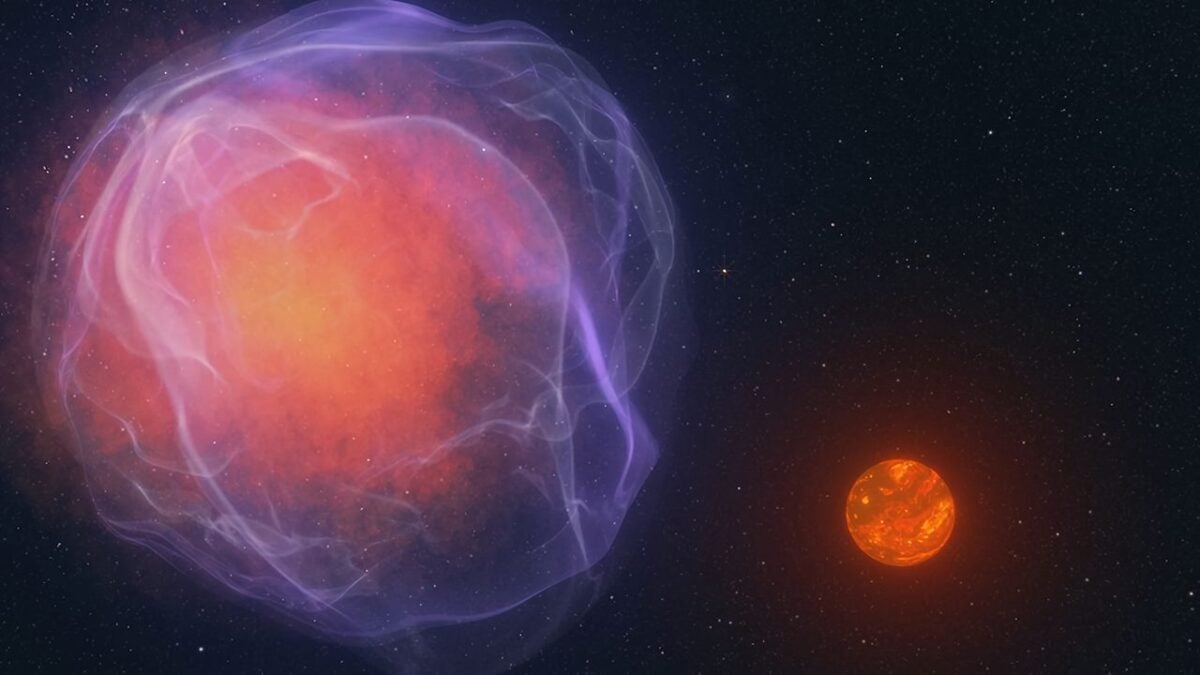
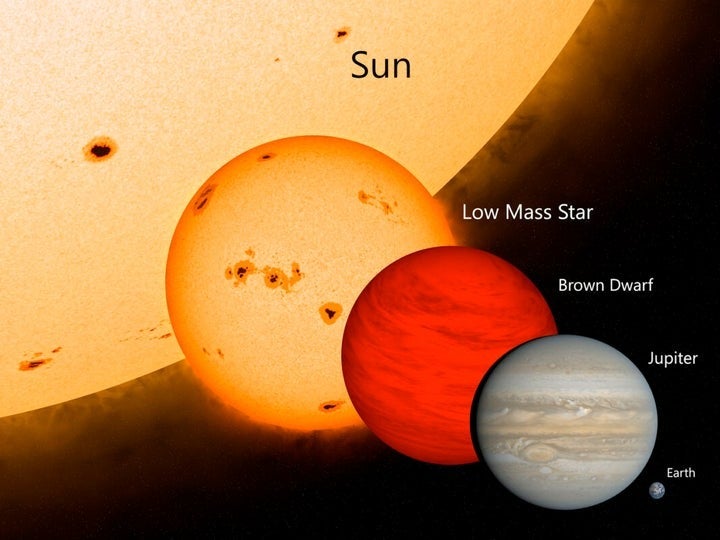
NASA has echoed the discovery in the Milky Way of an unusual celestial object that is moving at a speed of one million kilometers per hour, which could lead it to leave our galaxy. Identified as CWISE J1249, this colossal body, about 27,306 times the size of Earth, was discovered thanks to the collaboration of citizen scientists who analyzed data from the WISE telescope (Wide-field Infrared Survey Explorer) of NASA.

NASA App DOWNLOAD

Despite its detection, experts have not yet been able to determine the exact nature of CWISE J1249. Although it shares a similar size to that of a star, its mass and other characteristics differentiate it from conventional stars that orbit in the Milky Way. NASA has indicated that it could be a low-mass star or a brown dwarf. The latter are celestial bodies that, unlike stars, do not manage to constantly fuse hydrogen in their cores. Among the 4,000 brown dwarfs discovered in WISE data, none have been observed traveling into intergalactic space like CWISE J1249 does.

Another intriguing factor is its composition, as it contains much less iron and other metals compared to typical stars and brown dwarfs, suggesting that it is a very ancient object, possibly originating from one of the first generations of stars in our galaxy.

Scientists are puzzled by the incredible speed of CWISE J1249. One of the proposed theories suggests that the object originated in a binary system with a white dwarf that exploded as a supernova. Another possibility is that it was expelled from a globular cluster after a close encounter with a pair of supermassive black holes. According to Kyle Kremer, assistant professor in the Department of Astronomy and Astrophysics at the University of California, San Diego, “when a star encounters a binary black hole, the complex dynamics of this three-body interaction can launch it out of the globular cluster.”

NASA App DOWNLOAD

In just one week we will experience a historic event in space exploration: The Polaris Dawn mission

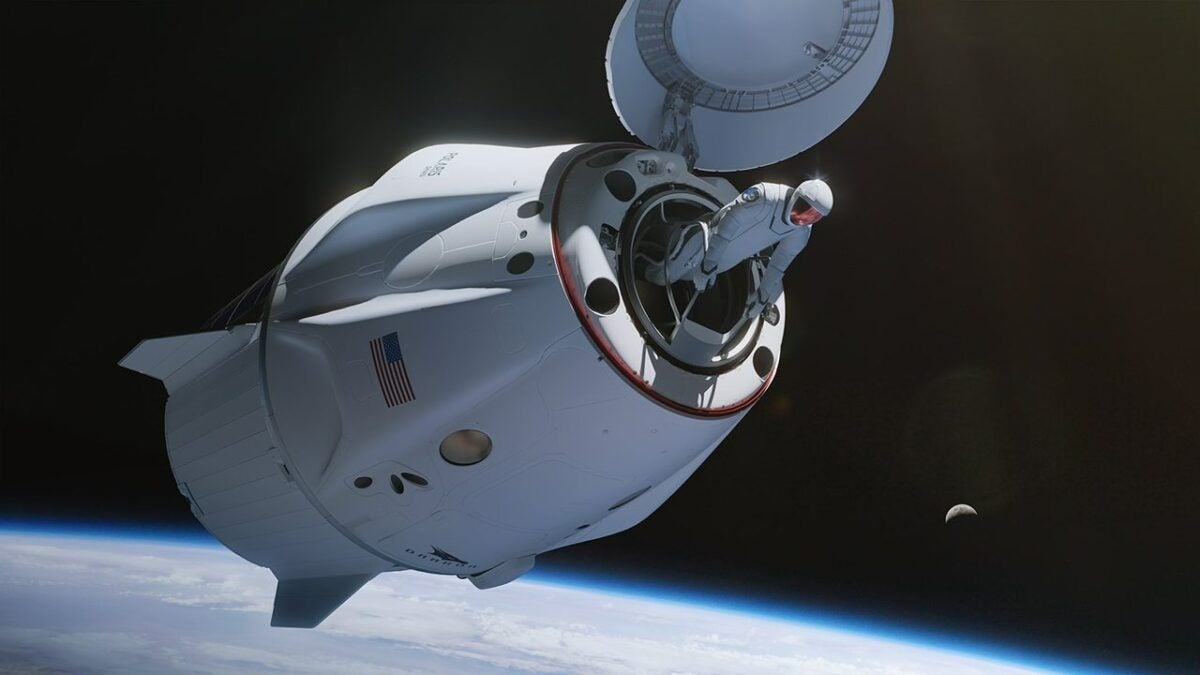
The Polaris Dawn space mission, led by billionaire Jared Isaacman, is shaping up to be a milestone in the history of private space exploration. Scheduled to launch on August 26th from the Kennedy Space Center in Florida, Polaris Dawn will be the first of three independent flights of Isaacman’s Polaris Program acquired from SpaceX, where they will attempt to carry out the first private spacewalk, thus marking a before and after in a sector where private companies are increasingly present.

NASA App DOWNLOAD

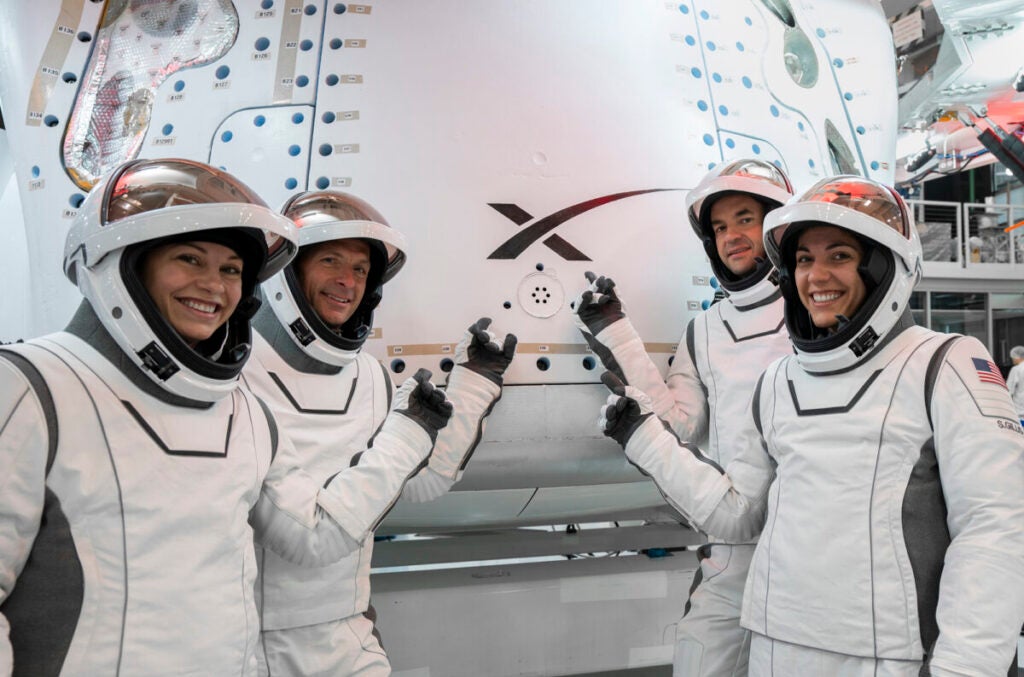
Isaacman, who already led the Inspiration4 mission, will be in charge of the SpaceX Dragon capsule, accompanied by veteran pilot Scott Poteet and SpaceX specialists Anna Menon and Sarah Gillis. Although it will not be heading to a specific destination, the mission will reach altitudes exceeding 1,400 kilometers, a height not seen in a space mission of this kind for decades. “We are going to reach very high altitudes that have not been seen since the last NASA missions over 50 years ago,” stated Isaacman, emphasizing the ambition of the project.

The main objective of Polaris Dawn is spacewalk, which is technically called “extravehicular activity” (EVA), and it will last approximately two hours, according to estimates. Isaacman and Gillis will exit the capsule, while Poteet and Menon monitor everything from the inside. The spacewalk will be broadcasted live, allowing the public to follow this unique event in history.

Polaris Dawn crew members – SpaceX

The design of the EVA space suits, developed from SpaceX’s intravehicular suits, represents a significant advancement, according to Isaacman, who highlighted that “everything revolves around building the next generation.” The Polaris Dawn mission also symbolizes the convergence of private and public investment in space exploration, in a sector where private companies like Lockheed Martin and agencies like NASA are actively driving its development.

NASA App DOWNLOAD

How fruit is eaten in space: the astronauts from the ISS show us

A Russian cargo spacecraft arrived on Saturday at the International Space Station (ISS), bringing with it nearly three tons of food, fuel, and other supplies for the current crew.

NASA App DOWNLOAD

Although most of the food will be processed and packaged, spaceships that deliver supplies to the orbital outpost usually include a small amount of fresh fruit so that astronauts can enjoy it in the days following their arrival.

NASA astronaut Matthew Dominick shared a short video of himself enjoying a segment of orange that arrived on the Progress cargo spacecraft over the weekend, and as you can see, microgravity conditions offer a rather unusual way to enjoy food aboard the space station.

Fruits in space and it’s not a Kubrick movie

‘We celebrate every bite with these rare delicacies,’ Dominick wrote in his Sunday tweet.

Over the years, astronauts on the space station have been researching ways to grow leafy vegetables and other vegetables in microgravity conditions, but most of the food they consume is still prepared and packaged on Earth.

Being able to grow fresh food in space is an important step towards launching human missions to Mars and other destinations in deep space, as it will not be practical to pack all the necessary food supplies into a spacecraft for such a long mission.

NASA App DOWNLOAD

Dominick, who arrived at the station in March, has been impressing us earthlings with his photographic skills, sharing a series of compelling images that show not only the interior of the station, but also the Earth and beyond.

The Progress spacecraft will remain docked to the space station for the next six months. The crew will fill it with trash before sending it to burn up during a rapid descent into Earth’s atmosphere.

There are so many Starlink satellites in the sky that they have to perform thousands of maneuvers to avoid collision

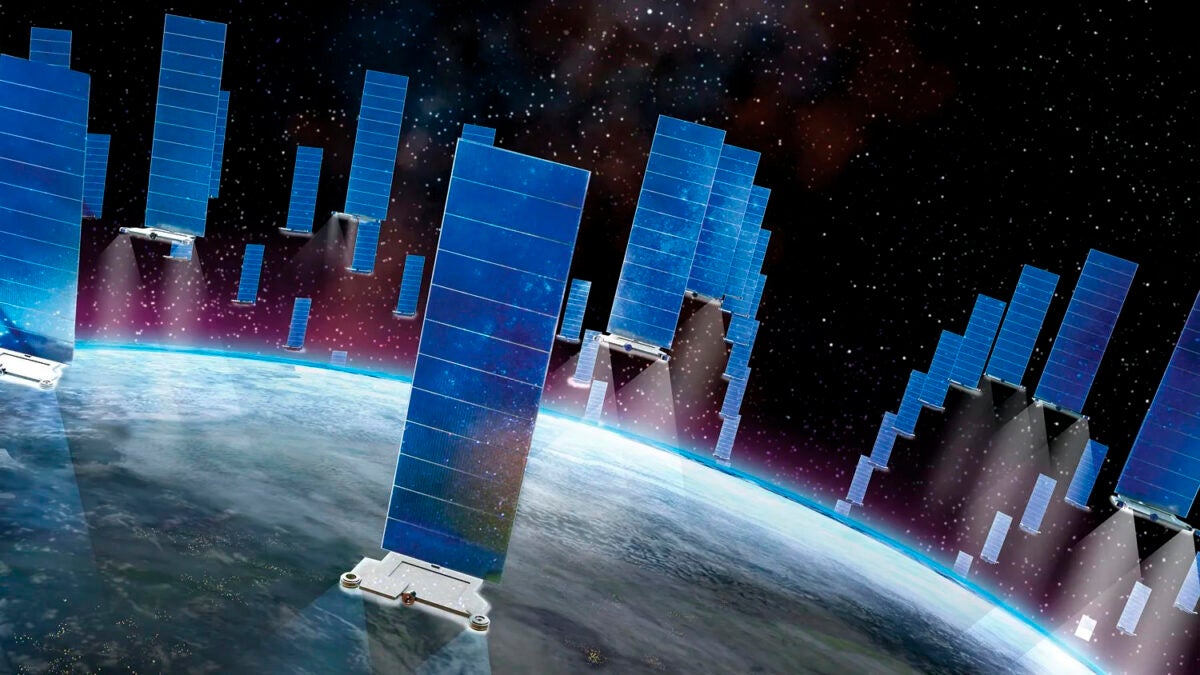
The satellites of the Starlink megaconstellation by SpaceX have carried out almost 50,000 maneuvers to avoid collisions in the last six months, which is almost double the number performed in the previous semester. This increase highlights the significant growth in orbital traffic in recent years, and raises great concern among experts, regarding the possibility of satellites colliding with other objects.

NASA App DOWNLOAD

Space.com has echoed the data from the latest Semi-Annual Report on the State of the Constellation, presented by SpaceX to the Federal Communications Commission (FCC) of the United States on July 1, which reveals that each Starlink satellite activated its thrusters an average of 14 times between December 1, 2023, and May 31, 2024 to avoid other objects in orbit. During this period, the constellation increased from 5,100 to 6,200 operational satellites.

SpaceX has also reduced the maneuver threshold of its satellites, now acting in the face of a one-in-a-million collision possibility, a threshold 100 times lower than the industry standard. Since the start of the Starlink deployment in May 2019, the mega-constellation has ushered in a new era in orbital traffic, where evasive maneuvers have become a daily necessity.

Hugh Lewis, Professor of Astronautics at the University of Southampton, attributes the recent increase in evasive maneuvers to the reduction of the maneuver threshold. “Starlink satellites would have performed approximately 25,000 maneuvers between December 1, 2023, and May 31, 2024, if the threshold had remained the same,” Lewis stated. This number is consistent with previous semesters, despite the increase in the number of satellites.

The Starlink satellites use onboard artificial intelligence to make autonomous evasion decisions. However, this increase in maneuvers can negatively affect future collision predictions, according to a study by the Commercial Space Operations Center (COMSPOC). In addition, the more maneuvers the satellites perform, the faster they will consume their propellant, shortening their lifespan. SpaceX maintains a zero waste policy by deorbiting satellites at the end of their operational life, and during the six-month period, only one satellite failed to deorbit correctly.

The construction of the Starlink megaconstellation continues, with plans to reach 42,000 satellites. Lewis predicts that evasive maneuvers will continue to increase and will reach 80,000 every 6 months by 2027.

NASA App DOWNLOAD

This is how you train in a gym in space

Astronauts visiting the International Space Station (ISS) usually stay for about six months. The conditions of microgravity on board the ISS cause muscles to be lost quickly if a strict exercise regimen is not followed during that time.

NASA App DOWNLOAD

NASA astronaut Loral O’Hara has just shared a video in which she is seen using many of the exercise machines on the station during her stay aboard the orbital outpost, before returning to Earth in April. O’Hara calls the video “a little glimpse into our space gym.”

The lack of gravity on board the ISS requires the use of many harnesses to stay in place. They also add resistance, as traditional training does not work due to the lack of gravity.

A brutal daily workout to avoid losing muscle mass

O’Hara notes that each astronaut exercises for 2.5 hours per day. This includes about 60 minutes of weightlifting and between 30 and 50 minutes of cardiovascular exercise such as running or cycling.

“Although any exercise program has its challenges, I found it very enjoyable to have the opportunity to work out my body every day and relax a bit by listening to music or podcasts, reading, studying for upcoming events, and hanging out in the Cupola watching the station and the planet in between sets,” said O’Hara.

At the beginning of human space exploration, scientists understood that exercise is a vital part to keep bones and muscles healthy in orbit, just like on Earth. In the early missions, simple elastic bands were used for exercise, but since then, gym equipment has become increasingly sophisticated.

The current exercise machines on board the space station include ARED (Advanced Resistive Exercise Device), a machine built with pneumatic cylinders that create the necessary force to give the astronaut a decent workout.

NASA App DOWNLOAD

Another machine is the Cycle Ergometer with Vibration Isolation and Stabilization System (CEVIS), a specially designed “bike” for aerobic exercises.

Scientists continue to investigate the effects of exercise in space, as well as other aspects such as diet, to help NASA better prepare for upcoming lunar missions in which astronauts could stay for extended periods of time inside a lunar base.

NASA astronauts proved 55 years ago that the Earth is not flat

Neil Armstrong and Buzz Aldrin landed on the Moon on July 20, and Armstrong became the first human being to set foot on the Moon as the mission commander. China has also arrived in 2024, but on the dark side.

NASA App DOWNLOAD

Aldrin followed, and both spent time on the surface collecting dust, planting the American flag, deploying scientific instruments, taking photographs, and placing the first plaque of humanity on the lunar surface. Along with the plaque, the crew also left the Apollo 1 mission patch and commemorative medals from their Soviet colleagues.

Once their two and a half hour lunar excursion was completed, the crew returned to the lunar module and began their rest period as part of the preparations for the ascent. The astronauts slept for seven hours on the Moon and then returned to the command module, piloted by Collins.

Some photographs that prove that the Earth is not flat, just in case there was any doubt

Before being able to dock with the orbiter, Collins had to locate the lunar module on the surface of the Moon. He saw it orbit the Moon several times and, as part of the contingency plan, Collins was also trained to land on the Moon and rescue the astronauts in case the landing module couldn’t reach it.

After Armstrong and Aldrin ascended to the command module, the ascent stage of the lunar module, which consists of the engine and other equipment, separated and entered a lunar orbit that, according to estimates, continued for decades.

NASA App DOWNLOAD

As he approached the command module, Collings began taking photographs of his flight, several of which show the Earth visible as a globe in the background.

The docking with the command module marked the end of the lunar part of the Apollo 11 journey and the crew prepared to return to Earth. Upon their return, the crew would spend some time in quarantine, which would prove to be fruitless as NASA discovered that there was no life on the Moon.