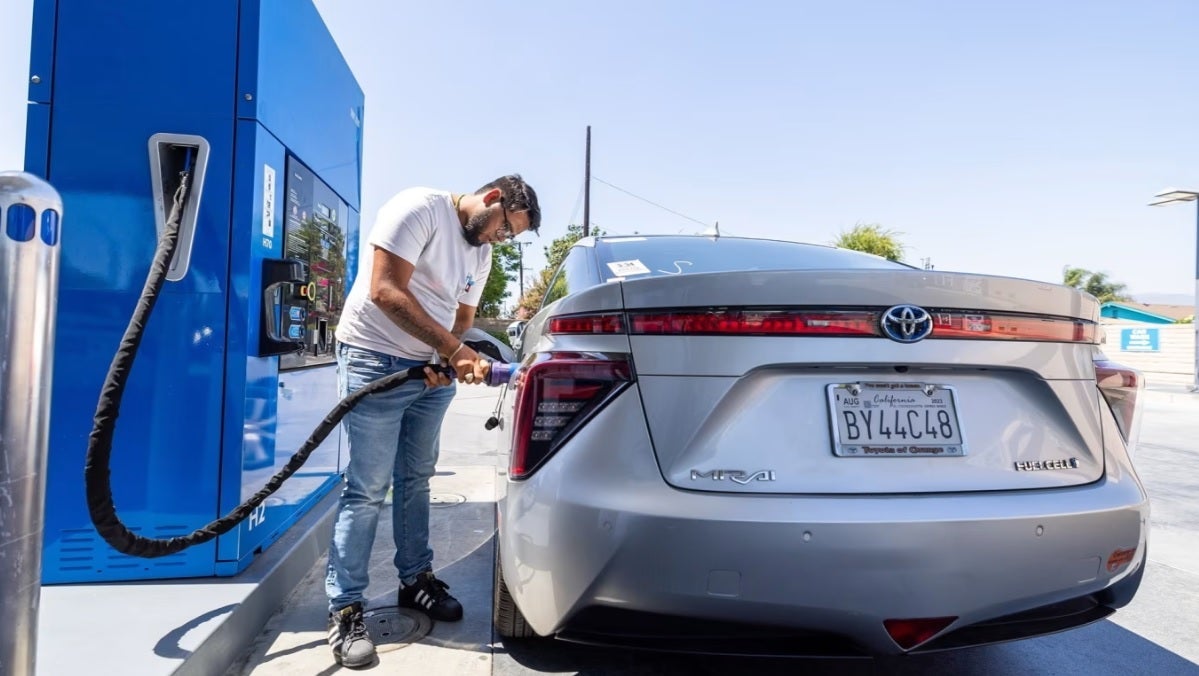
Last week, Toyota presented its third generation of hydrogen fuel cell, reaffirming its commitment to this technology, in parallel to its efforts in battery electric vehicles.

According to the automaker, the new battery is 1.2 times more efficient than its predecessor, which translates to a 20% improvement in range between refuels.
This advanced fuel cell stack is expected to debut in passenger vehicles and heavy commercial trucks in key markets such as North America, Europe, China, and Japan by 2026. Additionally, Toyota assures that this generation will achieve durability comparable to that of diesel engines, a crucial factor in its vision to replace propulsion technology in semi-trailer trucks.
The future of sustainable mobility also involves hydrogen
Among the improvements implemented, a more compact design stands out, thus facilitating integration into different types of vehicles, and a significant reduction in production costs, resulting from innovations in cell design and manufacturing processes.
Despite the challenges related to hydrogen supply infrastructure, Toyota continues to bet on this type of energy. The company has established a “hydrogen headquarters” in California, focused on the development of products related to this technology.
In addition, Toyota has explored the possibility of using a propulsion system that combines large batteries and fuel cells in heavy trucks, thus broadening its horizons.
On the other hand, as it moves towards 2030, Toyota seems to foresee a greater presence of hydrogen-powered vehicles compared to electric vehicles that use solid-state batteries, a technology that is also under development within the company. This vision suggests a sustained interest in hydrogen as a fundamental part of the future of sustainable mobility.