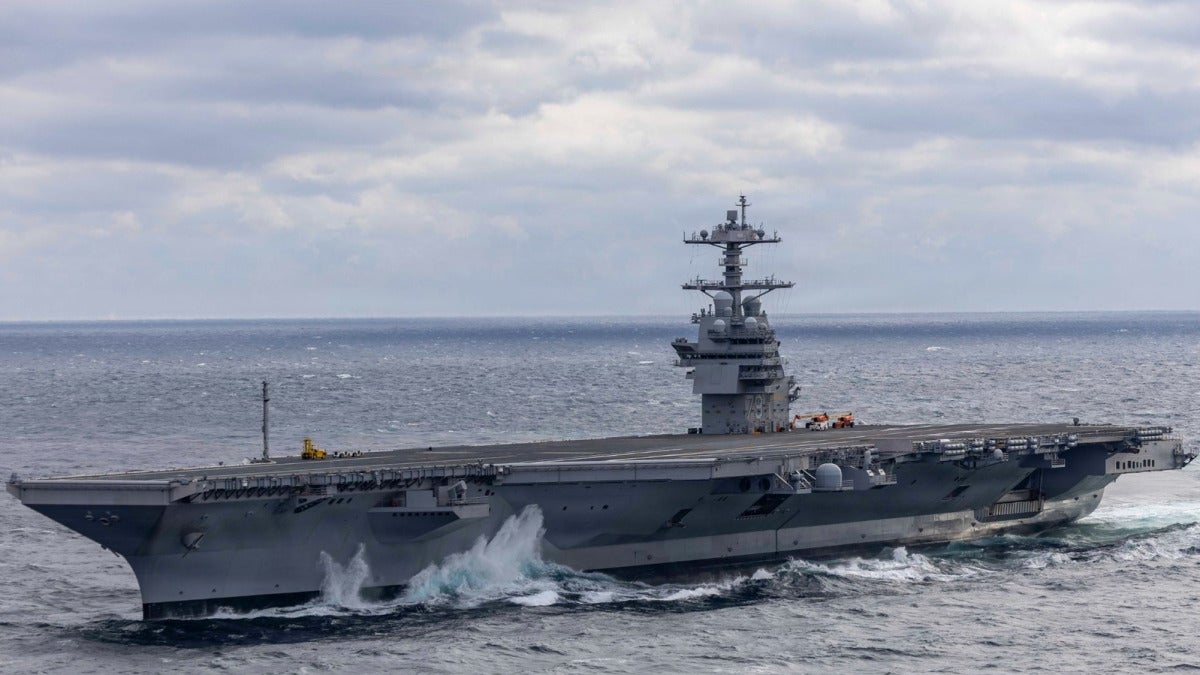
On August 15, 2026, the future USS John F. Kennedy (CVN-79) cleared acceptance sea trials. For the second Gerald R. Ford-class nuclear supercarrier, that’s a major checkpoint on the road to delivery, especially after delays pushed the schedule from July 2025 to March 2027.

Those trials put the ship’s propulsion plant, mechanical systems, and overall performance through their paces. If the timeline holds, the next steps are Contractor Fitting Out, delivery to the U.S. Navy, and then Post-Shakedown Availability, when deficiencies get fixed before the ship moves into full operational service.
USS John F. Kennedy is the second Ford-class nuclear supercarrier, after USS Gerald R. Ford, and like Gerald R. Ford it’s meant to change the way the Navy launches and recovers aircraft and moves weapons below deck. The ship measures 1,092 feet and displaces about 100,000 tons, with an estimated procurement cost of $13.2 billion. It’s also built to run with a smaller crew and produce higher sortie rates through EMALS, Advanced Arresting Gear, and Advanced Weapons Elevators.
Most of the delays trace back to those new systems, especially the arresting gear and the weapons elevators, along with the broader Ford-class story of cost overruns, technical setbacks, and the certification and integration problems that carried over from USS Gerald R. Ford. If you follow Navy fleet planning, USS John F. Kennedy deserves attention. The U.S. Navy still has to keep 11 active carriers in service as older Nimitz-class ships age and China keeps expanding its naval ambitions.
