Different Ways You Can Get Free Phone Numbers

Find out how to get a phone number for free for calling and texting in 2024 in our in-depth review of 8 best virtual phone number apps. Click here.

At some point, you’ve likely wanted to seamless switch phone numbers, if only for a single call. Fortunately, technological advancements have made this quite achievable, offering you more than one method to do so. 

Virtual phone numbers are useful for frequent travelers and businesses, enabling them to place local calls at local rates rather than relying on costly international numbers. 

In this piece, we discuss how to get a phone number for free with Phoner and other alternatives to explore. 

How to Get a Phone Number for Free:  Phoner 
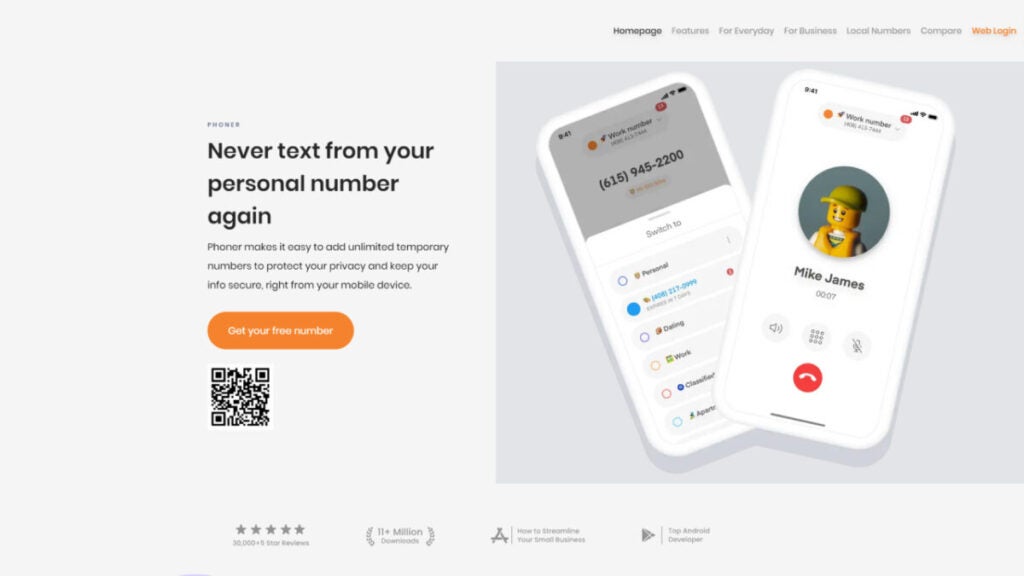
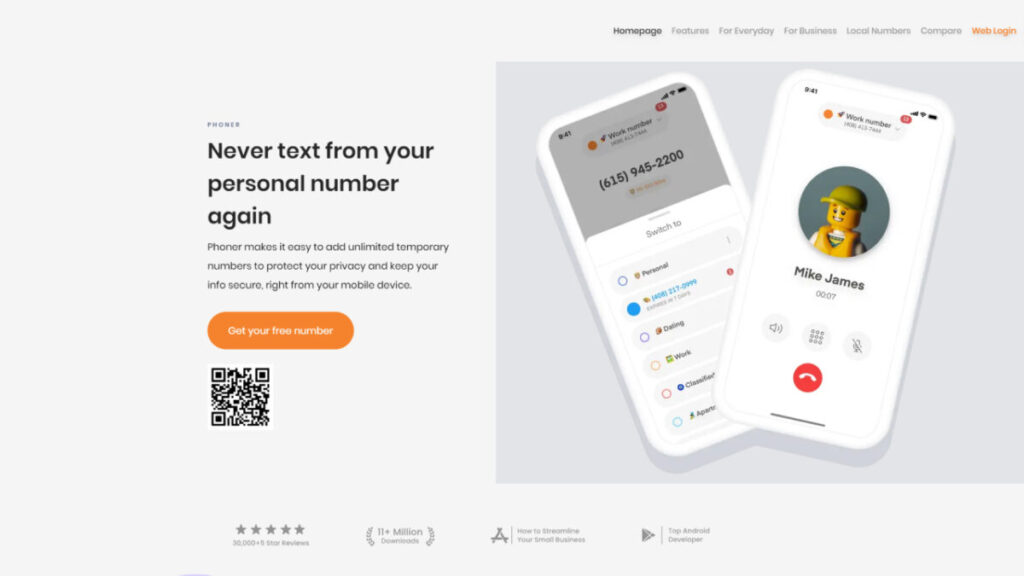
Getting a free number from Phoner can help you own a temporary, secure second line for differentiating your business and personal activities. Here are some general steps for getting a free number with Phoner

Step 1: Download and Install the Phoner App 

  • Visit the Google Play Store (for Android devices) and App Store (for iOS devices) here
  • Search “Phoner” in the search bar. 
  • Download the Phoner app and follow the on-screen instructions to install it on your mobile device.

Step 2: Sign Up or Log In:

  • If you are a new user, you can immediately get started without having to sign up. However it is a good idea to add an email and password for account recovery in the future. To do this, tap on Settings -> Set up Account. 

Step 3: Choose One of the Virtual Phone Numbers 

  • You will be prompted to select an area code. Then, choose from a list of available virtual phone numbers. 

Step 4: Customize Settings 

Explore the app’s settings to customize features like voicemail, call forwarding and text messaging preferences. It provides more encompassing features than an actual phone number if you appropriately customize for a personalized experience. 

Step 5: Use Your Free Number:

Once you’ve set up your virtual phone number, you can use it to make and receive calls, send & receive text messages and explore additional features provided by the Phoner app.

Also, kindly note that while the app itself may be free to download, some features or virtual numbers might come with additional costs. Always check the app’s terms of service, pricing and any potential limitations.

Other Options for Getting a Free Phone Number 

Perhaps you want to compare other alternatives to get free phone numbers and see how they stack in comparison to Phoner. Here are some popular alternatives to try: 

Option 1: TextNow 
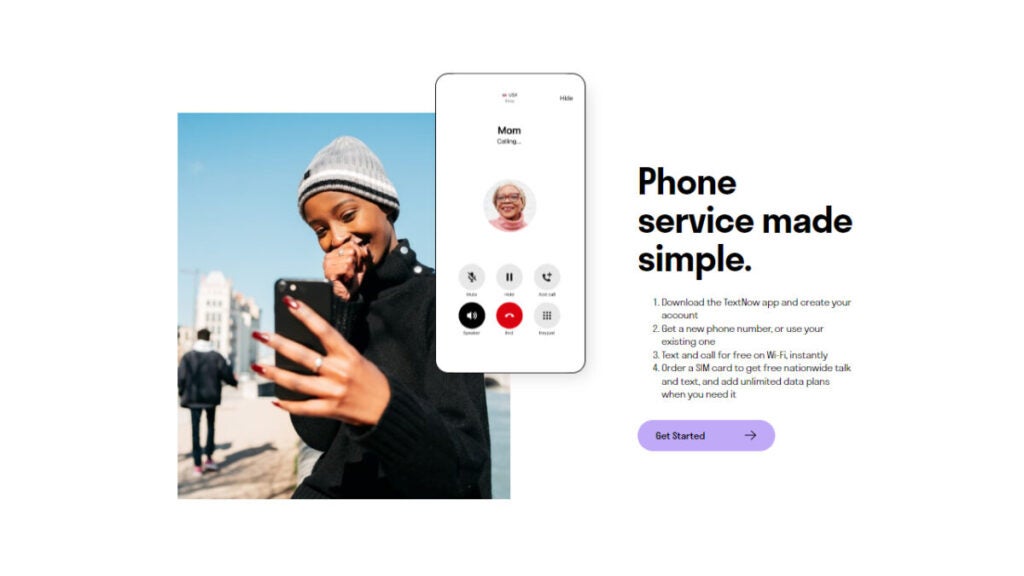
TextNow is a mobile application that lets users make and receive text and calls for free. The platform uses a mobile virtual network operator, ensuring it depends on other providers to offer services without extra charges or fees. 

By using TextNow, you can make calls via WiFi or internet connection. However, you’ll have to subscribe to its premium plan to use this feature. 

Key Features of TextNow 

Below are some great features of Text Now:  

1. Voicemail: It lets users receive and listen to voicemail – this is dependent on the app’s settings. 

2. Group Messaging: This feature lets users create and participate in group chats, helping them to communicate with multiple contacts simultaneously. 

3. Caller ID: The app provides a caller ID feature, showing the caller’s information during incoming calls. 

4. Customizable Wallpapers: It lets users personalize their messaging experience by setting wallpapers for their conversations. 

5. Emojis and Stickers: The app supports a range of stickers and emojis to enhance expression in text messages. 

Option 2: Google Voice 
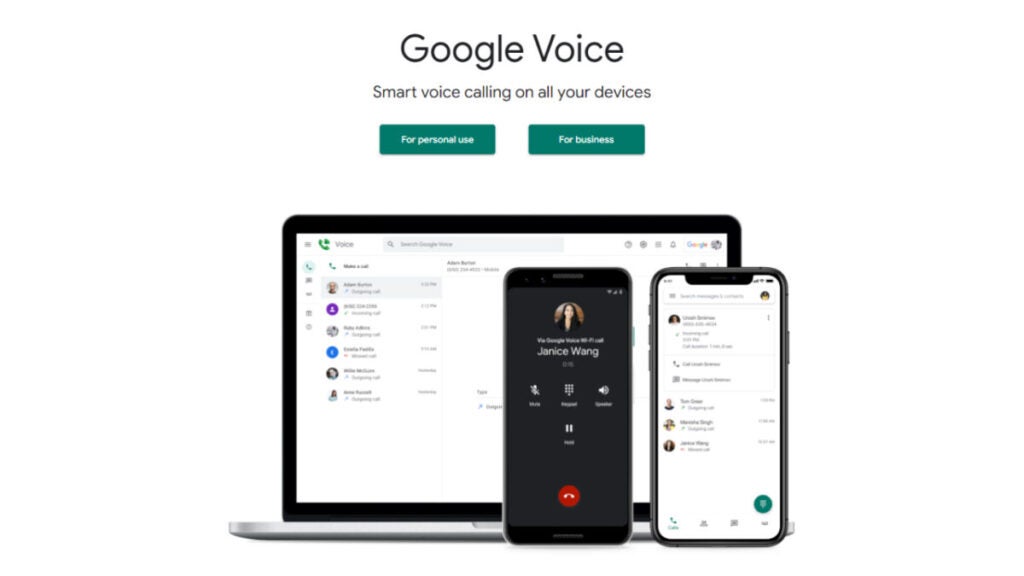
Google Voice is a telecommunications service by Google. This service offers users a free Google voice phone number for calls, texts and voicemail. It enables call forwarding to multiple linked numbers, voicemail transcription and spam filtering. 

Users can send texts, make international calls and integrate with Google Workspace. Custom greetings, conference calling and Do Not Disturb features enhance user control to improve the experience you get from your Google Voice number. 

Google Voice offers a valid phone number that’s accessible on web and mobile apps. It also provides a unified communication experience through group and unlimited calling. 

Let’s discuss some of its key features in details: 

Key Features of Google Voice 

1. Conference Calling: Users can initiate a conference call by dialing one participant and then adding others to the conversation. This is particularly useful for business meetings, collaborative discussions or catching up with friends and family. 

2. Spam Filtering: The spam filtering functionality in Google Voice automatically identifies and separates potential spam or unwanted calls and text messages from legitimate ones. 

3. Do Not disturb: The “Do Not Disturb” (DND) feature in Google Voice is designed to allow users to temporarily silence or mute incoming calls and notifications.

4. Custom Greetings: Instead of a standard, generic voicemail greeting, this feature allows users to create and set their own custom voicemail messages. 

5. Voicemail Transcription: Google Voice transcribes voicemail messages into text, making it easier to read and manage messages without listening to them.

Option 3: Tossable Digits 

Tossable digits is a virtual phone number service that forwards to the customer’s existing home, office phone and cell, anywhere in the world. It allows users to obtain disposable or temporary phone numbers that can be used for various purposes, such as protecting privacy, maintaining anonymity or testing services without revealing a personal phone number.

Each virtual phone number by tossable digits comes with unlimited virtual SMS text messaging (US/ Canada only), unlimited call recording, voicemail, inbound and outbound calling and international calling at low rates. Let’s delve into the key features: 

Key Features of Tossable Digits 

Beyond the catchiness of its 4,078,794 numbers in stock, it also boasts a range of highly impressive features: 

1. Call Recording: It lets you record any or all calls made to your virtual number. 

2. RoboCall Blocking: This feature helps users avoid unwanted or spam calls, enhancing the overall call experience by reducing interruptions from automated messages.

3. Interactive Voice Response: IVR is a technology that allows a computerized system to interact with callers through voice and touch-tone keypad inputs. It is often used for automated call routing and handling various tasks without the need for human intervention

4. Caller ID Control: Caller ID control refers to the ability to customize or manipulate the information displayed on the recipient’s caller ID when making outgoing calls. This feature puts users in control of how their phone number appears to others.

5. Two-Factor Authentication: 2FA sent to the user’s virtual phone number enhances the security of account logins or transactions. It adds an extra layer of protection beyond just a password.

6. Toll-free Numbers: Users can create numbers where prospective callers can call in for free.

Option 4: TextFree by Pinger 

TextFree by Pinger is a mobile application that offers free texting and calling services. It is developed by Pinger, Inc. and provides users with a free phone number, allowing them to send text messages and make calls over Wi-Fi or mobile data without using their cellular plan’s minutes. 

Users can use this app as an alternative to traditional texting and calling services, especially in situations where they want to conserve their cellular plan’s resources or for those who don’t have a regular phone service.

TextFree offers additional features like voicemail, group messaging and the ability to earn credits for calling to non-TextFree numbers.

Let’s breakdown the key features in more details

Key Features of TextFree 

Some of the most prominent features of TextFree are: 

1. MMS (Multimedia Messaging Service): MMS allows users to send multimedia content beyond simple text messages. This can include pictures, videos, audio files and other multimedia elements. With MMS support, TextFree users can enhance their communication by sharing various types of media.

2. Message Personalization: Message personalization typically refers to the ability to customize and personalize your text messages. This can include features such as adding emojis, changing fonts, using different colors or incorporating other elements to make your messages unique and expressive.

3. Online Voice Transmission: This feature refers to the ability to send voice messages or make voice calls using the TextFree app. Users can transmit their voice messages in real-time, allowing for a more dynamic and personal form of communication compared to traditional text messaging.

4. Reporting/Analytics: Reporting and analytics features provide users with insights into their messaging and calling activities. Users may be able to track things like the number of messages sent, call durations and other relevant metrics. 

5. Shortcodes: TextFree offers the ability to send and receive messages using shortcodes, providing users with a quick and easy way to interact with specific services or organizations.

Option 5: Dingtone 

Dingtone is a cost-free calling and messaging application that empowers users to initiate free phone calls and dispatch complimentary text messages. Users can place online calls to any number without requiring a SIM card or committing to any cellular plans.

Likewise, you can send free texts, voice messages and images to actual phone numbers through the app. Dingtone offers millions of authentic phone numbers across various regions, including the US, Canada, UK, India, Bangladesh, Pakistan, Mexico, Philippines, Jamaica, Nepal, Nigeria, Saudi Arabia, Egypt, Brazil, United Arab Emirates and more.

As for its user base, Dingtone is a trusted choice for those seeking dependable free-calling and free-phone number applications. With over 20 million downloads worldwide, it caters to the needs of freelancers, solopreneurs and small businesses alike.

Key Features of Dingtone 

1. Caller ID: Dingtone allows users to choose which of their numbers will be displayed when making calls. This feature provides flexibility and control over the caller identification information that recipients see.

2. Call Block: Dingtone includes a call block feature, enabling users to prevent unwanted calls and fend off potential fraud. By using this feature, users can maintain a more secure and uninterrupted calling experience.

3. Call Forwarding: This allows users to forward calls to any number of their choice using Dingtone. This feature is particularly useful for redirecting calls to another device or number, ensuring that users never miss important calls.

4. Walkie Talkie: Dingtone transforms iPhones into Walkie Talkies with its push-to-talk feature. Users can enjoy instant communication by simply pushing a button, making it a convenient and quick way to exchange messages with others.

5. Instant Messaging: Dingtone supports instant messaging, providing a platform for users to have fun while sharing photos, videos, locations, and contacts with their contacts. This feature enhances the communication experience beyond traditional calls and text messages.

Option 6: CallHippo 
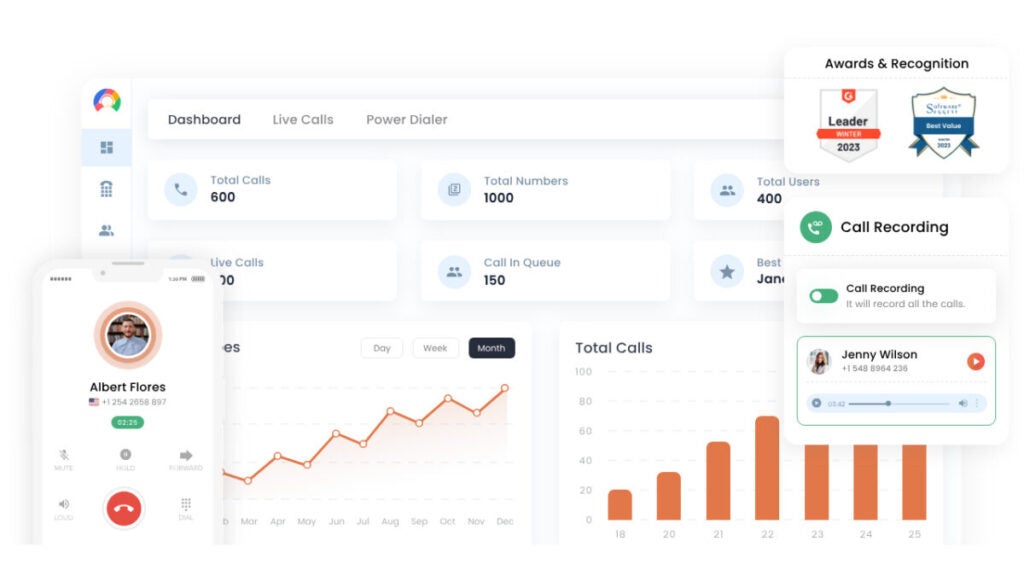
CallHippo provides a diverse selection of numbers from around the world, accompanied by various useful features such as call forwarding and messaging services. What stands out the most is its unique capability to integrate with cloud storage clients and platforms like Zapier, setting it apart from other similar services.

This distinctive feature transforms CallHippo from a mere calling program into a valuable component of your comprehensive office setup. This comprehensive approach is particularly beneficial for business owners seeking a versatile and integrated solution.

Let’s break down its key features further: 

Key Features of CallHippo

1. Call Queuing: Call queueing is a telecommunication feature that organizes and manages incoming calls, particularly in high-volume scenarios like call centers. It places callers in a structured line based on when they’re contacted, assigning positions and placing them on hold. 

2. Automatic Call Distribution (ACD): Automatic Call Distribution is a feature that efficiently distributes incoming calls among a group of agents or specific individuals based on predefined criteria. 

3. Call Monitoring: This feature allows supervisors or managers to listen in on live calls or review recorded conversations. It is important for quality assurance, training and ensuring that calls meet the desired standards of customer service. 

4. Interactive Voice Response (IVR): it allows callers to navigate through a menu system to access specific information or be directed to the appropriate department, enhancing the efficiency of call routing and reducing the need for manual intervention.

5. Number Masking: When making or receiving calls, the actual phone numbers are hidden , displaying a virtual or generic number instead. This helps protect sensitive information and maintains privacy.

6. Post-Call Surveys: Post-Call Surveys involve gathering feedback from customers immediately after a call concludes. This feature helps businesses assess and enhance their customer service based on direct feedback.

Option 7: Hushed
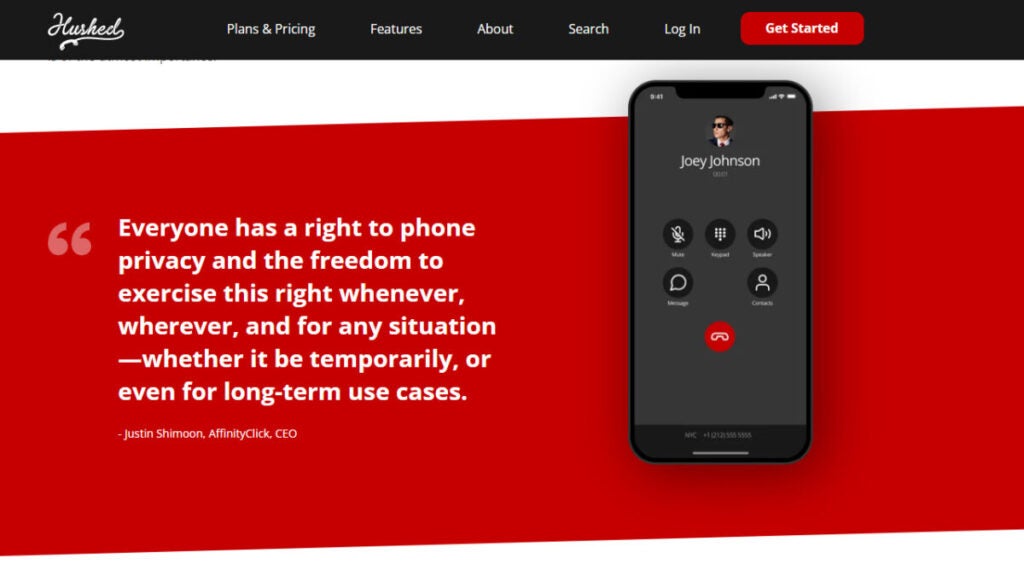
Hushed, which is available on both iPhone and Android devices, provides unique features not commonly found in other apps, including the option to establish a toll-free number. 

While Hushed doesn’t offer a continual free, ad-supported second line, users can enjoy a three-day free trial upon the initial use of the app. It’s worth noting that Hushed doesn’t collect payment information, meaning there’s no need for cancellation after the three-day period — the assigned number naturally expires.

For regular service, Hushed offers plans starting at $1.99 for a week of voice and text services. If you require an extended active period for your number, subscription options include a $3.99 per month plan or an annual plan for $29.99.

Key Features of Hushed 

1. DropBox/Slack Integrations: This functionality allows users to seamlessly connect their Hushed virtual numbers with these services, facilitating efficient communication and data sharing within those platforms.

2. Auto-Reply Messages: The Auto-Reply Messages feature automatically sends predefined messages in response to incoming texts or calls. 

3. Call Routing: Call Routing is a feature that enables users to customize how incoming calls are directed. Users can set up rules to route calls based on specific criteria, such as time of day or caller identity. 

4. Custom Voicemail Greeting: This feature enables users to record and customize voicemail messages to reflect their individual or business identity, providing a professional and personalized touch to callers who reach the voicemail.

Option 8: FlyP
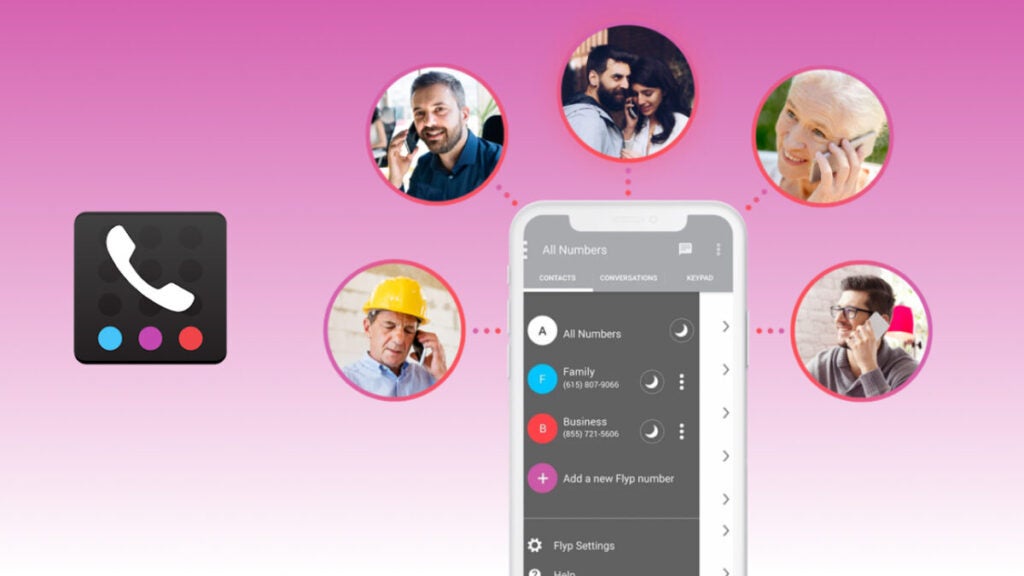
While Flyp does not provide a fully free service tier, you can explore its features at no cost during a seven-day trial period. This might be suitable for individuals with minimal requirements for a free business phone number. 

As opposed to many other second number apps, this phone company allows you to add as many as five additional numbers for $7.99/month; allowing you to have a separate phone number for your other businesses. Each subscribed line offers unlimited text and calling, along with customizable voicemail and various features. Notably, each number can be assigned a distinct area code, providing additional flexibility.

Key Features of FlyP 

Below are the primary characteristics of the virtual phone mobile app: 

1. Call Blocking: This feature lets users create a list of blocked numbers. Calls or messages from those numbers are automatically rejected or diverted to voicemail. This feature is valuable for avoiding unwanted calls or spam. 

2. Do-Not-Disturb: Do Not Disturb is a feature that silences incoming calls, notifications and alerts. DND is useful in situations where users need uninterrupted focus, such as during meetings, while sleeping or in quiet environments.

3. Geo-Sensitive Area Codes: This feature is often used for business or personal reasons, allowing users to choose numbers associated with specific cities or regions.

In Summary

Having detailed knowledge on how to get a phone number for free provides you a way to explore second-phone number options available at no cost. They provide your business with an opportunity to reduce expenses and collaborate more effectively.

Some popular free phone number apps mentioned here are Phoner, Text Now, Google Voice, Tossable Digits, TextFree, Dingtone, CallHippo, Hushed and FlyP. 

A Deep Dive into the 8 Best VoIP Services in 2024

Find out the in-depth review of 8 best VoIP providers based on pricing, use cases, pros and cons. Click here.

Phone calls are still crucial when a company wants to contact its clients and associates. This, however, does not obligate your business to continue using an old-fashioned analog phone system. There are several reasons why modern VoIP systems have mostly supplanted traditional phone systems. Video calling, SMS support, instant messaging and interaction with other business software like your CRM system are just a few of the capabilities that Voice over Internet Protocol (VoIP) offers over analog PBX systems, in addition to lowering expenses for business communications. Unified communications as a service (UCaaS) is sometimes used for solutions that combine various channels in this way.

Research from Global Market Insights, Inc. estimates that the VoIP market will be valued at $55 billion by 2025, making it a significant player in the industry. As a business owner, it’s up to you to carefully compare the different VoIP phone services you can access.

We tested and graded many VoIP service providers from around the industry to assist you in navigating this plethora of possibilities. 

We only recommend trustworthy and easy-to-use VoIP services in this article. Their plans are adaptable to any budget and offer first-rate phone support to get your new VoIP service up and running quickly. 

How to choose the best VoIP provider

In this article, we will go over some of the most crucial factors to think about when comparing VoIP services:

  • Required expenses. Finding the best service for your needs will largely depend on your budget. When choosing a VoIP provider, it’s essential to consider more than just the price. Other variables like service quality, customer phone support and service plan alternatives should also be considered. 
  • Basic VoIP features. The platform you choose should offer all the required VoIP phone system features and capabilities. VoIP features include automated attendant, video conferencing, voicemail-to-text, softphone, business text messaging, call recording, analytics and more.
  • Customer service. You rely on your VoIP providers for crucial contacts with customers and coworkers. Therefore, it is vital to address any issues promptly. To provide round-the-clock help, several VoIP solutions outsource customer service during peak business hours. 
  • Third-party integrations. A VoIP phone service’s built-in third-party connectors are one of its main advantages. Designed to be the backbone of your everyday business voice communications, VoIP services often integrate with other apps you use. 
  • Minimum and maximum call volumes. Before you can even consider selecting a VoIP provider, you must thoroughly understand your company. Are you more used to fielding outgoing VoIP calls or incoming ones? How many employees are taking/making voice calls from business phone numbers at the same time? How long do the calls last? Your responses to these questions will be critical when deciding on a provider and a plan.
  • VoIP safety. VoIP service is vulnerable to specific system vulnerabilities because it runs across the internet. That means there is a technological risk of interception or compromise involving your data. The importance of finding a VoIP phone system that goes above and beyond to safeguard consumer data cannot be overstated.

3 Best VoIP providers: a quick pick

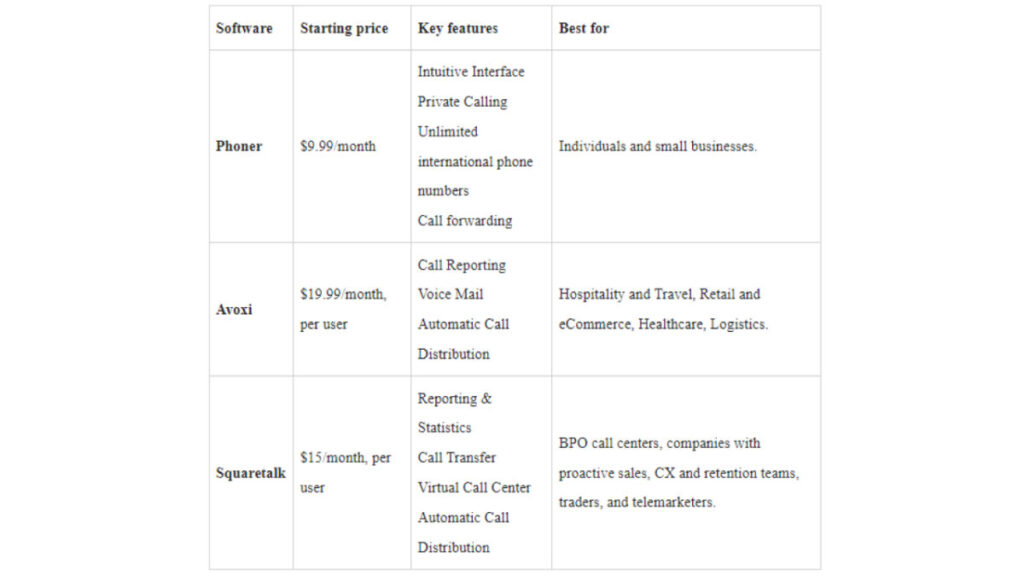
Provider #1: Phoner

Best pick for: A low-cost, user-friendly alternative to a traditional second business phone number. It’s the best VoIP phone service for individuals and small businesses.

With the Phoner VoIP phone system, you can avoid ever sharing your phone number whether running your business, buying online or going on dates. Send private photographs and texts to anyone. You can start making calls locally and abroad with your new number when you add it to Phoner. There are no new carriers or contracts with this VoIP provider. Everything syncs up with your existing desktop and mobile devices. You get a limitless amount of international calling. A wide range of virtual phone numbers are available, each with distinct area and country codes.

Pricing: 

Phoner VoIP phone service offers two pricing plans: 

  • Monthly – $9.99/month
  • Yearly – $69.99/year

Reviews: 

Trustpilot: 4.7/5 (300+ reviews)

Pros:

  • Pleasant, easy-to-navigate design
  • Reliable quality of phone calls
  • Ad-supported tier
  • Reasonable prices
  • Disposable numbers
  • Voice call recording
  • Message encryption
  • Support on Desktop, Android and iOS

Cons:

  • Not many extra features
  • Best for simple tasks

Overall experience:

Users highly regard the Phoner VoIP phone system for its user-friendly setup process, affordable pricing and adaptability to various personal and commercial needs. Although some reviews indicate minor bugs, the overall user response has been highly positive. Enjoy all the benefits of Phoner by downloading it here.

Provider #2: Avoxi

Best pick for: This is a great VoIP provider option for BPO, logistics, healthcare, retail, hospitality and travel.

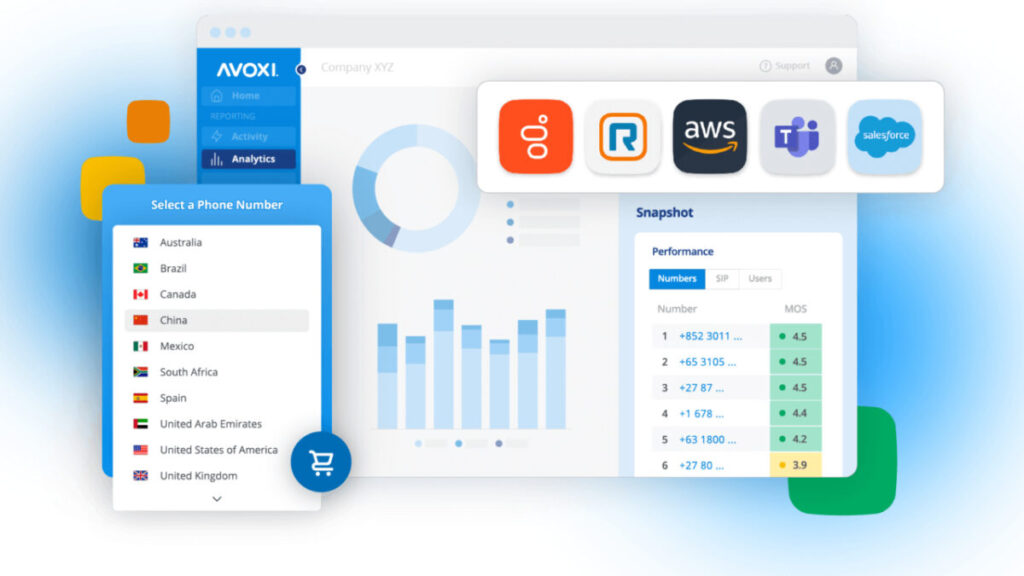
You can quickly and cheaply build the AVOXI system on the AVOXI Platform. AVOXI is a VoIP phone service with automated call distribution, skills-based routing, personalized call queuing, VIP experiences and queue callback—among many other routing possibilities. Customers can be sure their voice calls will go off without a hitch when they pair their business with AVOXI’s dependable and high-quality VoIP services.  

Pricing:

  • Free plan available 
  • Contact – $19.99 per user
  • Engaged Enterprise – $39.99 per user

Reviews:

Capterra 4.8 (53)

Pros:

  • Customer support
  • IVR/voice recognition
  • Real-time analytics
  • Automatic call distribution
  • Computer telephony integration
  • Easy setup

Cons:

  • No mobile apps or IP desk phones 
  • Limited features
  • Upgrade issues
  • Time constraints

Overall experience:

Avoxi VoIP phone system enables low-cost, real-time cross-border communication with exceptionally high call quality. Undoubtedly, it’s one of the top VoIP providers. All the necessary features for managing your IPBX and DID numbers are at your fingertips!

Provider #3: Squaretalk

Best pick for: Traders, telemarketers, market researchers, insurance agents, financial advisers, BPO call centers, proactive sales teams, customer experience retention teams and more can benefit from using Squaretalk VoIP service.

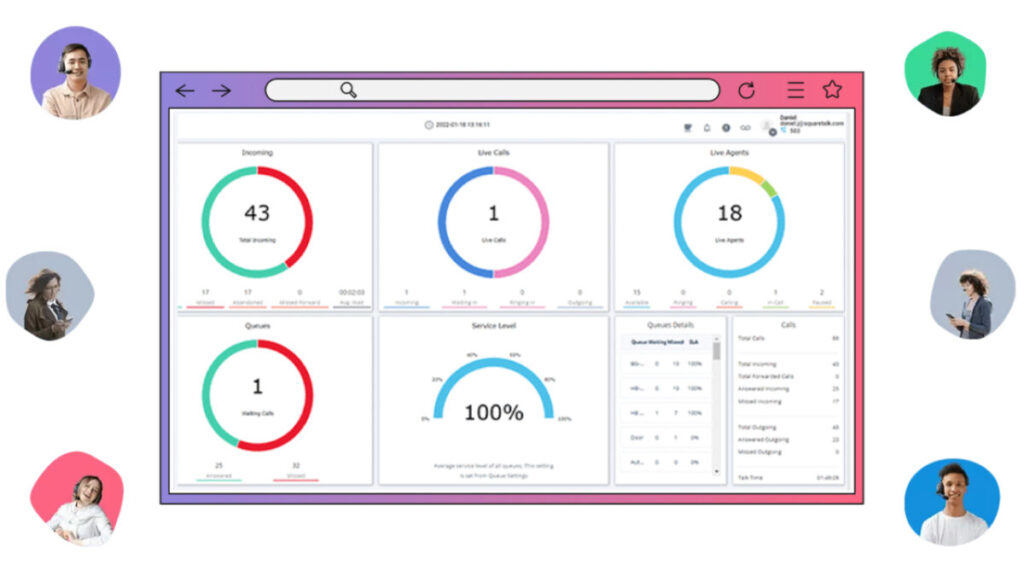
Squaretalk simplifies automation and integrations and is a flexible VoIP provider. It’s easy to use, allowing you to focus on the other aspects of running your company.

You can give your sales and phone support staff the tools they need to be productive no matter where they are or what channel your clients choose with an affordable, scalable and user-friendly communications business phone system. 

Whether you use Zoho, Salesforce or another popular CRM, the VoIP phone system’s native interfaces and custom API will make the process a breeze.

Pricing:

  • Standard – $15/user per month, billed annually 
  • Professional – $30/user per month, billed annually

Reviews:

Capterra 4.8 (72)

Pros:

  • Good customer support
  • Cost-effectiveness
  • ​​Fast connection
  • Auto-dialer
  • SMS Messaging
  • Call list management

Cons:

  • Expensive for some users
  • Mobile app issues
  • Learning curve

Overall experience:

People love using the interface of this business phone system. It’s easy to understand use and they have excellent customer service. The staff at Squaretalk VoIP are always there to help users whenever they encounter any problems or questions. If you choose to collaborate with Squaretalk VoIP phone system, they will promptly address any issues.

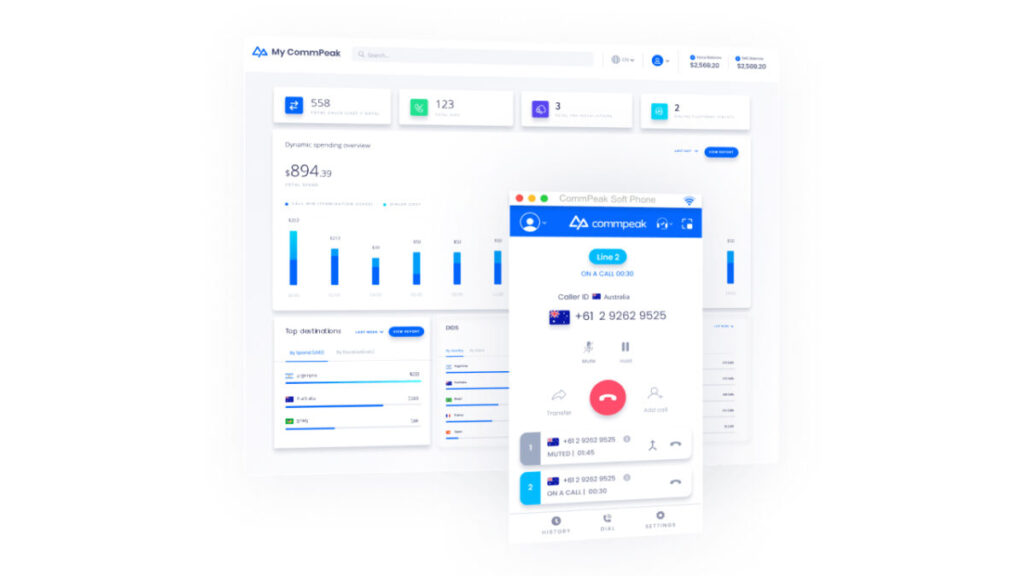
Provider #4: CommPeak VoIP Service

Best pick for: The VoIP telephone service is a perfect option for retailers and service providers with call centers that handle many calls and need more business phone numbers. International companies of all sizes and call targets, from small businesses to substantial IT companies.

CommPeak is one of those VoIP providers that offer an excellent connection for calls made from anywhere in the world. Enjoy features like a global network of 10 points of presence (PoPs), connectivity through regional providers, round-the-clock assistance, and direct dial numbers for local presence worldwide. With scalable bandwidth, teams of any size can maintain high-quality audio even when many calls run simultaneously. You can gain more audience reach, save money on international calls and plan budgets down to the last detail with transparent per-second billing. The software offers exclusive deals for high-volume traffic.

Pricing:

  • Free trial available
  • Contact CommPeak to get info about pricing

Reviews:

Capterra 4.8 (57)

Pros:

  • Simple to use
  • Excellent call quality, reliability
  • Call list management
  • Call recording
  • Mobile access
  • Online voice transmission

Cons: 

  • Customer service
  • Learning curve
  • Does not support many apps

Overall experience:

Reviews from satisfied customers indicate that CommPeak’s VoIP phone service technology consistently displays exceptional clarity and reliability during contact sessions, meeting or exceeding call quality criteria. Users get better experiences because the reliable phone system enables constant and faultless connection. Keeping track of everyone and making sure you’re communicating with the correct people at the right times can be tricky with a vast, ever-growing list of contacts. But when you use CommPeak, you’ll have access to a powerful contact management system.

Provider #5: Talkdesk

Best pick for: For both incoming and outbound call centers, this is the best VoIP service provider.

The flexible commercial VoIP phone service from Talkdesk lets you implement practically every feature required in a contact center. By bringing together users on one platform, Talkdesk improves communication across departments. Thanks to the desktop and mobile apps, team members can access voicemails and make calls from any device.

The CX Cloud platform, developed for both inbound and outbound calls, is Talkdesk’s strongest suit. It relies on virtual agents and AI-powered interactive analytics to take customer service to the next level. Intelligent call routing, call queue management and agent call metrics reporting are all features of VoIP services.

Pricing:

  • CX Cloud Essentials: $75 per user/month
  • CX Cloud Elevate: $95 per user/month
  • CX Cloud Elite: $125 per user/month
  • Experience Cloud packages: Contact Talkdesk to get info about pricing

Reviews:

Capterra 4.5 (721)

Pros:

  • Excellent quality of the calls
  • Easy integration with Salesforce
  • Easy to use
  • Incredible flexibility in IVR
  • Good Support team

Cons:

  • Issues with the reporting functionality
  • Hard to use without a reliable internet connection
  • Bad data interpreting

Overall experience:

Talkdesk VoIP phone service is widespread across several areas, including finance, marketing and sales. It has been used extensively, improving sales response time and activity visibility in many companies. Customer relationship management automation can start immediately if the conversation with a prospect is timed and measured correctly. With TalkDesk VoIP phone provider, your team will have a lot more time to work on different tasks.

Provider #6: Ring Central

Best pick for: It’s an ideal VoIP service provider for businesses of all sizes.

RingCentral VoIP phone service has consolidated many communication channels into one interface, with dashboards that can display all of them simultaneously or independently. When it comes to running your day-to-day operations, the dashboard is really helpful. Companies have been able to eliminate desk phone calls entirely as a result, allowing for more space on workstations.

With incoming virtual numbers in over 105 countries and coverage in over 45 countries, the RingCentral phone system has a vast global reach. Additionally, several speech prompts, including multilingual interactive voice replies (IVRs) (automated, interactive phone menu systems) and VoIP settings, are available to organizations in eighteen languages.

Pricing:

  • Essentials: $32.99 per user/month
  • Standard: $40.99 per user/month
  • Premium: $47.99 per user/month
  • Ultimate: $62.99 per user/month

Reviews:

Capterra 4.3 (1177)

Pros:

  • Inbound virtual numbers in more than 105 countries
  • Multilingual IVRs available in 18 languages
  • More than 300 integrations with business applications
  • User friendly 
  • Easy to set up
  • Auto call recording

Cons:

  • Higher prices than some competitors
  • Inconsistent customer support

Overall experience:

RingCentral VoIP phone service has consolidated many communication channels into one interface, with dashboards that display all of them simultaneously or independently. When it comes to running your day-to-day operations, the dashboard is really helpful. Companies have been able to eliminate desk phone calls entirely as a result of this benefit, allowing for more space on workstations.

With RingCentral MVP, all the essentials for efficient communication are in one convenient app you can use on your PC. You may check and reply to incoming phone calls, business SMS, faxes and IMs from other users, all from one convenient interface.

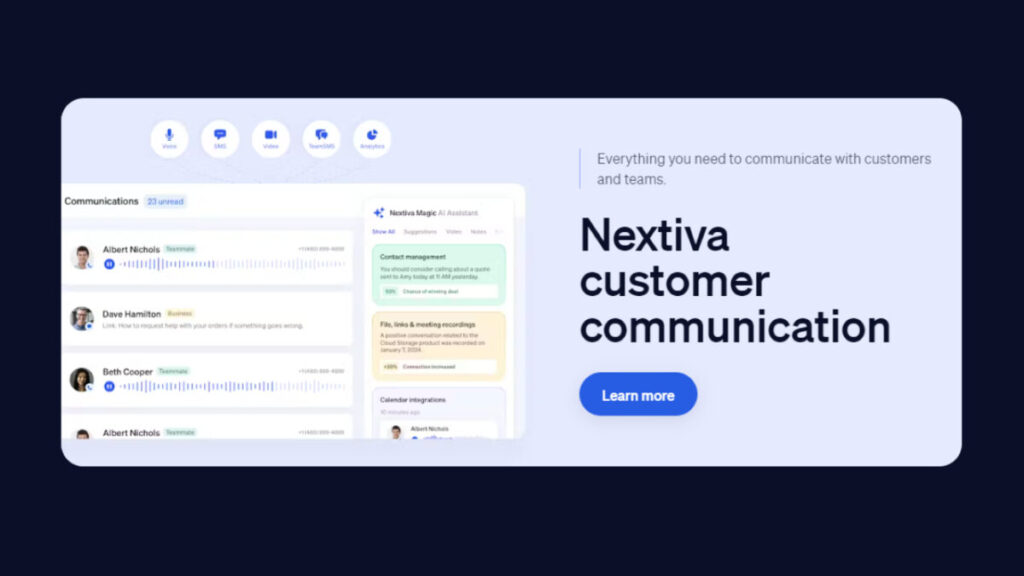
Provider #7: Nextiva

Best pick for: Nextiva is great for companies needing an advanced VoIP phone service with capabilities like video conferencing, call recording, a mobile app and reliability.

Nextiva is one of the cloud VoIP services with an impressive 99.99% uptime guarantee. Nextiva’s VoIP solutions offer more communication methods, including video conferencing and messaging. You may easily create call routing flows with Nextiva’s Call Flow Builder, a drag-and-drop tool. The ability to record and track calls in real-time makes evaluating agents’ work and spotting trends simple.

If any problems occur, Nextiva’s support team is there 24/7 to help. Remember that there is an extra fee for the contact center and business phone services.

Pricing:

  • Essentials: $25.95 per user/month
  • Professional: $30.95 per user/month
  • Enterprise: $40.95 per user/month

Reviews:

Capterra 4.6 (664)

Pros:

  • Affordable price
  • Reliable call quality and uptime
  • Intuitive interface
  • 99.999% uptime
  • Extensive international calling

Cons:

  • Limited international calling options
  • Learning curve

Overall experience:

Every time you need to change how the calls are routed, Nextiva support is simple to reach. Using the business VoIP service, you may quickly and easily set up call forwarding to voicemail in case of emergencies or bad weather.

Provider #8: Dialpad

Best pick for: Sales organizations of any size can use Dialpad.

Dialpad offers business VoIP phone service that could be a good fit for small and large businesses. The user-friendly desktop and mobile interface of Dialpad VoIP allows you to do more than make phone calls – it also lets you exchange instant messages, host video conferences and more.

With Dialpad’s call forwarding to mobile services, your staff can always stay connected. While the Standard plan does provide integration with Google and Microsoft, more complex features, like single sign-on (SSO) providers, are available in higher-tier plans. You can only get unique business phone numbers as extras, like local or toll-free.

Pricing:

  • Standard: $23 per user/month
  • Pro: $35 per user/month
  • Enterprise: Contact Dialpad

Reviews:

Capterra 4.3 (511)

Pros:

  • Great sound quality
  • Responsive support team
  • Voice AI
  • Easy to use
  • Integration with Google Contacts 

Cons:

  • Pricing
  • Not all Bluetooth or wireless headsets play well with Dialpad

Overall experience:

In addition to letting users make and receive calls, Dialpad Talk IP phone service also allows them to monitor a wide range of key performance indicators, auditing each encounter and ensuring consistent, high-quality service.

Dialpad Talk’s Voice AI is the most impressive feature – it helps to determine the call’s subject and guides users in analyzing every conversation.

In Summary

Many alternatives are now available among VoIP providers, catering to both large and small businesses. There is a solution to suit your needs, whether you’re searching for an affordable alternative like Phoner, a robust and scalable solution for big companies like SquareTalk or a feature-rich communication system like RingCentral.

Before you choose a VoIP service, take stock of your actual requirements. For instance, if you want to have informal conversations with a small group of individuals, you might find that a budget option gives you what you need at the lowest possible price. With more advanced features included, the more expensive plans are worth considering if you want to use your VoIP business phone system for professional or commercial purposes, particularly with many individuals and on a frequent basis.

Virtual phone services will adapt to new technology that comes out. They influence the future of international cooperation and corporate processes while altering how we communicate.

We hope this guide helps you make an informed decision by covering all the essential factors, such as reliability, price, features and customer service.

It’s time to return to Starfield thanks to its latest update for Xbox and PC

Starfield releases its first major update of 2024, bringing a long list of significant bug fixes and graphic improvements to Bethesda’s game.

Although it couldn’t meet fans’ expectations after waiting for over a decade for its release, Starfield pleased and convinced millions of players. Xbox and Bethesda are happy with the game’s sales performance and the idea is that, in five years, the title will be something completely new and vast.

Xbox Game Pass DOWNLOAD

Now, Starfield has officially released its biggest update to date, bringing notable improvements to the textures, lighting, and shadows of the game, while also fixing major issues such as saved game corruption and “asteroid pets”.

While players eagerly await the release of Shattered Space and the Creation Kit, Bethesda’s efforts to address the major technical issues of Starfield are the first step in their roadmap for 2024.

What the biggest Starfield update to date brings

The Starfield update entered beta testing on Steam on January 18, 2024, and its fixes are now available to PC, Xbox Series S, and Xbox Series X players.

Although Starfield is Bethesda’s worst-rated title on Steam, the consensus among fans is that the game has a lot of untapped potential. Players have enjoyed its ship and weapon building mechanics, although many were expecting a more open-world experience that relied less on procedural generation and more on the handcrafted content that defined Bethesda’s previous games.

Bethesda has shared on social media the patch notes for the final update 1.9.51.0 of Starfield, which include many fixes and improvements.

In particular, players will no longer have to worry about their characters’ eyes remaining closed in third-person view, and the phase time power bug that occurred during Starfield’s New Game Plus should also be fixed.

Although fun at first, many fans were annoyed by Starfield’s persistent bug of asteroids that kept following their ship through space, and the latest update claims to have found another solution.

The new Starfield update also improves character shadows, enhances water reflection, and fixes various artifact issues found throughout the game.

Although this patch may not address the complaints that Starfield players have had about its gameplay, it is certainly a step in the right direction.

Xbox Game Pass DOWNLOAD

It remains to be seen what Shattered Space will bring to Starfield, but fans are hoping it will offer a more rewarding experience when exploring the worlds of the Settled Systems.

Since there are still more than 250 employees assigned to Starfield, Bethesda’s scope for post-launch support for the game seems ambitious. In addition, the developers have promised a regular patch cadence. The idea is to turn it into the Skyrim of space.

A Deep Dive into the Top 9 Digital Transformation Challenges

Find out the biggest digital transformation challenges and find out how to overcome them in our in-depth guide. Click here.

We all understand that digital transformation is an ongoing and dynamic process. Consumer expectations and the tech landscape have evolved rapidly over time, and now, there are more new digital technologies than ever.

As all companies recognize the need for digital transformation, each must face some form of obstacles or hurdles when embarking upon their transformation journeys. Here, we highlight several top digital transformation challenges companies encounter while embarking on their digital journey and provide strategies on how to effectively overcome them.

Challenge 1: The organization’s culture isn’t very flexible

Change happens rapidly in society, and this requires companies and brands to adapt quickly as well. Maintaining stability while adapting quickly to new technology is at the core of corporate agility.

Successful brands prioritize business processes that focus on the customer journey and embrace change as an opportunity for business growth rather than holding onto outdated systems that no longer meet these objectives. An innovation culture must also be fostered within organizations so new technologies are utilized across their operations and integrated seamlessly.

Imagine an outsourcing agency used to employing conventional project management methodologies; when client demand shifts toward more flexible and adaptive approaches, however, their processes struggle to adapt rapidly enough in response. An unwillingness to break away from established norms jeopardizes project timelines while hampering responsiveness to client demands in an ever-evolving marketplace.

Launching an adaptable culture transforms an agency into an agile and responsive entity, with projects flowing more smoothly due to efficient workflows and a collaborative mindset. Tailoring solutions specifically to client requests becomes much simpler, as does timely delivery while adhering to agile principles, which helps the team navigate digital transformation challenges seamlessly, becoming industry pioneers along the way.

Challenge 2: Not enough technological capabilities

The adoption of new tools is one of the most common digital transformation challenges. Modern technologies give organizations an invaluable strategic advantage, yet many lack the infrastructure, knowledge, or resources needed to effectively utilize modern technologies. Businesses without technological capabilities often suffer as a result. 

From outdated IT infrastructure and personnel who lack proficiency with emerging technologies to failing to innovate efficiently or meet the evolving demand of the digital marketplace, businesses without new tools and technological capabilities face multiple disadvantages in business operations. This handicap prevents innovation, streamlining operations, and meeting changing customer demands effectively.

At one time, most recruiting agencies developed applications oriented around job vacancies. Now that job candidates are more scarce and receive numerous job offers than before; their needs can no longer be satisfied by these outdated tools; as a result, companies decided to develop systems using modernized tech stacks instead.

Recognizing modern digital technologies is key for business expansion. Equipped with enhanced capabilities, modern tech gives organizations a competitive advantage by streamlining operations and making data-driven decisions with precision when client needs or market trends emerge. Beyond internal improvements, companies expanding service horizons may demonstrate adaptability towards serving various client bases while encouraging innovative thought through technological leaps that spark creative breakthroughs that foster an environment for creativity!

Challenge 3: Evolution of customer needs

Most organizations nowadays need help meeting evolving customer needs. For sure, this happens because of the fast development of the customer service industry. And if our existing systems change and improve all the time, then why wouldn’t customer needs change along the way?

Companies should invest their time and money into digital transformation projects constantly if they want to keep up with customer needs and provide them with modern and high-quality customer journeys.

If you take a look at a marketplace that went through a digital transformation process a few years ago and changed nothing since that time, then most probably, it has some problems keeping its clients today. Why? Because a few years ago, people only cared about a straightforward shopping experience; now, with the continuous evolution of modern technologies, customers expect tailored recommendations, real-time order tracking capabilities, eco-friendly packaging solutions, and much more. Of course, it takes more work to satisfy all those needs with some old-school systems and manual processes. That’s why only those businesses that are constantly trying to keep up with customer needs and new technologies will stay at the top of the industry’s “food chain.”

Challenge 4: Security concerns

If you decide it is time for your company to go digital and embrace remote working arrangements and cloud solutions – get ready for some additional risks. Once you make this decision, you need to take care of additional security measures and protect all your sensitive data from cyberattacks. Those failing to do so often meet various serious consequences. So, take care of the company’s cybersecurity before losing your valuable assets and customer loyalty.

In case you’re still not convinced that security concerns could become a serious challenge, let’s imagine the following: a successful financial organization decides to go digital and transform to cloud-based systems. While increasing its operational efficiencies and improving some digital processes, the company forgets about implementing adequate cybersecurity measures. What happened next? The customer data and financial records became vulnerable, which led to huge damage to the company’s reputation. So, while hopping on your digital transformation journey, it’s essential to take care of all the crucial organizational structures.

Robust cybersecurity is important for an organization’s digital transformation. We won’t tire of repeating that taking care of all these measures and dealing with challenges will protect your data, improve your brand image, and foster client trust.

Challenge 5: Inadequate digital transformation strategy

Do you know why your company should switch from legacy systems to digital ones? Do you have an organization’s digital transformation strategy to introduce complex and advanced systems (or a need for it)? Do you have the right tools to migrate from your old systems to new ones, and have you created a comprehensive financial strategy?

Answering these questions is essential before you implement a digital transformation process. It is not possible to have a successful project in digital transformation without having a clearly defined change management strategy. Avoid false buzzwords or assumptions. Legacy systems play an essential part in the integration of new technologies. You can choose from the many digital transformation models based on where your business needs to improve and which areas need upgrading. 

Imagine that a manufacturing company seeking digital transformation invests in technologies without fully comprehending their individual needs and objectives, leading them down an ineffective path toward implementation of these tools into their daily processes. Employees struggle with adapting, efficiency gains are scarcely seen through, and employee morale suffers due to this disjointment in the digital era and landscape. Due to an incomplete digital and change management strategy, companies’ transformative potential is diminished; therefore, it would be prudent for businesses to reexamine and adapt their digital transformation plan before investing or adapting it.

Creating and bringing to life an effective change management strategy is crucial to business success. By following an organized roadmap, businesses can better align technological investments with organizational digital transformation goals; processes become more streamlined while employees gain essential skills that facilitate an easier transition process. Furthermore, a well-defined strategy creates an atmosphere of intentional transformation where digital initiatives serve a strategic function.

Challenge 6: Lack of employee empowerment and internal involvement

Transformation roadmaps and digital initiatives must both be flexible in order to remain adaptable in response to digital transformation efforts. Although IT/engineering plays an essential part in digital transformation processes, ultimately, all parties involved need to ensure that successful implementation, adaptations, and iterative changes take place smoothly – digital solutions present both people and technology with digital transformation challenges that need addressing simultaneously. The digital transformation initiative can radically change the company’s business model, including workgroups and job titles. It also changes long-established processes. People feel threatened, insecure, and fearful of their job security when these changes occur.

Take, for instance, a retail company undertaking digital transformation programs by adopting an advanced inventory management system. While its IT team excels at the implementation of this new tech, frontline staff who perform daily operations, feel left out as roles and responsibilities change without adequate communication or training, creating resistance among staff.

Early and in-depth involvement by digital transformation leaders and CEOs with all company employees will increase engagement. People will become aware of new digital solutions’ effect on business operations; its digital success relies on cross-functional teamwork requiring leadership and empathy skills as essential ingredients of team success; success will occur more readily if company culture supports and engages in its digital transformation efforts.

Challenge 7: Bad data management

Data challenges impede many firms, even as trustworthy information is crucial for digital transformation. Amalgamating systems may prove challenging when there are siloed structures present.

Before selecting software to manage your data analytics, a blueprint of it should be drawn. This will enable you to identify areas that require cleaning, normalizing, or transfer to ensure its continued value for insights.

Finding new technologies and data sources that could increase software insights becomes much simpler with an organized data blueprint.

Imagine this: a marketing agency goes through a digital transformation process to strengthen campaign analytics. Their client data was previously scattered amongst various platforms and presented challenges when consolidating for campaign optimizations as well as real-time decision-making capabilities or timely performance metrics for clients.

Dealing effectively with data issues is at the core of an agency’s campaign effectiveness. Creating an effective data strategy and integrating client information for real-time analytics and informed decision-making – providing clients with real-time insight, optimizing campaigns in real-time, and demonstrating tangible data-driven results; this not only ensures client satisfaction but also positions them as pioneers within today’s marketing ecosystem.

Challenge 8: Lack of sufficient skill and talent

Your company could experience difficulty hiring enough qualified workers for its digital transformation initiatives due to either insufficient candidates with experience or insufficient knowledge among new hires. Therefore, additional spending might need to go toward training and development initiatives as a means to bridge any digital skill gap between what your staff possesses and your needs.

Digitizing requires numerous skill sets ranging from technical acumen to business acumen; companies may struggle with hiring employees who possess all these capabilities for digital transformation projects or finding qualified applicants for roles like software development and data analysis.

Firms aiming to fully harness digital transformation must address staff and skill shortages effectively if they want to fully take advantage of its promise in order to exploit its full benefits. Doing this ensures long-term viability, competitive position strengthening, and continuous improvement, as well as a productivity boost for the workforce! Having qualified personnel onboard allows companies to boldly adopt cutting-edge technologies while exploring uncharted territories fearlessly, taking full advantage of its promise; winning this talent/skill battle means greater competitiveness and innovation sustainability within a digital transformation context!

Challenge 9: Siloed decision-making 

This is the last digital transformation challenge on our list. Siloed decision-making that limits visibility across an organization and information flow can present businesses with numerous roadblocks to successful digital transformation. To overcome such hurdles, internal barriers should be broken down to facilitate teamwork; additionally, an environment of candor within policymaking processes needs to be fostered for maximum success in digital transformation efforts.

Imagine a tech firm seeking digitization: software engineers focus on expanding platform capabilities while marketers develop engaging strategies, but due to disjointed product launches caused by disparate teams failing to collaborate or communicate properly, customers become disoriented because marketing materials no longer reflect recent software capabilities while siloed decision making prevents stakeholders from working collaboratively towards offering customers an exceptional and seamless customer experience.

Breaking siloed decision-making can change a company’s digital transformation journey, as doing away with silos promotes cross-functional collaboration and ensures decisions reflect all goals within an organization. Successfully dealing with this challenge leads to coordinated efforts between teams, cohesive product launches, and improved internal and external communications, ultimately leading to higher innovation efficiency and customer satisfaction for businesses that cultivate openness and transparency within decision-making – ultimately leading to successful digital transformation efforts.

How to overcome digital transformation challenges?

Digital transformation presents businesses with numerous obstacles; these range from common challenges like aligning company culture with emerging tech gaps and managing complex data intricacies to aligning employee values to emerging digital advancements, among others. Overcoming such organizational challenges requires more than good intentions: successful transformation requires tools designed specifically for its process.

FuseBase (formerly Nimbus) provides an effective software solution to effectively lead digital transformation projects while overcoming potential roadblocks along their journey.

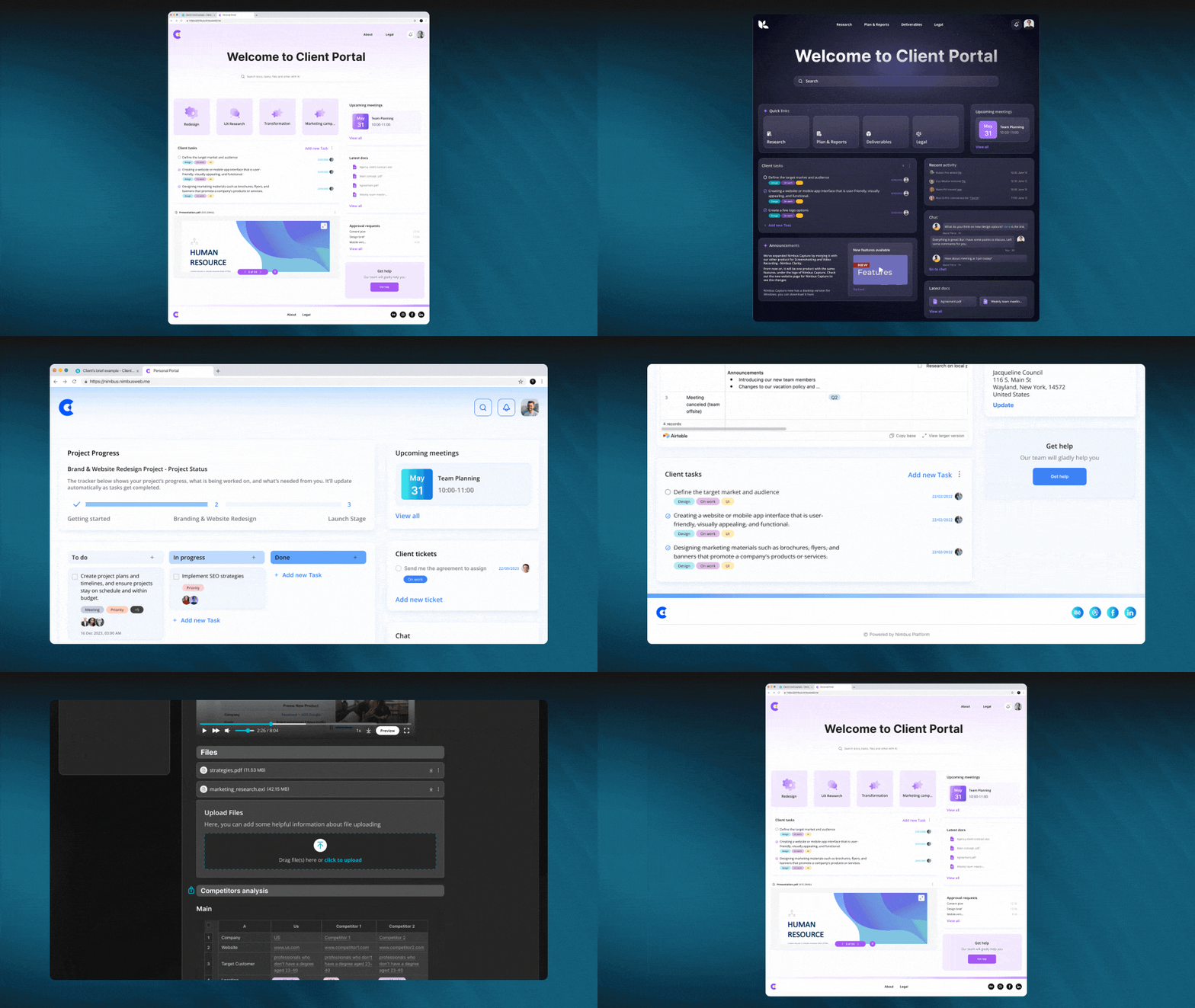
FuseBase provides client-driven businesses with a one centralized system and indispensable collaboration hub designed specifically to simplify client interactions and improve customer engagement by consolidating communication channels, tools, and content into one easy platform they can quickly use to streamline workflows and delight their client base.

If your company’s digital transformation requires and prioritizes customer happiness and adaptation, then you will find this software extremely valuable.

How can  FuseBase (formerly Nimbus) help you deal with all the digital transformation challenges?

Nimbus

FuseBase provides various powerful features, tools, and new systems, making it an invaluable solution for businesses navigating a complex digital transformation journey. Here, we explore some of these features that may assist your scalable business with digital transformation while offering custom-tailored solutions designed specifically to support digitization efforts across its journey and beyond.

  • Client Portals. FuseBase stands out with Client Portal by creating sophisticated yet branded spaces to facilitate efficient project management. These portals eliminate such a significant challenge as siloed decision-making by centralizing updates, approvals, and communication. Once an IT firm went online, its organizational structure improved, marketing materials quickly started featuring updates about software features, launches were no longer confusing or mistimed, teams worked efficiently without data leakage disrupting teamwork processes, and client experiences improved significantly while remaining more transparent than ever.
  • Data Collection. FuseBase provides an essential data collection feature to expedite client information-gathering processes quickly and efficiently by seamlessly embedding forms, surveys, and analytics onto pages for data acquisition purposes. FuseBase’s real-time data collection capability empowers agencies and businesses to improve data security and quickly capture reactions, preferences, and expectations as quickly as they alter strategies to respond to changing target audience requirements in real time, thus helping businesses meet client demands quickly.
  • Knowledge Base. Knowledge base feature can serve as an efficient solution to poor data management by offering an organized platform for creating searchable wikis, documentation, and guides. Institutional knowledge must be protected at all costs to reduce risks of data loss while strengthening overall management practices. Knowledge bases form the cornerstone for informed decision-making and effective collaboration. Imagine an outsourcing agency using multiple platforms for project information storage without a knowledge base solution in place to simplify searching key details and avoid data oversights. Failing to access a central knowledge repository made obtaining essential details time-consuming and inefficient when searching various systems, leading to potential inefficiencies as well as data mistakes. FuseBase makes it simple for businesses to organize all project information into an easily searchable knowledge base for quick retrieval, reduced risks of missing crucial details, and overall improved data management. Employees gain easy access to any details needed, facilitating smooth collaboration and informed decision-making throughout a project’s lifespan.
  • Collaboration and Communication features. FuseBase provides businesses with powerful Collaboration and Communication features to bridge talent and skills gaps with real-time comments and chats, video/audio recording/playback capabilities, and real-time collaboration features that allow employees to meet them head-on. In the workplace setting, FuseBase promotes efficient team communications for maximum productivity while at the same time nurturing a digital world conducive to a collaborative culture for the seamless adoption of digital transformation initiatives by employees.

Summing up

2024 is an essential year for organizations looking to maintain a competitive edge in an increasingly digital economy in terms of digital transformation challenges they must surmount to stay viable. Technological developments and digital transformations continue their rapid ascent while businesses shift online rapidly at increasing rates; having an effective digital presence to reach out to customers has never been more crucial.

Digital transformation enables organizations to increase cost efficiency and effectiveness, leading to increased profits as well as helping develop innovative new business models and revenue streams necessary to remain competitive in today’s environment and digital future. And if you want to get the most out of your business’s digital transformation journey, FuseBase stands ready to support you with a seamless, efficient, and trouble-free experience.

A Comprehensive Dive into Insurance Digital Transformation

Find out how to run insurance digital transformation in the most effective way in our in-depth guide. Click here to learn more.

The insurance market has always had a reputation for conservatism, but that has begun to change. A contract closing without a stack of paperwork was unthinkable to the average person. We could not envision resolving an insurance claim and obtaining compensation in several minutes or hours. The insurance sector, however, has benefited from the spread of insurance digital transformation. Today, the insurance technology industry (InsurTech) is among the most dynamic in the digital economy.

This article highlights the advantages of digital transformation for insurers, the technologies behind its adoption, and examples of successful transformation projects in action.

Understanding digital transformation in insurance 

Digital transformation in insurance involves adopting innovative digital technologies and strategies to enhance customer experiences, operational processes, data analytics, and risk factors evaluation. Digital transformation also includes shifting away from old data processing methods and traditional business practices towards modern technologies like artificial Intelligence (AI), predictive analytics, cloud computing, etc.

Digital transformation can significantly impact the insurance industry as it offers a number of benefits like:

  • Better customer experience. A fast and reliable customer support services is what we all need. Once insurance companies adopt digital channels to communicate with clients, they work more efficiently, offering their clients the necessary convenience. Companies can do almost everything digitally, like selling policies online, streamlining claims processing via mobile apps, and more. And clients love it!
  • Personalized insurance products. It’s that time to use predictive analytics and AI technologies to start creating tailored client experiences to improve customer satisfaction and loyalty and lead to more business opportunities. 
  • Better risk management processes and risk assessment. Digital platforms make customer data analysis and risk assessment more precise, giving insurance companies more accurate rates to set and anticipate losses precisely. This allows them to set rates more efficiently as well as predict losses more precisely in future loss forecasting scenarios.
  • ​​Fighting fraud. Real-time data analytics and machine learning algorithms can identify suspicious activity that indicates fraud; insurance companies can reduce losses through this practice.
  • New products and business model creation. Technologies facilitate the creation of new business models and insurance products, such as cyberattack insurance coverage or pay-as-you-go plans, making new product development possible and meeting consumer expectations.
  • Adapt to rapidly changing market conditions. Insurance industry developments occur constantly due to regulatory, economic, and climate influences; implementing digital transformation enables organizations to respond and adapt more swiftly.

Real-life Use Cases and Success Stories

Streamlining Operations with Technology

Insurance companies process vast amounts of data every day. This increases the amount of time required to perform the daily routine operations. In this case, integrating innovative technologies like cloud platforms, (IoT) sensors, and machine learning can significantly streamline business operations. Adopting new technologies simplifies streamlining operations, automates manual processes, and provides data security.

For instance, besides their traditional benefits, cloud platforms help insurance companies reduce operating costs and increase processing speed, which is already a good reason to shift data to the cloud platform.

Internet of Things (IoT) sensors are a great choice if a company wants to create a more customer-centric model. (IoT) sensors can improve underwriting choices and preventative actions, mitigate risks, and allow individualized pricing based on individual customer behavior.

Enhancing Customer Experience

Digitalization may enhance customer experiences yet also raise customer expectations. Modern customers want instantaneous information and seamless digital customer interaction paired with customized service from insurance executives – something insurers must meet by investing in easy-to-use interfaces, multichannel digital capabilities, and responsive support services that meet these customer demands. Failing to deliver satisfactory digital experiences could result in customer churn.

An effective strategy to attract more clients is using an omnichannel approach. You can create customer groups based on their interests, track behaviors and requests as well as complaints, ensure clients have multiple communication channels available to them for communication purposes and service requests, and finally, ensure customers can quickly get your products or services. Based on all this, you can make more informed decisions, making an omnichannel approach crucial for any insurance company going through digital transformation.

By giving your clients a positive digital experience, your company enhances its brand reputation and position among rivals. 

Innovative Product Development

Innovations and new technologies are precisely what can help an insurance company remain competitive and stay on top. 

Organizations that are not scared of integrating new digital tools and accepting challenges are the market’s leaders because they always prioritize clients’ needs by offering them standout and comfortable solutions. That’s exactly how you increase customer loyalty and make your clients happy with the services a company provides. Isn’t that already enough to take a risk and try a new product? 

The possibilities are endless nowadays everywhere, even in the insurance industry. Your company can benefit from tools that tailor car insurance premiums to each customer or use IoT data to launch parametric insurance for flight delays that will automatically pay out if certain conditions are satisfied.

You can even integrate an AI-powered face recognition used in medical centers to diagnose patients’ conditions to speed up the underwriting process for health insurance and improve the entire client experience. 

You can choose any technology or new tool that will benefit your company; just make sure you do it because other companies will not hesitate when deciding whether to accept the challenge and win or back up and lose clients.

Key Drivers of Digital Transformation in Insurance

Changing Customer Expectations

Many digital transformation initiatives are aimed at enhancing experiences to improve consumer relations. Global insurance consumers place a high value on digital experiences. EY survey results show that only 40 percent of genuine customers decide whether to keep their insurers based on experience quality. The increasing expectations of consumers and their willingness to change providers are forcing insurers into greater accountability, transparency, and effectiveness. These attributes are often the by-products of digital transformations.

The experience is often reliant on the simplicity of the interactions. Insurers can identify customers when they switch channels in the middle of a claim process or while they’re researching new policies. Customers want to interact with insurers through digital channels and other methods. Insurers are expected to have consistent context and information across channels to recognize their customers’ goals and understand where they are on the customer journey. Hand-offs across channels must be seamless. It’s a basic customer expectation.

Competitive Advantage

Insurance is a highly competitive industry, and new players constantly change the traditional business model. The digital transformation gives insurers the flexibility to adapt quickly to changes in market conditions, such as regulatory changes or new customer demands.

Neoinsurers offer an assortment of products and services online 24/7. This makes them particularly appealing to younger customers, such as millennials, who prefer digital services.

As part of an effective response to this new threat of neoinsurers, established players in the insurance industry should provide customers with online access to all products and services offered, in addition to offering new services and becoming sources of advice in customers’ lives. To compete effectively against newcomers like neoinsurers it will also be essential that insurers offer customers full product knowledge as part of an overall offering from established players in this space.

Companies that incorporate digital technology quickly into their core system could enjoy an edge. They can use this advantage to continuously innovate, offering products and services to meet the changing needs of their customers.

Challenges in Digital Transformation

Data Privacy and Security

Cyber attacks have increased exponentially and continue to pose an immense cybersecurity challenge to multiple insurance firms. Given the volume of collected information and its type, insurance providers must remain vigilant if they want to safeguard both customers and online platforms from threats.

Cyberattacks fall into two main categories. First are cyberattacks designed to disable systems for their victims. For instance, a company may find that its website has been temporarily disabled until payment (usually cryptocurrency) has been received from ransom thieves. Second comes malware, which invades systems to steal or modify data stored therein.

Cyber insurance providers face additional responsibilities: they must defend against hackers to manage risk and preserve customer trust. Appropriate protocols like multi-factor authentication or other identity verification technologies must be put in place by insurance firms to keep client information safe.

Personnel and processes capable of handling various risk scenarios must be deployed to respond effectively to threats and privacy issues.

Cybersecurity is one of the primary considerations when selecting an insurer or financial institution, with customers placing great value on data security as one of their criteria for choosing an insurer or bank. Data protection serves as the cornerstone of trust among customers within this sector.

Regulatory Compliance

Insurance is a highly regulated industry that must abide by numerous rules and regulations, which requires them to maintain large amounts of paperwork and data storage – making digitizing processes challenging at best. To remain compliant, insurers need to work in close conjunction with regulators.

Regulators present insurers with an enormous challenge. The insurance sector is heavily regulated, and digital transformation could bring changes that breach current relevant regulations.

Insurance carriers must cooperate closely with regulators to ensure their digital transformation projects comply with all pertinent regulations.

Solution to Run Insurance Digital transformation

Though some businesses fail to fully appreciate the advantages digital transformation brings for the insurance sector, those reading this article know its positive results are indisputable, mainly if using FuseBase (formerly Nimbus) during the transformation journey.

FuseBase is a solution built specifically around meeting client-centric businesses’ needs for digital transformation and can serve as an indispensable asset during and beyond that process. That makes Fuse Base one of the go-to solutions in its class.

FuseBase simplifies interactions between you and clients while streamlining workflows and increasing customer engagement – perfect for an insurance provider looking for a digital transformation tool!

Why FuseBase?

FuseBase

FuseBase (formerly Nimbus) stands out among digital transformation solutions because it goes beyond simple digital transformation tasks; it provides an all-inclusive toolset designed to streamline internal and external processes while supporting teamwork and keeping all employees involved during its transformation journey.

Client-first businesses are at the core of everything the platform does; its primary mission is to assist companies with keeping clients satisfied and loyal to your firm.

FuseBase provides your company with an abundance of incredible features that will enable it to take full advantage of digital transformation efforts while enjoying it as well. Let us describe some of these tools by showing how they can simplify business processes:

  • Client Portals. Remember when we talked about integrating new technologies? Well, this is the case. FuseBase’s client portals feature can revolutionize how your company interacts with clients. You can create branded online portals with custom styling to simply access project details, provide approvals, and collaborate seamlessly. Client Portal also offer a white-label solution and multiple external integrations (Google Docs, Calendly, etc.) So, in case your clients urgently need to update insurance policy details because of a changed address, you don’t have to waste time on countless emails or phone calls. Instead, a person goes into a branded portal, inputs new information through a user-friendly form, attaches new documents, and, after submission, the company gets this request. There are no delays or miscommunication, just a simple and fast process that ends with a great client experience. 
  • Data collection. With the data collection feature, gathering crucial client information is a breeze. You can embed forms, surveys, and analytics into pages without switching to multiple apps. A perfect digital transformation journey is all about the streamlined, user-friendly approach to collecting data and enhancing efficiency. This feature will give you exactly what you need. Imagine an insurance company claims data and feedback from clients about their experiences. How would one do all that? Sending out emails and making phone calls is time-consuming and totally unnecessary. FuseBase’s data collection feature streamlines client feedback within their portal. All clients have to do is submit feedback via an embedded survey and include customer satisfaction levels, suggestions, or complaints. A client-oriented insurance service, in turn, can use real-time notifications to deal with any concerns promptly and use integrated tools to get data about client experiences and use it to improve customer engagement.
  • Project management. Consolidate tasks, timelines, and approvals into clear project boards and workflows with a project management feature if you want to improve transparency and collaboration.  An insurance company can create task self-service, client dashboards, Kanban boards, time-tracking systems, and more to create a space where all clients and companies can track and manage progress efficiently.
    Imagine your company planning a product launch with multiple departments and stakeholders participating. Task coordination may become challenging; with this feature, however, creating an organized project board with tasks to track can become much more straightforward. Communication among project participants is enhanced via an effective project board, and real-time task dashboard updates provide real-time insight. This collaborative approach ensures all members stay on the same page while speeding up approvals and decreasing delays – the insurance company expertly manages each phase of the project lifecycle to deliver client experiences that are both transparent and structured.
  • FuseBase AI. AI capabilities continue to amaze us; FuseBase’s AI assistant is no exception! If you’re looking for a tool that will unburden your team from dealing with the manual processing of tasks and let you concentrate on more important ones, FuseBase AI is what you’ve been looking for. It will help you extract insights from large data sets, will help to generate proposals and briefs, and more!
    Now, let’s get into the details. Sometimes, when developing and marketing new insurance products takes more effort than we expect to create a compelling proposal, content generation features become invaluable tools. FuseBase’s AI assistant knows all the nuances surrounding the insurance industry and can quickly craft tailor-made proposals for each insurer or policyholder. Imagine manually dealing with vast quantities of sensitive customer data: that would be hell on Earth! Instead, FuseBase AI offers a solution: its machine learning algorithm can analyze everything from policy details and claims history, extracting insights that people might miss while making better-informed decisions with already identified patterns, technology trends, and correlations.

Summing up

Insurance digital transformation has already influenced the insurance industry and will continue as technology evolves. That is why there’s no better time than now to start your company’s digital transformation to facilitate interactions with clients and make your company a leader in the insurance sector. 

If you face this challenge and start your digital transformation with FuseBase now, your company will improve its customer-oriented approach and prosper from all the other benefits this journey will bring. 

A Comprehensive Guide to Supply Chain Transformation

Find out how to run supply chain digital transformation in the most effective way in our in-depth guide. Click here to learn more.

With big data technology’s slow but gradual arrival and ever-evolving work process technologies, new elements have been brought into supply chain processes. At its core level, supply chain functionality was profoundly changed by linked devices and IoT; consequently, digital supply chain transformation has spread throughout procurement, warehousing, and finance operations alike. According to Gartner findings, supply chain processes implementing digital technologies saw 20% revenue gains while experiencing 50% decreases in process expenses.

This article investigates supply chain digital transformation, its definition, real-life usage examples, and related challenges and solutions. We hope to equip you with all the knowledge required for effective digital transformation within supply chains.

What is digital transformation in supply chain management? 

Logistics and digital supply chain management must become the core focus of your business to flourish efficiently and increase revenue while building customer loyalty. What steps must be taken? Let’s get to work by understanding the true worth of digital transformation in relation to supply chain processes.

Digital transformation requires organizations to integrate digital technologies in all operations and deliver value to customers while being flexible enough to explore untested concepts.

Digital transformation goes far beyond installing new digital technologies; it also involves using them to reinvent how your organization operates and delivers value to its customers. Digital supply chain transformation boosts efficiency while offering numerous other advantages – among these are:

  • Cost optimization. Supply chain transformation offers immediate cost reduction and optimization benefits to businesses of any kind, as its increased efficiencies help maximize resource use more efficiently – directly impacting costs. Automating tasks saves time and costs by eliminating repetition or duplication, while monitoring processes ensure that errors do not arise due to manual efforts. Predictive responses allow more agility, resulting in savings overall.
  • Talented employees. Remote working is an increasingly popular trend that highlights the advantages of digital technologies. Digital supply chain businesses that embrace it can provide their employees with secure data access at any time or location, collaboration tools enable remote collaboration; and they can recruit highly skilled supply chain leaders globally.
  • Customers are more satisfied with the service.  Your competitive edge and client relationship will increase dramatically by allowing customers to track their orders, providing top-of-the-line products, and guaranteeing they arrive as scheduled.
  • Routine flow automation. Digital supply chains can reduce the amount of SC paperwork, which previously took up much time. In real-time, entrepreneurs have access to all the data they need thanks to IoT sensor devices.
  • Better visibility. Manufacturers and clients both benefit from this feature of supply chain intelligence software. Businesses can quickly detect problems with suppliers by gathering more data about performance; furthermore, companies can more accurately interpret consumer needs to enhance customer service delivery.

Digital supply chain planning presents one of today’s most significant technological and managerial challenges. Traditional supply chains rely heavily on data-intensive processes that could benefit from new technologies; digitalization aims to improve customer experiences via improved communications, inventory visibility, and other methods.

The main goal of improving the entire supply chain ecosystem is to expedite customer orders while cutting costs for all involved (manufacturers/suppliers).

Real-life use cases of supply chain digital transformation

As part of their competitive strategy, many global companies have implemented digital tools into their supply chains to stay ahead of competitors and maintain an edge. Here are several notable instances of digitizing supply chains:

1. Unified platforms

Digital transformations often entail supply chain technologies that help integrate disparate applications or upgrade outdated systems into one cohesive supply chain platform, providing greater visibility throughout inventory management and distribution processes, thus eliminating bottlenecks and increasing efficiency across various tasks.

Digital solutions exist that can enhance supply chain operations at work. Your company will benefit from using these platforms since they can quickly increase the productivity of your supply chain department. You can use cloud document-sharing software for its mobile capabilities or automation features that promote efficiency or use Vendor Managed Inventory (VMI) solutions to have better insight into product movement between stores and suppliers. All these digital supply chain technologies make supply chain planning a breeze by giving your company more significant insights into forecasting capabilities to maintain optimal stock levels for managers.

2. Demand planning and predictive analytics

It’s no secret that by using machine learning, digital technology analytics companies can improve multiple processes in their supply network. It doesn’t just help better anticipate market fluctuations; it allows businesses to simply enhance the accuracy of their demand forecasts and, at the same time, minimize supply chain disruption.

3. AI and automation 

Digital transformation in global supply chains is only possible with advanced technologies like automation. This digital technology simplifies supply chain planning by letting people focus on crucial tasks while it takes care of automated operations and decreases human error risk.

AI and automated tools offer supply chain professionals invaluable assistance with various administrative duties: forecasting trends when purchasing, tracking product movement, and collecting invoice data accurately for precise purchases.

Artificial Intelligence technology empowers businesses to conduct in-depth data analyses without human input, leading them to make more informed decisions and provide tailored client services. Furthermore, AI tools contain natural language processing features that facilitate direct interactions between AIs and clients.

4. Data analytics

Data analytics form the backbone of digital transformation, helping assess current and future trends; data analytics also allow businesses to remain agile by gathering customer demand data and supply chain disruptions or delays within operations, giving us greater chances for timely responses if required.

Supply chain managers can utilize sophisticated tools and software for real-time data access and keep an eye out for changes to supplier activity, disruptions, or shipment status changes that arise at any given moment.

Your organization can leverage data analysis to maximize operations. Visual dashboards make information readily available so decisions can be made more rapidly; automated software and other tools may further streamline decision-making processes as well.

5. Supply chain visibility with Blockchain

Blockchain technology holds great promise to create more transparent, accountable supply chains for businesses to utilize, making monitoring easier while guaranteeing they come from companies dedicated to ethics, environmental protection, and sustainable practices.

6. Enhanced customer service ability

Businesses have had to adjust their sales and distribution strategies in response to changing consumer behaviors, with modern consumers demanding rapid deliveries via supply chains, as this requires swift action by all departments, including logistics and fulfillment, in order to retain customers quickly while meeting expectations promptly and reliably.

Organizations are making the necessary adjustments by shifting towards direct-to-consumer sales models while taking cues from retailers’ strategies for strengthening digital customer support capabilities.

Implementation of this strategy includes setting up online stores and ordering forms to increase remote customer communication and ordering capabilities. Businesses may utilize virtual reality technologies to demonstrate products/services, conduct tours of facilities, or even conduct presentations about themselves remotely.

Key components of supply chain digital transformation

Cloud computing 

Cloud computing can transform supply chains in many ways. Cloud-based collaboration software enables supply chain stakeholders and partners to communicate more rapidly, collaborate more efficiently in real-time, and respond faster and more quickly to evolving market requirements or customer desires.

Cloud computing enables companies to carry out efficiently and plan supply chain execution more effectively. Through cloud-based tools, organizations have access to real-time information regarding all parts of their supply chains, which allows for enhanced demand forecasting, inventory levels management, and changes in demand/supply planning.

Internet of Things (IoT)

Internet of Things technology is increasingly being deployed in various ways for supply chain transformation purposes. IoT sensors enable real-time tracking and visibility as products move throughout supply chains; businesses using IoT sensors gain real-time information regarding product location, status, and condition to help optimize logistics strategies and transportation plans.

IoT technology can also aid inventory data accuracy and timeliness by quickly gathering accurate inventory information with devices like RFID tags or barcode readers that collect real-time updates of inventory counts.

Artificial Intelligence 

Artificial Intelligence can transform the digital supply chain in many ways. AI can assist managers with streamlining processes for demand planning, inventory levels, and logistics operations with less manual intervention, ultimately providing more responsive management decisions and flexible supply chains.

AI technology assists businesses in improving the accuracy, timeliness, and reliability of supply chains by using artificial intelligence tools such as Natural Language Understanding or Semantic Analysis for extracting pertinent information from multiple sources – sensor data or customer feedback being two examples where companies might utilize this type of AI customer support software.

Data analytics 

Complex supply chains are currently experiencing rapid disruption. And since most businesses now need to react rapidly to changing customer demands before they fluctuate, it’s better to turn to advanced technologies like computer learning and predictive models.

Did you know that your company’s supply chain’s performance also depends on data analytics, as it’s one of the indispensable elements of transportation and logistics processes? When tracking product movement through the supply chain, the database you get can reveal many inefficiencies. And once you analyze that data, go through supply chain digitization, and optimize routes, you will see that transportation costs are decreasing.

Machine Learning 

Besides being an invaluable asset for detecting bottlenecks in logistics, machine learning is one of the critical components of supply chain transformation because it can prove its worth in various areas.

We can rely heavily on computers because they have one massive advantage over people – they don’t get tired and make no mistakes. When companies use machine learning during supply chain transformations, they know it’s safe to rely on it. ML can help with everything – from improving demand planning accuracy and efficiency to predicting supply and demand pattern shifts. Besides that, machine learning algorithms can adapt to supply chain processes’ difficulties and make changes along the way.

Challenges in supply chain digital transformation

  • Failure to create an effective change management strategy. One essential part of supply chain transformations lies in developing an effective change management plan; your supply chain’s success relies on keeping issues top-of-mind during planning sessions and taking personal responsibility to find creative ways of solving any potential obstacles.
  • Wrong use of tools and systems. Companies undertaking digital supply chain transformation initiatives often neglect to provide employees with adequate training on the new systems and software necessary for implementation, even though many were designed with user-friendliness in mind. There will still be an initial learning curve associated with any new implementation, and your company must feel comfortable using any unfamiliar technologies or systems, comprehend their applications, and see the value in adopting them. Experience with global organizations has shown that legacy tools and systems often remain used because people view them as more efficient over time, especially since many organizations need more training on new systems to maximize their efficiency.
  • External disruptions. Do not become distracted by digital transformation hype: always focus on its purpose – minimizing disruptions – before diving in. Your customers’ needs are always changing. Also, stressors like pandemics, political uncertainty, port block congestion, and others will continue to change. The perspective shifts quickly for any company as external challenges become the priority.
  • A loose company culture. Your supply chain transformation will be negatively affected by a loose culture. Supply chain leaders often spend too much energy, time, and money on technology and must integrate this change into the organization’s culture. The latest technologies will always give you a competitive advantage, but keep sight of the people who remain at your company’s core. Your transformation is likely to fail if you don’t make it a top priority from the start. Your employees could become confused and disgruntled as a result.

Solution for supply chain digital transformation

Supply chain digital transformation may be exactly what your business needs to meet current and emerging challenges more easily while opening doors to future ones. Therefore, there should be no debate about starting this transformation process; instead, the only question should be how best to implement it.

FuseBase (formerly Nimbus) can provide businesses with an effective companion for their digital transformation journey and is one of the premier solutions available within its class.

Why FuseBase?

FuseBase

FuseBase can give your company everything it needs to address digital transformation challenges in its supply chain and much more. As previously noted, FuseBase was explicitly designed with client-oriented businesses in mind; therefore, it can streamline internal/external processes while engaging all employees on your journey toward digital transformation and ensure customers remain loyal to your company.

FuseBase offers multiple features for an effortless digital supply chain transformation:

  • Client Portal. This feature can significantly boost client engagement and streamline communications throughout the supply chain by quickly creating customized portals with sleek designs to enable clients to access project details effortlessly.
    Imagine one of your clients has reached out to your firm with concerns over unanticipated product delivery delays at one of its suppliers; what would be an appropriate response from your team? Make them aware of your portal, where they have instantaneous access to real-time updates, production schedules, and collaborative tools – everything a client might require when faced with disrupted productivity or obstacles to progress. Google Docs’ integration into this portal enables seamless sharing and collaborative problem-solving sessions, giving clients instant and accurate decision-making when facing disruptions to productivity or barriers to progress.
  • Data collection. FuseBase’s Data Collection feature is designed to enable companies engaged in supply chain management to gather information efficiently, streamline collaboration, and enhance communication. Users can embed forms, surveys, and analytics directly onto pages without switching applications – this facilitates data-gathering processes while increasing transparency within the digital supply chain and increasing efficiency and collaboration.
    Imagine you have a retailer client experiencing unexpected demand, calling upon you immediately to expedite their supply chain. Utilizing an easily navigable portal with embedded forms, they quickly submit specific order requirements and delivery deadlines for processing via the data collection feature, thus expediting decision-making processes while showing how effective and responsive their supply chain response has been.
  • Project management. FuseBase’s project management feature effectively organizes tasks, timelines, approvals, and workflows into clear project management dashboards for easy collaboration among team members and streamlining work patterns – an indispensable asset in supply chain management.
    Imagine being a distributor facing supply chain challenges due to unanticipated delays in raw material deliveries; your team leverages project management features by setting up a separate board using tasks for expediting these deliveries faster, timelines for quickly reassessing production schedules, approval processes as necessary – providing real-time visibility, transparent collaboration, and swift responses so supply chain issues can be solved as efficiently as possible.
  • Collaboration and communication. FuseBase’s collaboration and communication feature facilitates meaningful interactions by encouraging engagement, clarifying conversations, simulating in-person dynamics for more efficient supply chain management collaboration, and simulating potential future problems that might arise during discussions. Your company could benefit from employing comments, chats, video recording, and audio archiving tools.
    Imagine this: customers have urgently contacted you regarding an issue that threatens delivery for several days without intervention from you or logistics specialists. FuseBase allows your team to engage clients and logistics experts seamlessly using real-time chat capabilities within FuseBase to engage them effectively and address urgent matters immediately. They can use everything from chats, comments, and document sharing to video and audio recording tools to facilitate communication and fully understand specific customs requirements. As FuseBase tools create clear communication channels across supply chains, finding solutions quickly will become much simpler.

Summing up

The future is unpredictable, but we can guess that within several years, it will become impossible to imagine digital supply chain transformation without including cutting-edge technologies like artificial intelligence, the internet of things, and blockchain – plus collaboration and innovation will always play a part in the digital transformation of the supply chain. Businesses that plan to succeed must learn to collaborate with partners and stakeholders more efficiently and get used to implementing innovation to build flexible and resilient supply chains.

Soon, supply chain digital transformation will be based on the need to adapt to sustainable and efficient customer and market demands as they develop over time. 

HR Digital Transformation: Insights and Challenges

Find out what HR digital transformation is, its advantages and challenges, and more about the stages of such a transformation in our 2024 guide. Click here.

Imagine a future where companies engage employees like never before, where data drives decisions and the workplace has transformed into an engaging, efficient and highly personalized place—this is HR digital transformation. Its effects can be felt across industries, from startups to multinational corporations. But what exactly does successful HR digital transformation entail and why has it generated such hype in business circles?

In this article, we’ll reveal what HR digital transformation is. We will analyze its profound impacts, uncover rewards and obstacles associated with digital HR transformation efforts and reveal the stages that lead to success. By the end of this article, you will hold keys for unlocking an entirely new era of HR practices that reimagines how businesses and employees connect and thrive!

Now, let’s get started.

What is HR digital transformation?

Human Resource Management is currently experiencing an immense transformation due to digitalization. New policies favor eliminating manual HR processes and time-consuming paperwork processes to automate them—increasing productivity, efficiency and operational resilience due to HR digital transformation across enterprises. 

HR digital transformation represents an overall transition for any successful enterprise. Businesses can bolster operations by adopting digital tools, components, machine learning technology and systems into their operations systems to streamline them more efficiently.

Human resources (HR) digital transformation refers to moving HR functions from their current paper-based location into digital format to gain more autonomy and efficiency through cutting-edge technologies like automation, data analytics, chatbots and client and customer onboarding software, making it an ongoing process.

Why is HR digital transformation important?

HR changes must have clearly outlined goals to be effective and long-lasting. Any adjustments must be economically sensible for long-term viability and growth.

Transforming HR operations can increase productivity, decrease expenses and enhance employee experience. HR may become an active partner in driving success for any organization with automation and analytics technologies that facilitate faster decision-making processes and smooth operations.

HR digital transformation has become an indispensable element of today’s business world, empowering HR professionals to serve as strategic partners while improving employee experiences and contributing to overall business success.

Benefits of HR digital transformation

Increased employee happiness and engagement 

As your business expands, more staff are needed to handle its increased workload. The HR office, in particular, may require extra staff members like individual HR employees. HR digital transformation offers several solutions for unifying resources and streamlining interactions, contributing to increased employee and customer satisfaction. Increasing connectivity keeps workers informed and interested while encouraging faster work processes.

Better Integration of People Management With Business Strategy 

Workforce planning and human resources data can leverage HR technology to assist an organization with talent management and better aligning itself to its strategic goals. For instance, if expanding into new lines of business, data can show which employees possess the necessary expertise while others might require further training to expand successfully into said lines.

Improved deliberation based on reliable knowledge and data 

COVID-19’s situation showcased how vital data-based decisions are, giving human resource representatives access to data-rich choices that could increase staff efficiency, effectiveness and productivity, ultimately enhancing the employee experience through technology’s computing power and analytical ability.

Eliminated paper-based HR procedures

Automation makes many administrative jobs more efficient by increasing compliance control and eliminating human mistakes, freeing HR professionals to focus on more strategic projects for their companies’ benefit and ultimately improving employee productivity.

Increased workforce visibility 

Tracking employees dispersed across various locations can be challenging; technology makes this easier by connecting fragmented systems to gain full transparency over your workforce and extend it to managers for monitoring aspects like training needs and skills requirements.

Challenges of HR digital transformation

As part of our discussion about digitalization processes and issues organizations face during and after digitization efforts, we will look at several challenges companies might experience during or after digitization efforts.

Data Security and Privacy 

Privacy and data security are of utmost importance in HR digital transformation. Organizations transitioning to digital HR platforms must protect sensitive employee information against increasingly prevalent cyber-attacks. This HR transformation process entails databases, cloud storage solutions, secure transmission channels and access control measures.

Employee Resistance 

Employee resistance stems from our natural tendency as humans to resist change, particularly when new technology and work practices are involved. Employees may fear what lies beyond, feel anxious over job security concerns or require assistance adjusting to new tools and processes. Resistance can take many forms, from disengagement through passive opposition to active opposition. To overcome employee resistance, human resource professionals must implement effective change management strategies, communicating why change must happen while outlining the benefits of the HR operating model to employees as individuals and companies alike. Training employees on how to use digital tools can also reduce resistance levels.

Skill Gaps 

As organizations start implementing digital technologies and advanced HR tools, companies often experience an uneven match between the skills required to use them and those held by HR professionals implementing them. 

Organizations must provide learning and development training programs or upgrade HR staff members as a solution. offering courses like data analysis, digital HR platforms for HR automation technology or other technologies, including a digital learning platform, may help narrow this divide faster. Hiring digital HR specialists or working closely with outside consultants may also speed up the process.

Quality and Accessibility of Data 

HR digital transformation relies heavily on data quality and access, including accuracy, availability and up-to-date HR tools like HRMS. Data quality helps HR processes become more effective while leading to more intelligent decision-making. Data cleansing, validation and standardization are critical steps toward maintaining high data quality; organizations should implement data governance frameworks to clearly articulate roles, responsibilities and standards within an organization.

Change Management 

Change management is paramount in any HR digital transformation initiative as it addresses its human elements. Change management involves planning, implementing and communicating changes successfully so employees and stakeholders can adapt more quickly to digital transformation in HR. Without an effective change management strategy to support its success, its destiny could be in jeopardy.

How long does digital transformation take?

Timing of HR digital transformation varies between organizations depending on factors like size, existing IT infrastructure, scope of transformation, and commitment and acceptance for change.

Professionals estimate that once an overall concept of digital transformation in HR has been decided and agreed upon, its realization could take between 12-18 months to materialize. You can achieve a minimal viable transformation of your entire organization in 18 months. It’s best to implement HR digital transformation in phases. It allows organizations to test and adjust along the way. Some changes are relatively quick to implement, but a complete digital transformation can take several months or even years.

6 Stages of HR digital transformation when working with FuseBase (formerly Nimbus)

FuseBase (formerly Nimbus), a versatile collaboration platform explicitly designed for client-oriented businesses, plays an essential part in the HR digital transformation journey. FuseBase (formerly Nimbus) provides HR professionals with an intuitive platform that integrates communication, content management and essential tools into one streamlined package—providing HRs with the tools to successfully navigate digital transformation challenges. FuseBase (formerly Nimbus) collaboration platform excels at simplifying and improving every stage of HR digital transformation. Let’s delve into each stage of HR digital transformation and discuss how FuseBase (formerly Nimbus) can serve as an invaluable asset at each one.

Stage 1: Business as Usual 

Business as usual is the first of the six stages where your HR digital transformation journey starts. This stage shows things are stuck in the past. Traditional HR operations remain prevalent, top business leaders are uninterested in change and the HR department is using outdated approaches. Everyone appears comfortable using old methods. Everybody’s focus seems more directed on maintaining the status quo and sticking with what’s familiar than shifting towards anything different and willing to raise digital literacy in the company.

FuseBase’s (formerly Nimbus) Knowledge Base feature can be especially valuable to organizations in Stage 1, where traditional HR methods remain prevalent due to leadership’s inability or unwillingness to change outdated solutions. By building accessible knowledge bases that incorporate digital technologies, companies preserve institutional knowledge while keeping vital insights alive even when leaders resist change. Documenting HR processes and practices into one centralized knowledge base prepares your entire organization for transformation while safeguarding essential HR knowledge.

Stage 2: Present and Active

Present and Active is the second of 6 stages of the HR digital transformation journey, where HR teams start getting curious about different methods of doing things. Big bosses are beginning to see the advantages of technology in HR, creative ideas surfacing and trials conducted on new technology or processes. In this stage, HR begins testing different ideas or processes while trying small experiments in an “I wonder what will happen” phase to optimize HR work processes and practices.

FuseBase

FuseBase’s (formerly Nimbus) Client Portals feature is an ideal fit to get the most out of this stage. HR employees can utilize this digital technology tool to easily create customized project portals branded to each employee.

With FuseBase (formerly Nimbus) you can:

  • Centralize updates –  Make updates more user-friendly by creating and organizing files into folders.
  • Streamline approvals – Streamline approvals by receiving notifications directly on your dashboard when someone completes a task.
  • Enhance communication – Transform employee communication by engaging  via convenient chat channels.

This incredible feature provides users with an enhanced client experience while successfully implementing technology or process changes. FuseBase’s Client Portals provide HR departments a way of streamlining communication while creating the foundation for future transformation initiatives.

Stage 3: Formalized

Things have taken a significant turn in Stage 3: job applicants and employee data are now essential factors when making decisions. With everyone from big bosses guiding people on how best to use new systems to team members pitching in with their expertise to apply new tech across their companies—it marks an era where everyone works collaboratively to digitally transform the organization.

At Stage 3, FuseBase’s Data Collection feature is ideal when the HR team embraces data-driven decision-making and adopts new technology. This feature enables HR departments to easily embed forms, surveys and analytics into HR processes, streamlining data gathering from candidates and employees while discovering information discrepancies & formalizing data use for decision-making purposes. As executive members guide organizations into adapting new systems efficiently, Data Collection ensures each team member contributes their expertise for accurate HR data gathering & storage.

Stage 4: Strategic

Stage 4 is one of the stages of the digital HR transformation journey where things start moving rapidly. Those responsible for leading HR changes sit directly under their big boss, so convincing people of digital changes is no longer required. Now is when planning for future HR operations is key; you are building an expanded road and google map of technological solutions that spans years into the future.

FuseBase’s collaboration feature is essential in supporting digital HR transformation projects involving multidisciplinary teams and long-term planning by offering comments, chats, Video/Audio Recording capabilities and Real-time Collaboration features that facilitate successful results for organizational transformation efforts.

  • Comments provide an ideal platform for team discussions around HR transformation strategies and long-term plans.
  • Chats offer real-time communication channels for multidisciplinary teams, providing instant discussions, updates sharing and brainstorming sessions regarding HR transformation roadmaps. 
  • Video and Audio Recording help users to make sure they’ve captured important meetings, discussions and presentations related to HR transformation strategies to safeguard key dialogue for reference and future planning purposes.
  • Real-time Collaboration tools enable teams to work simultaneously on documents, plans and strategies—this feature is particularly valuable when developing HR transformation roadmaps that integrate HR across every facet of business operations.

Stage 5: Converged

Stage 5 of HR strategy development focuses on making employee lives exceptional. By engaging creative HR teams and outside help to optimize how new hires are welcomed, learning strategies implemented, goals met and achievements reached, you are looking for ways to create an incredible employee experience—moments that bring people joy while improving job performance. Hence, employees remain with your company long-term. At this stage, HR leaders guide company strategy and operations while initiating exciting changes within HR operations/strategies with more rewarding employee benefits for all staff involved.

FuseBase (formerly Nimbus) allows you to invite external experts and agencies into your client portal, giving them access to documents and resources they’ll require for specific projects—opening doors to innovation!

This feature allows you to collaborate closely with external partners, enabling them to contribute their expertise directly into specific folders or generate novel ideas. It also simplifies collaboration and innovation, ultimately leading to improved employee engagement and efficiency within HR at this stage of its journey.

Stage 6: Innovative and adaptive

Stage 6, the last one of the stages of HR digital transformation, involves testing out new things and exploring what’s possible. Your digital transformation team resembles an inventive group, working closely with other departments and testing seemingly offbeat ideas, such as HR transformation. Though experimentation doesn’t always go smoothly, they continue with it anyway! At this stage, all those within an organization start seeing things differently; digital transformation becomes part of everyday work life for employees like an entirely new world reveals itself! Digital transformation becomes the new normal—something out of science fiction that makes all other work possible!

FuseBase’s integration feature is truly game-changing for this final stage; it acts as an arsenal of gadgets you can connect to FuseBase (formerly Nimbus) seamlessly.

So, suppose one of your colleagues develops a unique feature in another tool, finds an intriguing website reference or creates an incredible design flow in Figma. In that case, you can seamlessly incorporate those innovations into FuseBase (formerly Nimbus).

FuseBase (formerly Nimbus) serves as an open doorway to new ideas, offering you a portal into all the creative and innovative experiments being performed across your organization. By harnessing FuseBase (formerly Nimbus) for these experiments, you keep digital transformation rolling forward despite some unconventional concepts; digital transformation will become a normal part of the company’s life!

HR digital transformation examples

Digital Onboarding

Thousands of people have been employed after the pandemic and never set foot inside a company’s office, which makes it harder to get started in a new company. The increasing popularity of remote and hybrid work makes this a constant challenge.

In some cases, what used to be a few anxious days while new employees got to know their colleagues and their company culture has been replaced with a feeling of disconnection from their company and its culture.

Through its digital employee onboarding process, FuseBase (formerly Nimbus) serves as a bridge that introduces new employees to their company culture and processes, whether they are working remotely, following a hybrid schedule or are office-based. Employees access documents, instructional material and essential resources through an employee portal. Widgets housing process documents, task lists and clickable checklists make onboarding procedures accessible and smooth for newcomers. With integrations like Calendly, they can seamlessly schedule meetings with mentors or colleagues without feeling disconnected from their company culture and goals. FuseBase (formerly Nimbus) turns remote onboarding from a disjointed effort to an integrated experience for employees.

Performance management

It is evident that the board representative’s execution was an HR waste, as it required manual auditing and an assortment of assessment structures. The robotization of these paper-based, monotonous cycles will increase profitability and maintainability through better critique, objective setting and more preparation opportunities.

Determining and discussing goals with representatives is critical to the execution of executives. Representatives and directors can monitor the achievements of executives in an exhibit of their framework with robotization. After implementation, the information allows HR offices to identify bottlenecks. Using automation, notifications and updates are sent to both representatives and administrators to promote the culmination and completion of important achievements.

FuseBase (formerly Nimbus) stands as an invaluable ally for HR digital transformation efforts, automating time-intensive processes like manual collection of employee feedback and review of assessment forms through FuseBase (formerly Nimbus) to increase efficiency and promote employee retention. One notable feature is HR’s Task Management system, through which employees and HR can assign tasks to new hires and monitor their completion. With the help of this important digital technology, employees then mark tasks complete, allowing HR to evaluate performance objectively and adapt training or support accordingly. FuseBase (formerly Nimbus) streamlines the onboarding process and ensures employees are actively engaging and aligning themselves with organizational goals. Furthermore, tracking and notifications features help HRs pinpoint bottlenecks within processes so important milestones are reached efficiently and smoothly.

Employee Self-Service Portals

A McKinsey report found  employees spent nearly a full day every week searching for company information, including basic human resources data. “How much time can I take off? Who do I call when I am sick? What is the best way to get my W-2 form from 2 years ago?”  

FuseBase (formerly Nimbus) makes this process simpler by offering its powerful Knowledge Base feature, enabling HRs to quickly build an employee knowledge repository containing essential info that is readily accessible for easy reference.

This is one of the best digital HR solutions that help employees quickly locate answers to common employee inquiries in this centralized knowledge base, freeing them to seek solutions independently while alleviating HR professionals of some burden. Not only is FuseBase (formerly Nimbus) efficient, but it also fosters an atmosphere of self-service and knowledge empowerment within your organization.

Summing up: HR digital transformation best practices

Human Resources Digital Transformation can have powerful positive results on business. Successful HR digital transformation depends on many factors, including strategic alignment and leadership support, data-driven decision-making and implementation, change management, user-centric design, collaboration/sustainability and continuous improvement. HR digital transformation provides a way for organizations to create environments that are employee-friendly and adaptable at the same time. This article covers the best practices that will aid your company’s transformation processes if appropriately implemented. Good luck with your transformation journey!

It seems that the release date for Star Wars Outlaws has been leaked

Journalist Tom Henderson has stated that Star Wars Outlaws will be released at some point in the first half of the year, which means…

Despite the difficulties that Ubisoft continues to face, the company has some major releases planned for this year. If there are no further delays, Ubisoft has two major releases planned for this year: Star Wars Outlaws (first half of 2024) and Assassin’s Creed Codename Red (second half of 2024).

Star Wars Outlaws DOWNLOAD

In recent months, there have been several questions about Ubisoft’s roadmap for releases, with one particular game catching attention: the highly anticipated and delayed Star Wars Outlaws.

The open-world action and adventure title from Massive Entertainment looks promising from what we’ve seen so far, and its release is scheduled for 2024, but in which exact year?

Before July 2024

In a report published on Insider Gaming, journalist Tom Henderson has stated that Star Wars Outlaws will be released sometime in the first half of the year, which means the game will be launched before July, if everything goes as planned.

Henderson also claims that Assassin’s Creed Codename Red will be released in the second half of the year, which aligns with several previous leaks, and that the next two years will bring the announced Splinter Cell remake, a new Ghost Recon game, and much more.

At the beginning of this month, Disney seemed to suggest that Star Wars Outlaws would be released in “late” 2024, although Ubisoft quickly stated in a press release that it was a mistake. Officially, the publisher has maintained the release date of 2024, but so far has refused to specify it.

Star Wars Outlaws DOWNLOAD

When it goes on sale, Star Wars Outlaws will be available for PS5, Xbox Series X/S, and PC, that is, for the new generation of consoles, as has been the norm for the past couple of years.

Apple almost eliminates the MacBook Air: Jony Ive wanted it

They were seeking to streamline the company’s laptop range, focusing solely on the MacBook Pro.

In the technological world, few companies have as much impact as Apple, and their decisions regarding products and services are always of great interest and generate debate. In line with this, in an episode of The Vergecast podcast, journalist Walt Mossberg revealed some quite surprising information: Jony Ive, former head of design at Apple, had the intention of completely eliminating the MacBook Air line. According to Mossberg, who cites a high-level source within Apple, Ive sought to simplify the company’s range of laptops, focusing solely on the MacBook Pro.

Apple TV+ SUBSCRIBE

What would have happened to Apple laptops?

Ive’s proposal was bold: to create a MacBook Pro as light and thin, or even more, than the MacBook Air. This move, according to him, would benefit Apple’s product line, making it simpler, not to mention that it would generate revenue with a higher-priced MacBook Pro. However, the idea went against Steve Jobs’ philosophy, who always advocated for maintaining two distinct product lines: one for the general consumer and another for professionals.

The tension between the design team led by Ive and the engineering and product management side of Apple was palpable. The latter group defended the importance of the MacBook Air, arguing its sales success and relevance in the market. Finally, this vision prevailed and an update of the MacBook Air was launched in 2018.

Apple TV+ SUBSCRIBE

Although this story comes from a single source — as Mossberg comments — and may lack the usual journalistic rigor, it raises an interesting “what if” in Apple’s history. Ive left the company the following year, and while it is not claimed that this decision was directly related to the outcome of this dispute, it does mark a turning point in Apple’s product strategy. While we wait for a new MacBook Air soon, would we have accepted a single MacBook model?

Google is spending billions of dollars to be able to lay off its workers

The main revenue generator for Google, its search engine business, generated 48 billion dollars, an increase of almost 13%.

Google spent $2.1 billion on severance payments when laying off over 12,000 employees throughout 2023. And the layoff charges keep coming: in just one month of 2024 so far, the company has already spent another $700 million on 1,000 more layoffs.

Google Chrome DOWNLOAD

Alphabet, Google’s parent company, revealed the figure along with the release of its fourth-quarter results on Tuesday.

Despite the cuts, Google closed 2023 with growth in most of its main lines of business. Google recorded revenues of $86 billion in the fourth quarter of 2023, representing a year-on-year increase of 13%.

Increased profits and layoffs, the world upside down

The main digital advertising and cloud computing businesses of the search giant also showed steady growth, which CEO Sundar Pichai attributed to Google’s investments in generative AI.

Google’s main revenue generator, its search engine business, generated $48 billion, an increase of nearly 13% year-over-year. The company’s subscription services and devices segment generated $10.7 billion, primarily thanks to subscriptions to YouTube Premium and Music, YouTube TV, and Google One, according to Pichai. YouTube’s advertising revenue amounted to $9.2 billion, a 15% increase from last year.

Google is currently the third largest cloud provider in the world, behind Microsoft’s Azure and AWS. But the cloud division gained momentum last year. The company recorded revenues of $9.19 billion in Google Cloud, representing a significant year-on-year increase of 25.6%.

Google Chrome DOWNLOAD

And Google’s continuous investments in AI, or its “Gemini era”, mean that in 2024 there will be even more layoffs, as the company will make cuts in other divisions to compensate.