The creators of the acclaimed series Stranger Things, the Duffer brothers, are preparing to launch their new project titled The Boroughs, a series that promises to captivate the audience with its intriguing narrative and a cast of renowned actors. The production, which will be directed by Ben Taylor, Augustine Frizzel, and Kyle Patrick Alvarez, will be available on Netflix starting May 21. A series that promises to be a hit The plot of The Boroughs transports us to an apparently idyllic retirement community, where a group of elderly people is forced to come together after an unexpected encounter with […]
The creators of the acclaimed series Stranger Things, the Duffer brothers, are preparing to launch their new project titled The Boroughs, a series that promises to captivate the audience with its intriguing narrative and a cast of renowned actors. The production, which will be directed by Ben Taylor, Augustine Frizzel, and Kyle Patrick Alvarez, will be available on Netflix starting May 21.
A series that promises to take the world by storm
The plot of The Boroughs transports us to an apparently idyllic retirement community, where a group of elderly people is forced to come together after an unexpected encounter with a monstrous creature. This event triggers a series of events that reveal a dark secret that calls into question the value of their golden years. The series promises to reflect on life in old age and the dangers that may lurk behind a tranquil facade.
The cast of The Boroughs includes talented actors such as Alfred Molina, Geena Davis, Alfre Woodard, and Bill Pullman, who will bring great quality to the project. Alongside them, Denis O’Hare, Clarke Peters, Carlos Miranda, Jena Malone, Seth Numrich, and Alice Kremelberg participate, suggesting that the series will not skimp on acting talent.
Additionally, The Boroughs serves as a nod to the classic 1985 film Cocoon, which was a major success and won two Academy Awards. This homage to 80s pop culture is part of the essence that the Duffer brothers seek to capture in their new work, suggesting that the connection to the cinema of the era will become a prominent aspect of the series. Thus, The Boroughs will not only attract modern fans but also those nostalgic for the iconic films of their youth.
The creators of the acclaimed series Stranger Things, the Duffer brothers, are preparing to launch their new project titled The Boroughs, a series that promises to captivate the audience with its intriguing narrative and a cast of renowned actors. The production, which will be directed by Ben Taylor, Augustine Frizzel, and Kyle Patrick Alvarez, will be available on Netflix starting May 21. A series that promises to be a hit The plot of The Boroughs transports us to an apparently idyllic retirement community, where a group of elderly people is forced to come together after an unexpected encounter with […]
The creators of the acclaimed series Stranger Things, the Duffer brothers, are preparing to launch their new project titled The Boroughs, a series that promises to captivate the audience with its intriguing narrative and a cast of renowned actors. The production, which will be directed by Ben Taylor, Augustine Frizzel, and Kyle Patrick Alvarez, will be available on Netflix starting May 21.
A series that promises to take by storm
The plot of The Boroughs transports us to an apparently idyllic retirement community, where a group of elderly people is forced to come together after an unexpected encounter with a monstrous creature. This event triggers a series of events that reveal a dark secret that calls into question the value of their golden years. The series promises to reflect on life in old age and the dangers that may lurk behind a calm facade.
The cast of The Boroughs includes talented actors such as Alfred Molina, Geena Davis, Alfre Woodard, and Bill Pullman, who will bring great quality to the project. Alongside them, Denis O’Hare, Clarke Peters, Carlos Miranda, Jena Malone, Seth Numrich, and Alice Kremelberg participate, suggesting that the series will not skimp on acting talent.
Additionally, The Boroughs serves as a nod to the classic 1985 film Cocoon, which was a major success and won two Academy Awards. This homage to 80s pop culture is part of the essence that the Duffer brothers seek to capture in their new work, suggesting that the connection to the cinema of the era will become a prominent aspect of the series. Thus, The Boroughs will not only attract modern fans but also those nostalgic for the iconic films of their youth.
The Shrouded Sky 1.17 update of Arc Raiders has brought significant changes to weapon balance, especially focused on improving the gameplay experience in PvP mode. Embark has identified that some low-level weapons, such as the Stitcher and the Kettle, have been standing out on the battlefield, facilitating free charges in the game and penalizing competitiveness. An update for those who do not speak The Stitcher has seen its elimination time increased, while the damage of the Kettle has been reduced. These adjustments aim to encourage the use of higher quality weapons while […]
The Shrouded Sky 1.17 update of Arc Raiders has brought significant changes to weapon balance, especially focused on improving the gameplay experience in PvP mode. Embark has identified that some low-level weapons, such as the Stitcher and the Kettle, have been excelling on the battlefield, facilitating free charges in the game and penalizing competitiveness.
An update for those who do not speak
The Stitcher has seen its elimination time increased, while the Kettle’s damage has been reduced. These adjustments aim to encourage the use of higher quality weapons while reducing the preference for strategies that rely on low-cost armaments. Despite not being adjusted this time, the Il Toro shotgun continues to raise concerns among players due to the imbalances it causes during gameplay.
In the game’s Discord server, the community has expressed its concerns about these issues, and Embark has acknowledged that it is working on solutions to address the frustrating dynamics of PvP. Although Il Toro has not received nerfs in this update, it has been confirmed that the development team is evaluating its impact and considering future adjustments.
In addition, the update has included improvements to the Aphelion, a weapon that had been considered underperforming in the PvP context, providing players with more balanced options. Other changes include the additional nerf to the Venator, which has increased its elimination time, while developers warn of possible adjustments to its ammunition consumption if current results are not satisfactory.
In summary, while Embark continues to listen to the voices of its community, these modifications represent an effort to balance the game and promote a fairer experience for all players in the increasingly competitive environment of Arc Raiders.
Ubisoft is going through a significant crisis following the failure of Skull and Bones, a project that cost $200 million and failed to capture the public’s interest. This setback adds to a series of problems that have affected the company, including mass layoffs, the closure of studios, and growing dissatisfaction among employees, who have protested against the obligation to return to the office. The departure of key individuals has harmed the company. The exit of numerous key executives and creatives has decreased both the quality and quantity of new Ubisoft games
Ubisoft is going through a significant crisis following the failure of Skull and Bones, a project that cost $200 million and failed to capture the public’s interest. This setback adds to a series of problems that have affected the company, including mass layoffs, the closure of studios and growing dissatisfaction among employees, who have protested against the obligation to return to the office.
The departure of key individuals has harmed the company
The departure of numerous key executives and creatives has diminished both the quality and quantity of new Ubisoft games. Alex Hutchinson, former creative director of Far Cry 4 and Assassin’s Creed 3, suggests that this decline is due to several cumulative factors, including a talent drain that has intensified in recent years. This has complicated the management of large teams, especially in a remote work environment that has hindered learning and collaboration among employees.
One of the most notable examples of the lack of innovation at Ubisoft is the game Pioneer, which was originally intended to be a peaceful exploration experience. However, it was canceled and transformed into a cooperative shooter, reflecting the company’s reluctance to take risks with new concepts.
As Ubisoft navigates this restructuring, efforts include the establishment of ‘creative houses’ that could restore the autonomy of studios in their projects. However, this change comes at a critical time and could take years before players see tangible results. Meanwhile, Tencent’s control over 26% of the newly formed subsidiary Vantage Studios for Assassin’s Creed adds another layer of complexity to the company’s situation.
With each new obstacle overcome, the path to recovery becomes increasingly uncertain for Ubisoft.
A new trailer for Mortal Kombat 2 has been released, focusing on the iconic character Johnny Cage, played by Karl Urban. This teaser reveals the actor in a moment of crisis, just before being selected to participate in Mortal Kombat, where he faces Sonya, although with initial reluctance due to his chivalrous nature. However, the story soon takes a more intense turn when the battle becomes inevitable. A movie that has excited its creator The sequel to the 2021 film continues the narrative of the Earthrealm champions, who must unite to fight against […]
A new trailer for Mortal Kombat 2 has been released, focusing on the iconic character Johnny Cage, played by Karl Urban. This teaser reveals the actor in a moment of crisis, just before being selected to participate in Mortal Kombat, where he faces Sonya, although with initial reluctance due to his chivalrous nature. However, the story soon takes a more intense turn when the battle becomes inevitable.
A movie that has its creator excited
The sequel to the 2021 movie continues the narrative of the champions of Earthrealm, who must unite to combat the villain Shao Kahn, a threat seeking to dominate their world. According to Ed Boon, co-creator of the franchise, the opening of Mortal Kombat 2 will be a unique emotional experience that will set the tone for the film. Boon commented: It’s a powerful start that will surely leave a lasting impression.
Directed by Simon McQuoid, the film features a notable cast including Adeline Rudolph as Kitana and Jessica McNamee as Sonya Blade, among others. Mortal Kombat 2 is scheduled to be released in theaters on May 8, 2024, and following the success of its predecessor, it is expected to attract an audience eager for the combination of action and nostalgia. With anticipation growing, fans should stay tuned for more updates that may arise as the release date approaches.
The recent cancellation of an animated adaptation project of the comic Head Lopper has left many fans disappointed. The comic, created by Andrew MacLean, has been praised for its distinctive visual style and thrilling action, which led to its consideration for an animated series. However, changes in the corporate structures of the companies involved, including mergers and layoffs, have caused many initiatives to be left in limbo, and Head Lopper has not been the exception. Only two minutes of the project remain. Despite the cancellation, a test clip of […] has been shared
The recent cancellation of an animated adaptation project of the comic Head Lopper has left many fans disappointed. The comic, created by Andrew MacLean, has been praised for its distinctive visual style and thrilling action, which led to its consideration for an animated series. However, changes in the corporate structures of the companies involved, including mergers and layoffs, have caused many initiatives to be left in limbo, and Head Lopper has not been the exception.
Only two minutes left of the project
Despite the cancellation, a two-minute test clip has been shared showing the protagonist, Norgal, in action, capturing the essence of the comic. This clip, although it is just a piece of a project that could have been, highlights the quality and energy that fans were hoping to see in a series. MacLean, in his statements, mentions that this type of situation is a common reality in the entertainment industry, where many talented projects are left behind due to business decisions.
However, the Head Lopper comic series remains alive. A new release has been announced, a special issue that will come out on April 22, which could attract new readers and revitalize interest in the work. With several volumes available, fans and new readers have the opportunity to explore the saga of Norgal and his adventures, as he faces giant monsters and confronts challenges worthy of a true hero.
The comic has been praised for its blend of action and humor in a narrative that captures the imagination of its readers. The wait for an animated adaptation that does it justice remains a fervent wish for the fans of the series. Although there are no news of new developments in that regard, the community remains hopeful, remembering that in the industry rumors about renewed efforts to revive such projects can emerge in the future.
The John Wick saga has set a new standard in the revenge movie genre, combining intense action with careful fight choreography. This influence is evident in the new Mexican production Venganza, directed by Rodrigo Valdés, which is marked as the first original feature film from Amazon MGM in Mexico, with its premiere scheduled for February 26 in theaters. A Mexican John Wick The film, which promises to revolutionize the action movie landscape in the country, is described as the most expensive ever filmed in Mexico. Alonso Aguilar, head of Amazon […]
The John Wick saga has set a new standard in the revenge movie genre, combining intense action with careful fight choreography. This influence is evident in the new Mexican production Venganza, directed by Rodrigo Valdés, which is marked as the first original feature film from Amazon MGM in Mexico, with its premiere scheduled for February 26 in theaters.
A Mexican John Wick
The film, which promises to revolutionize the action movie landscape in the country, is described as the most expensive ever filmed in Mexico. Alonso Aguilar, head of Amazon Originals in Mexico, highlighted the magnitude of the project by pointing out that a “dream team” of producers and specialists from various countries has been created, including a team of Bulgarian specialists and editing in Barcelona, to carry out this ambitious production.
The plot follows the story of Carlos and Miguel, two elite soldiers played by Chaparro and Alejandro Speitzer. After the murder of Carlos’s wife, he takes on the identity of Captain Toro and embarks on a bloody mission of revenge alongside his partner. This focus on the theme of revenge reflects the essence of the genre, where the protagonists take their quest for justice to the extreme.
Chaparro emphasized the importance of public support for the continuation of this type of production in Mexico, noting that the success of Venganza could open the doors to more action films in the future. “In order for this type of movie to continue being produced, we need people to attend the movie theaters,” he stated.
Vengeance seeks not only to capture the essence of the action genre but also to establish a new benchmark for Mexican cinema. With its release on the horizon, the film promises to elevate the cinematic experience to an unprecedented level in the country.
Since its premiere in 1977, Star Wars not only revolutionized cinema with its jedis and lightsabers, but also introduced agile space battles that redefined the audience’s interaction with science fiction. At that time, battles in space were heavy and comparable to those of a warship, but George Lucas’s vision laid the groundwork for what are now the iconic starfighter confrontations. Rogue Squadron is very beloved by Star Wars fans Starting in 1996, the expanded universe of Star Wars, especially through […]
Since its premiere in 1977, Star Wars not only revolutionized cinema with its jedis and lightsabers, but also introduced agile space battles that redefined the audience’s interaction with science fiction. At that time, space battles were heavy and comparable to those of a warship, but George Lucas’s vision laid the groundwork for what are now the iconic starfighter confrontations.
Rogue Squadron is very beloved by Star Wars fans
Starting in 1996, the expanded universe of Star Wars, especially through the Rogue Squadron book and comic series, continued this evolution. With the first book, X-Wing #1 Rogue Squadron, by Michael A. Stackpole, the popular character Wedge Antilles became the central figure for a new squadron being formed after the Battle of Endor. This approach not only captivated fans but also brought a narrative complexity that resonated with a dedicated micro-fandom.
The blend of narratives in the books and comics built a story rich in intrigue. Rogue Squadron, often compared to Top Gun in space, stood out for its detailed flight mechanics and its focus on conspiracy within the rebel ranks, creating an atmosphere of tension and suspense. The impact was such that this series extended over ten novels and its comics also gained popularity, establishing a deep connection between fans.
However, despite its legacy, the modern Star Wars canon has capitalized very little on this rich background. Currently, there are rumors that a Rogue Squadron movie is in development, set in the sequel era, which raises the possibility of iconic figures like Wedge Antilles appearing as older characters. Despite the evolution of the content, fans can still enjoy the Rogue Squadron books and comics, key pieces that kept the spirit of this saga alive.
The general public has always associated the name Adobe with photo editing (the well-known Photoshop) or PDFs with Adobe Acrobat. However, few know that, currently, Adobe Acrobat is capable of much more than editing and opening PDFs. The revolution of generative AI has led Adobe Acrobat to integrate a new tool, AI Assistant. As you can imagine from its name, this assistant has completely transformed the Adobe program into a powerful file management tool. If you want to know exactly what AI Assistant is and […]
The general public has always associated the name Adobe with photo editing (the well-known Photoshop) or PDFs with Adobe Acrobat. However, few know that, currently, Adobe Acrobat is capable of much more than just editing and openingPDFs.
The revolution of generative AI has led Adobe Acrobat to integrate a new tool, AI Assistant. As you can imagine from its name, this assistant has completely transformed Adobe’s program into a powerful file management tool.
If you want to know what AI Assistant is exactly and how you can make the most of it, keep reading a little further down.
It doesn’t matter if you are a large company, a freelancer, or an individual: it is very likely that you have had to deal with many PDFs in your work. The problem, in most cases, usually lies in the information of the PDFs; it is almost never clear, and you have to spend a lot of time gathering the most important details.
Reviewing documentation involves a lot of reading time, a time we almost never have. AI Assistant can help you manage that time; instead of searching for data manually, AI helps you locate it in a contextualized way.
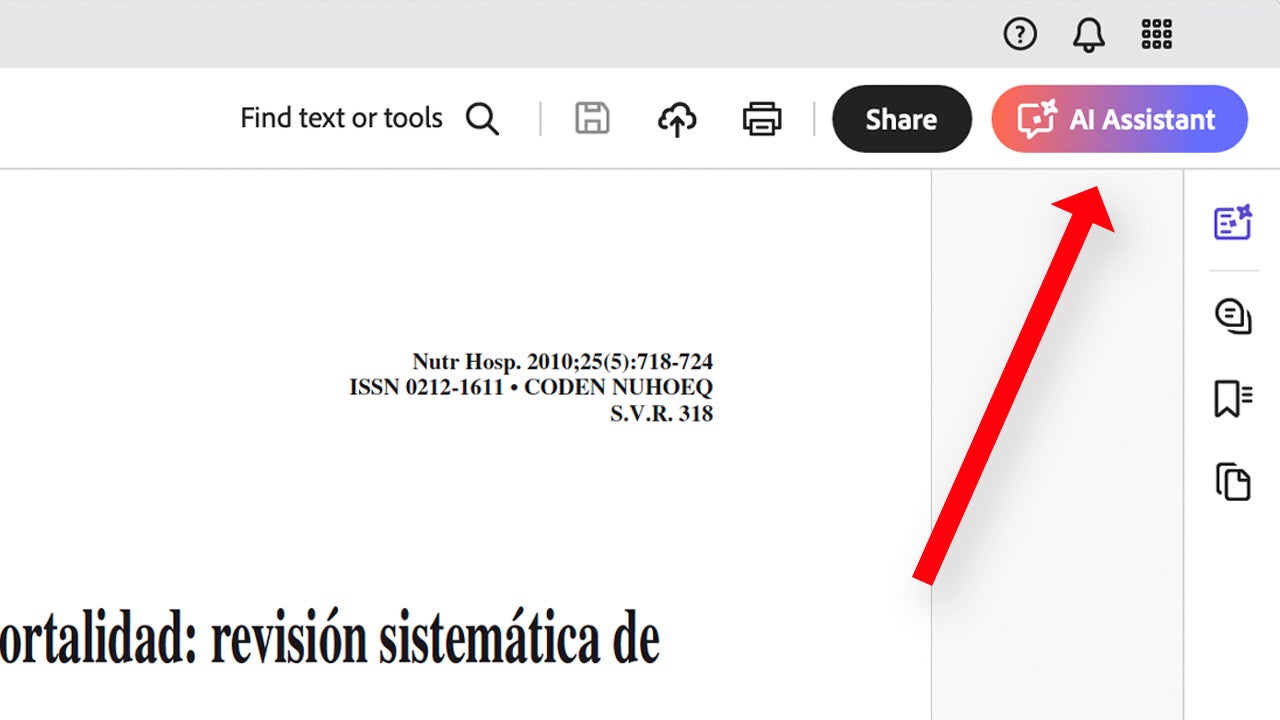
If you are working with the PC version of Adobe Acrobat, open your PDF with Acrobat, just as you normally would. Then, go to the top right and click on the AI Assistant.
By clicking there, you will see several options, one of which is to “chat” with the assistant. From there, you can ask it specific questions. In addition to the application, you can also access Adobe Acrobat from any browser. Go online to Adobe Acrobat and upload your PDF there. From here, Acrobat offers you a series of free questions so you can try firsthand how AI Assistant works.
If you want to access more free questions, you would need to log in with an Adobe account or pay for a subscription, something we will discuss later.
What the Acrobat AI Assistant Allows
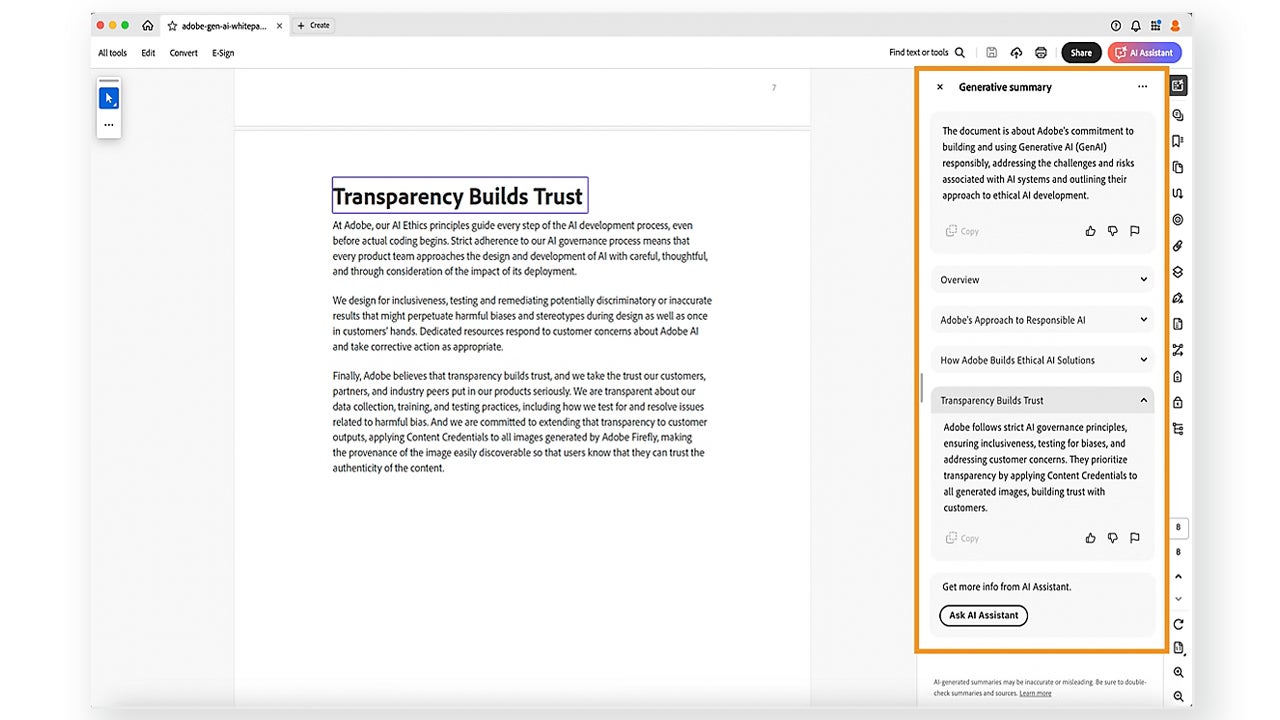
Don’t get it wrong, AI Assistant does not replace your brain to analyze information; it simply helps you get to that information faster. To do this, you can generate summaries (AI Summary) of longer or convoluted documents to save time.
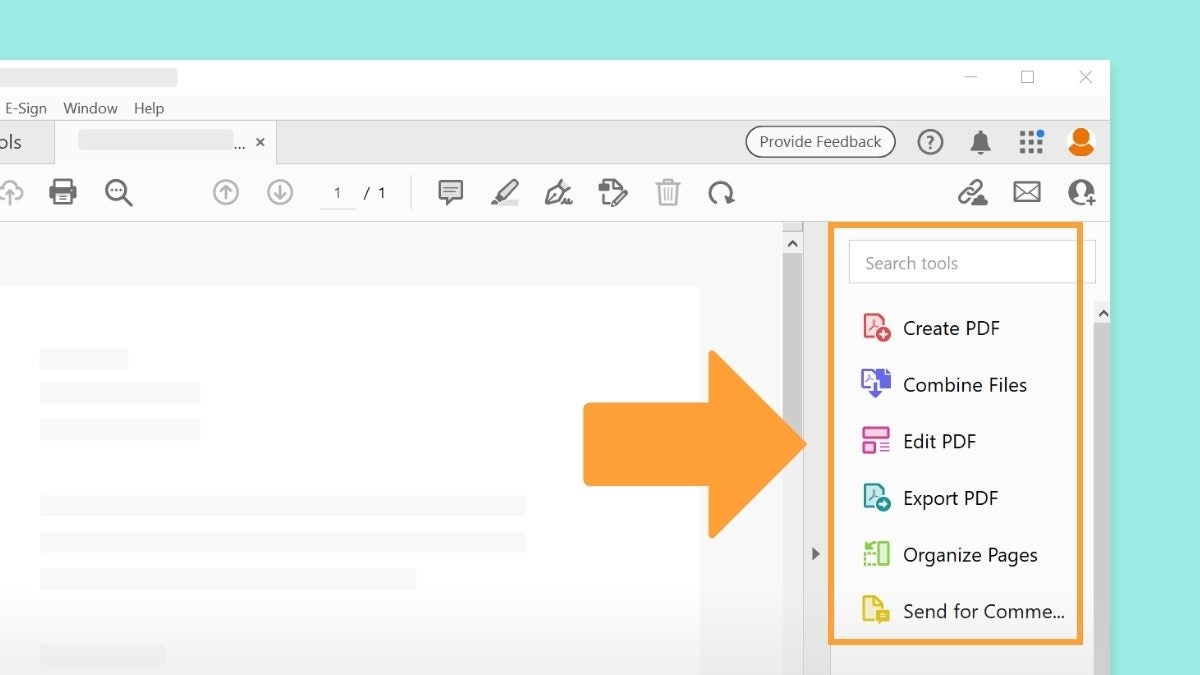
As before, you can access the AI Summary feature from the same AI Assistant button. Alternatively, you can also select All tools > Generative summary.
If prompted, select Get Started. Next, you will see how a summary with the key points of the document is generated in real time. From the summary itself, you can also access the parts of the document from which the information was extracted.
Use cases beyond editing
In any job, having a fast response time is essential. However, analyzing extensive requests or technical documentation can lead to significant delays. With AI Assistant, it is possible to identify the essentials and extract the relevant information more quickly.
Reduction of manual labor across all teams
PDF Spaces is a feature designed for teams that need to organize their documents. It is not just about storing files, but about creating a structured environment where documents are grouped by project or teams.
To get started, we will need to access Acrobat in its web version. Click on PDF Spaces, you will find it on the main page, in the Tools tab on the left.
Next, drag from your PC to Archives the files you want to be in your PDF Space. Now that you have created your PDF Space, you can share it with other users from the Share button.
From here, you can add the emails of the people you want to invite to edit or view your PDF Space. From Link access you can configure permissions for external users.
How Acrobat AI Fits into Comprehensive Workflows
Adobe Acrobatdoes not work in isolation; its usefulness increases when it is part of a broader ecosystem of creation and collaboration tools. The information from your PDFs can be turned into presentations or serve as material for other types of visual content, such as what you can create with Adobe Express.
You’ve just hit your 14th tab in a desperate search for the perfect stock photo. Just two hours left until your deadline, and that elusive “perfect” hero image is buried somewhere among shots of business people smiling at salad for some reason. SaaS landing page gradients are all starting to merge into the singularity as you scroll. Good luck with that.
The sad reality is that you’re not just choosing a pretty photo. You’re deciding that changes click throughs, comprehension, confidence in your brand, and the time it will take for the rest of the work to be approved.
It gets really tricky when you need your asset to act as a visual for a landing page that has to leave room for a headline, or a social post that needs to fit exactly like your existing campaign… Or even an image for a deck in a pitch that needs to look like it was intentional to the content. All that means for you is that time is essential, because if you spend too much time looking, all you end up doing is doubting your selections and wasting a ton of hours. When you could be using Adobe Stock and its powerful filtering system.
Why Picking Visuals Feels Tough Even When You “Know What You Want.”
Lack of decision-making doesn’t usually get a team bogged down. Usually the usual culprit is the presence of too many reasonable options, making it harder to decide and easier to question your recent selection.
In real scenarios, the situation looks like this: you keep jumping from tab to tab with your final choices because it feels like all of them are “right,” but you don’t know which one is “the best.” Then there are stakeholders in the group chat who talk more about the type of image you chose rather than the messaging of the slide or page. Or, you go all-in and choose something quickly and have to redo everything because now it’s clashing with the brand or the layout.
Approvals take time, so design and copy remain in draft while the deadline slips. And with time, each new project starts from scratch, and you never quite discover a visual standard that works for you.
All of this comes down to a choice overload, documented in a famous study known as the Jam Study, and then in later meta-analyses that show up its effects. These studies explain how this overchoice is more likely to show up when the decisions are hard and you don’t know your exact preferences. When you think of it this way, large stock image libraries are prime estate for creating this. That’s why it’s important to rely on a resource where the search experience helps you filter and reduce choice overload, for example, with Adobe Stock.
Why Stock Image Searches Always End Up Feeling Like Torture and What to Do About It
Adobe Stock gives you the means to eliminate choice overload, but you need to use it correctly, so let’s start with some ways stock searches typically go wrong.
Many searching problems occur even before you click in the search field. The idea in your mind is likely pinpointable, but the search query you start with is far too general. “Business teamwork” returns a thousand handshake assets when you really need to search for something specific, such as “two people collaborating on a laptop, natural light, copy space left.”
Mismatched brand values come up quite often. If your brand is minimal and a search returns loud and a tad over-the-top results, you might feel it’s almost good enough to use because it at least hits the intent.
Or the mismatch could be in the layout. It’s even possible to find a beautiful photo that’s the incorrect orientation, or doesn’t have enough “safe area” for the text you need to insert, or perhaps the photo is just a touch “off.”
Keyword guessing games can lead to a lot of time loss as well. You’re constantly trying different variants without any real idea of how that library has its images tagged.
Finally, there’s anxiety about licensing. If the work ends up in ads, print, or for a client, then fears of legal rights risks can slow things down even more.
If you’re pressed for time, any of the above can make you tempted to opt for a solution that “will suffice,” even if that means you’ll actually have to change it down the road.
How to Make Faster Decisions in Adobe Stock About Which Asset to Go With
You can go faster with visuals once you decide what “right” means before starting out. Always use three easy to remember decision anchors that you want your asset to fulfill:
Message: What should someone know instantly?
Mood: What should the feel be: bossy, calm, fun, high-end, etc.?
Format: Where is it used and in what size?
Thereafter, specify non-negotiables. This should help in excluding results that end up wasting time by being “almost right.” Non-negotiables can be orientation, copy space necessity, color direction (such as shades that match the brand), and people in the frame (if you want them). If you do want people, define them to fit the criteria that resonate with your audience in terms of age, ethnicity, or dress style.
Now, create a shortlist rule to help yourself decide. Reduce your options to 10, then 3, and finally just 1. Make your final choice by swapping your shortlisted candidates into the layout; don’t eye it based on the stock listing thumbnails. This should heavily influence your final decision.
Finally, keep in mind that photos that look great in the library can fail with a headline, mobile crop, or once you match them to other layout elements. Always choose an image that fits the context it’s meant to be part of.
Using Adobe Stock the Easier Way Than Your Current Stock Library… (Yes, There Is an “Easier Way”)
Adobe Stock is enormous, and while there’s no denying it’s a powerful tool to have at your fingertips, it’s also a rabbit hole for anyone browsing with a vague intention of what they need. Just to give you an idea of how big it is, Adobe claims to contain beyond 900 million assets. Speed here comes from its filtering capabilities with constraints that are genuinely in line with designers’ workflows. It cannot be overstated how valuable it is in this regard. Everyone using it needs to look at it as a feature to help in decision-making.
First, engage your filters to avoid future layout heartbreak. Orientation keeps you from falling in love with photos that will never fit. Copy space helps you locate photos where your headline isn’t jammed. And a really handy feature: Adobe Stock supports cropping previews in search, so you’re able to make a quick check before you even click on the image.
Color can be another early decision. Adobe Stock also includes a color filter and, best of all, will allow HEX, which is the biggest boon to those who are really keen on their color. “Color vividness” lets you flip from strong commercial to quiet editorial moods, and “depth of field” splits up busy and clear backgrounds.
When guessing keywords slows you down, use visual matching. The “Find similar” feature saves restarting when you want a similar concept but with more options. “Find similarities by color” helps with palette consistency. Reverse image search is useful when scoping options from a mood board.
For workflow, choose assets that don’t require too much editing. Items cut out from their background are great for quick drag-and-drop work, while scalable art is actually much better for print, UI, or brand system work (there is a filter for this).
The searching algorithm can also be filtered for people. For instance, Adobe has an ethnicity filter in their search, which is based on contributed model release data and not machine learning. It makes a lot more sense to use that feature when the casting or community will be just as important as the visual message.
The most basic way to use this big selection of tools is to tie every feature to a decision being made. “Room for copy,” “palette needed,” and the “same theme, less stocky” all become decisions in the search process.
Why Drop Previews in Your Assets? Faster Feedback, Faster Editing.
Even a great image will fail without full context. This is another case where Adobe Stock makes life easier, since watermarked previews can be dropped immediately into assets via Adobe Creative Cloud Libraries.
This feature makes a huge difference. Instead of being forced to picture a design from thumbnails, you make your choices having already judged things like spacing, typography, crop, etc. This can be shared for stakeholder feedback earlier too.
An efficient workflow is to drop previews, check on headline and focal legibility, test with stakeholders, and then, once everyone is certain, you can license the image that emerges as the final choice. After licensing, the high-resolution asset will seamlessly update the preview, with all your edits preserved.
Licensing Early Can Save the Hassle of Searching for a New Photo Right Before Going Live
Delay on licensing happens at the last moment. It’s actually the absolute worst time to make a visual change. A basic understanding can make it easier to vet a visual earlier.
Within the realm of stock photos, “royalty-free” normally means we pay once and can use the photo under certain terms without further payments. This does not imply the asset is free, unlimited, or without specific restrictions.
You can find the details in Adobe’s licensing guide, and you should consult it. In summary, the standard license is generally for print runs up to 500k copies, unlimited web views, and use in social media, email marketing, and mobile ads where expected viewers are below. 500k. The standard license is different from the extended license, with the latter being an upgrade for scale in items sold or print runs.
Teams tend to be more confident in simple use cases. Web, social, or internal decks tend to be simple. High print runs, items for resale or broadcast, and audio-based use cases tend to bring up questions in the process. Just always be sure to run a quick check if your asset is in scope.
There is also IP indemnification with Adobe Stock for select customers (under terms and conditions and with eligibility restrictions). That can give a little extra peace of mind on those commercial jobs.
Habits That Cut Stock Search Time and Improve the Final Pick
Faster searching comes from setting clearer criteria and rejecting sooner. Write your search out in concrete terms. Use subject, environment, emotion, and composition as a starting point. For example: “person working from home, relaxed, copy space above, muted”.
Eliminate unwanted results quickly by filtering based on layout requirements and color.
Remove images from search that don’t cut it to save more time, such as HDR that’s too bold, smiling models, or tight backgrounds that clutter a message.
If you’ve already got a reference image you like, save it with context by noting things like legibility, tone, on-brand. You can always use these references with the Find Similar feature to help standardize your campaigns. Once one piece fits, keep using it with variants.
Remember that basing your decisions on stock listing thumbnails can be misleading and may lead to you licensing a useless asset for your campaign. Always test in your layout, Adobe Stock empowers you to be able to do this, so don’t waste the opportunities.
Less Searching Through Salads, More Creating With Adobe Stock
Adobe Stock was never intended to be a massive wall of media assets to sift through. It’s a design tool that allows you to hone workflow by picking the assets that communicate what you want quickly.
If you want to put this into practice today, open Adobe Stock, run one real search for a project you’re already working on, and use those filters to get to a final shortlist. This will be easy to make feel like it was created for your workflow.
All of this means you get back to doing the actual creative work you do best: Not sifting through images of people laughing at salad ever again… Unless that’s your thing, of course