There is a detail from 'Star Wars' that you may have overlooked, but it is surprising all the fans

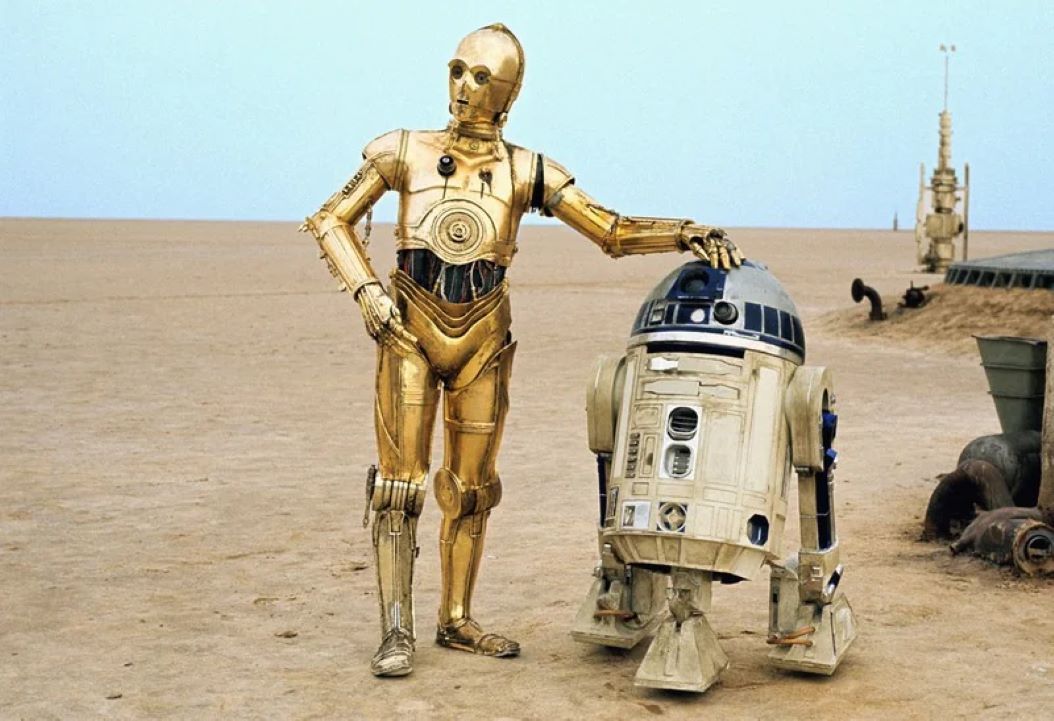
Since his debut in 1977, C-3PO has established himself as one of the most iconic characters in the Star Wars saga, portrayed by actor Anthony Daniels. This protocol droid is not only known for his linguistic skills, being the first character to speak in the film, but also for a peculiar detail that has gone unnoticed by many: one of his legs is silver, contrasting with his golden body. C-3PO, watch out for your legs! This nuance, present in the initial installments, A New Hope and The Empire Strikes Back, has surprised some fans who, after years […]

Since his debut in 1977, C-3PO has established himself as one of the most iconic characters in the Star Wars saga, portrayed by actor Anthony Daniels. This protocol droid is not only known for his linguistic skills, being the first character to speak in the film, but also for a peculiar detail that has gone unnoticed by many: one of his legs is silver, contrasting with his golden body.

Citripio, watch out for your legs!

This nuance, present in the initial releases, A New Hope and The Empire Strikes Back, has surprised some fans who, after years of watching the movies, never noticed the existence of this difference. The lighting used in many scenes, especially in the desert of Tatooine and inside spaceships, has made it difficult to perceive the color of the leg. To properly appreciate the original design, it is advisable to refer to high-definition versions.

The confusion has also been fueled by the design of C-3PO action figures, which commonly depict him entirely in gold, omitting the detail of the silver leg. The decision to show one leg a different color was meant to emphasize the repairs that C-3PO underwent over the years, reflecting his wear and the character’s history. However, by the time of Return of the Jedi, C-3PO appeared with both legs gold and, interestingly, the reason behind this change is never mentioned during the plot, adding another layer of confusion for the saga’s fans.

This type of detail highlights the richness of the Star Wars universe and the deep connection that fans have with every visual aspect of its mythology. As the legacy of Star Wars continues to grow, these nuances remind us of the care put into the construction of these memorable characters.

George Lucas is fed up with 'Star Wars', and no one can blame him

Thirteen years ago, George Lucas made the decision to sell the rights to ‘Star Wars’ to Disney for the impressive sum of 4.05 billion dollars. Since then, this galactic universe has gone through different paths under the direction of the mouse company, which has generated various opinions, even from Lucas himself, who has expressed reservations about Disney’s handling of the saga. In a galaxy far, far away… At 81 years old, the creator of Star Wars has chosen not to get involved again in the franchise he conceived himself. His current focus […]

Thirteen years ago, George Lucas made the decision to sell the rights to ‘Star Wars’ to Disney for the impressive sum of 4.05 billion dollars. Since then, this galactic universe has taken different paths under the direction of the mouse company, which has generated various opinions, even from Lucas himself, who has expressed reservations about Disney’s handling of the saga.

In a galaxy far, far away…

At 81 years old, the creator of Star Wars has chosen not to get involved again in the franchise he conceived himself. His current focus is on the creation of the Lucas Museum of Narrative Art, an ambitious cultural proposal in Los Angeles. Lucas has made it clear that he does not want the institution to be identified solely with Star Wars, although the museum will include some iconic objects from the saga, such as an N-1 Starfighter. “I didn’t want people to walk into the museum and say ‘Where is Star Wars?'”, he commented in a recent interview.

Lucas’s words reflect a discontent with the direction that the stories and characters have taken within the framework of Disney. “I was the one who really knew what Star Wars was… many of the ideas that were in the original movie were lost”, he stated, highlighting his perception that, fundamentally, the essence of the saga has undergone significant alterations.

With his gaze set on his legacy through the museum, Lucas does not seem interested in the possibility of returning to the cameras or regaining creative control of the franchise, making it clear that he believes the true roots of Star Wars should not be lost. Meanwhile, fans reflect on the future of a saga that, although it continues to evolve, is drifting further away from the original vision of its creator.

George Lucas prohibited talking about the Clone Wars, but in the end, he had to backtrack

Before the release of the Star Wars prequels, the narrative about the Clone Wars and other events in the galactic universe was a territory filled with speculation and unofficial theories from fans. For years, the stories about the fall of the Jedi Knights and the history of Darth Vader developed through the Expanded Universe (EU), creating varied and often strange interpretations that had little to do with the final version offered by George Lucas on screen. In a galaxy very, very far away, the first film, A New Hope, barely mentioned the Wars […]

Before the release of the Star Wars prequels, the narrative about the Clone Wars and other events in the galactic universe was a territory filled with speculations and unofficial theories from fans. For years, the stories about the fall of the Jedi Knights and the history of Darth Vader developed through the Expanded Universe (EU), creating varied and often strange interpretations that had little to do with the final version offered by George Lucas on screen.

In a universe very, very! far away

The first movie, A New Hope, barely mentioned the Clone Wars, which created a void that EU writers filled with complex narratives, such as Timothy Zahn’s proposal in his Thrawn Trilogy. In it, an opposing faction to the Republic, the “cloners,” was introduced, using cloning technologies that differed significantly from the methods later established in the official saga.

At that time, there was an order from George Lucas that prohibited giving information about the Clone Wars, which allowed for a variety of creative interpretations among fans. However, the release of the prequels and the animated series The Clone Wars recontextualized the story, presenting the clones as heroes instead of antagonists, and modifying elements such as the relationship between Darth Vader and the events of the Jedi Purge.

The new canon established by the movies and series has redefined the narrative, discarding classic concepts from the EU, such as the “Clone Wars” and theories about the timeline of galactic conflicts. Despite this restructuring, the legacy of the EU remains present, showcasing the diversity of ideas that once shaped the Star Wars universe before being officially closed by Lucas.

Fans who wish to explore this official version of the story can access the movies and series available on Disney+, which offer a new perspective on the Clone Wars and other crucial events in the galactic universe.

If you think reading comics is a child's thing, wait until you hear what George Lucas has to say

George Lucas, the renowned creator of the Star Wars and Indiana Jones sagas, made a milestone at the San Diego Comic-Con by participating for the first time in more than 50 years of the convention’s history. In front of more than 6,500 enthusiasts, Lucas, 81, chose to focus on an unconventional aspect of his career: his extensive comic book collection, which exceeds 40,000 works. This interest in comics reflects a personal facet of the director, shaped throughout his life and career in film. May the panels be with you! During the […]

George Lucas, the renowned creator of the Star Wars and Indiana Jones sagas, made a milestone at the San Diego Comic-Con by participating for the first time in more than 50 years of the convention’s history. Before more than 6,500 enthusiasts, Lucas, 81, chose to focus on an unconventional aspect of his career: his extensive comic book collection, which exceeds 40,000 works. This interest in comics reflects a personal facet of the director, shaped throughout his life and career in film.

May the vignettes accompany you!

During the panel, Lucas was joined by renowned filmmaker Guillermo del Toro and production designer Doug Chiang. Moderated by the famous host Queen Latifah, they discussed the creation of the Lucas Museum of Narrative Art, a museum that will open in Los Angeles in 2026. The museum, which is considered a tribute to popular art, will house works by iconic comic artists and painters, as well as a special selection from the Lucas archive, which includes models and costumes from his most emblematic projects.

Lucas assured that the museum seeks to give recognition to comic art, which, in his youth, was not valued as it should have been. “When I was a child, comic art was not taken seriously. I was always told: ‘Doug, someday you’ll get over it.’ And I’m very glad I didn’t”, stated Chiang, highlighting the cultural importance of this medium. Del Toro added a historical perspective, pointing out that “comics were the first to hit the Nazis”, emphasizing their social impact.

The Lucas Museum of Narrative Art will not only be a space to admire art, but it also seeks to educate and promote the history of comics and their influence on modern culture. With its opening scheduled for 2026, the museum promises to be an important new cultural destination in Los Angeles.